

US technology stocks are stuck in a market pattern that has become hard for investors to ignore: strong earnings fail to lift prices, while disappointing results draw heavy selling. That uneven response is shaking confidence in the AI investment narrative on Wall Street and accelerating the retreat from richly valued tech names.
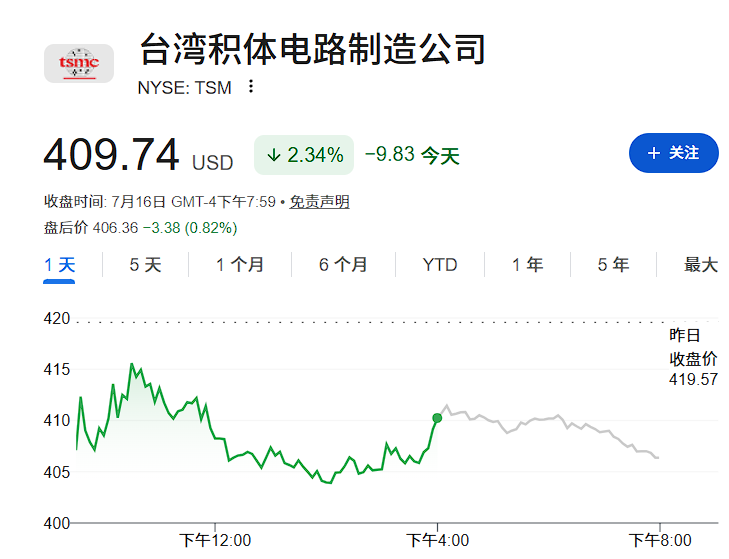
Taiwan Semiconductor Manufacturing Co. on Thursday reported a record quarterly profit, with net income up 77% from a year earlier, and raised its 2026 revenue growth outlook to above 40%. Its US-listed shares still closed down 2.3%. IBM moved the other way. After issuing a profit warning, the company fell more than 20% on Tuesday, a drop that the source said was even larger than its decline on 1987’s Black Monday. A Vital Knowledge analyst summed up the mood this way: “Tech stocks just can’t seem to win — better-than-expected earnings can’t spark gains, but earnings blowups get severely punished.”
Strong results are no longer enough
The most striking feature of the current correction is the widening gap between fundamentals and price action.
According to the Wallstreetcn article cited in the source, TSMC’s second-quarter net profit rose 77% year over year to a record NT$706.6 billion, or about $22 billion. Gross margin reached 67.7%, and the company lifted its 2026 capital spending plan to a range of $60 billion to $64 billion. ASML had earlier reported quarterly results that beat expectations and came with raised guidance. Micron also delivered a quarter that beat forecasts by a wide margin, but its stock has still retreated about 25% from its peak.
Market watchers said the three sets of earnings reinforced the case for faster AI-driven demand growth and offered fresh support for the logic behind AI capital spending and computing infrastructure investment. Even so, semiconductor and storage shares kept falling in the face of those positive catalysts. That suggests price action may now be driven less by fundamentals than by positioning and factor moves. It also points to a market where expectations for hardware companies have been pushed extremely high.
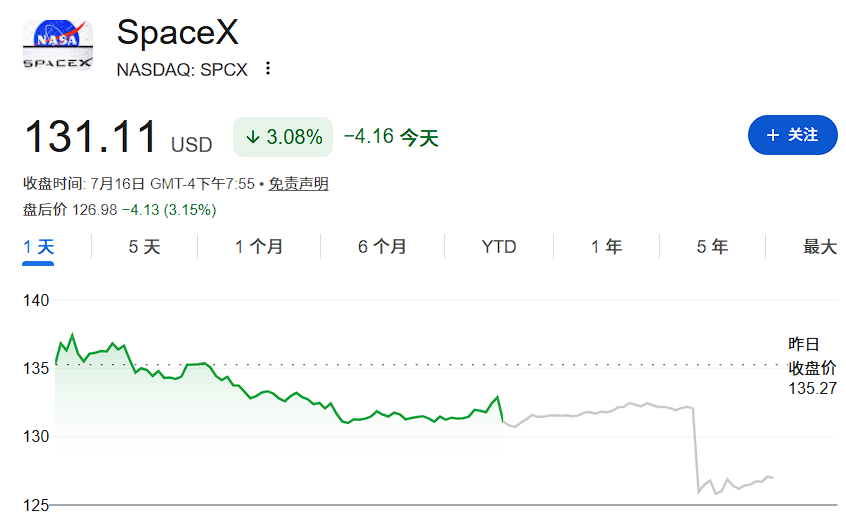
SpaceX, which had been treated as a symbol of the AI boom, has not been spared. The company completed an IPO last month at a record valuation of $86 billion, with an offering price of $135. The stock at one point climbed to $225.64 and drew substantial retail participation. By Thursday, however, it had fallen another 3.1% to $131.11, below the offer price.
Valuation and spending concerns are building
The move reflects a broader reassessment of valuation across AI-linked companies. The Financial Times reported that some investors have become increasingly concerned about when heavy data-center spending by major US technology companies will begin to produce meaningful returns.
Google shares fell 4.4% on Thursday, while Amazon slipped 1.2%. Bonds issued by hyperscale cloud companies have also come under pressure recently as investors question the scale of their borrowing and spending plans.
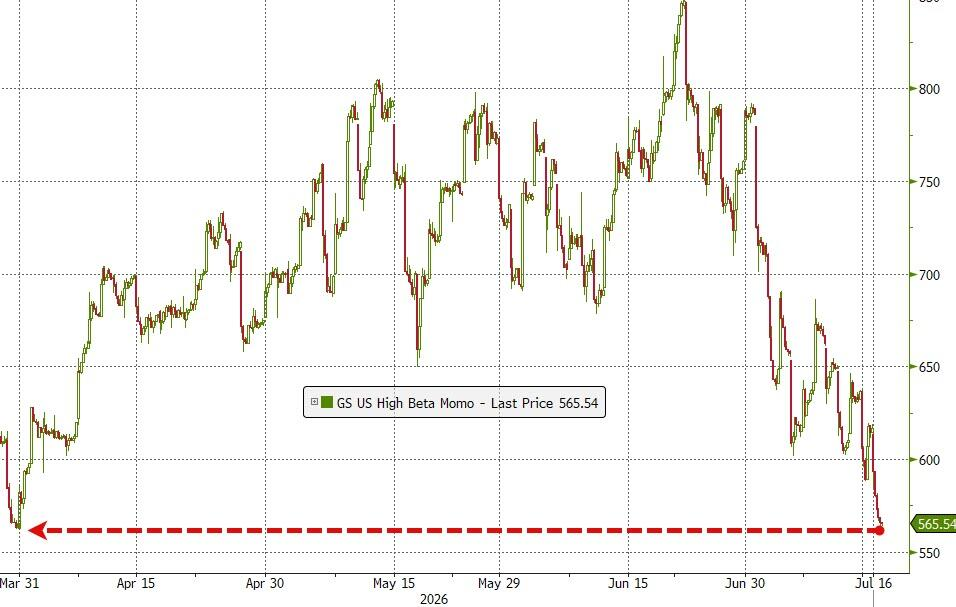
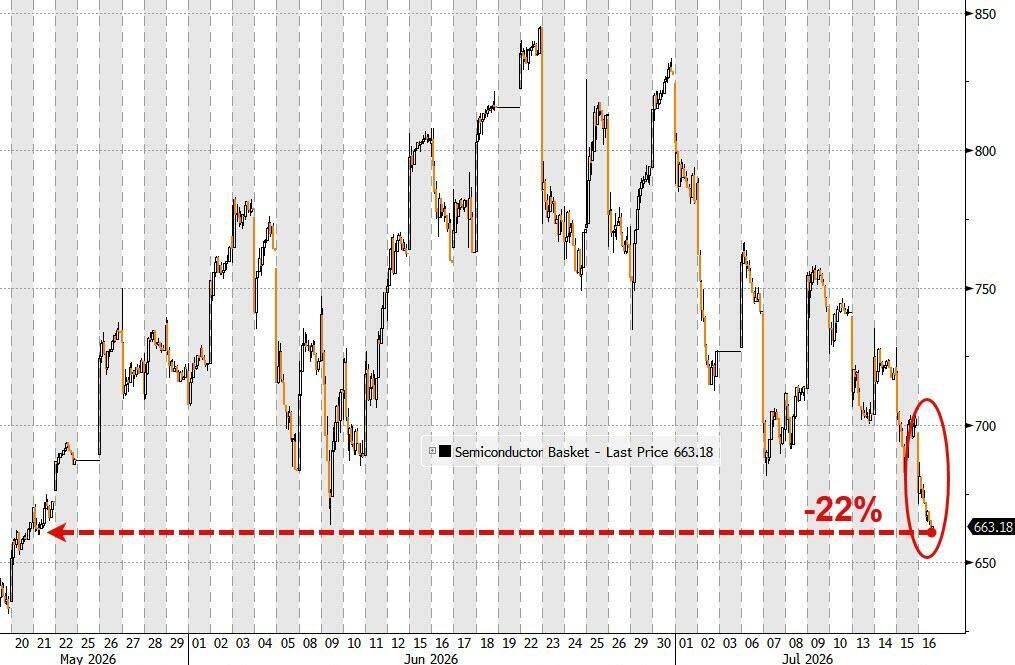
The weakness was visible across the market. The Nasdaq Composite fell 1.5% on Thursday, led lower by storage and chip stocks. Sandisk, Western Digital and Seagate each dropped more than 9%, while Intel and Micron lost about 6% apiece. US semiconductor shares are now down about 22% from their mid-June high, officially entering a technical bear market. Goldman Sachs’ momentum-stock index fell 6% in a single day on Thursday and has lost about one-fifth of its value this month.
Chip stocks have become the market’s key signal
With several pressures hitting at once, the direction of the semiconductor sector has become one of the central questions for the broader equity market.
Analysts cited in the source said the future path of chip shares remains the market’s most important issue. Cracks are beginning to show, they said, and a strong, durable rebound needs to appear soon. If it does not, the message from the market will turn more serious.
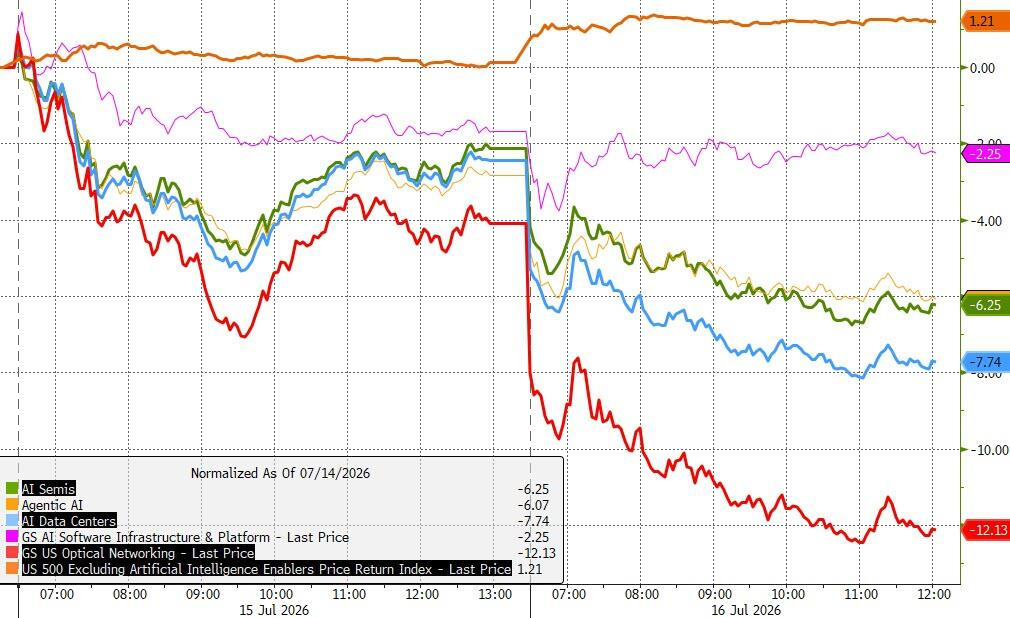
The sector as a whole is now down about 22% from its mid-June high, placing it in a technical bear market. Against a backdrop where ASML, Micron and Samsung all beat expectations only to see their shares sold, high-beta momentum strategies have also come under renewed pressure.
At the same time, implied correlation remains near historical lows and has clearly decoupled from the VIX index. The article said that points to volatility driven more by a repricing of structural factors than by broad-based panic, though it does not mean risk has already been cleared.
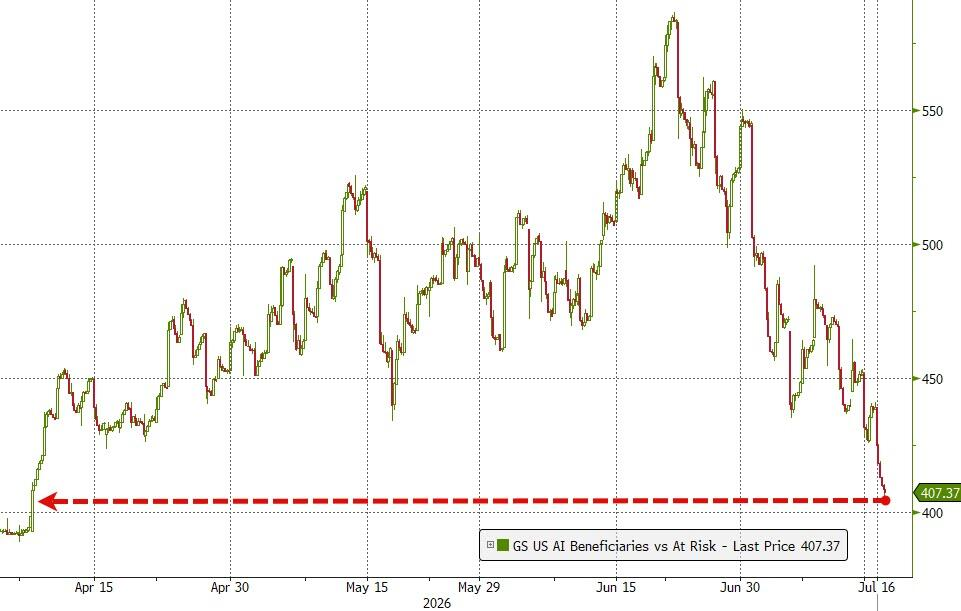
Deleveraging is still running
Behind the selloff is what the source described as a systemic deleveraging process that began in June.
JPMorgan strategist Nikolaos Panigirtzoglou said: “The investor deleveraging phase that started in June appears to still be ongoing. We believe there is more room for deleveraging in leveraged equity ETFs, options and margin accounts, and that will remain a persistent headwind for equities.”
Goldman Sachs data show pressure across the broader AI complex. Optical interconnect, AI semiconductors and data-center shares have all fallen 5% to 12% over the past two days.
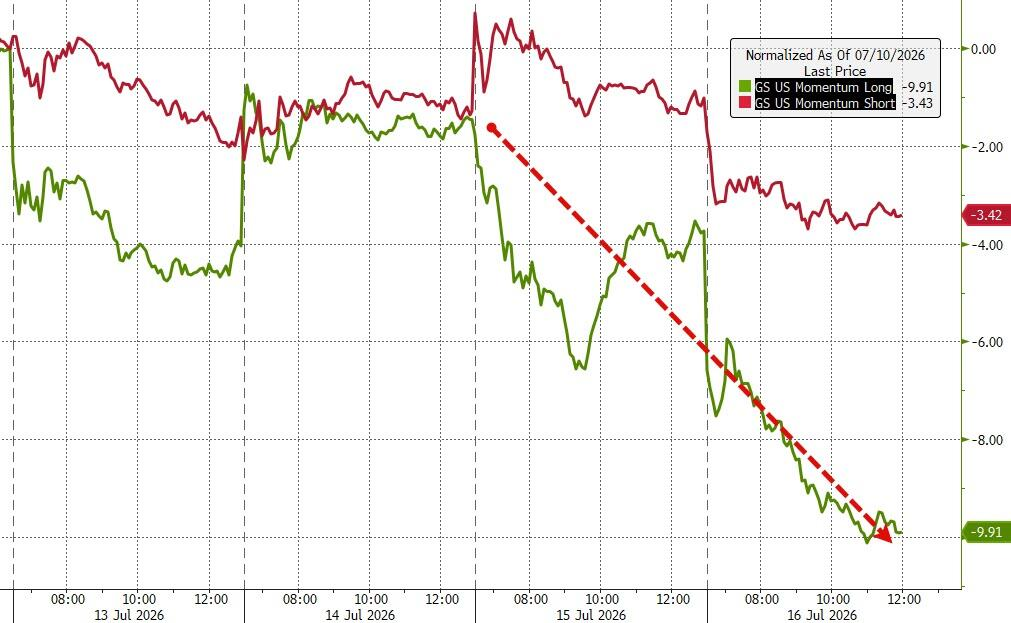
Goldman’s momentum-stock index is down about 20% for the month. According to the firm’s analysis, volatility in the relevant factor pair, adjusted for realized volatility, has climbed to a five-year high and is now close to 10 times the S&P 500’s three-week realized volatility.
Separate analysis cited in the source said “wrong-way” price action has appeared across AI-related stocks versus “AI risk” stocks, hedge-fund crowded longs versus shorts, and high-beta 12-month winners versus losers. That points to clear dislocation in the market’s internal structure.