
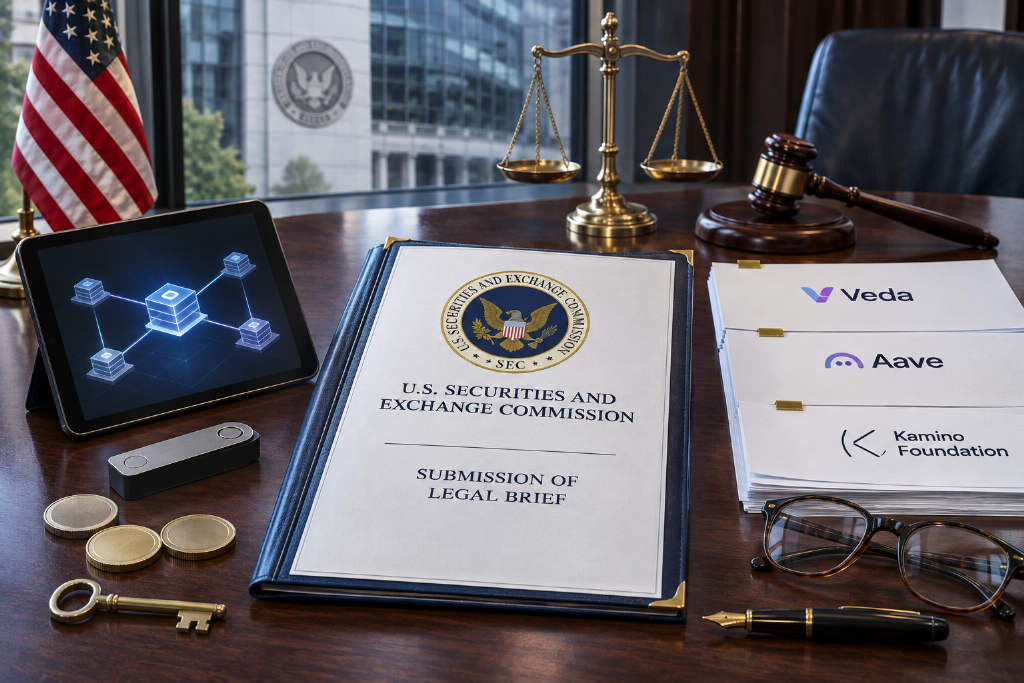
On Nov. 3, onchain vault infrastructure provider Veda said it, Aave Labs and the Kamino Foundation had released a public summary of a legal framework discussing how U.S. federal securities laws may apply to decentralized lending protocols and non-custodial vaults.
Veda said the framework addresses a core question: how securities laws should apply when financial activities traditionally carried out by intermediaries are instead executed by smart contracts, while ownership, control and decision-making are split across different participants.
Detailed version submitted to the SEC
The three parties said they submitted a more detailed version to the U.S. Securities and Exchange Commission on Oct. 26 and asked to communicate with commission staff.
Aave Labs said the detailed version was submitted to the SEC Crypto Task Force and the Division of Corporation Finance, and that it also requested a meeting with staff. The full submission remains confidential.
Analysis centers on rights, obligations and powers
Veda said securities regulation should follow the rights, obligations and powers actually created by an arrangement, including who owns the assets, who bears the obligations, who exercises authority, and whose economic outcome is affected. Shared infrastructure, receipt tokens, or service providers with discretion cannot by themselves determine those questions.
The document analyzes the issue against the Howey investment contract test, the Reves note test, the Investment Company Act of 1940, and the Investment Advisers Act of 1940. It argues that the protocols and vault arrangements examined do not constitute investment contracts or notes, that the vaults described are not investment companies, and that compensated investment discretion does not necessarily amount to custody of client assets.
Conclusions depend on the specific structure described
Veda also said those conclusions depend on the specific architecture, contractual arrangements, and allocation of rights and powers described in the document. If ownership structures, repayment commitments, discretionary authority, or redemption limits differ, the legal analysis could also change.
The submission did not ask the SEC to create an exemption, safe harbor, or a dedicated regulatory regime for decentralized finance. Instead, it applies existing securities laws and asks the commission to confirm that the law already distinguishes among issuance, investment management, custody and related activities.
The blog post said the material is for informational purposes only and does not constitute legal advice. It also said the SEC has not endorsed the document's conclusions.
Background on Veda
According to RootData and Veda's public materials, Veda was founded in 2024 and completed an $18 million financing round led by CoinFund in June 2025.



