
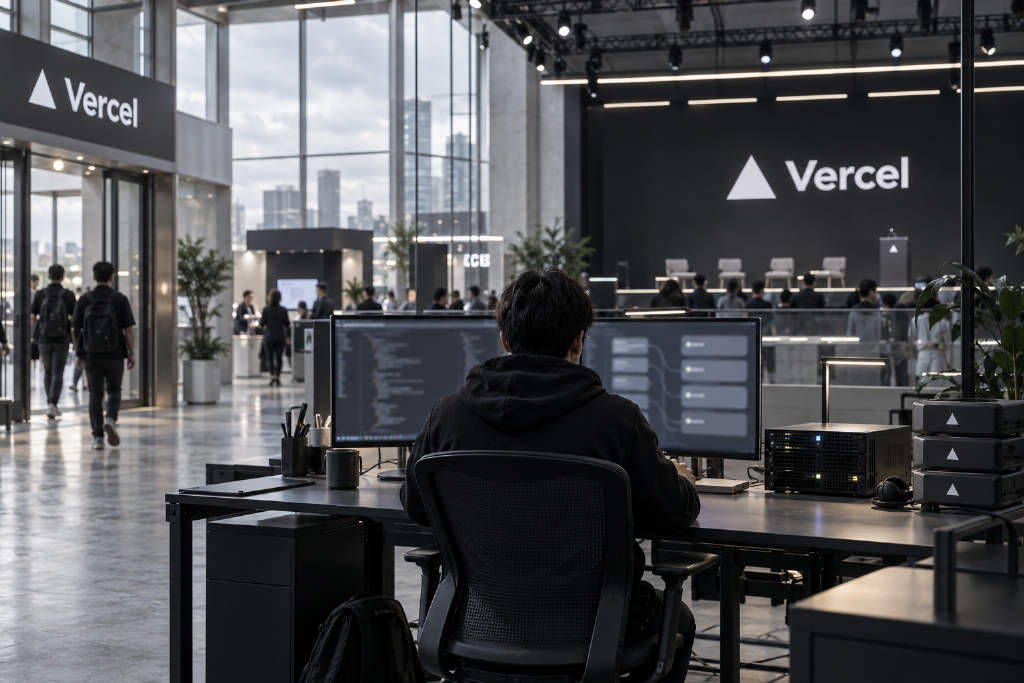
Vercel introduced Daemons at its Ship 2026 developer conference, giving developers a way to deploy long-running background processes directly on the platform.
Daemons can keep pulling jobs from a message queue or database, complete one task, and then take the next. If a process crashes, it restarts automatically. Vercel had largely run code on a request-based model before this, which meant developers often had to deploy a separate backend service when they needed long-running jobs. Daemons is now in public beta.
Drives opens for persistent agent storage
Vercel also formally opened Drives, a persistent file storage product for AI agents.
Before this update, files stored inside a temporary sandbox disappeared once that sandbox shut down. With Drives, agents can keep code, data, and work output in separate storage and reuse them the next time a new sandbox starts. Developers can also clone workspaces so multiple agents begin from the same set of files, handle different tasks in parallel, and avoid overwriting each other’s changes.
Connect gets MCP Events
Vercel added MCP Events to Connect as well, allowing agents to subscribe to events from external systems.
In the examples shared by the company, a compatible MCP service can actively send a notification when a new GitHub issue appears or when a document gets a new comment. An application can then trigger an agent to handle the task instead of repeatedly checking for updates. The feature remains in public beta and requires external services that support event subscriptions.
Broader scope for the platform
These updates also expand Vercel’s scope. Developers who had mainly used the platform to deploy websites can now place long-running background jobs, agent workspaces, and event integrations on Vercel in one place, cutting some of the work involved in building and maintaining separate infrastructure.