


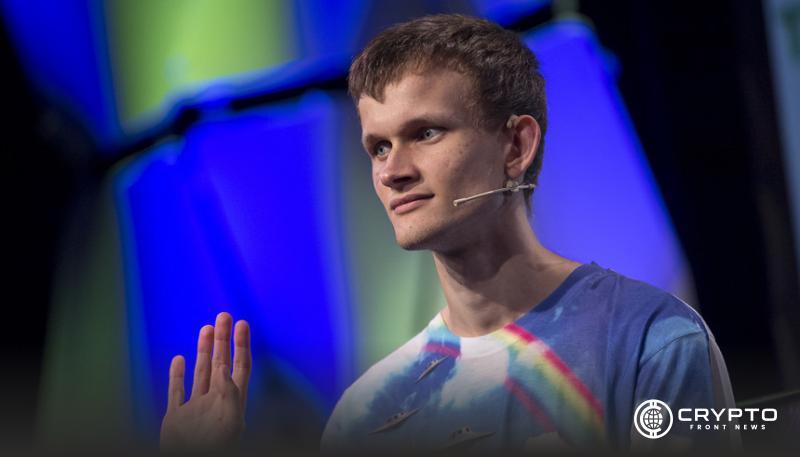
Ethereum co-founder Vitalik Buterin said artificial intelligence is sharply accelerating Ethereum development. In public remarks, he described how a developer used agentic coding in early 2026 to produce a client prototype aligned with Ethereum’s 2030 roadmap in just weeks. The prototype contained about 700,000 lines of code, covered 65 roadmap items, and synced with the Ethereum mainnet within two weeks.
A rapid prototype, with major caveats
Buterin said progress at that speed would have looked nearly impossible six months earlier. The pace stood out. He also warned that the code likely included critical bugs and incomplete implementations, making clear that fast output does not mean production-grade security.
He argued that AI is changing the economics of software work across many tasks, not only code generation. As an example, he said he rebuilt blog software in an hour using local models. His view is that the gains from AI should be split evenly between faster development and stronger security discipline, instead of being spent only on shipping code sooner.
Testing and verification remain the real bottlenecks
Buterin said the strongest use of AI is pairing faster coding with larger test suites and deeper formal verification. He pointed to work from a Lean Ethereum collaborator who used AI to generate a machine-verifiable proof for a complex theorem related to STARKs. Lean Ethereum, he said, is trying to formally verify every component.
Bug-free code is still hard to achieve. That has not changed. What AI changes is the speed and depth of debugging cycles, along with the ability to run repeated tests and compare multiple implementations to catch failures earlier.
Quantum-resistance plans target signatures and proof systems
Separate from development tooling, Buterin also outlined Ethereum’s quantum-resistance roadmap. He identified several vulnerable areas: BLS consensus signatures, KZG-based data availability, ECDSA account signatures, and zero-knowledge proof systems. His proposed direction includes replacing BLS with hash-based signatures and using STARK aggregation.
For externally owned accounts, he referenced EIP-8141, which would allow multiple signature schemes, including quantum-resistant options. He acknowledged that this would raise gas costs, though he said efficiency should improve over time. On proof systems, he noted that STARK proofs are more expensive than current ZK-SNARKs, but aggregation could cut on-chain computation. Last month, the Ethereum Foundation said the next phase of the ecosystem will expand capacity while preserving long-term security and resilience.