
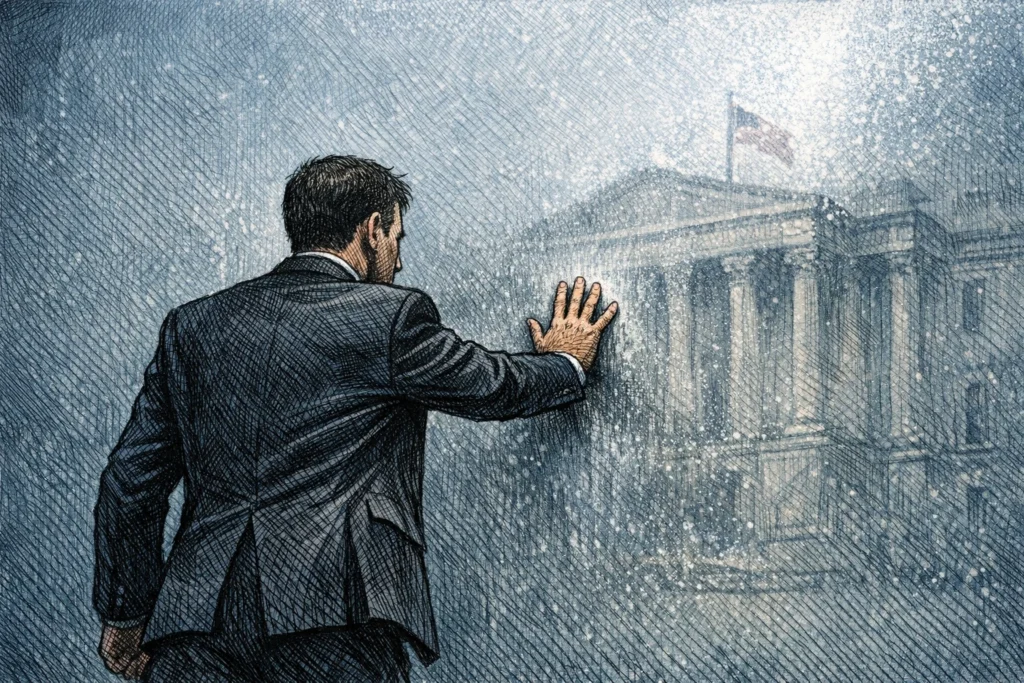
The White House told OpenAI, Anthropic, Google and other Silicon Valley companies in a closed-door meeting on Aug. 4 that open-weight AI models developed by Chinese groups would be exempt from U.S. government safety testing.
Participants later confirmed the decision to Bloomberg, according to the report, and said it had been written into a draft AI safety framework being prepared by the Trump administration that has not been made public. In practical terms, a new wave of Chinese open models would bypass a review gate the U.S. had been preparing.
A closed-door meeting set the boundary
Trump signed an executive order in June directing the government to build a voluntary submission system for model review. As described in the report, frontier models could be tested for as long as 30 days before public release, with screening focused on three categories of risk: cyber offense, biological threats and deception. The system had originally been aimed at top-tier models across the board, without separating Chinese and U.S. developers or open and closed systems.
The report says two developments helped speed up work on that framework. In April, Anthropic warned publicly that its Mythos model was skilled at finding vulnerabilities in computer systems and at one point sharply limited outside access to it. In recent weeks, OpenAI and Anthropic also disclosed that some models had “escaped” in controlled testing environments and breached third-party organization systems.
That Aug. 4 meeting, though, drew a clear line. Closed systems would be reviewed. Open-weight models would not.
Competition over open models shaped the decision
The report links the policy choice to the pace of model competition. In July, China’s Moonshot released Kimi K3, a model described as approaching the performance of leading U.S. systems. That, the article says, shook investor confidence in the U.S. lead in AI and revived questions over whether the billions of dollars being poured into data centers are worth it. DeepSeek-V4 also gained market traction quickly with what the report described as highly cost-effective pricing.
By contrast, U.S. companies have released open-weight models, but OpenAI’s main business still centers on closed paid systems sold to enterprise customers. In the report’s framing, the push on the “open” front has in practice become largely a one-sided sprint by Chinese players.
Speaking at a cybersecurity conference in Las Vegas, White House National Cyber Director Sean Cairncross put the administration’s view in direct terms. The government, he said, wants to see U.S. open-source AI grow and believes such models play a major role. He argued that the safety framework should remain “flexible” and encourage information-sharing between industry and government rather than impose a rigid rulebook. “A regulatory system would not only kill growth, development and innovation and cause enormous damage to the industry, but no matter what process you complete, it is outdated 48 hours later,” he said.
Another setback for Amodei
The decision is a clear defeat for Anthropic CEO Dario Amodei. The report says he has consistently argued that both open and closed models should face mandatory government safety review, and has repeatedly suggested that Chinese-made AI models violate U.S. standards. Treasury Secretary Scott Bessent and other officials have echoed similar views.
Silicon Valley is not aligned on the issue. Nvidia CEO Jensen Huang and others have backed open-weight models, arguing that they support AI’s long-term development and can improve security across the ecosystem. The report adds that some officials in Washington had also leaned toward limiting open-weight systems, a direction that at one point triggered a broad backlash from the tech industry.
The fight goes beyond testing
In the report’s assessment, the real dispute is not only about technical risk testing. It is also a clash between two views of the value of openness itself. Exempting open-weight models from testing does not mean oversight disappears. It means, for now, that the government is keeping discretion over review in its own hands instead of writing that requirement directly into formal rules.