
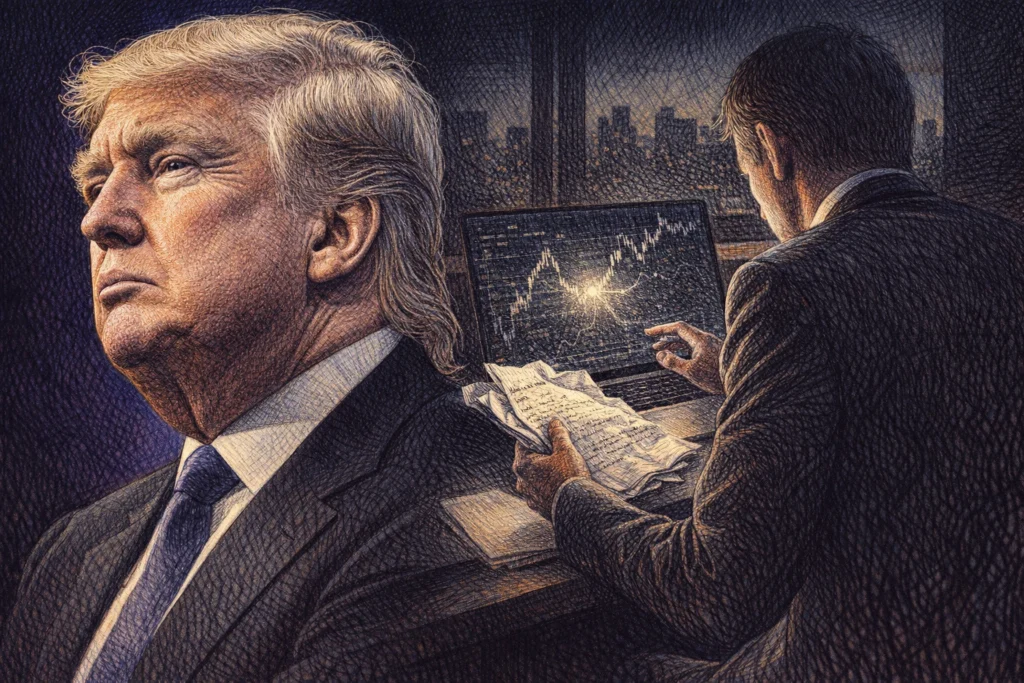
Gabriel Perez, a White House staffer who has operated Donald Trump’s teleprompter since 2016, allegedly used his access to presidential speech scripts to trade on Kalshi and made more than $100,000 across more than a dozen speech-related bets, according to ABC News.
He allegedly traded speech-content contracts, not election outcomes
ABC News reported that Perez was not betting on who would win an election. Instead, he traded Kalshi’s “Mentions” markets, which let users wager on whether a public speech will include specific words, phrases, or themes.
The edge was straightforward: Perez allegedly had access to original teleprompter drafts. When Trump skipped prepared sections, Perez would close positions during the speech itself. ABC News, citing people familiar with the matter, said the pattern was repeated more than a dozen times over about three months and covered events including a State of the Union address and remarks at the World Economic Forum.
Kalshi flagged the activity and passed it to the CFTC
According to the report, Kalshi’s surveillance system detected unusual trading activity and referred the trading records to the US Commodity Futures Trading Commission, or CFTC. Regulators then opened an investigation and traced additional wagers tied to speeches.
Perez is now in settlement talks with federal regulators, the report said. The White House has placed him on unpaid administrative leave. White House press secretary Karoline Leavitt said Trump described the conduct as “disgraceful.”
Prediction-market insider trading is drawing wider scrutiny
The article said growth in prediction markets has made the issue harder to ignore. Citing CoinGecko data, it said first-quarter trading volume in prediction markets hit a record this year even as the broader crypto market softened.
It also listed several recent cases that have intensified attention on the sector:
- In March, six Polymarket traders correctly bet that the US would strike Iran before the end of February and made about $1 million.
- On-chain research by DeFi platform Axiom found that several wallets placed bets before blockchain investigator ZachXBT published accusations, generating $1.2 million in profit.
- In Venezuela, one trader correctly bet before the capture of Nicolás Maduro and made about $400,000.
On the legislative front, Representative Bryan Steil introduced a bill last month that would ban members of Congress and their immediate families from trading prediction-market contracts tied to public policy and political outcomes.
A case that tests the reliability of price discovery
The source article argued that while Taiwan already has lottery and sports-betting markets, event-contract prediction markets like Kalshi and Polymarket are still relatively new there. If a teleprompter operator can profit from informational advantages, ordinary participants may face an even sharper information gap.
Prediction markets are often promoted as tools for price discovery that can compete with polling. But once insider information enters the market, the reliability of that price signal weakens. In this case, the article argues, what traders are betting on matters as much as where they place the bet.