
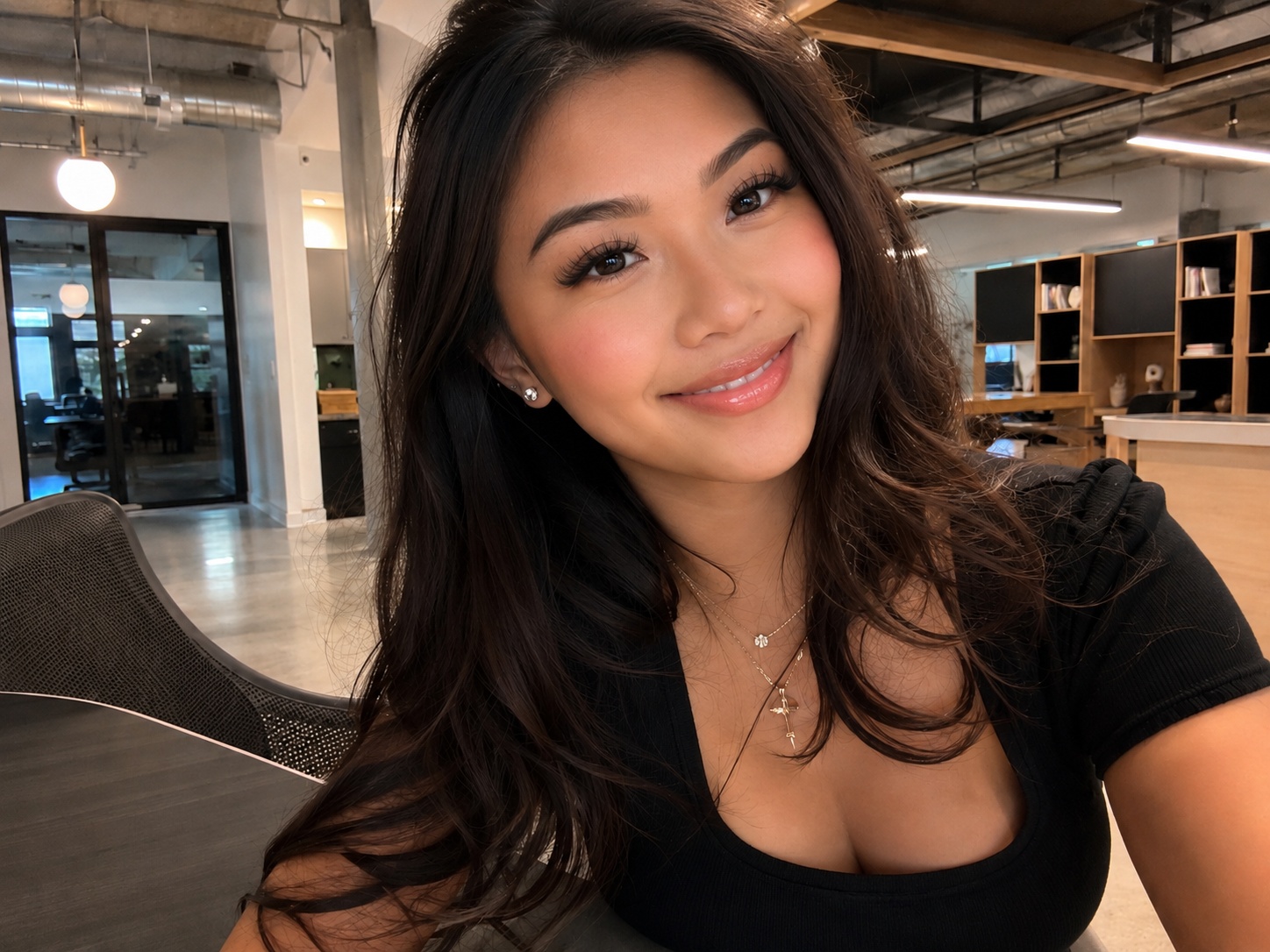
ABG, short for Asian Baby Girl, began as a term tied to Chinese American gang culture in Queens during the 1980s. In the source material, it is now framed as something much larger: a recognizable internet aesthetic, a dating-app preference category, and even a shorthand for the kind of attention-grabbing persona some Silicon Valley AI startups want in a CMO role.
From immigrant subculture to a global aesthetic
The piece says ABG originally referred to young Asian women associated with dyed hair, tattoos, club scenes, and rave culture. It cast that image as a rejection of the “model minority” stereotype. Research cited from University of California scholars Stacey Salinas and Talitha Trazo says the subculture spread through Southeast Asian immigrant communities in the late 1990s, moving from New York to Los Angeles and San Francisco before taking root across the US West Coast.
By the 2010s, the Facebook group Subtle Asian Traits had helped move the ABG label from street culture into college settings. Then TikTok accelerated the shift. The source says tags such as #ABGTransformation, #ABGVibes, and #ABGMakeup had generated more than 1.4 billion views by 2025.
TikTok, Xiaohongshu, and K-pop pushed the label into mass culture
The article ties that growth to several overlapping channels: TikTok’s short-video format, Xiaohongshu’s appetite for imported lifestyle trends, and the global spread of Korean pop aesthetics. According to the source, the #ABG女孩 tag on Xiaohongshu had passed 9.8 million posts, while sales of ABG-related clothing and products on Taobao jumped 333% in 2021.
In that telling, ABG is no longer presented as just makeup or styling. It becomes a package of identity, branding, and commerce. The material also names Blackpink’s Jennie as one of the public figures associated with the look, while noting that she has not used the label herself.
Dating app preference and attention economics are treated as one story
A central argument in the source is that dating-app behavior, beauty premiums, and social-platform algorithms can be read through the same lens. It says that among Western dating apps that published statistics in the past two years, Asian women had the highest Like rates across men of all racial groups. It also says white men and Asian women recorded the highest reply rates in direct messages.
From there, the article makes a broader claim about tech communities with heavily male user bases. In a space described as 90% male, an ABG account posting the same content as a male account could see engagement rates roughly 3 to 5 times higher. The source itself qualifies this point, saying the formula is a personal estimate rather than a verified dataset.
Why some AI startups now treat CMO as a distribution job
The discussion ends with startup marketing structure. The article cites Cluely founder Roy Lee at TechCrunch Disrupt saying, “Distribution is the scarcity.” It then lists the company’s content machine: 60 content creators, 700 editors, and 200 videos a day. According to the source, that helped the startup reach $6 million in annualized revenue within 10 weeks, with little reliance on traditional ads. Two months later, a16z led a $15 million round.
Under that framework, the CMO role is recast as something closer to a public-facing distribution engine. The source also quotes an anonymous venture capitalist in a Signal group saying, “If your CMO can’t be a KOL, don’t come raise.” The article’s conclusion is blunt: when distribution is treated as scarcer than product, the person who can capture attention may be valued more highly than the person writing the code.