
WuBlockchain daily selected crypto news
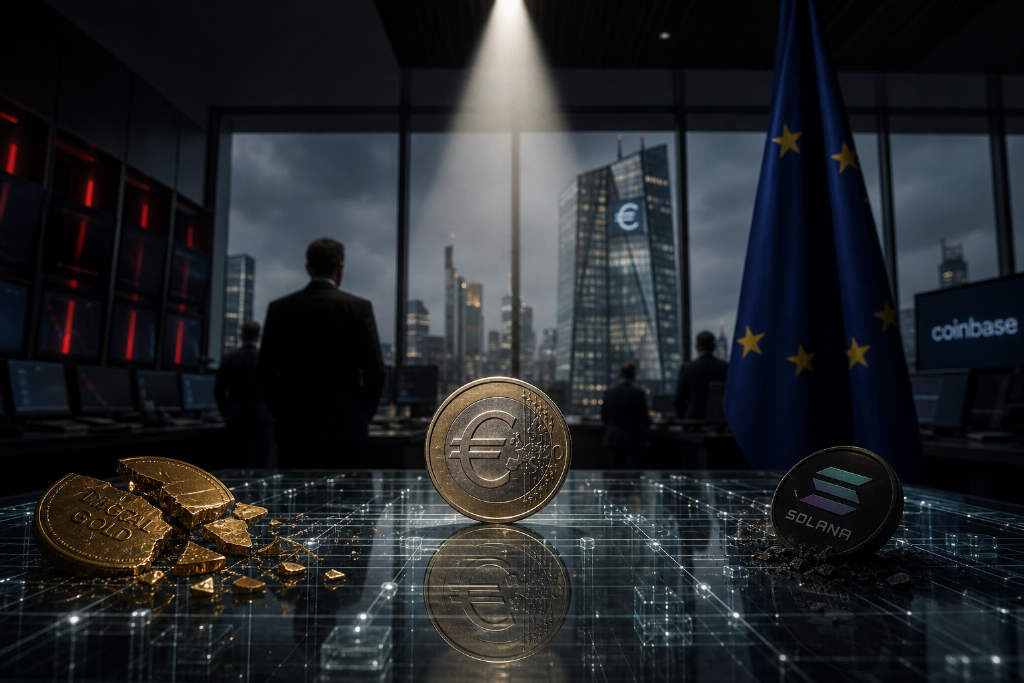
ECB board member Schnabel says central bank money should move on-chain
European Central Bank Executive Board member Isabel Schnabel said central banks should bring central bank money onto blockchain rails and use the programmability of distributed ledgers to modernize monetary policy execution, collateral management and liquidity provision.
The ECB plans to launch the Pontes project next month to connect distributed-ledger platforms to its existing TARGET services, and to complete the architecture blueprint for the longer-term Appia project in 2028. Schnabel said the ECB is still assessing whether to use a unified ledger or connect multiple ledgers.
CFTC says former White House teleprompter operator traded on non-public information, ordered to pay more than $170,000
The U.S. Commodity Futures Trading Commission said former White House teleprompter operator Gabriel Perez used advance access to presidential speech content while working at the White House from December 2025 to February 2026 to trade "mention market" event contracts tied to words or phrases the president might use on a prediction market platform.
Perez was ordered to disgorge $107,539.02 in illicit gains, pay a $65,000 civil monetary penalty and accept a three-year trading ban. The CFTC said the penalty was substantially reduced because Perez provided "exemplary cooperation" during the investigation, and it thanked KalshiEX for assisting with the case.
New York warns AI is fueling investment scams as U.S. 2025 losses top $8 billion
New York’s consumer protection authorities warned that scammers are using AI-generated voices, faces, celebrity endorsements and phishing messages to package fake investment platforms and crypto projects. Some of those platforms show fabricated balances and returns, and may even let victims withdraw small amounts first to lure them into sending more money.
Federal Trade Commission data show that 144,041 consumers across the U.S. reported investment scams in 2025, with reported losses of more than $8 billion, up 38% year over year. The median reported loss was $10,560. The figures cover all types of investment scams in the U.S., not only AI-related or crypto-related fraud.
Trump Digital Gold market cap drops more than 95% in one minute as posting account faces compromise suspicions
Trump Digital Gold (GOLD), a Solana meme coin, lost more than 95% of its market capitalization in one minute and now stands at $450,000.
The meme coin was promoted under the "Trump Digital Gold" narrative by the official X account @realtrumpcoins1. The account focuses on promoting and selling official Trump-related commemorative coins and medals and is described as an official partner of The Trump Organization. With more details still unavailable, the community has broadly questioned the token’s authenticity and suspects the account may have been compromised. As of now, the related post remains on the realtrumpcoins account and has drawn nearly 400,000 views.
The operators tied to the Trump Digital Gold token sold all 82.454% of the GOLD supply under their control two hours earlier, realizing 9,784.6 SOL in profit, or about $1.01 million.
GoPlus Security said the developer funding for GOLD can be traced to KuCoin, while another 15 operator wallets were funded from Binance. It also said the same group deployed a malicious token called PLATINUM that contains a backdoor allowing direct draining or transfer of any holder’s balance.
WuBlockchain weekly selection: Top 10 news items and popular reads
1. Arthur Hayes says U.S. Treasury liquidity will keep flowing and a new Bitcoin bull market has begun
Arthur Hayes said in his latest essay, "Old Wine in a New Bottle," that U.S. Treasury Secretary Scott Bessent is pushing down yields by expanding long-dated Treasury buybacks, which in Hayes’ view amounts to creating more dollar liquidity for markets. He said Bitcoin would be an early beneficiary.
Hayes said the most aggressive scenario would be for the Treasury to adopt a yield-curve-control-like approach if the 10-year Treasury yield rises above 5%. A more likely path, he said, is a gradual expansion of buybacks and the use of about $1 trillion in Treasury General Account funds. He said Bitcoin has already entered a new bull cycle, though volatility is likely to rise sharply, and added that Maelstrom is now at "maximum risk allocation," mainly in BTC, ETH, ENA and ETHFI.
GSR’s latest weekly report said Bitcoin broke out of the $60,000 to $70,000 range that had held for seven weeks, briefly climbing to about $79,000, with a weekly gain of around 25%, its strongest week of the year. Total market short liquidations from Wednesday to Friday reached about $4.6 billion. GSR said the rally looked more like fresh outside capital returning than internal rotation within crypto, with flows clearly favoring BTC and ETH. Over the same period, only 33% of the top 100 altcoins outperformed BTC, suggesting the move has not yet turned into a broad altcoin season. GSR said the market will next watch U.S. PCE data, Nvidia earnings and Jackson Hole. If policy intervention keeps pressure on long-end Treasury yields and ETF and stablecoin inflows continue, the relative strength of BTC and ETH may persist.
Wintermute said in a market update that it had turned more constructive after BTC broke out of a six-week trading range and spot ETFs for BTC and ETH recorded net inflows of about $1.92 billion and $693 million over the past week. The move also came with about $2.7 billion in short liquidations, and Wintermute said whether ETF flows can hold up will be the key next variable. It added that it would turn cautious again if BTC ETFs post weekly net outflows and BTC closes back below the old range under $67,000. Wintermute also pointed to the U.S. Treasury’s decision to raise the maximum size of single 10- to 30-year Treasury buybacks from $2 billion to at least $4 billion starting Sept. 9 as an important backdrop for the liquidity shift now being priced in.
2. BlackRock says the case for Bitcoin as a fiscal-risk hedge is strengthening as U.S. debt tops $40 trillion
Robbie Mitchnick, BlackRock’s head of digital assets, said U.S. debt and fiscal deficits are moving back to the center of market risk and are pushing some investors toward alternative stores of value such as Bitcoin and gold. As of Aug. 18, U.S. federal debt had risen to about $40.05 trillion.
Mitchnick said fiscal sustainability matters more to Bitcoin’s long-term valuation than the still-pending CLARITY Act, while regulatory clarity would have a larger effect on other parts of crypto such as DeFi. BlackRock has also said that rising government debt and persistent fiscal deficits may strengthen the long-term allocation case for Bitcoin as a hedge against fiat currency debasement.
3. U.S. Treasury weighs using about $950 billion in TGA funds to support long-dated buybacks
CNBC, citing two senior U.S. Treasury officials, reported that the Treasury is considering using about $950 billion from the Treasury General Account to support expanded buybacks of long-dated Treasurys.
The Treasury has already raised the size of single 10- to 30-year buybacks from $2 billion to at least $4 billion, and Treasury Secretary Scott Bessent said the actual scale could increase further. If TGA funds are used, the Treasury would gain a larger funding source for repurchases, though officials did not disclose the amount to be used or the timing.
4. Coinbase lays out its Agentic Finance, or AiFi, ecosystem
Coinbase outlined its "Agentic Finance" ecosystem, or AiFi, saying traditional finance is constrained by business hours, legal identity checks and manual intervention and does not meet the economic needs of AI agents that operate autonomously around the clock. Crypto and stablecoins, with 24/7 availability, programmability and low-cost micropayments, are being positioned as the core base layer for AiFi.
Coinbase said its current AiFi product stack includes Coinbase Advisor, an SEC-registered advisory tool for agent trading; Coinbase for Agents, which supports sandbox interactions through Claude, ChatGPT and Cursor; the x402 open micropayments protocol; and Coinbase Business, which allows enterprises to charge AI agents directly in USDC.
5. Solana inflation proposals could lower issuance as staking yield may roughly halve within two years
Solana is advancing two governance proposals, SIMD-550 and SIMD-553. SIMD-550 would raise the annual deflation rate from -15% to -30%, moving the date at which Solana reaches its 1.5% terminal inflation rate from around 2032 to the first half of 2029. It would also push nominal staking yield down to about 2.25% in the third year.
SIMD-553 was approved and merged on July 20. It proposes adding a burn fee to compute units used by financial activity requests. Based on current network activity, daily SOL burned would rise from about 600 to 800 SOL to about 7,500 to 9,000 SOL. Together, the two proposals are expected to reduce issuance by about $1.4 billion to $1.5 billion over six years. The final effect still depends on the outcome of the SIMD-550 vote and on validator fee design under SIMD-553.
Ellipsis Labs CEO Eugene Chen criticized Solana fee reform proposal SGP-0003, saying it could have a sizable impact on applications on Solana that depend on market microstructure. He said changing the on-chain cost model without sufficient participation from application developers would weaken confidence in building on Solana. Solana co-founder Anatoly Yakovenko later suggested charging signature fees based on compute units, or CU, while keeping average fees roughly similar. Chen said he supports the idea in principle but believes the mechanism still needs more review.
6. Uniswap founder Hayden Adams says AMMs now have a clear path to dominate global financial markets
Uniswap founder Hayden Adams said in a post that the tokenization wave around real-world assets, or RWA, is giving automated market makers, or AMMs, a clear path to dominate global financial markets.
Adams said traditional market makers preserve high margins through vertical integration and costly delta-neutral hedging, while blockchains separate execution, custody and settlement, sharply lowering the barrier to market making. In on-chain markets, liquidity naturally clusters around correlated pairs, with only a small number of highly liquid bridge pairs such as SPY/USD and ETH/USDC needed to connect assets to dollar rails. Because market makers holding correlated assets face lower inventory risk, passive AMMs can replace traditional high-cost market-making strategies with far lower capital costs.
7. Biggest backer of Trump family token project, Guren Zhou, remains listed as a dishonest debtor and is tied to six cases
UAE-based investment firm Aqua 1 Foundation previously spent $100 million buying tokens in the Trump family crypto project World Liberty Financial, or WLFI, overtaking Justin Sun, who had put in a cumulative $75 million, to become WLFI’s largest mystery buyer.
An investigation found that Aqua1’s long-obscured beneficial controller is Guren Zhou, born in Shanghai in 1984, and that his funding sources have drawn broad scrutiny. The report said Zhou still appears on China’s public enforcement disclosure system as a dishonest judgment debtor, with six cases and combined unpaid obligations totaling tens of millions of yuan. An indictment disclosed by the U.K. Crown Prosecution Service, or CPS, also shows Zhou is tied to a money-laundering case in the U.K.
8. U.S. adds digital assets to latest Iran sanctions package and warns of sanctions risk for related business
The U.S. Treasury said it is expanding sanctions on Iran by applying secondary sanctions across five areas: digital assets, technology, aviation, gold and shipping. The measures are aimed at cutting off Iran’s overseas sources of revenue, and the Treasury warned that foreign institutions continuing to do business with Iran-linked entities could face U.S. sanctions.
Scott Bessent said the new measures will raise sanctions risk for related business dealings. The U.S. had previously sanctioned Nobitex, Iran’s largest crypto exchange, saying it was involved in sanctions evasion, terrorism financing and transactions tied to Iran’s Islamic Revolutionary Guard Corps. U.S. authorities also said that by May this year they had seized nearly $1 billion in Iran-linked crypto assets. The new sanctions package also covers multiple digital asset addresses, including a Bitcoin wallet that the Treasury said is controlled by Arman Kahzadian.
9. Trump-linked crypto ventures caused at least $4.7 billion in investor losses, report says
Consumer advocacy group Public Citizen said in a report published on Aug. 27 that crypto businesses tied to Donald Trump and his family have caused at least $4.7 billion in investor losses since 2022, with most of the losses unrealized. The reported exposures cover NFT trading cards, WLFI, TRUMP, USD1 and Trump Media’s crypto treasury strategy.
The report said TRUMP accounted for the largest share of the losses, estimated at $3.2 billion. Nansen data show that about 1 million of the roughly 1.6 million Solana wallets that bought TRUMP were sitting on unrealized losses. Public Citizen also estimated that WLFI alone generated at least $1 billion in losses, while Trump Media’s holding of 9,477 BTC had produced about $450 million in unrealized losses as of the end of June 2026. Trump reported at least $1.4 billion in income from related crypto businesses in his 2025 asset disclosure.
10. On-chain RWA market value reaches record $44.9 billion
The on-chain market value of RWA, excluding stablecoins, has climbed to a record $44.9 billion. Tokenized U.S. Treasurys are the largest asset class at $15.3 billion, followed by yield or active strategies at $8.8 billion and credit funds at $6.3 billion.
Key fundraising events
- Crypto tax and financial infrastructure provider FinTax completed a seed round led by YZi Labs at a $40 million valuation.
- Havenex, a compliance-focused exchange platform being built with participation from Sui co-founder Kostas Kryptos, is nearing completion of its Series A round.
- City Protocol said it completed a combined $11 million in seed and pre-Series A financing.
- Hivemind completed a $17 million strategic financing round led by M&G Investments.
- More industry fundraising deals are available at crypto-fundraising.info.