
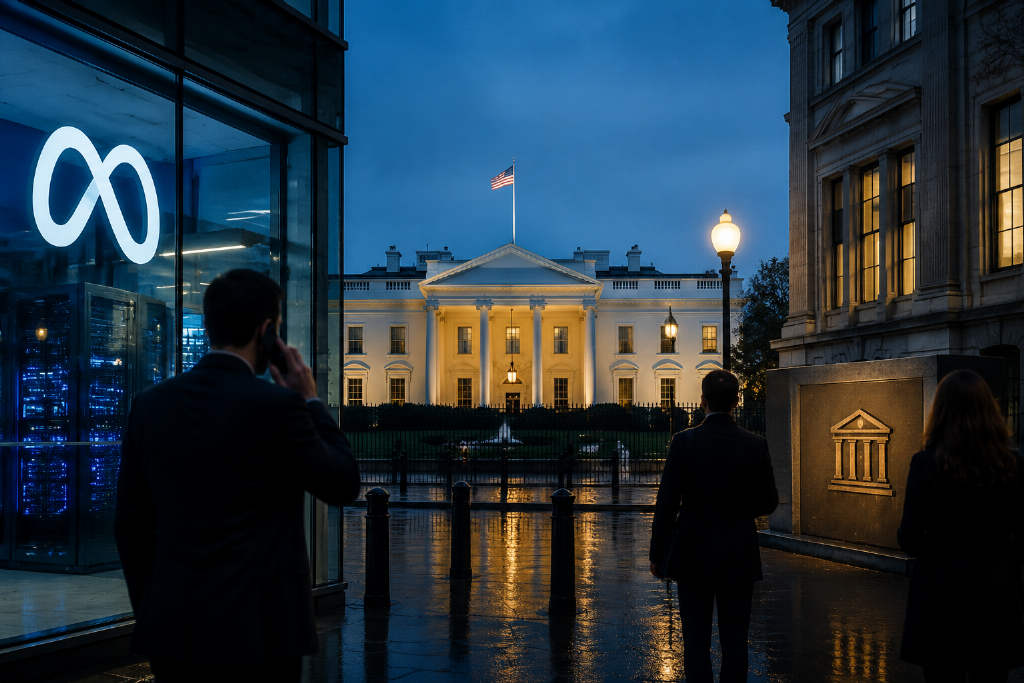
Meta co-founder Mark Zuckerberg told President Donald Trump in a phone call last month that he opposed the creation of a national artificial intelligence regulator, arguing that any such body should adopt a looser approach or risk slowing U.S. competitiveness in AI.
Business Insider, citing people familiar with the matter, reported that the call took place during the week of Aug. 17. Trump initiated the call with the Meta chief, and the two discussed a "FINRA-style" AI regulatory body that the White House is considering.
A FINRA-style model is under discussion at the White House
According to the report, the proposal was first put forward by Google DeepMind CEO Demis Hassabis. It would set up an independent body modeled on the Financial Industry Regulatory Authority, with responsibility for reviewing advanced AI models and conducting risk tests.
The White House said the Trump administration wants to strike a balance between advancing AI innovation and protecting safety. The plan remains under consideration, and officials are also evaluating an alternative built around industry-led self-regulation.
Zuckerberg argued against a bureaucratic regulator
Zuckerberg’s view, according to the report, is that such an agency should reflect the Trump administration’s looser AI regulatory philosophy rather than function as a bureaucratic control point. He said overly strict oversight could slow the pace of AI model releases and hurt the United States in AI competition.
The argument lines up with Meta’s recent internal direction. Earlier this month, Meta executives said the company had dropped AI token usage targets and that 93% of code changes had already been completed by AI agents, while adding that using AI "is not itself the end goal."
The source article also drew a Taiwan industry comparison
The original article said that, in Taiwan’s industrial context, competition in AI models is also driven by first-mover advantage. It said Taiwan has the TSMC supply chain, but that the competitive edge in the software layer of AI comes from open innovation rather than bureaucratic oversight.
The article added that if Taiwan later considers its own AI regulatory framework, one reference point may be to avoid creating an "AI version of a financial inspection bureau" and instead preserve enough flexibility so model iteration is not held up by administrative procedures.