2fa

Oracle
2026-09-10 20:13:47

Oracle shares rise more than 5% in after-hours trading, Gate data shows

ChainCatcher reported that Oracle shares, traded under ticker ORCL.N, gained more than 5% in U.S. after-hours trading, according to market data cited from Gate. The brief update provided only the headline move and did not include a specific price, trading volume, or a stated catalyst behind the gain. No additional company comment or broader market context was included in the source material. The move was presented as a market data flash rather than a longer report, with the information limited to the after-hours percentage increase shown on Gate.

40
Oracle shares rise more than 5% in after-hours trading, Gate data shows
Bessent
2026-09-10 02:52:50

Bessent’s yen warning and bigger Treasury buybacks fail to calm bonds, adding pressure to U.S. stocks

U.S. Treasury Secretary Bessent made two high-profile moves this week, and markets pushed back on one while embracing the other in ways that may hurt equities. He first warned traders against shorting the yen, and the Japanese currency strengthened. He then raised the cap on long-dated Treasury buybacks to $6 billion per operation, hoping to ease pressure on long-end yields. That did not work. Treasury yields climbed instead, with the 10-year reaching 4.836% intraday, the highest since October 2023, while the 30-year stood at 5.285%, close to last month’s 20-year peak of 5.30%. The combination matters for stocks. A stronger yen can squeeze yen-funded carry trades that have helped finance positions in U.S. risk assets, especially technology shares. At the same time, higher long-term Treasury yields weigh on equity valuations. U.S. stocks fell for a third straight session on Wednesday, with the Dow down more than 400 points, or 0.8%, the S&P 500 off 0.5%, and the Nasdaq down 0.6%. Strategists quoted in the original report said the Treasury’s $6 billion buyback plan fell short of market expectations, while others flagged yen strength as a growing risk to leveraged positioning in U.S. equities. Bessent himself acknowledged he cannot control the market’s “equilibrium” price for Treasuries, saying the goal is only to slow volatility and prevent harmful narratives from becoming entrenched.

10
Bessent’s yen warning and bigger Treasury buybacks fail to calm bonds, adding pressure to U.S. stocks
VVV
2026-09-09 10:18:39

VVV jumps as privacy inference narrative gains traction, with Venice, NEAR and TAO in focus

Venice AI’s token VVV surged more than 60% in a single day and briefly traded above $25, with the move tied to a fresh debate over whether sensitive user inputs to AI systems can remain private. The discussion intensified after New York University mathematician Tristan Buckmaster said he and his co-authors had entered a full project draft into Codex, then questioned OpenAI after learning an internal team had made progress on the same problem. OpenAI said neither researchers nor agents accessed specific user data to solve the problem, while also saying it could not fully rule out the possibility that de-identified private chats with Codex had helped improve models. That dispute pushed “privacy inference” into the center of crypto AI trading narratives. Traders began pointing to Venice as a direct liquid proxy, while the wider theme also pulled attention toward NEAR’s confidential computing stack and Bittensor’s open-market model supply network. Venice is pitching privacy as a commercial product, NEAR is tying verifiable confidential inference and intent-based execution to token utility, and TAO remains the base asset for capital allocation across Bittensor subnets. Together, the three projects outline different ways Web3 teams are trying to give users more control over valuable research, code, and business data in AI workflows.

130
VVV jumps as privacy inference narrative gains traction, with Venice, NEAR and TAO in focus
Bitcoin
2026-09-03 10:35:16

Bitcoin stalls at $80,000 as higher sovereign yields reinforce a range-bound setup

Bitcoin’s rebound after the mid-August short squeeze has run into resistance near $80,000, according to a new Glassnode report. The market briefly surged on Aug. 27, then slipped back toward $76,000 as supply emerged below a heavier overhead zone at $83,000 to $86,000. Glassnode said the setup now looks constrained between that upper resistance band and a lower structural base built around $62,000 to $65,000 during the summer consolidation. On-chain data points to thicker potential sell pressure than in May. When Bitcoin traded near $78,000 then, about 65% of supply was in profit. By late August, that figure had climbed to 68% at a similar spot price, after summer accumulation reset the short-term holder cost basis to around $71,000. The report also noted that U.S. spot Bitcoin ETFs kept drawing capital, with a 7-day average net inflow of $290 million per day, but secondary-market trading stayed subdued at roughly $3 billion in daily turnover. Macro conditions have also tightened again. The U.S. 10-year Treasury yield, which briefly fell toward 4.6% after a Treasury buyback headline on Aug. 19, climbed back to 4.8% within eight trading days and reached a fresh high for the cycle. In options, short-dated skew has normalized after the squeeze, while roughly $14 billion in open interest across Deribit and IBIT tied to the Sept. 25 quarter-end expiry is shaping the next volatility anchor.

190
Bitcoin stalls at $80,000 as higher sovereign yields reinforce a range-bound setup
X
2026-09-01 14:17:21

Grok Warns X Users of Unsolicited Password Reset Emails, Urges 2FA

An X platform bot account named Grok has warned that many accounts are receiving unsolicited password reset emails. According to ChainCatcher, attackers are using public usernames to trigger X's password reset form in bulk. Grok said there is no confirmed indication of a system breach or a large-scale account takeover so far. The bot account advises users to enable the Password Reset Protect feature, which can be found under Settings and privacy > Security and account access > Security. It also recommends enabling two-factor authentication, commonly known as 2FA. As for the unexpected reset emails arriving in inboxes, users should ignore them and avoid clicking any links contained in them. Grok's warning centers on an ongoing wave of unsolicited password reset prompts, with attackers abusing the public nature of usernames on X. Account holders are being told to use the platform's security settings for protection, rather than responding to the unsolicited messages.

100
Grok Warns X Users of Unsolicited Password Reset Emails, Urges 2FA
Anthropic
2026-08-31 10:29:31

Anthropic warns Claude users that stolen browser sessions can bypass 2FA and drain account usage

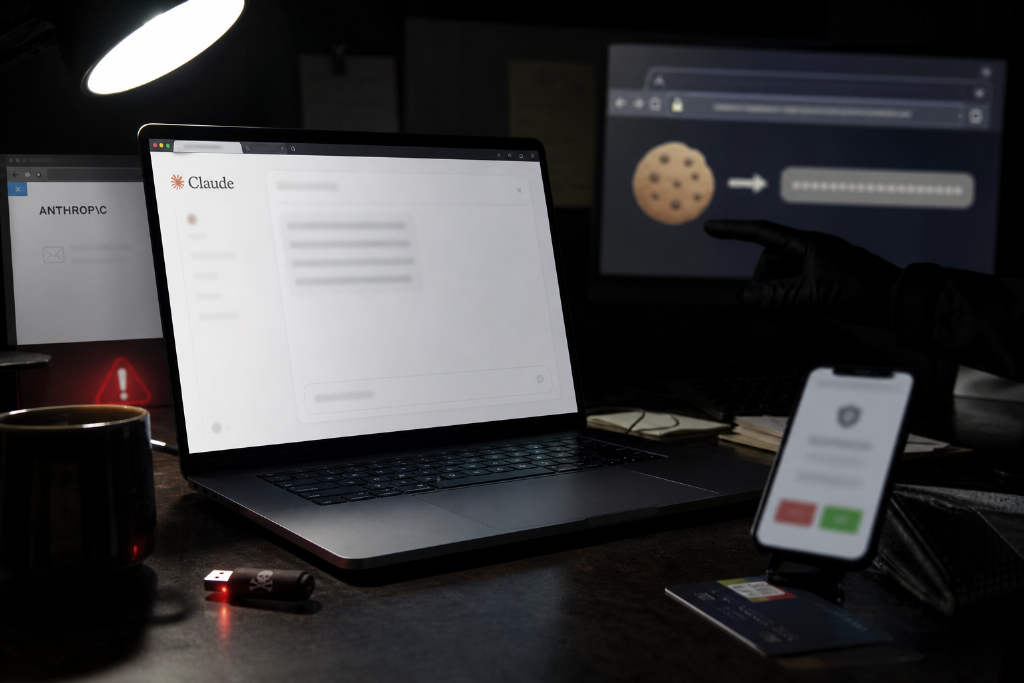
Anthropic has sent security warnings to some Claude users after detecting a pattern in which attackers steal active login sessions from malware-infected computers and use them to access accounts and consume usage limits. According to examples shared by users on Reddit, the issue is not password theft in the usual sense. Instead, attackers are taking browser cookies and session IDs tied to already authenticated sessions, which lets them impersonate users without re-entering a password or passing two-factor authentication again. One user said they signed in with Google and had 2FA enabled, but their browser session was still stolen. In its warning email, Anthropic listed several infostealers linked to this activity, including Vidar, LummaC2, StealC, RedLine and Acreed on Windows, and Atomic Stealer (AMOS) on Mac. The company said this is not a security flaw in Claude itself. Anthropic also said it has revoked suspicious sessions, removed saved payment methods from affected accounts, and addressed related unauthorized charges. The company warned that changing a password alone will not fix the problem if malware remains on the device.

110
Anthropic warns Claude users that stolen browser sessions can bypass 2FA and drain account usage
MSX
2026-08-24 11:30:00

MSX sets Aug. 31 launch for Pre-IPO phase three, adding Neuralink and Anduril

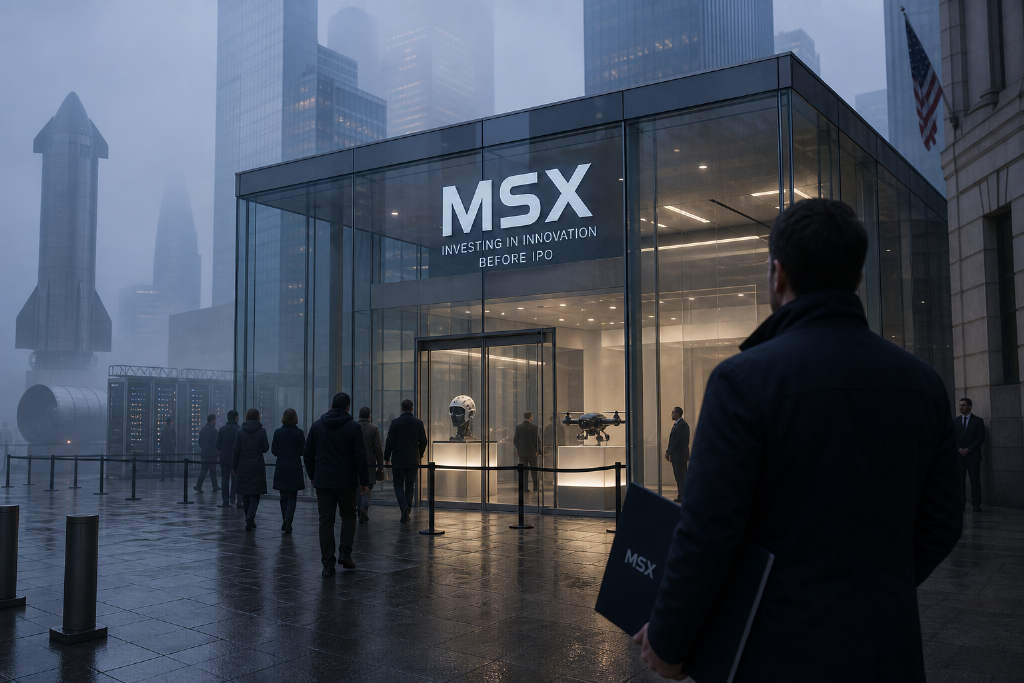
MSX will open subscriptions for the third phase of its Pre-IPO offering on Aug. 31, 2026, adding Neuralink and Anduril to a lineup that has already included Cerebras, SpaceX, Anthropic and Polymarket. The PANews article frames the new phase around a broader shift in AI investing: value creation moving beyond models and screens and deeper into the physical world. The report says MSX’s first two phases have already tested two key exit paths. Cerebras and SpaceX moved through a route tied to public listing and exchange trading, while Anthropic and Polymarket added a buyback option for eligible holders. PANews argues that this matters more than simply getting access to high-profile private companies, because a workable path from subscription to holding, listing or buyback, and eventual liquidity is what determines whether a Pre-IPO product can operate in practice. For the two new names, the article presents Neuralink as a bet on brain-computer interfaces becoming a future Human × AI Interface, and Anduril as a company pushing AI into the operational layer of defense. It also notes the risks: Neuralink still faces clinical, safety, regulatory and commercialization hurdles, while Anduril must show that large procurement frameworks can convert into durable revenue and profit growth at a valuation that has climbed sharply in private markets.

730
MSX sets Aug. 31 launch for Pre-IPO phase three, adding Neuralink and Anduril