ADGM

crypto stocks
2026-08-20 04:51:13

How Major CEXs Are Building Crypto Stock Products Across Brokerage, Tokenized Equities and Perpetuals

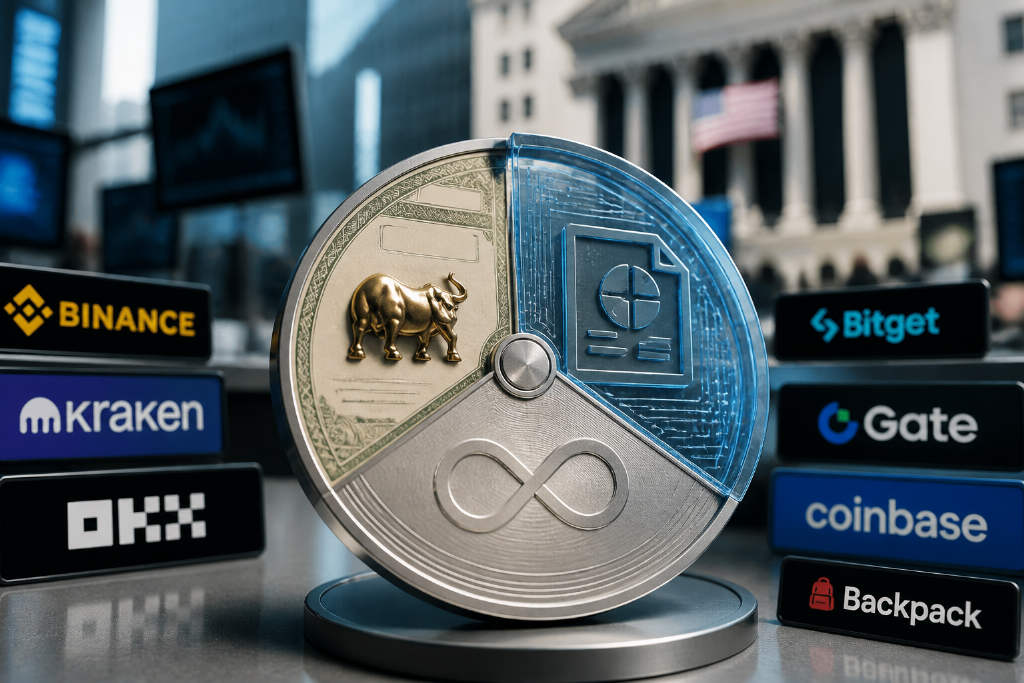
Crypto exchanges are pushing deeper into equities, turning stocks into one of the clearest product expansion paths in this market cycle. CoinGecko data cited in the report shows monthly stock perpetual volume across the top 13 crypto trading platforms climbed from about $831 million in July 2025 to roughly $34 billion in May 2026, a jump of nearly 40 times in less than a year. TradFi and RWA perpetuals spanning stocks, commodities and indexes reached $347.17 billion in May 2026 alone, with year-to-date volume above $1.32 trillion. The landscape is no longer limited to synthetic price exposure. Binance, Kraken, OKX, Bitget, Gate, Coinbase and Backpack are each combining different layers of product infrastructure, including direct access to real U.S. stocks and ETFs, tokenized stocks backed 1:1 by underlying securities, onchain-transferable equity tokens, stock perpetuals, CFDs and pre-IPO contracts. Their structures differ in important ways, especially around custody, investor rights, redemption and whether users actually own shares or only gain economic exposure. The report argues that crypto stocks remain early relative to traditional equity markets, with CoinGecko data indicating activity in crypto stock derivatives is still less than 1% of traditional stock market volume. Even so, the segment is moving from a niche RWA experiment toward a core competitive arena for centralized exchanges that want to extend from crypto into broader financial trading.

930
How Major CEXs Are Building Crypto Stock Products Across Brokerage, Tokenized Equities and Perpetuals
crypto stocks
2026-08-20 05:03:01

How Major CEXs Are Building Crypto Stock Products Across Brokerage, Tokenization and Perpetuals

Crypto stock products are turning into one of the clearest expansion paths for centralized exchanges as they push beyond digital assets and into traditional finance. The competitive set is no longer limited to synthetic price exposure. By 2026, major platforms had rolled out a mix of real stock brokerage, tokenized equities, stock perpetuals, CFDs and pre-IPO products, often inside a single account system. According to CoinGecko figures cited in the source article, monthly trading volume for stock perpetuals across the top 13 crypto trading platforms climbed from about $831 million in July 2025 to roughly $34 billion in May 2026, an increase of nearly 40 times in less than a year. The article also notes that cumulative stock-perpetual volume in the first five months of 2026 had already surpassed the whole of 2025. On the tokenized spot side, xStocks had logged more than $35 billion in cumulative trading volume by July 2026 and nearly 200,000 holders globally, while expanding beyond U.S. stocks and ETFs into Hong Kong, the U.K., Europe and South Korea. The report reviews how Binance, OKX, Bitget, Gate, Kraken, Coinbase and Backpack approach the market through different legal and product structures. It argues that the category now spans four distinct models: traditional brokerage access to real shares, tokenized securities backed by underlying stocks, total-return or synthetic equity tokens, and stock perpetuals or CFDs that do not require 1:1 share backing. The result is a market that is still early by global equity standards, yet increasingly central to how exchanges compete for the next phase of user growth.

500
How Major CEXs Are Building Crypto Stock Products Across Brokerage, Tokenization and Perpetuals
RWA
2026-08-14 10:25:00

RWA Weekly: Hong Kong’s regulated HKD stablecoin moves into rollout as the EU prepares MiCA access changes

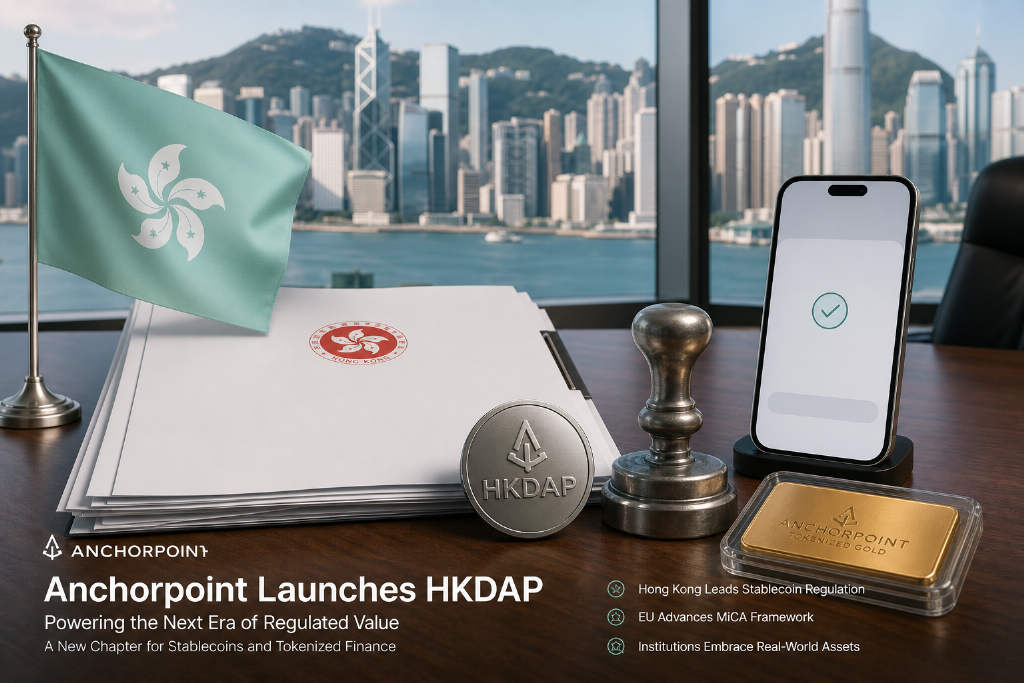
Real-world asset activity and stablecoin policy both moved this week. As of Aug. 14, 2026, on-chain RWA market capitalization reached $38.29 billion, while the number of holders climbed to 1.7935 million, according to RWA.xyz data cited by PANews. In stablecoins, total market value slipped slightly to $297.91 billion, but transfer volume and monthly active addresses both fell, pointing to a quieter on-chain period even as holder counts kept growing. On the policy side, the People’s Bank of China said in its 15th Five-Year reform and development plan that it will steadily develop the digital yuan. In Europe, officials decided to revise the Markets in Crypto-Assets framework, or MiCA, with a focus on the market access rules that have left non-EU stablecoin issuers such as Tether outside the bloc. The U.K. advanced the second phase of its digital pound lab and also began work on a regulatory framework for tokenized gold. At the project level, Anchorpoint, the Hong Kong licensed stablecoin issuer backed by Standard Chartered, HKT and Animoca Brands, launched the first phase of issuance and institutional use for HKDAP. HashKey Exchange and OSL joined as recognized distributors. Elsewhere, NYSE, Itaú Unibanco, Coinbase, LG CNS, Miden, Dow Protocol and Rain each disclosed new tokenization, stablecoin or funding developments during the week.

780
RWA Weekly: Hong Kong’s regulated HKD stablecoin moves into rollout as the EU prepares MiCA access changes
Fidelity
2026-08-14 01:59:25

Fidelity seeks staking for FETH as Anthropic investors float a possible $2 trillion-plus IPO valuation

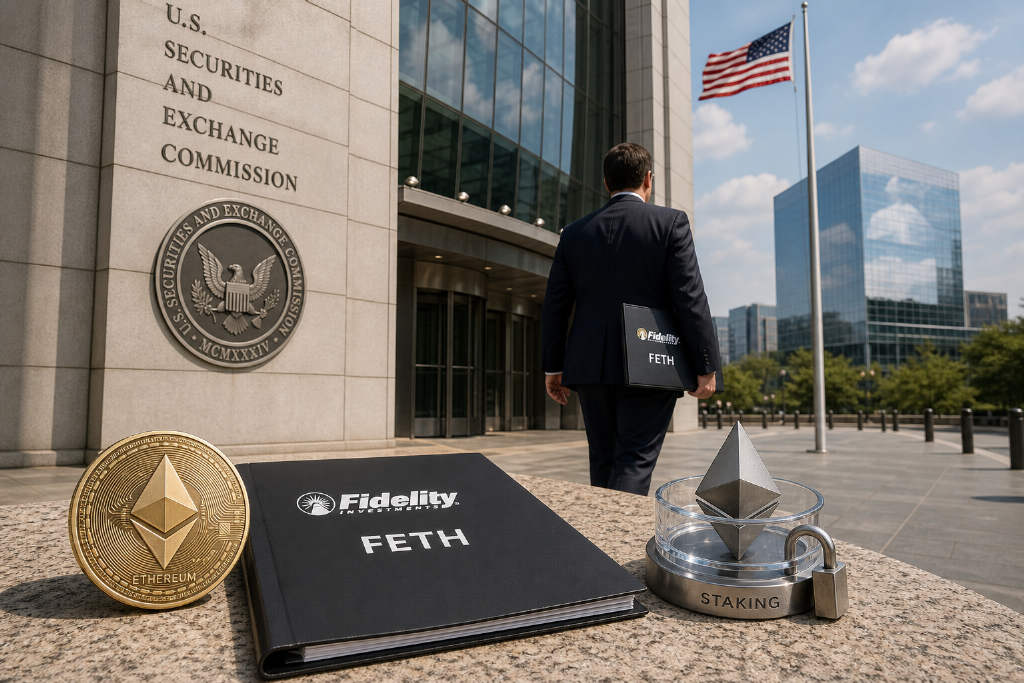
A dense 24-hour news cycle brought fresh filings, earnings, market calls and regulatory signals across crypto and adjacent tech markets. Fidelity filed an amended registration statement with the U.S. Securities and Exchange Commission on Aug. 11 to add ETH staking to its spot Ethereum ETF, the Fidelity Ethereum Fund (FETH). Under normal conditions, the fund said it could stake as much as 100% of the ETH it holds, with no minimum staking threshold, and its investment objective would change to include staking rewards if approved. Elsewhere, some existing Anthropic investors said the AI company could be valued at more than $2 trillion if it goes public as early as October, with one investor putting the upside case at $3 trillion based on a roughly 30x revenue multiple. The estimates remain investor forecasts, and several investors said Anthropic management has not set an IPO valuation target. The session also featured quarterly updates from Bullish, BitGo and Securitize, new SEC steps around tokenized fund operations and tokenized equities, ETF flow data for Bitcoin and Ethereum products, and a series of policy, infrastructure and security developments spanning Europe, the U.K., Brazil and the U.S.

770
Fidelity seeks staking for FETH as Anthropic investors float a possible $2 trillion-plus IPO valuation
tokenized sto
2026-08-13 12:50:25

Tokenized stocks are turning into a three-front contest across issuance, distribution and settlement

The tokenized stock market has expanded quickly over the past few months, but the fight is no longer just about attracting users who want equity exposure on-chain. The sharper contest is happening across three separate functions: issuance, distribution and clearing. According to RWA.xyz data cited in the report, the market stood at about $2.5 billion as of Aug. 12, with Ondo leading at roughly $866 million, Binance’s bStocks at about $614 million, and xStocks at around $560 million. Together, the top three accounted for about 80% of the market. The report argues that early independent issuers built an initial lead, but exchanges that control traffic and liquidity are now moving upstream by launching their own issuance brands. Binance’s bStocks rose to the No. 2 spot in less than two months, while Bitget and Gate have also built in-house products. At the same time, broker-connected stock access is gaining traction because users receive direct ownership of real shares, along with dividends, corporate actions and SIPC protection. Binance’s cash equities offering, for example, averaged about $143 million in daily trading over its first nine days, versus a peak weekday range of roughly $35 million to $40 million in the tokenized spot market during the same period. The piece also notes that new models, including directly registered shares on-chain, could reshape today’s structure again.

260
Tokenized stocks are turning into a three-front contest across issuance, distribution and settlement
Market Analys
2026-08-12 03:03:43

Three veteran traders say speed, liquidity and capital efficiency now define stock trading on crypto platforms

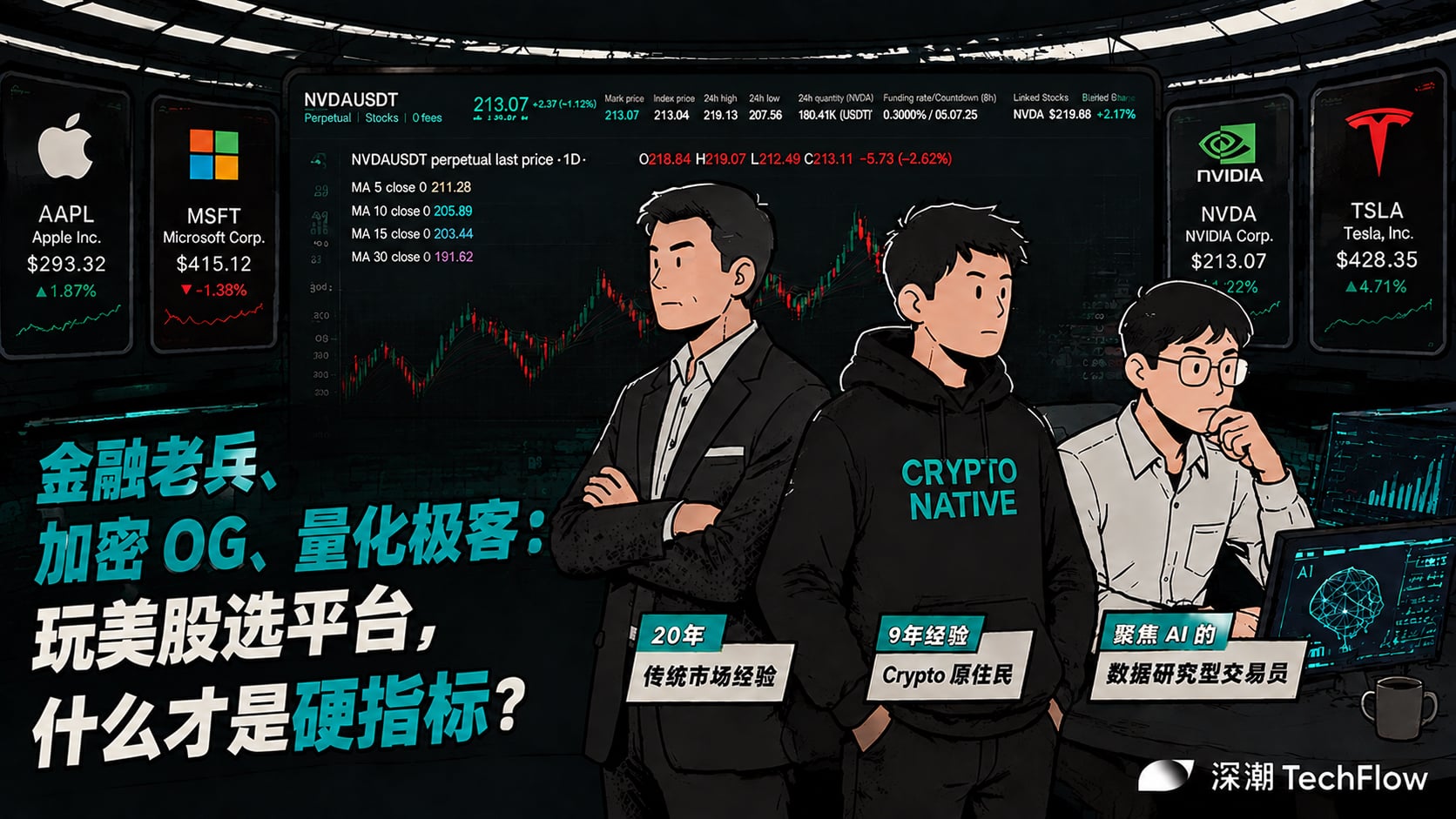
A long-form report by TechFlowPost argues that U.S. stock trading is shifting from legacy broker systems to crypto-native platforms, with little sign of reversal. Based on interviews with three experienced market participants — Rocky, Bean Ge and Xiadie Haida — the piece maps out what traders now treat as hard metrics when choosing a venue for equities: execution speed, order-book depth, total transaction cost, market-hours flexibility, information delivery and capital efficiency. The report says trading on centralized crypto exchanges is moving from a trial experience to a daily habit for some active users, especially during earnings season, when after-hours price moves can define outcomes. Bean Ge focuses on latency, liquidity and news tools; Xiadie Haida highlights 24/7 access, faster reaction to headlines and broader symbol coverage; Rocky looks beyond simple buy-and-sell access to how tokenized stocks can be used for yield, collateral and borrowing. TechFlowPost also reviews current platform positioning. Binance, OKX and Bitget are all expanding stock-related products, but with different emphasis across ecosystem integration, compliance, API access, tokenized products and AI-driven trading tools. The article further notes market projections cited by Rocky, who believes tokenized equities could reach a 10% penetration rate of the global stock market within three years, while regulation, transparency and on-chain composability remain central to broader adoption.

1080
Three veteran traders say speed, liquidity and capital efficiency now define stock trading on crypto platforms
Binance
2026-08-11 12:50:57

Binance pushes deeper into equities with broker transfers and stock perpetuals

Binance is expanding on two fronts at once: bringing real stock holdings from brokers such as Interactive Brokers into Binance accounts, and listing perpetual contracts tied to Hong Kong and Asian equities. According to the article, users can now submit details such as their full account name and a delivering broker’s DTC number to move real holdings into Binance, while an incentive program running from Aug. 11 to Sept. 30 offers a share of 300,000 USDC for U.S. stock transfers. At the same time, Binance and other major exchanges including Gate, OKX, Bitget, Hyperliquid, Bybit, and Coinbase are broadening stock and index perpetual offerings covering names in Hong Kong, South Korea, Japan, and mainland China-related markets. The piece argues that these two tracks serve the same direction: exchanges become a unified venue for trading both tokenized real-world securities and synthetic price exposure, reducing the role banks and traditional brokers used to play in the path between capital and markets. The report also highlights the trade-off. Tokenized equities such as bStocks, issued by BTech Holdings Limited under an Abu Dhabi Global Market framework, differ sharply from USDT-settled stock perpetuals that offer only price exposure. Past regulatory pressure on Binance in 2021 and scrutiny of Robinhood’s tokenized stock products in 2025 show that legal boundaries remain unsettled, especially around whether tokens are backed by real assets and what protections apply in each jurisdiction.

1240
Binance pushes deeper into equities with broker transfers and stock perpetuals
Coinbase
2026-08-11 10:07:00

Coinbase Secures Abu Dhabi License to Launch Global Securities Tokenization Hub

Coinbase has secured a financial services permit from Abu Dhabi Global Market's Financial Services Regulatory Authority and will set up an international securities tokenization center in ADGM. The center will provide investment matching and custody services and issue security tokens fully backed by underlying stocks. Token-holding addresses receive shareholder dividend and voting rights. Investors can participate with only a wallet, with no securities account or bank relationship required. All transfers will go through sanctions screening, and the platform can freeze or seize assets at the wallet level. Coinbase says the center will act as its on-chain capital market and tokenization infrastructure in Abu Dhabi, forming, with its global derivatives business in Dubai, two major overseas hubs in the UAE. PANews reported the news on Aug. 11.

1070
Coinbase Secures Abu Dhabi License to Launch Global Securities Tokenization Hub