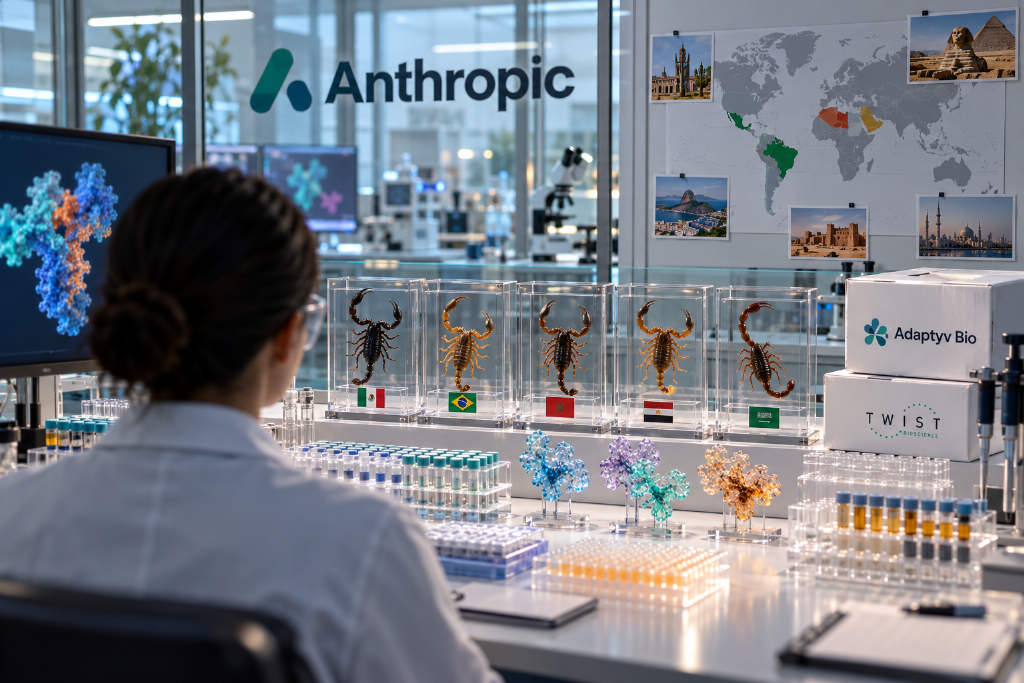
Anthropic2026-10-20 17:12:15Anthropic says Claude-designed scorpion toxin binders produced 17 hits from 211 lab-tested candidatesAnthropic said its internal research model, running in the Claude Science environment, designed minibinders for five scorpion neurotoxins in about 64 hours, producing 318,484 protein designs and screening roughly 553,052 design-toxin pairs. After narrowing the set, 211 candidates were sent to Adaptyv Bio and Twist Bioscience for surface plasmon resonance testing, with 17 meeting the company’s binding threshold. All successful designs were single-toxin binders: seven for Cn2, four for AaH II, four for AaH I, and two for LqhIII, while Ts1 produced no qualifying hits. Anthropic said the work was done with Citrini Research and focused on toxins known to threaten humans in regions including Mexico, Brazil, North Africa, and the Middle East. The company also cited scorpion stings as affecting more than 1.2 million people each year and causing more than 3,250 deaths. The company drew a clear line around what the results do and do not show. Anthropic said the study only confirmed binding to recombinant toxins and did not establish cell-level neutralization or animal protection. It said it is not claiming to have produced an antivenom. External reviewers Susana Vázquez Torres and Timothy P. Jenkins described the work as a promising first step, while noting that efficacy, safety, affordability, and access remain major hurdles after binding is achieved.30
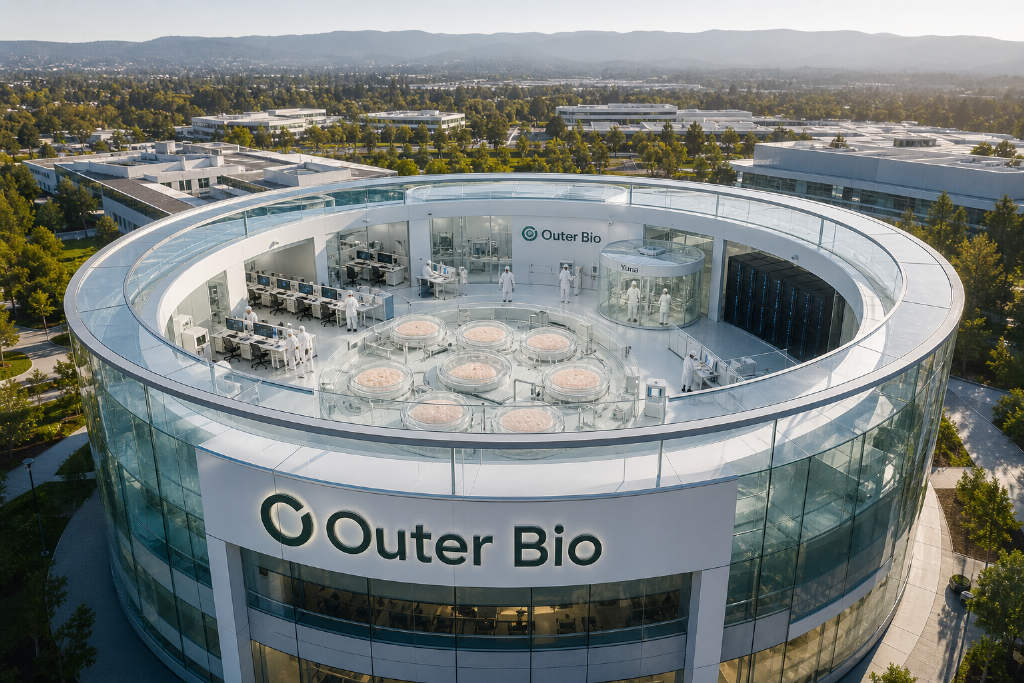
Outer Bio2026-08-25 14:17:50Outer Bio, backed by Lady Gaga, raises $23 million to train AI on living human skinOuter Bio, an AI biotech startup linked to Lady Gaga, has made its public debut and said it raised about $23 million. The company’s Yuna platform keeps donated human skin alive outside the body for four weeks and uses the tissue’s response to drugs or ingredients to train machine-learning models. Co-founder and CEO Michael Polansky said biology data, not compute, is now the bottleneck for AI progress. Outer Bio said its platform has logged more than 10,000 treatment data points from over 300 donors, with each sample generating more than 30,000 measurements. The company is currently offering access to biopharma teams and consumer brands, and says the technology is meant to provide a human alternative that could help regulators reduce unnecessary animal testing. Europe has banned the sale of cosmetics tested on animals since 2013.1010