AST

Elon Musk
2026-08-14 08:12:12

Musk says memory, not compute, is the real bottleneck for AI agents

Elon Musk backed a claim on X that memory, rather than raw compute, is the real rate-limiting factor in the age of AI agents, replying that 「Few realize this.」 The point is one he has made repeatedly this year. According to the source material, Musk raised the issue at Tesla’s first-quarter earnings call on April 22, echoed complaints about memory price inflation in late June, and then gave a sharper figure at SpaceX’s Q2 earnings call in early August: memory capacity is growing about 20% a year, while demand is rising 200% or more. The report ties that view to a broader shift in AI infrastructure. As agentic systems hold much larger context windows and persistent task histories, KV cache becomes a bigger memory burden. With HBM still expensive and tight in supply, companies are moving more context data down the memory stack into NAND and storage. NVIDIA’s Inference Context Memory Storage Platform, introduced at CES, is cited as one example, using Dynamo and NIXL to place KV cache on NVMe SSDs. The same report also tracks how markets are reading the memory cycle. Korean brokerages cut target prices for Samsung Electronics and SK hynix on concerns that the conventional memory upcycle may have peaked, while Sandisk later issued long-term revenue growth guidance that helped memory shares rebound across Asia.


1380
Musk says memory, not compute, is the real bottleneck for AI agents
South Korea
2026-08-12 08:49:53

Tiger Research says roughly KRW 700 trillion in crypto capital has moved offshore from South Korea

A report by Tiger Research, produced with Chainalysis data, argues that South Korea is losing crypto activity, revenue, and product-building capacity to offshore venues as local investors seek products unavailable at home. By tracking roughly 120,000 wallets linked to Korean users, the study estimates that around KRW 700 trillion, or about $530 billion, flowed from Korean exchanges to overseas platforms between 2021 and 2026. The report says the migration does not stop at centralized exchanges. Korean-linked wallets were also active in decentralized derivatives trading, prediction markets, and crypto card spending, showing that unmet demand has spread across the broader on-chain economy. Tiger Research estimates that Korean users generated about $3.5 billion in fees for overseas exchanges in 2025 and another $900 million in the first half of 2026. The report argues that foreign operators are gaining not only fee income, but also customer relationships, trading data, and operational know-how. It adds that South Korea still has a window to respond, but says any reversal would require both a market structure that can retain capital domestically and clearer rules that reduce friction for funds returning from offshore venues.

1710
Tiger Research says roughly KRW 700 trillion in crypto capital has moved offshore from South Korea
Perp DEX
2026-08-12 03:28:11

Perp DEX Growth Was Bought With Token Incentives. The Real Test Starts After TGE

A Foresight News analysis argues that the rise of perpetual DEXs has been driven in large part by token incentives, especially during the cold-start phase when platforms need traders, liquidity providers and distribution channels at the same time. Before token generation events, points programs, airdrops and trading mining help pull in volume and liquidity by offering claims on future token value. After TGE, fee revenue often shifts into buybacks, burns and staking rewards, sending value back into the ecosystem, but still largely through the exchange token itself. The piece says the core issue is not whether incentives should exist, but whether rewards match actual market contribution. It reviews how dYdX, Hyperliquid, Aster and Lighter structured early growth, and argues that post-TGE performance is the first real test of whether incentive-fueled attention can turn into durable trading relationships. It also points to data showing that token holding, yield participation and derivatives trading are not the same kind of demand. From Foresight Ventures’ investment perspective, PopDEX is presented as an alternative approach. Rather than making token expectation the starting point of growth or requiring token holding as a condition for trading rights, PopDEX is described as building a framework in which 100% of distributable value created by trading fees flows back according to real contribution, with more details to be disclosed in later product stages.

1760
Perp DEX Growth Was Bought With Token Incentives. The Real Test Starts After TGE
Crypto Market
2026-08-12 02:28:09

Crypto Market Flat as CeFi Rises Nearly 2%, NFT Sector Drops Over 6%

According to SoSoValue, the cryptocurrency market remained in a narrow range on Aug. 12. Bitcoin (BTC) declined 0.30% to trade around $63,000, while Ethereum (ETH) gained 0.44% to hold near $1,800. The CeFi sector delivered the strongest performance, rising 1.89% in 24 hours. Binance Coin (BNB) advanced 3.12%, and Aster (ASTER) rose 1.00%. Other sectors also posted gains: Layer1 was up 1.22% with Canton Network (CC) adding 3.40%; the Meme sector rose 0.76% with Dogecoin (DOGE) up 3.04%; and PayFi increased 0.15% as Trust Wallet (TWT) jumped 5.72%. On the losing side, the NFT sector fell more than 6%. DeFi dropped 0.41%, although Chainlink (LINK) surged 3.99%. Layer2 declined 1.70%, but ImmutableX (IMX) held up with a gain of 1.79%. Meanwhile, sector indexes ssiCeFi, ssiAI and ssiMeme rose 2.64%, 2.26% and 1.74%, respectively.

1780
Crypto Market Flat as CeFi Rises Nearly 2%, NFT Sector Drops Over 6%
binance-spot
2026-08-11 20:30:17

Binance Spot Data: EPIC Slumps 22.56%, DODO Rebounds 7.79%

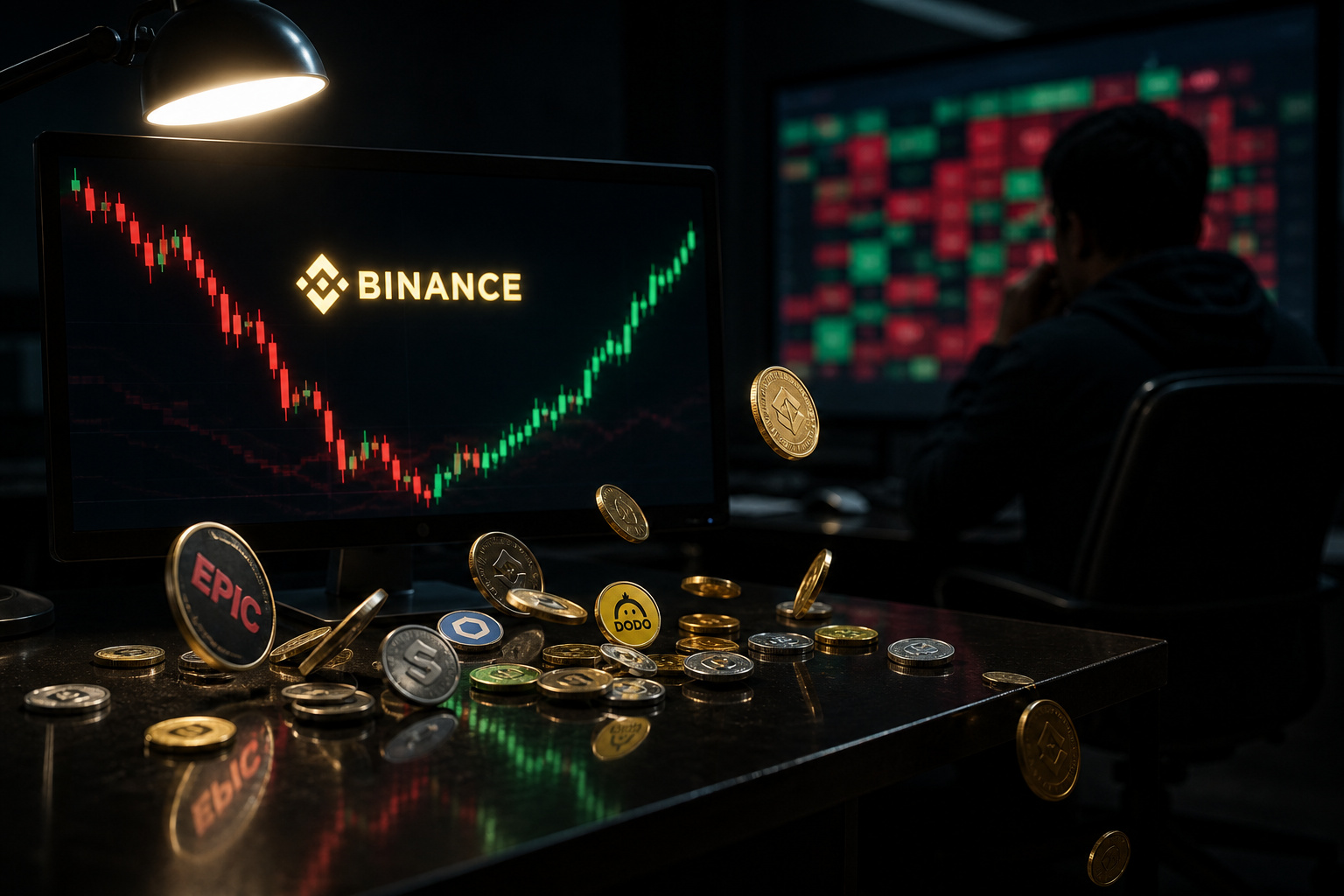
ChainCatcher reports that Binance spot market data shows significant volatility across the cryptocurrency market. EPIC recorded a 22.56% decline over the past 24 hours, the steepest drop among the tokens tracked in the latest data. DODO gained 7.79% and displayed a bottom-rebound pattern during the same window, having dipped before recovering. Three other tokens — OSMO, RE and ENSO — all followed a spike-then-pullback path, ending the period lower by 6.75%, 5.51% and 5.23% respectively, according to the same Binance spot figures. Meanwhile, ASTSB rose 6.53% and LSK advanced 9.41%, with both touching new intraday highs during the session. The data, published by ChainCatcher on Aug. 11, shows a sharply diverging market where several assets sold off hard while others pushed to fresh highs within the same trading window.

1850
Binance Spot Data: EPIC Slumps 22.56%, DODO Rebounds 7.79%
Aster
2026-08-11 14:47:03

Aster Activates AOS-2, Opening Perpetual Listings to Public Standard

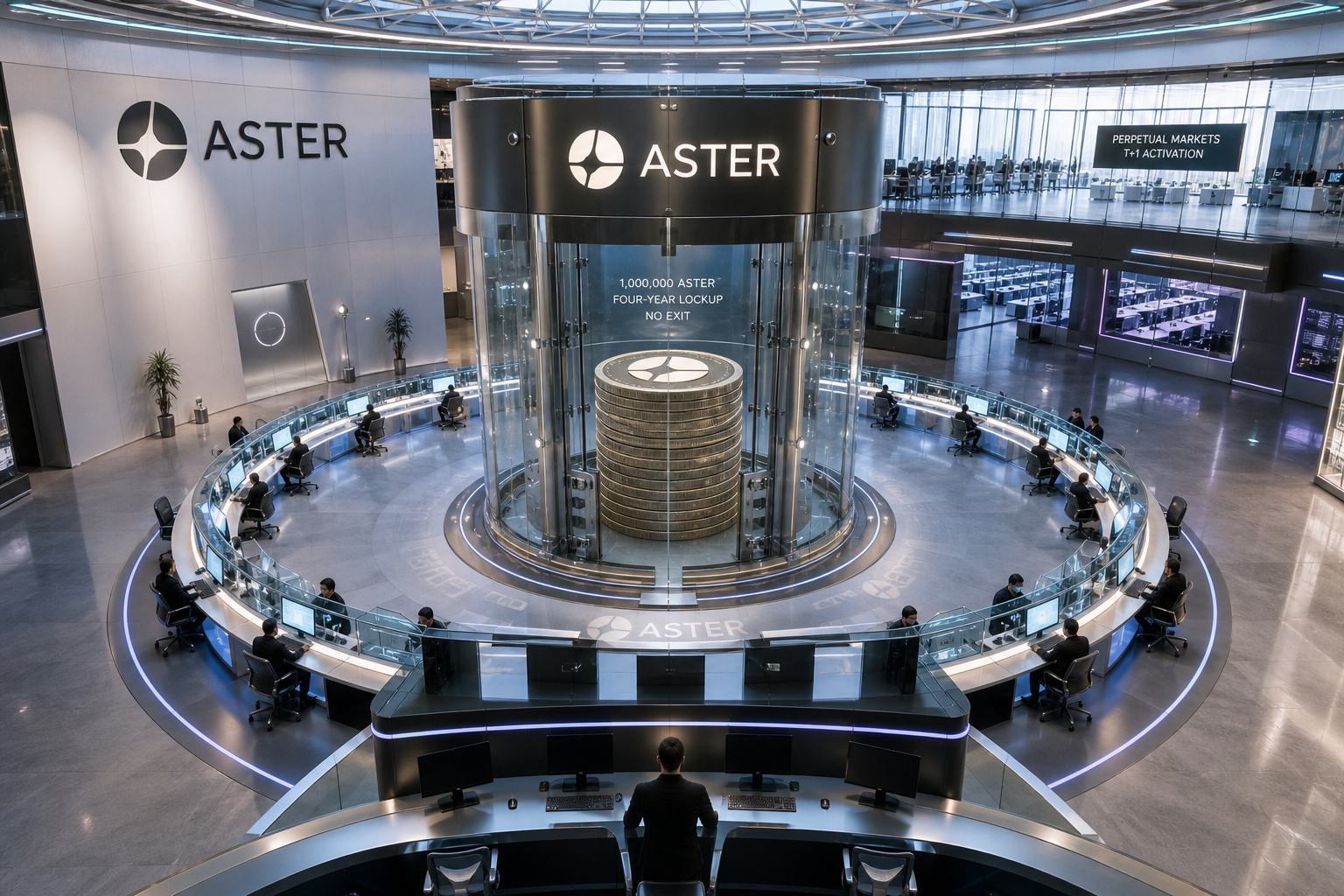
ChainCatcher reports that Aster has officially activated AOS-2, the next stage of its asset-listing framework. AOS-1 had already opened spot listings to projects meeting public criteria; AOS-2 now applies that same principle to perpetual markets, which have traditionally relied on private listing negotiations. Under the new rules, an eligible applicant must stake 1,000,000 ASTER, with the tokens locked for four years and no early exit channel. After the stake is in place, the application proceeds to an on-chain validator vote. If the vote passes, Aster's risk control team completes the market configuration and the perpetual contract goes live on T+1. If the vote fails, the locked stake is returned in full. For each new market, leverage and other risk parameters are set by Aster's risk control system, with public rules and decisions recorded on-chain. Aster also noted that AOS-3 will be introduced at a later stage. The new framework replaces the old private-negotiation path for perpetual listings.

1980
Aster Activates AOS-2, Opening Perpetual Listings to Public Standard
Perp DEX
2026-08-11 11:01:11

Foresight Ventures says Perp DEX incentives need an alternative beyond token-centric models

Foresight Ventures argues that perpetual DEX growth has relied heavily on token incentives, but the core issue is not whether incentives should exist. In its view, the bigger question is how those incentives are structured and whether rewards actually match real economic contribution. Before token generation events, many platforms use points, airdrops and trading mining to pull in order flow and liquidity with the promise of future token value. After TGE, fee revenue often shifts into buybacks, burns and staking rewards, which sends value back into the ecosystem but still routes distribution through the platform token. The firm reviews models used by dYdX, Hyperliquid, Aster and Lighter, and argues that points-based growth can blur the line between genuine trading demand and reward-driven activity. It also highlights post-TGE data as a pressure test for whether users stay once incentive expectations fade. The article then examines fee recycling and token buybacks, noting that token ownership, wealth management participation and derivatives trading do not necessarily represent the same kind of demand. Using PopDEX as an example, Foresight Ventures presents a different framework in which distributable value generated by trading fees is directed more explicitly toward real contributors and actual traders rather than being used first to support the platform token.

1880
Foresight Ventures says Perp DEX incentives need an alternative beyond token-centric models
Market Analys
2026-08-10 02:12:36

Aug. 10 Crypto Market Wrap: Unitree Robotics Opens STAR IPO Subscription, CLARITY Act Odds Fall to 21%

Crypto markets on Aug. 10 were driven by a mix of trading data, policy signals, corporate developments and geopolitical headlines. On centralized exchanges, BMT and TUT posted the largest gains among the top 10 tokens by trading volume, while OKX’s 24-hour leaderboard was led by BOME and PEOPLE. On-chain, GMGN’s most watched meme tokens were TODA, REMUS, LOUIE, RISK and PUMPGUY. Away from the tape, Unitree Robotics officially opened subscriptions for its STAR Market IPO, with the market estimating an allotment rate of just 0.02% to 0.03%. In U.S. crypto legislation, Polymarket data showed the probability of the CLARITY Act becoming law by Dec. 31 had dropped to 21%, while Senate procedure points to a first cloture vote on Sept. 15. Industry updates included Bithumb restricting deposits and withdrawals tied to three entities sanctioned by the U.S. Treasury’s Office of Foreign Assets Control, fresh data showing more than 100 crypto projects have shut down or filed for bankruptcy in 2026 so far, and DeFiLlama figures showing Pump.fun’s 30-day protocol revenue moved ahead of Hyperliquid. Separate updates covered Strategy’s lack of Bitcoin purchases since June, a $10.5 million seed round for Dow Protocol, and proposed South Korean tax and VASP rule changes.

1910
Aug. 10 Crypto Market Wrap: Unitree Robotics Opens STAR IPO Subscription, CLARITY Act Odds Fall to 21%