B2C2

crypto market
2026-09-21 10:22:01

Crypto market-making reshuffle: GSR gains Standard Chartered backing as concentration rises

A BigTime industry review says crypto market making is becoming more institutional even as trading volumes have cooled from their September 2025 peak. The report points to three broad trends: weaker conditions are pushing smaller firms out and lifting concentration, traditional finance is buying into established crypto firms to gain market access and operating capability, and leading market makers are expanding into broader crypto capital-markets businesses. GSR sits at the center of that shift. BigTime describes the firm as a long-standing market maker that has added cross-jurisdiction licensing, brought in Standard Chartered’s SC Ventures as its first external strategic shareholder, and moved into ETFs and advisory work. The report also notes that derivatives now dominate trading activity, institutional trading accounts for 72% of the market, and crypto ETF assets are nearing $100 billion. The piece compares major players, flags the mixed post-listing performance of firms such as Circle, Bullish, Gemini and CoinShares, and argues that valuation ranges may be more useful than point estimates for this segment. It also says tokenized real-world assets and related products are becoming a shared expansion path for top firms including GSR and Wintermute.


210
Crypto market-making reshuffle: GSR gains Standard Chartered backing as concentration rises
crypto market
2026-09-21 08:08:12

BigTime maps the crypto market-making sector, with GSR and rival firms shifting toward institutional business

BigTime has published a sector report on crypto market makers, arguing that the business is being reshaped by lower trading activity, rising institutional participation and a broader push into capital-markets services. The report says overall trading volume has kept falling from its September 2025 peak, while institutional trading share has climbed to a record 72%. It also points to derivatives activity, near-$100 billion ETF assets and a record stablecoin supply as signs that market structure is no longer retail-led. The report outlines several industry trends. It says the post-crash shakeout after the October 2025 sell-off increased concentration among market makers, while banks are increasingly using equity stakes and partnerships to gain crypto capabilities rather than building market-making desks themselves. Standard Chartered’s SC Ventures investment in GSR is cited as a leading example, alongside ties involving B2C2, FalconX and SBI. BigTime also highlights FalconX’s IPO filing in May 2026 and compares it with the sharply mixed post-listing performance of Circle, Bullish, Gemini and CoinShares. On strategy, the report says leading firms including Wintermute and GSR are moving beyond pure market making into brokerage, ETFs, tokenized assets and advisory work, effectively positioning themselves as broader crypto capital-markets platforms.

190
BigTime maps the crypto market-making sector, with GSR and rival firms shifting toward institutional business
Gemini
2026-09-20 14:54:48

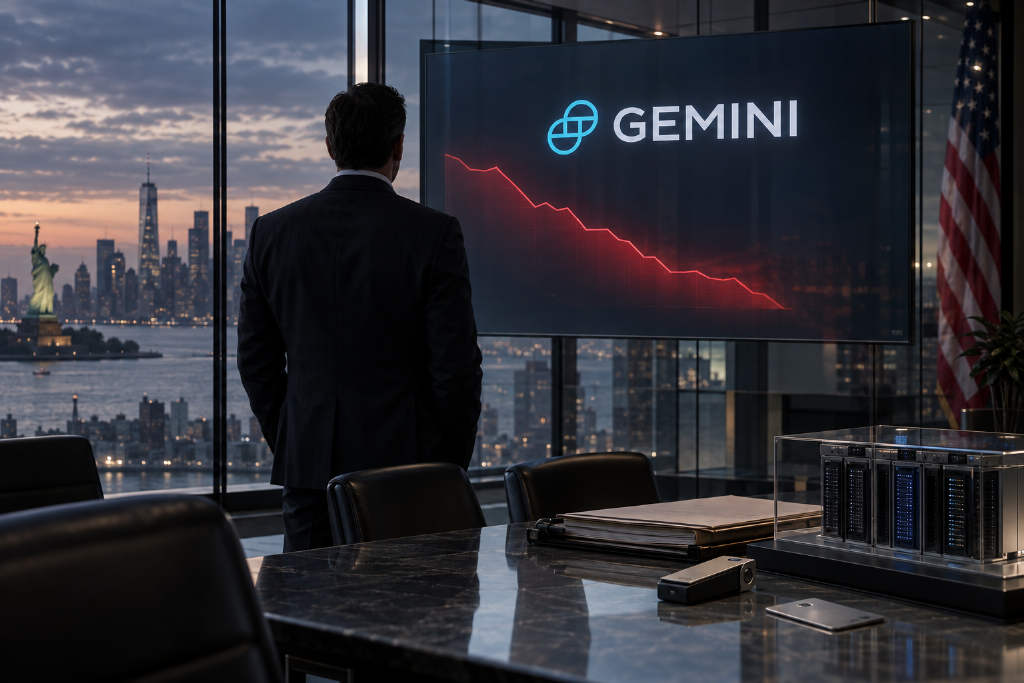
Gemini’s 80% post-listing slide puts takeover talk back in focus

Gemini’s stock has fallen about 80% since its public debut, cutting the crypto platform’s market value from roughly $4 billion at its peak to about $753 million. That drop has revived discussion over whether the company could become an acquisition target, not because of the strength of its shrinking spot-exchange business, but because of the regulatory licenses, custody infrastructure and customer relationships a buyer could gain. CoinDesk reported that there is no sign of an active bid. Still, Gemini may appeal to a company looking for a regulated U.S. foothold. ARK Invest digital assets research director Lorenzo Valente argued in a post on X last month that Hyperliquid should buy Gemini and use it as a U.S. gateway for perpetual futures and prediction markets, though the report said there is no indication Hyperliquid is pursuing such a deal. Gemini’s latest operating figures show pressure across the business. Second-quarter exchange revenue fell 38% year over year to $12.5 million, spot trading volume dropped 66% to $3.8 billion, and assets on the platform declined from $18.2 billion to $8.4 billion. At the same time, Cameron and Tyler Winklevoss control 94.5% of Gemini’s voting power, a structure that could simplify negotiations but also makes any sale dependent on their approval.

270
Gemini’s 80% post-listing slide puts takeover talk back in focus
Circle
2026-09-14 13:40:30

Circle to launch Arc public mainnet on Sept. 16 with USDC gas and a validator set led by global finance firms

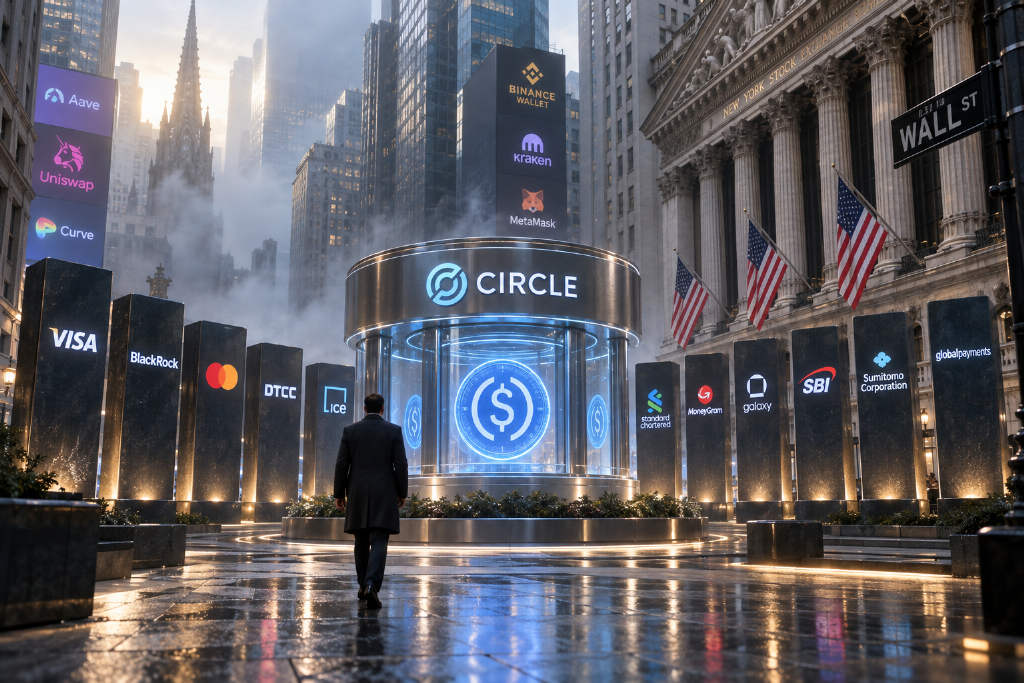
Circle is set to open the Arc public mainnet on Sept. 16, positioning the network as an economic operating system for internet-based finance rather than another generic Layer 1 blockchain. The project stands out for three design choices disclosed in the source article: USDC serves as the native gas token, transaction finality is deterministic and reaches sub-second speed through the Malachite consensus engine, and the execution layer is EVM-compatible while offering an optional privacy layer built for compliance and auditability. The validator roster at genesis includes BlackRock, DTCC, Intercontinental Exchange, Visa, Mastercard, Standard Chartered, MoneyGram, Galaxy, Sumitomo Corporation, SBI Group, and Global Payments. Circle has also outlined a day-one ecosystem spanning DeFi, payments, wallets, and exchanges, with names such as Aave, Uniswap, Curve, Morpho, Aerodrome, Binance Wallet, Kraken, Ledger, MetaMask, Upbit, Rain, Thunes, and Wirex. According to the article, Circle’s May 2026 white paper set ARC’s initial supply at 10 billion tokens, with 60% allocated to the ecosystem and an expected annual issuance rate of 2% to 3%. The piece also cited Cryptonomist as saying ARC presale financing reached $222 million at a $3 billion valuation, led by a16z crypto, with BlackRock and Apollo participating.

1120
Circle to launch Arc public mainnet on Sept. 16 with USDC gas and a validator set led by global finance firms
Fasset
2026-08-24 05:19:45

Fasset tops $1 billion valuation after $68 million SBI-led round

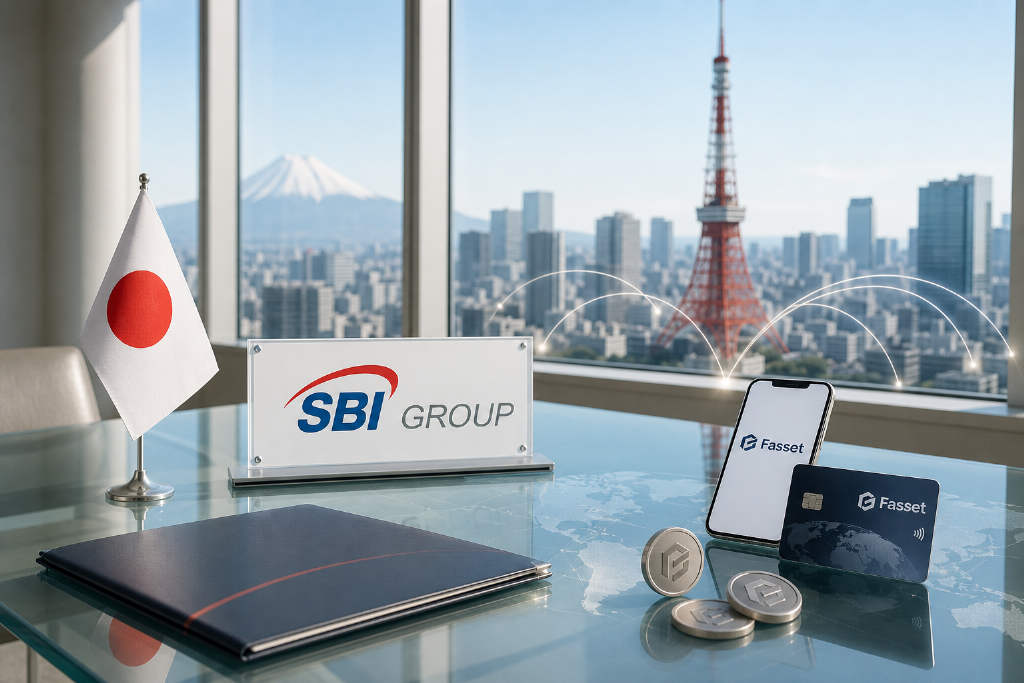
Stablecoin banking platform Fasset has raised $68 million in a funding round led by Japan’s SBI Group, pushing its valuation above $1 billion just three months after its previous raise. The Los Angeles-based company said the new deal brings its total fundraising this year to $119 million, following a $51 million round in May backed by Speedinvest and other strategic investors. Fasset says it runs a platform built on stablecoin-based settlement rails for both retail and institutional users, with annualized transaction volume above $40 billion across 125 countries and territories. CEO Mohammad Raafi Hossain said revenue has grown nearly sixfold over the past year and that the company has been profitable for 12 straight months, while card and bank account products are only starting to add new revenue. The company plans to use SBI’s network to expand OWN Network, its Arbitrum-based AI-enabled Ethereum Layer 2 infrastructure, into Japan, broader Asia, and emerging markets through new cross-border payment corridors.

1020
Fasset tops $1 billion valuation after $68 million SBI-led round
Bitcoin
2026-08-19 00:39:46

Bitcoin Volatility Nears Record Low as Trading Flows Shift to AI Stocks, Prediction Markets

According to CoinDesk, Bitcoin’s 30-day realized volatility has fallen to an annualized 42%, narrowing the gap with the S&P 500’s 18% to the smallest level on record. Traders interviewed in the report point to retail rotation into AI stocks, tokenized equities and prediction markets, while institutional ETF and DAT activity, low open interest, and pending U.S. regulatory clarity continue to shape the market. Monarq’s Shiliang Tang said Bitcoin is stuck in a price standoff, with corporate treasury selling limiting the upside and long-term accumulation helping cap the downside. B2C2’s Edmond Goh and Wincent’s Paul Howard both described a market that is quieter, more mature and less volatile than before. NYDIG’s Greg Cipolaro said the search for 5x or 10x returns has broadened well beyond crypto. The report also notes sharp drops in Korean retail trading on Upbit and Bithumb, alongside rising volume in prediction markets and perpetuals tied to traditional assets.

1210
Bitcoin Volatility Nears Record Low as Trading Flows Shift to AI Stocks, Prediction Markets
Bitcoin
2026-08-13 11:35:53

Strategy, Metaplanet paper losses near $10 billion put single-token treasury risk back in focus

CoinDesk’s Aug. 13 Daybook excerpt centered on the risk tied to concentrated bitcoin treasury strategies after two of the largest listed holders disclosed massive unrealized losses. Tokyo-listed Metaplanet said its 43,000 BTC position carried a $1.5 billion paper loss as of the end of June, while Strategy, described as the world’s largest public digital asset treasury company, reported a comparable $8.2 billion unrealized loss last month. Together, the two figures come to nearly $10 billion. CoinDesk framed that amount by saying a hypothetical token representing those losses would rank as the 11th-largest digital asset by market capitalization, behind DOGE and ahead of ONDO, ZEC and AAVE. The report said the figures highlight both bitcoin’s growing financialization and the risk of concentrating exposure in a single token, especially as many digital asset treasury firms have relied on debt issuance to fund BTC purchases. Even so, the market has not shown obvious concern so far, with bitcoin holding in a $62,000 to $66,000 range for weeks and trading mostly below $64,000 during the session discussed in the report. Analysts cited by CoinDesk remained divided between technical optimism and macro-driven positioning ahead of Jackson Hole and upcoming economic data.

1330
Strategy, Metaplanet paper losses near $10 billion put single-token treasury risk back in focus
CoinDesk
2026-08-13 15:00:00

CoinDesk newsletter says traditional advisors risk losing clients as crypto moves into estate plans

CoinDesk’s latest Crypto for Advisors newsletter argues that a growing number of crypto holders already treat bitcoin, ether and solana as long-term family assets, yet most traditional wealth advisors still do not manage them. In the lead essay, Joyce Lai says an informal survey of the Real Mamas of Crypto community found that nearly all respondents viewed major digital assets as core long-term positions, about half had already included crypto in estate or inheritance planning, and only one respondent said a financial advisor actively managed those holdings. Respondents said they would want proven industry expertise, privacy awareness, tax and custody competence, security and credibility before handing digital assets to an advisor. Lai also says a separate informal poll of people aged 18 to 23 showed that many default first to AI tools and parents, not advisors, for money guidance. In the same newsletter, DAiM CEO Bryan Courchesne says investors are increasingly separating speculation from wealth building and looking for help with custody, estate planning, reporting and broader financial integration. He also argues that short-term negative headlines should be weighed against bitcoin’s longer-term fundamentals.

400
CoinDesk newsletter says traditional advisors risk losing clients as crypto moves into estate plans