Bitcoin
4 days agoNews Editor

Casa security chief says Bitcoin is already behind if quantum migration window is under 10 years

Casa Chief Security Officer Jameson Lopp said a quantum computer capable of breaking Bitcoin remains orders of magnitude away, but warned that the network is already behind on quantum-resistance planning if the industry has less than a decade before "Q-Day." His estimate suggests roughly 2.6 million BTC, worth about $207 billion and representing around 13% of supply, sit in public-key addresses that may not be able to migrate. Oxford quantum computing lecturer Gogioso has projected that Q-Day could arrive in the early to mid-2030s. A proposal he co-authored, BIP-361, would phase out signature schemes vulnerable to quantum attacks over time. Coinbase has also published a post-quantum readiness plan, according to BeInCrypto. Even so, Bitcoin still does not have a unified migration timetable at the protocol level, leaving the timing and coordination of any future transition unresolved.


230
Casa security chief says Bitcoin is already behind if quantum migration window is under 10 years
Bitcoin
2 months agoNews Editor

Justin Drake says Satoshi-era Bitcoin addresses face quantum risk

Bitcoin security researcher Justin Drake said in an interview that early mining addresses linked to Satoshi Nakamoto could be vulnerable to quantum attacks because they used raw public keys instead of hashed addresses. He said the addresses in question hold about 1 million BTC. Drake added that ordinary users remain safe as long as they move bitcoin to a fresh address and do not spend from it, since the public key is not exposed in that case. He also said even the fastest quantum computers currently being discussed would still need time to break keys, so users do not need to rush into post-quantum cryptography tools that are still under development. According to Drake, Bitcoin developers are already testing quantum-resistant approaches, including Quantum Safe Bitcoin transactions that do not require consensus changes and the BIP-361 proposal, which is designed to gradually freeze vulnerable addresses. The report was cited by CryptoPotato.

770
Justin Drake says Satoshi-era Bitcoin addresses face quantum risk
Policy Regulation
2 months agoNews Editor

US finalizes quantum R&D awards as Bitcoin BIP-360 and BIP-361 debates gain traction

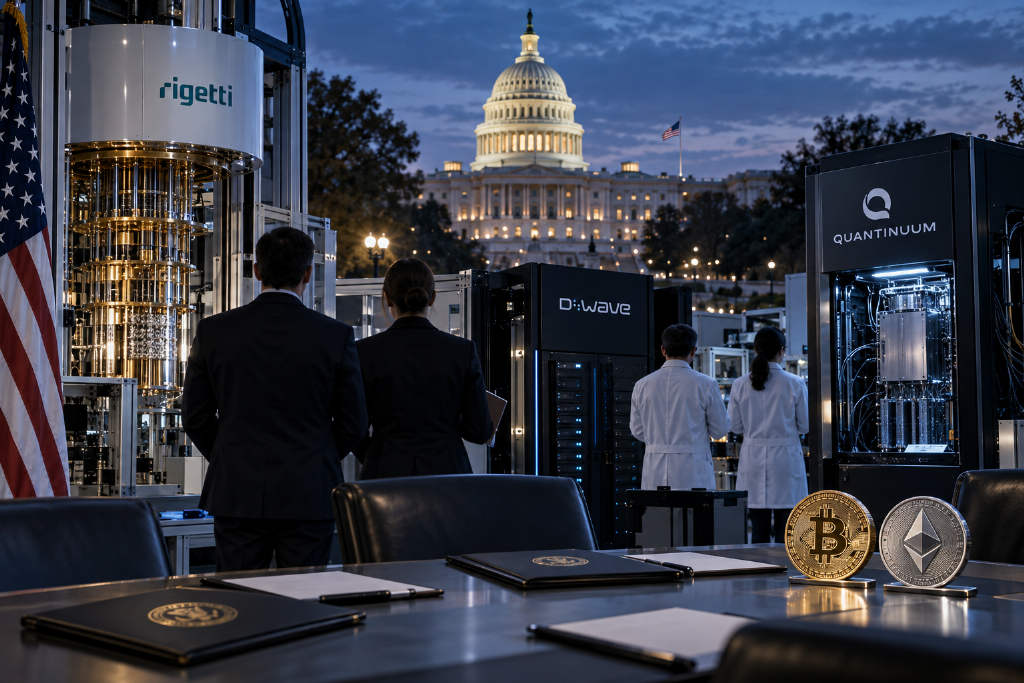
The US Department of Commerce on Sept. 8 finalized CHIPS research and development awards for Rigetti, D-Wave, and Quantinuum, with each company eligible for as much as $100 million and the three together receiving up to $300 million. The same day, PsiQuantum was approved for up to $100 million, while GlobalFoundries was approved for up to $375 million, including support tied to domestic quantum foundry capacity. Earlier in May, the department had already announced $2.013 billion in intended quantum industry investments across nine companies. The latest funding has sharpened attention on a long-standing risk for Bitcoin: a future quantum computer powerful enough to break current cryptography. While there is no evidence such a machine is close to breaking Bitcoin today, developers are debating how long a migration away from quantum-vulnerable setups could take. BIP-360 focuses on reducing long-term public-key exposure through a new output type called Pay-to-Merkle-Root, or P2MR. BIP-361 goes further by outlining how the network might phase out vulnerable addresses and eventually restrict ECDSA and Schnorr-based spending. According to material cited in the draft, more than 34% of Bitcoin’s supply had exposed public keys on-chain as of March 2026.

1310
US finalizes quantum R&D awards as Bitcoin BIP-360 and BIP-361 debates gain traction
Policy Regulation
2 months agoNews Editor

US commits up to $300 million to quantum hardware as Bitcoin and Ethereum race toward a 2029 post-quantum window

The US Commerce Department finalized a quantum funding package on Sept. 9, setting up CHIPS Act grants of up to $100 million each for Rigetti, D-Wave and Quantinuum, while also taking minority equity stakes in the three companies. The money is earmarked for hardware, manufacturing capacity and error-correction systems needed to build larger fault-tolerant quantum machines. At the same time, Ethereum’s protocol team has set December 2029 as a self-imposed deadline for making the base layer quantum-resistant across execution, consensus and data, based on an assumption that a potential "Q-Day" could arrive as early as 2030. Bitcoin has no single network-wide deadline, but work this year around BIP-360 and BIP-361 has accelerated, and researchers and institutions are also treating 2029 as the point by which a credible migration path needs to be in place. Estimates from Google Quantum AI and roadmaps from IBM and Quantinuum are tightening that timeline, turning post-quantum migration from a long-range discussion into an engineering and coordination problem for crypto’s two largest networks.

1220
US commits up to $300 million to quantum hardware as Bitcoin and Ethereum race toward a 2029 post-quantum window
Bitcoin
3 months agoNews Editor

Vaulted CEO says quantum computing could end Bitcoin within four years

Vaulted CEO David McAlvany said Bitcoin could disappear within the next four years because of advances in quantum computing, according to Forbes, though he also acknowledged he cannot say when such a breakthrough might actually arrive. He said Bitcoin would face an existential problem if quantum machines become capable of quickly solving the mathematical problems that protect private keys. As of mid-2026, however, no quantum computer exists that can break Bitcoin’s cryptography. The concern described in the report is tied to the pace of future quantum development rather than any security breach that has already happened. Estimates cited in the report show that a large share of BTC sits in addresses with exposed public keys: Galaxy Digital put the number at about 7 million BTC, worth roughly $470 billion, while Glassnode estimated 6.04 million BTC, or 30.2% of supply. The report also outlined an active debate over how Bitcoin should respond. BIP-360 would add quantum-resistant address types, while BIP-361 would phase out old signature support, a move that could permanently freeze coins that are not migrated in time. Supporters say that outcome would be preferable to theft and forced selling by quantum attackers, while critics see it as confiscation.

2220
Vaulted CEO says quantum computing could end Bitcoin within four years
Total 26 items
Go topage