BMO

Oil
2026-09-15 08:43:44

Oil and Treasury yields climb in lockstep, adding to inflation and rate concerns

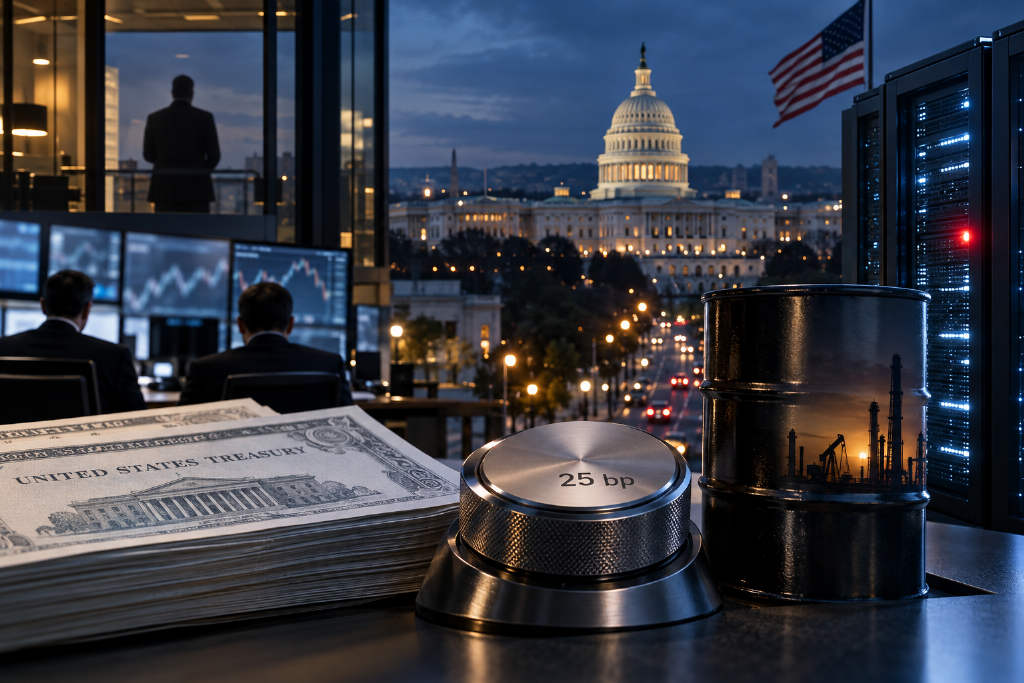
Oil prices and U.S. Treasury yields are rising together in an unusual move that is intensifying concerns over inflation and borrowing costs. According to BMO Capital Markets, the one-month rolling correlation between front-month WTI crude and the 10-year U.S. Treasury yield has climbed to 0.96, the highest level since June 2019. On Monday, the 10-year yield moved above 5% for the first time since October 2023. Market commentators said the combination is feeding through financial markets via inflation expectations and discount rates, weakening the traditional diversification relationship between commodities and government bonds. Yardeni Research President Ed Yardeni said continued gains in oil could push Treasury yields even higher and increase the odds of a tighter federal funds rate path, with another two to three rate hikes still possible in his view. Others warned that the pressure is spreading beyond markets. Sri-Kumar Global Strategies President Komal Sri-Kumar flagged rising bond bear-market risks, while Andy Lipow of Lipow Oil Associates said higher energy prices and yields could raise household and corporate financing costs and weigh on capital-intensive projects, including AI and related energy infrastructure.

540
Oil and Treasury yields climb in lockstep, adding to inflation and rate concerns
Policy Regula
2026-09-14 05:12:00

Rate bets hit 86.7% before central bank week as AI slowdown debate and oil shock pressure risk assets

Markets are heading into a packed central-bank week with three pressure points moving at once: higher oil, higher Treasury yields and a sudden rethink of AI optimism. After U.S. stocks rebounded Friday, the tone turned defensive over the weekend as geopolitical risk in the Middle East resurfaced, Brent crude jumped to about $104, and the U.S. 10-year Treasury yield touched 4.992%, its highest level since October 2023 and just shy of 5%. August U.S. core CPI rose 0.3% month over month, above the 0.2% consensus, pushing the market-implied probability of a 25-basis-point Federal Reserve hike this Wednesday to 86.7%. Traders are also pricing in two more hikes by year-end. At the same time, a new AI safety debate hit sentiment after Anthropic CEO Dario Amodei called for slower frontier-model development, a view publicly backed by Elon Musk and OpenAI CEO Sam Altman. Altman also told Fortune that OpenAI will not go public this year. The week ahead includes the Fed, the Bank of England and the Bank of Japan, alongside U.S. Senate movement on the CLARITY Act, a bill tied to the digital-asset regulatory framework. For crypto investors, that vote puts regulation back near the center of the macro calendar rather than off to the side.

1120
Rate bets hit 86.7% before central bank week as AI slowdown debate and oil shock pressure risk assets
Wall Street R
2026-09-01 13:01:04

Wall Street Firms Update Ratings on Nvidia, Microsoft, Apple and SpaceX

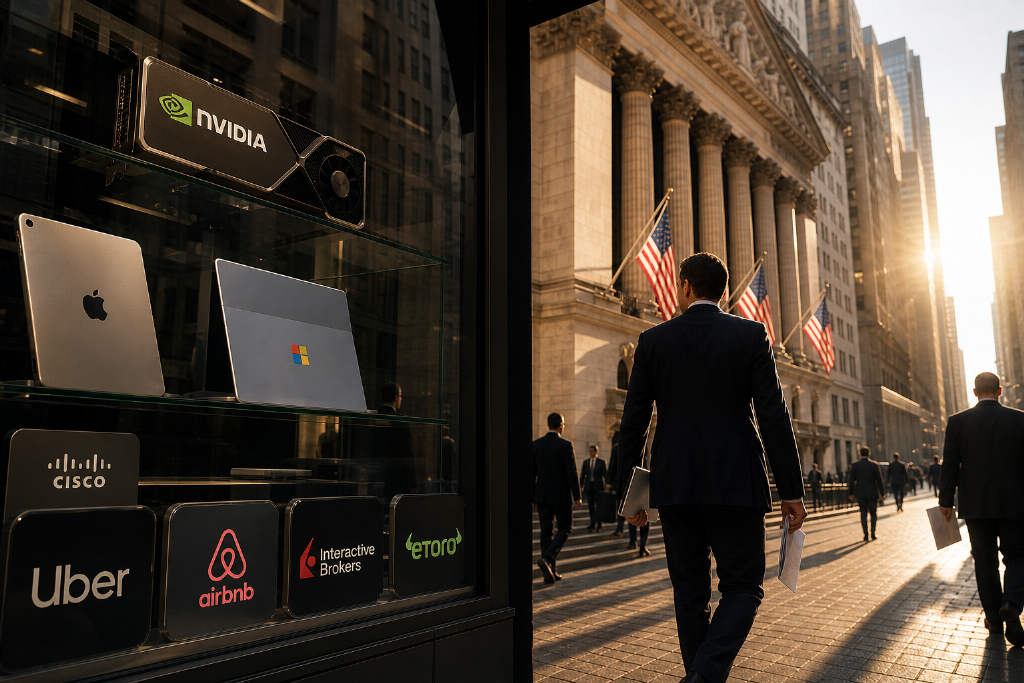
Wall Street firms issued a concentrated round of rating updates on Sept. 1, with Nvidia, Microsoft, Apple, SpaceX, Cisco, Airbnb and Uber receiving positive assessments. Baird reaffirmed an Outperform rating on Nvidia, citing its leading market share and continued growth in inference as reasons it remains one of its preferred large-cap names. Bank of America reaffirmed Microsoft at Buy and lifted its price target from $500 to $600, saying faster Azure growth offered further support for the company’s AI strategy. JPMorgan reaffirmed Apple at Overweight, arguing that the company could benefit from a larger share of the premium device market even as global smartphone shipments are expected to decline in 2026. Bernstein reaffirmed SpaceX at Outperform and pointed to new launch facilities at Starbase in Louisiana as infrastructure for future Starship launches and orbital data center construction. Deutsche Bank initiated coverage of Cisco at Buy, while Rosenblatt initiated Uber and Airbnb at Buy, with price targets of $100 and $220. Other changes included upgrades for Tempus AI, Duolingo, Timken and Park Hotels & Resorts, and a downgrade of Interactive Brokers to Neutral.

810
Wall Street Firms Update Ratings on Nvidia, Microsoft, Apple and SpaceX
US Treasuries
2026-08-27 03:30:00

Wall Street Watches Bessent’s Next Debt Move as Treasury’s November Refunding Plan Turns Into a Wild Card

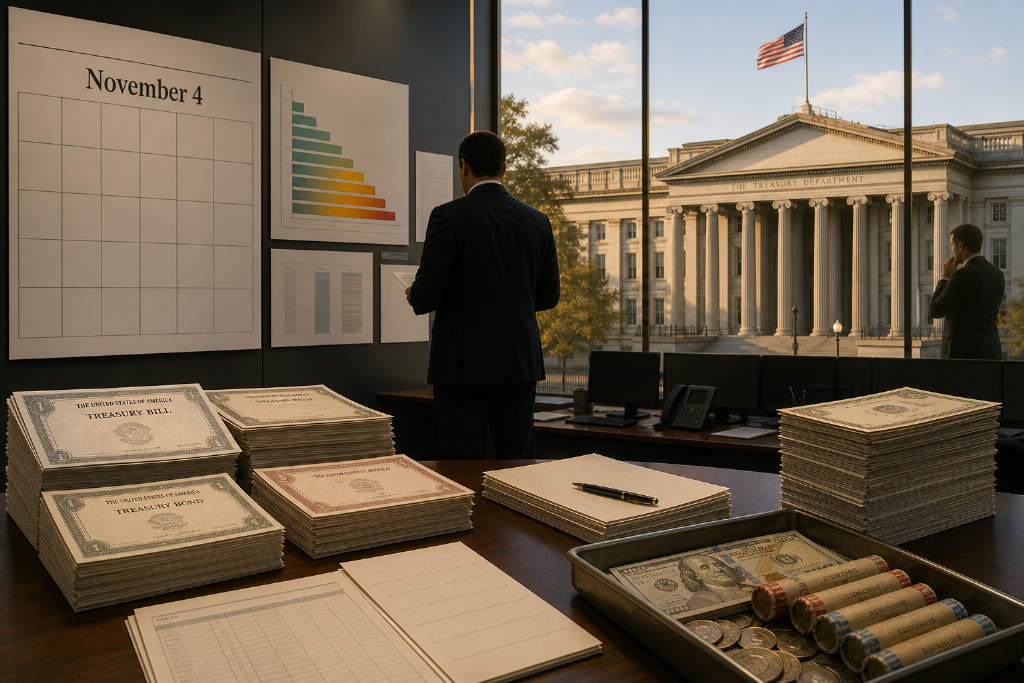
U.S. Treasury Secretary Scott Bessent’s recent shift toward a more active debt-management approach has unsettled one of the market’s longest-standing assumptions: that Treasury issuance remains regular and highly predictable. According to a Bloomberg report dated Aug. 26, attention has now moved to the Treasury’s Nov. 4 quarterly refunding announcement after officials unveiled a bond buyback plan that Bessent described as a "Treasury twist." For a $31 trillion Treasury market, strategists at Bank of America, Deutsche Bank and other Wall Street firms say the upcoming statement now carries an unusual degree of uncertainty. The core debate is no longer whether borrowing needs will rise, but how they will be distributed across the curve. Many on Wall Street expect the Treasury to signal that future increases in financing will lean more heavily on Treasury bills and shorter-dated notes, while buybacks could be expanded to ease pressure on long-term yields. Some banks have also started treating direct cuts to long-dated bond issuance as a rising risk scenario. Subtle wording changes in the Treasury’s latest guidance — referring to possible "changes" in future coupon and floating-rate note sales instead of "increases" — have added to that interpretation. Strategists are also debating whether larger buybacks would be only a bridge to broader maturity changes later in the year. Morgan Stanley said the Treasury General Account could provide $80 billion to $200 billion for buybacks, while Citi has pushed its forecast for larger auction sizes out to 2028 and raised the tail risk that 20-year Treasuries could eventually be removed. Even so, market participants warn that cutting long-end issuance outright would be difficult and could be seen by investors as market manipulation.

330
Wall Street Watches Bessent’s Next Debt Move as Treasury’s November Refunding Plan Turns Into a Wild Card
Dallas Fed
2026-08-26 22:15:39

Dallas Fed says tokenized deposits could cut banks’ risk-bearing capacity by $700 billion

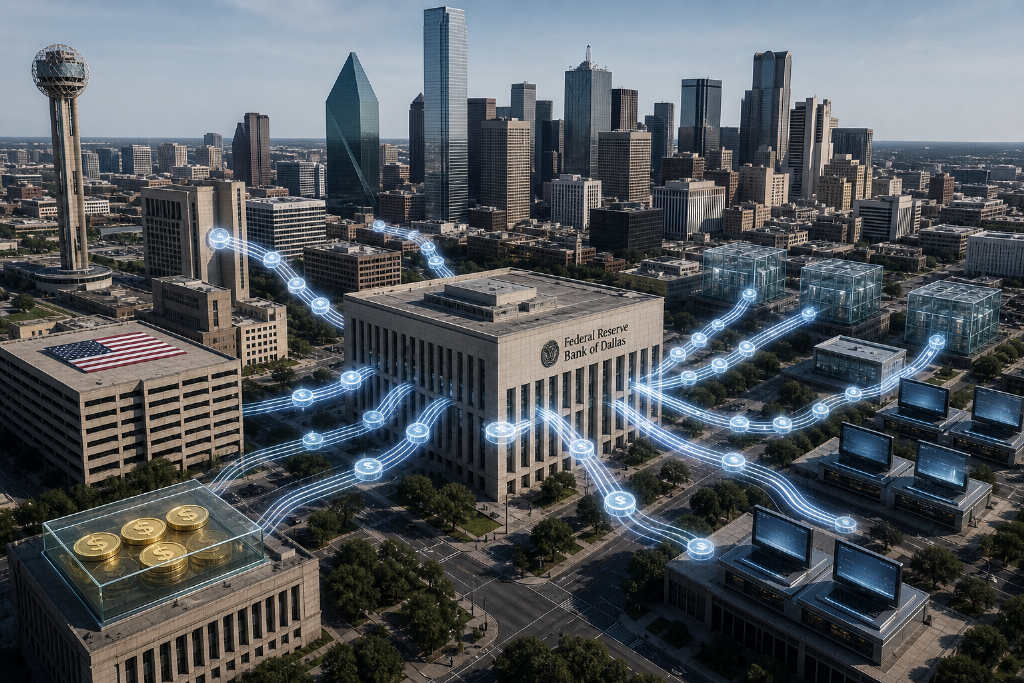
A report from the Federal Reserve Bank of Dallas said tokenized deposits may weaken the stickiness of bank deposits even as they enable real-time settlement. The bank estimated that if deposit sensitivity to interest rates rises by 10%, banks’ capacity to bear interest-rate risk could fall by about $700 billion. The report drew a distinction between tokenized deposits and stablecoins such as USDT, saying tokenized deposits are regulated and can pay interest. At the same time, instant settlement could make it easier for depositors to move funds in search of higher yields. The report also noted that Custodia, Vantage, Barclays, and BMO have recently launched pilot programs tied to tokenized deposits or around-the-clock settlement, according to Decrypt.

720
Dallas Fed says tokenized deposits could cut banks’ risk-bearing capacity by $700 billion
Dallas Fed
2026-08-26 16:23:21

Dallas Fed Says Tokenized Deposits Could Weaken Banks’ Lending Capacity

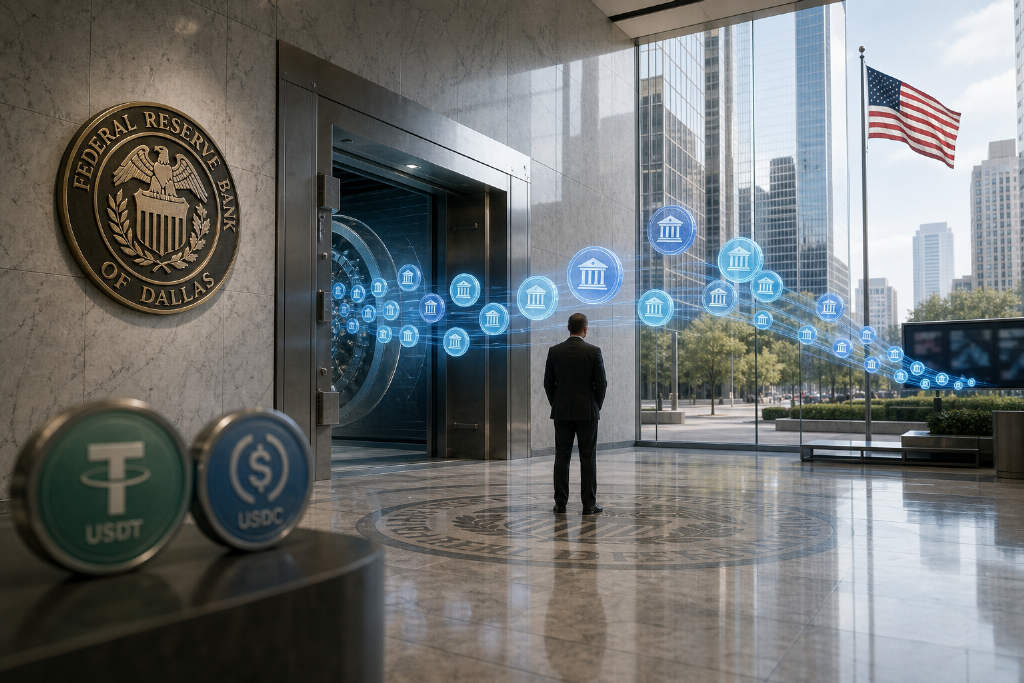
A report from the Federal Reserve Bank of Dallas says tokenized deposits could make it easier for customers to move funds quickly in search of higher yields, reducing the stability of bank funding. The report estimates that a 10% increase in deposit rate sensitivity could cut banks’ interest-rate risk-bearing capacity by about $700 billion. It also says that if the weighted average maturity of deposits shortens by 10%, the banking system’s maturity transformation capacity could fall by $580 billion. The Dallas Fed drew a distinction between tokenized deposits and stablecoins such as USDT and USDC, saying tokenized deposits are regulated and interest-bearing. At the same time, the report warns that instant settlement, smart contracts, and AI could reduce deposit stickiness. It also notes that several institutions, including Custodia, Vantage, Barclays, BMO, and Swift, have already tested or advanced projects tied to tokenized deposits and 24/7 settlement.

780
Dallas Fed Says Tokenized Deposits Could Weaken Banks’ Lending Capacity
Policy and Re
2026-08-26 16:18:24

Dallas Fed says tokenized deposits could weaken bank funding and reduce lending capacity

A report released Tuesday by the Federal Reserve Bank of Dallas says tokenized deposits may improve payment speed while also making bank funding less stable. The paper looks at how broader use of tokenized deposits could affect liquidity and banks’ ability to perform maturity transformation, or use on-demand deposits to fund longer-term loans. According to the report, a 10% increase in deposit-rate sensitivity could reduce banks’ capacity to bear interest-rate risk by about $700 billion on a 10-year-equivalent basis. In a separate estimate, a 10% decline in the weighted average life of deposits could cut the banking system’s maturity-transformation capacity by $580 billion. The report distinguishes tokenized deposits from stablecoins such as USDT and USDC, noting that tokenized deposits are regulated and can pay interest, but warns that instant settlement, smart contracts, and agentic AI could make it easier for customers to move funds in search of better yields. It also points to recent industry activity from Custodia, Vantage, Barclays, BMO, CME Group, Google Cloud, and Swift.

820
Dallas Fed says tokenized deposits could weaken bank funding and reduce lending capacity
US Treasurys
2026-08-19 08:21:44

$16 Billion 20-Year Treasury Sale and Fed Minutes Set Up Overnight Market Test

U.S. markets are heading into a high-stakes overnight window as two closely watched events land within hours of each other: a $16 billion sale of 20-year Treasurys and the release of the Federal Reserve’s July meeting minutes. The Treasury auction is expected to test demand at the long end of the curve, while the minutes could reshape expectations for short-term rates after the Fed held its benchmark rate at 3.5% to 3.75% in July even as three of 12 voting members backed a hike. The backdrop is already tense. The 30-year Treasury yield touched 5.327% Tuesday, its highest level since June 2007, and the 10-year yield rose to 4.747%, the highest since January 2025. U.S. equities have also fallen for three straight sessions. Analysts cited in the report said the worst-case setup for markets would be a weak auction paired with hawkish minutes, a combination that could lift the entire yield curve and pressure technology stocks, emerging markets and leveraged trades. The report also points to broader structural concerns, including a U.S. fiscal deficit nearing $1.8 trillion this fiscal year, total federal debt approaching $40 trillion, and rising bond supply tied to AI-related corporate borrowing. Similar moves in long-dated yields across Germany, France and Japan suggest the selloff is no longer a U.S.-only story.

1200
$16 Billion 20-Year Treasury Sale and Fed Minutes Set Up Overnight Market Test