September mining roundup: Ethiopia cuts power, Sweden seeks tax repayments, and bitcoin miners keep shifting toward AI
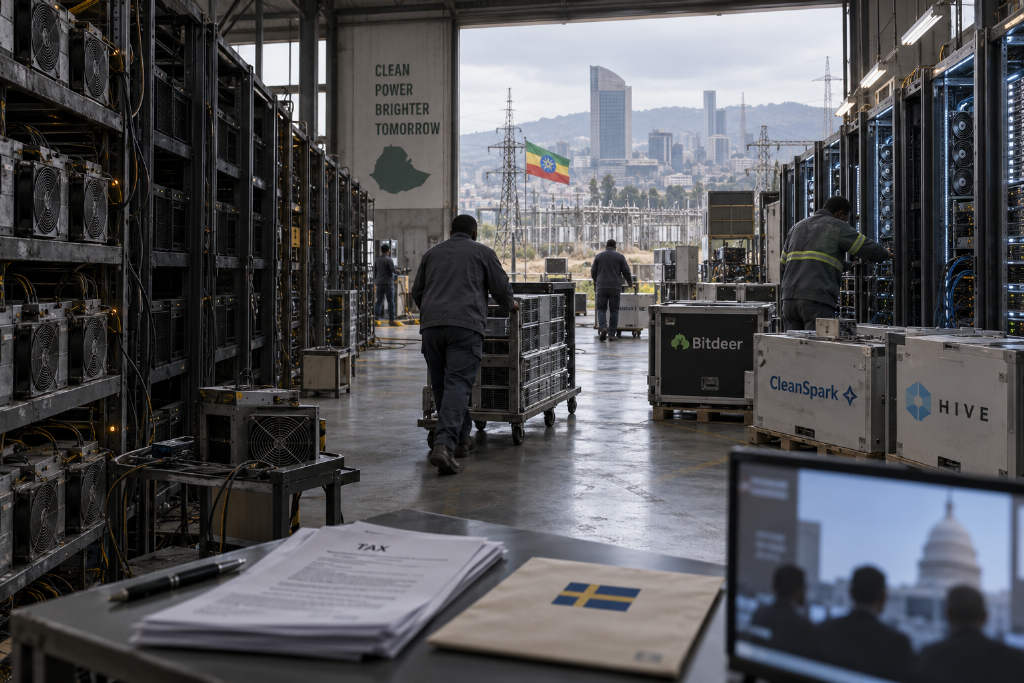
Bitcoin mining in September was shaped by the same forces showing up across company filings, policy developments, and regional energy decisions: tighter economics for pure-play mining, stronger investor support for AI and HPC exposure, and rising pressure from tax and power authorities in some markets. CoinShares said public miners are increasingly redirecting electricity and data center capacity toward AI and high-performance computing, with estimated annualized profit at roughly $1.5 million per MW for AI compute versus about $500,000 per MW for bitcoin mining. CryptoQuant and JPMorgan pointed to similar trends, including falling network hash rate from prior peaks, miner treasury sales, and a widening gap in equity performance between miners with AI initiatives and those without. At the same time, Bloomberg reported that Ethiopia cut power supply to bitcoin miners by about three-quarters after lower hydropower inflows linked to El Nino, while Sweden’s tax agency moved to reclaim nearly SEK 540 million from six crypto companies in Boden. In the US, the House Ways and Means Committee is set to review two crypto tax bills touching staking, mining, wash-sale rules, and constructive sale rules. Company updates from Bitdeer, CleanSpark, MARA, HIVE, Cango, Canaan, BitFuFu and others added to the picture, showing a sector balancing bitcoin output, treasury management, AI data center buildouts, and selective mining pullbacks.