CDS

Policy and Re
2026-08-19 04:30:00

Rising global bond yields and AI financing concerns drive a broad sell-off in U.S. tech stocks

U.S. stocks fell for a third straight session Tuesday as higher long-term bond yields put fresh pressure on richly valued technology names. The Nasdaq Composite dropped 1.33%, underperforming the Dow Jones Industrial Average and the S&P 500, while the 30-year U.S. Treasury yield briefly touched 5.338%, its highest level since 2007. The move was part of a wider global bond sell-off that also pushed long-dated yields higher in France, Germany, Japan and the U.K. Markets are increasingly focused on the growing debt burden tied to artificial intelligence expansion. According to figures cited in the report, AI-related bond issuance has reached $489 billion so far this year, well above an earlier full-year 2025 estimate of roughly $322 billion, while The Wall Street Journal reported that nine major technology companies have about $3 trillion in off-balance-sheet AI commitments. That backdrop hit semiconductors, memory, optical communications and AI cloud-service providers especially hard. Investors are also weighing fiscal deficits, oil-driven inflation risks tied to the Iran situation, and a heavy event calendar that includes U.S. tariffs on some Canadian products, a 20-year Treasury auction, Federal Reserve minutes and China’s one-year LPR decision.

130
Rising global bond yields and AI financing concerns drive a broad sell-off in U.S. tech stocks
ChainFeeds
2026-08-18 13:46:31

ChainFeeds PRO Covers Builder Economics, EIP-7999 and Native Ethereum Delegation

ChainFeeds Research’s PRO #155 rounds up updates across Bitcoin protocol work, Ethereum governance topics, new research, and fresh papers. The issue centers on the supply side of Ethereum block building, a proposed way to handle gas accounting under EIP-7999, and Native Ethereum Delegation (NED), a protocol-level design for staking delegation. It also includes Bitcoin quantum-recovery ideas, a Lightning Network congestion proposal, Bitcoin Core release changes, and several MEV and proof-system research notes. On the builder side, Christoph Rosenmayr and Jascha Samadi argue that the scarce asset is not block count but valuable orderflow. Their Dune-based data shows validators have earned about $1.36 billion in execution-layer rewards via MEV-Boost since early 2024, while builders kept about $404 million in builder surplus. Titan, they say, now builds around half of blocks yet captures roughly 80%–85% of surplus. The Bitcoin section includes Shinobi’s view that users who still control private keys should be able to recover BTC locked to hash-addresses without protocol-level confiscation of long-dormant coins. It also covers Bitcoin Optech’s CMTC proposal, Bitcoin Core’s new static Linux binaries, and a change that moves transaction relay throttling from per-peer queues to a global limit. On Ethereum, Anders Elowsson lays out four accounting paths for EIP-7999, while Jeff’s NED research proposes protocol-routed delegation with a worst-case concentration bound. The issue also highlights ragged multi-instance GKR for Poseidon2b, MEV articles and conference videos, and a censorship paper from Derivation Technology, Aarhus University, and Nanyang Technological University.

50
ChainFeeds PRO Covers Builder Economics, EIP-7999 and Native Ethereum Delegation
AI
2026-08-14 10:40:06

AI Spending Fuels Bond Rush Among U.S. Tech Giants, With Nearly $2 Trillion in Off-Balance-Sheet Commitments

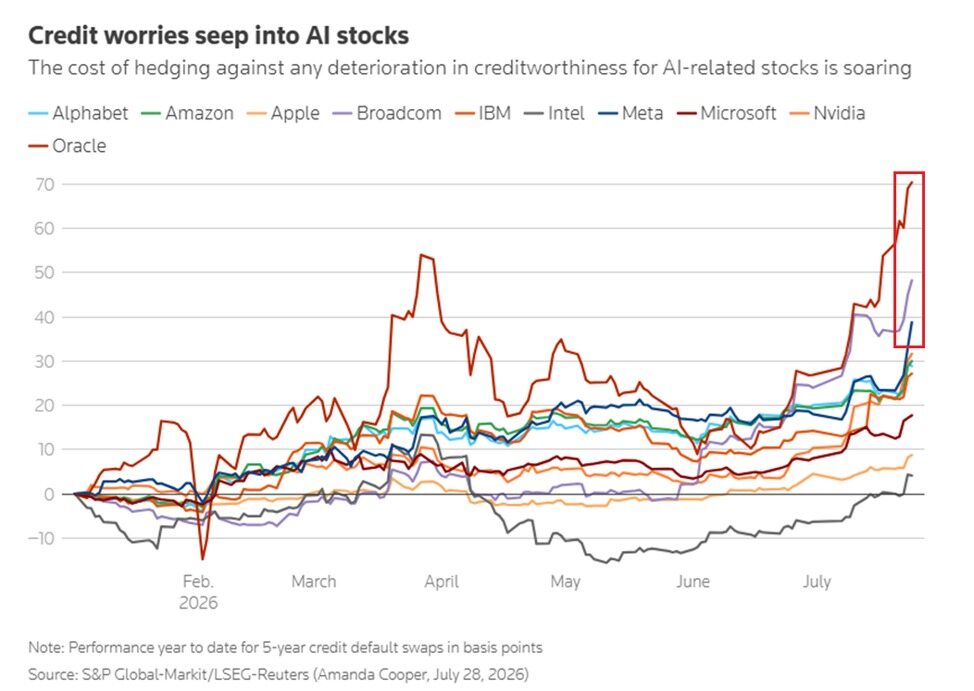
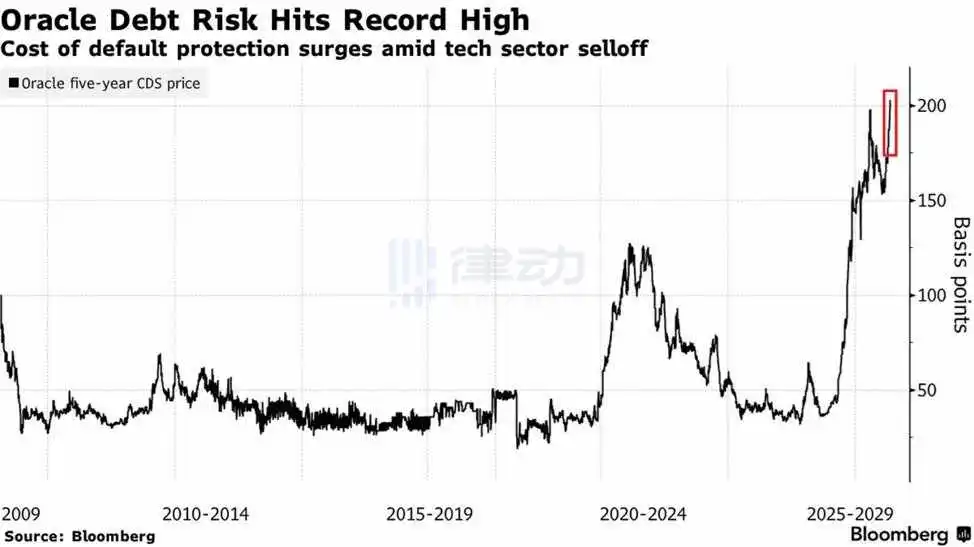
A debt wave tied to artificial intelligence spending is sweeping through major U.S. technology companies, with AMD’s $4.75 billion bond sale adding to a year of outsized fundraising across the sector. Bloomberg reported on Aug. 13 that the chipmaker completed the largest U.S. dollar bond offering in its history. Earlier this year, Nvidia sold $25 billion in bonds and drew roughly $85 billion in orders, while Alphabet also raised $25 billion in early August with demand reaching $115 billion. Reuters, citing London Stock Exchange Group data on Aug. 14, said Alphabet, Amazon and Meta had issued nearly $220 billion in bonds so far this year, more than double the $108 billion sold during all of 2025. The visible borrowing is only part of the picture. An Aug. 11 article from BigGoFinance, citing recent research from Goldman Sachs and Morgan Stanley, said AI cloud companies including Alphabet, Microsoft, Amazon and Meta have amassed close to $2 trillion in off-balance-sheet financial commitments through leases that have not yet started and procurement contracts. Goldman estimated about $1.5 trillion in off-balance-sheet lease commitments, including around $1 trillion not yet commenced. Morgan Stanley put procurement commitments for Alphabet, Microsoft, Amazon, Nvidia and Oracle at $982 billion as of the end of the first quarter. Credit markets have begun to react, with Beignet bonds yielding 6.95%, up from about 5.65% at issuance last autumn, while CDS pricing on debt from Oracle, Nvidia, Meta and Alphabet has also climbed to record highs.

150
AI Spending Fuels Bond Rush Among U.S. Tech Giants, With Nearly $2 Trillion in Off-Balance-Sheet Commitments
Ethereum
2026-08-14 03:53:48

Ethereum Drops Poseidon for SHA2 and BLAKE2 in Layer 1 Post-Quantum Shift

Ethereum is moving away from Poseidon at Layer 1, ending years of work around a hash function long favored in SNARK-based systems. On Aug. 13, Ethereum researcher Justin Drake said on X that the Ethereum Foundation had decided to abandon Poseidon in favor of traditional hash functions such as SHA2 or BLAKE2. The change comes after eight years of research, tens of millions of dollars in spending, and a broader reset of Ethereum’s post-quantum roadmap. The key technical driver is progress in binary-field SNARK design, which allows traditional hash functions to perform inside proving systems at speeds that were previously associated with SNARK-optimized designs. Drake said a laptop can now verify about 1 million conventional hash calls per second in a SNARK setting, while recent benchmarks from projects including Flock and SNARK.fast point to sharply improved throughput. The roadmap itself remains in place. Ethereum still expects a production-grade leanVM in 2027, followed by deployments across the consensus, execution, and data layers in 2028. The Foundation has also expanded its post-quantum work through pq.ethereum.org, weekly interoperability devnets involving more than 10 client teams, and two $1 million research prizes. The shift also comes as Solana and Starknet advance their own post-quantum plans using Falcon and BLAKE2-based transitions.

270
Ethereum Drops Poseidon for SHA2 and BLAKE2 in Layer 1 Post-Quantum Shift
ChainFeeds
2026-08-14 02:25:08

ChainFeeds research roundup tracks weak Bitcoin demand, Ethereum STARK debate and AI agent wallets

ChainFeeds published its Aug. 14 research roundup, pulling together five feature pieces selected from its Aug. 13 Web3 briefing. The package spans Bitcoin market structure, crypto venture and trading narratives, wallet design for AI agents, Ethereum’s long-term cryptography roadmap, and startup advice from Y Combinator CEO Garry Tan. The Bitcoin section, citing Glassnode, says BTC remains stuck between two key on-chain cost bases: the Median Realized Price near $63,000 and the Short-Term Holder Cost Basis near $68,700. Spot activity has fallen to one of the lowest levels in years, ETF demand has yet to show a convincing return, and leveraged longs in derivatives have built up ahead of a broader recovery. The report says a downside break would put focus on the June low around $58,500. Other pieces in the roundup argue that stablecoins and perpetuals remain crypto’s clearest native product-market fits, examine how products such as x402 and MetaMask Agent Wallet try to give AI agents controlled spending and execution power, and frame recursive STARK aggregation as a key tool for Ethereum’s post-quantum, privacy, and scaling agenda. The final feature highlights Garry Tan’s warning that chasing hot sectors can pull founders away from areas where they have genuine edge, while AI-driven coding is changing what counts as a durable moat.

420
ChainFeeds research roundup tracks weak Bitcoin demand, Ethereum STARK debate and AI agent wallets
Crypto cycle
2026-08-13 04:12:08

Lao Bai on the next crypto cycle: VC labels fade, prediction markets are overheated, and Perp DEX competition narrows behind Hyperliquid

Crypto investor and researcher Lao Bai used a nearly two-hour conversation with 168X to lay out a blunt view of where the industry stands in August 2026 and what may still matter in the next cycle. His argument starts from the current washout: exchanges such as BitMEX and BitMart have stopped trading operations, former star products including Zapper and Fantasy Top are shutting down, and both talent and capital are drifting toward AI. In that setting, he says crypto has already “won” in one sense — Bitcoin ETFs exist, stablecoins have become important dollar infrastructure, traditional firms are building on-chain rails, and tokenized real-world assets are entering mainstream finance — yet many old participants still feel they lost because the era of effortless altcoin upside is gone. Lao Bai’s core judgments are sharp. He says issuing tokens is closer to taking on liabilities than raising capital. He expects the idea of a standalone “crypto VC” to gradually disappear as blockchain becomes embedded infrastructure rather than a self-contained sector. He sees stablecoins and perpetual futures as crypto’s two strongest native inventions, while arguing that prediction markets have genuine product-market fit but a much lower ceiling than perpetuals. On market structure, he expects Perp DEXs to consolidate into only a handful of winners, with Hyperliquid in the top tier and names such as Aster, Lighter, edgeX and Variational competing below it. He also argues exchanges should stop thinking of themselves as crypto-only venues and instead evolve toward a global risk-asset super app — a model he says Robinhood best represents today.

170
Lao Bai on the next crypto cycle: VC labels fade, prediction markets are overheated, and Perp DEX competition narrows behind Hyperliquid
Morgan Stanle
2026-08-13 03:02:54

Morgan Stanley says LTAs are reshaping memory pricing as the storage cycle continues

Morgan Stanley’s August global technology webinar tied memory, hyperscaler financing and SpaceX into a single theme: capital formation around AI infrastructure is changing both funding structures and pricing logic across semiconductors and communications. In memory, the bank highlighted three main points — how long-term agreements, or LTAs, are replacing spot-driven pricing, where the current cycle stands, and what rising inventories actually mean this time. The report outlined more explicit LTA targets and disclosures from major suppliers. Samsung said 60% to 70% of capacity is planned for rolling five-year LTAs, with five agreements signed and five in final negotiations. Micron is targeting more than 50% of revenue under LTAs and has received about $22 billion in prepayments and commitments. The note also cited SK hynix, SanDisk and Kioxia as expanding contract coverage. Morgan Stanley said 3Q26 DRAM contract prices rose about 15% quarter over quarter, below an earlier 20% expectation, while NAND rose about 20% with momentum easing. Even so, the bank argued this does not mark the end of the cycle. It also said higher inventory levels look different from 2018 and 2022 because customers are building stock under binding contracts with prepayments and minimum commitments. Beyond memory, the report used SpaceX and credit-market data to argue that large technology companies are increasingly using their balance sheets to support AI supply-chain financing.

220
Morgan Stanley says LTAs are reshaping memory pricing as the storage cycle continues
Market Analys
2026-08-12 01:52:22

Lao Bai says crypto VC will fade, prediction markets are overvalued, and Perp DEXs still have room beyond Hyperliquid

In a nearly two-hour conversation hosted by 168X, investor and researcher Lao Bai laid out a broad thesis on where crypto stands in 2026 and where it may be headed next. His core view is blunt: the crypto industry has matured, token issuance works more like debt than financing, and the label "crypto VC" is likely to disappear over time as blockchain becomes part of the broader commercial stack rather than a standalone sector. Lao Bai, whose past roles include Amber, ABCDE and OKX Ventures, said his focus inside crypto has narrowed to a handful of sectors he still sees as having product-market fit: perpetuals, prediction markets, real-world assets and stablecoins. Even there, he drew sharp distinctions. Stablecoins and perpetual contracts, he argued, are crypto’s two strongest native inventions. Prediction markets, by contrast, do have real PMF but a much lower ceiling than perpetual trading. He also discussed Hyperliquid’s lead in Perp DEXs, the competitive setup around HIP-3 deployers such as TradeXYZ and Paragon, why security issues often stem from lending rather than pure perpetual products, and why exchanges are increasingly competing not just with Binance or OKX but with Robinhood, Interactive Brokers and even banks. His conclusion was equally direct: the endgame for exchanges is to become a single global gateway for risk assets.

650
Lao Bai says crypto VC will fade, prediction markets are overvalued, and Perp DEXs still have room beyond Hyperliquid