CET

CoinEx
2026-09-15 03:21:10

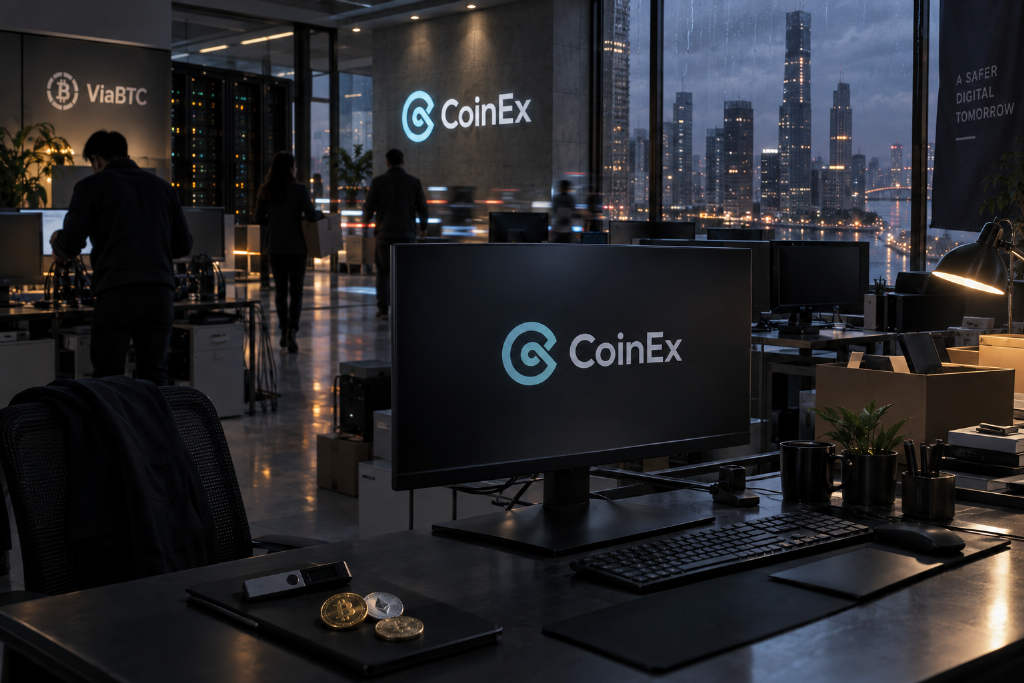
CoinEx to Shut Down on Dec. 22, 2026, Founder Haipo Yang Says

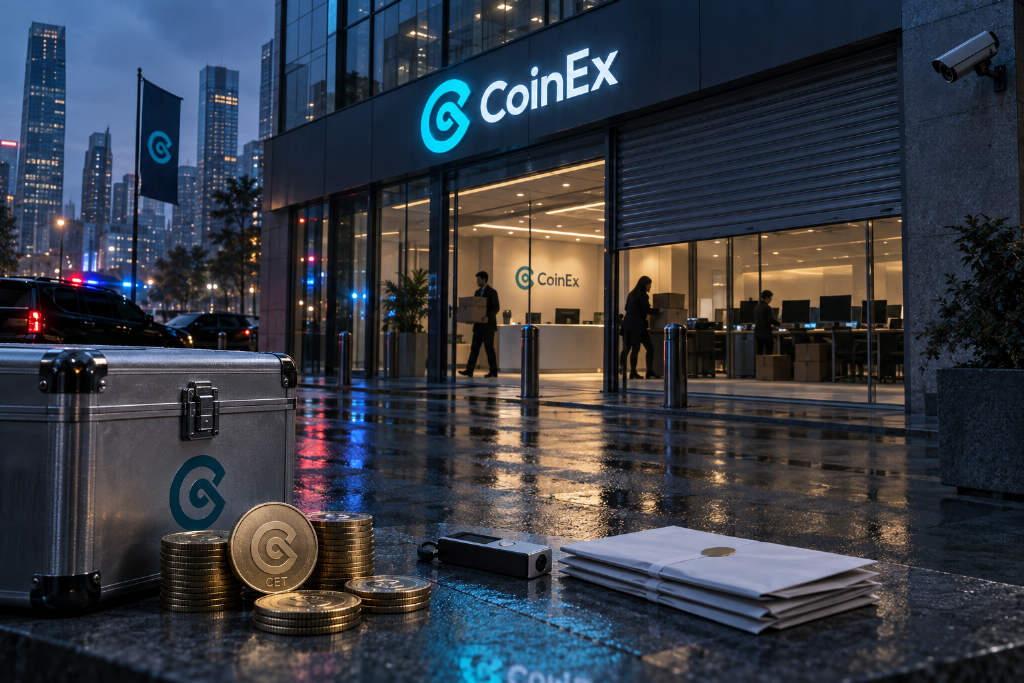
CoinEx founder Haipo Yang said the exchange, which officially launched on Dec. 22, 2017, will formally shut down on Dec. 22, 2026. In his explanation, Yang said nine years is a long time in the crypto industry and that CoinEx had gone through multiple bull and bear cycles with its users, witnessed the rise and fall of many projects, and seen many peers leave the market in different ways. He said he had come to accept that CoinEx did not become a leading exchange in the industry, while the security and compliance risks involved in operating a crypto exchange have become increasingly difficult to control. Yang added that revenue can fall, but responsibility does not, and taking on unlimited risk under limited income is no longer a rational choice. He also said CoinEx would repurchase CET at its initial listing price of 0.005 USDT per token with no cap, ensure users can fully withdraw their assets, provide employees with a proper farewell, and offer CET holders a clear and responsible plan.
550
CoinEx to Shut Down on Dec. 22, 2026, Founder Haipo Yang Says
CoinEx
2026-09-15 02:34:45

CoinEx to shut down after nearly nine years, sets Dec. 22 deadline for withdrawals

Crypto exchange CoinEx said it will cease operations and begin an orderly wind-down, citing a prolonged downturn in the crypto market, a sharp contraction in industry-wide trading volume and liquidity, and rising regulatory and compliance costs across major jurisdictions. The platform said it stopped new user registrations on Sept. 15 and switched futures trading to reduce-only mode the same day. It will halt non-spot businesses including futures, wealth management, staking, and lending on Sept. 22, stop all spot trading on Sept. 29, and end withdrawals on Dec. 22, when the platform will formally close. A public letter described CoinEx as a global cryptocurrency exchange founded in December 2017 by Yang Haipo, the founder of the ViaBTC mining pool. The exchange went live on Dec. 22, 2017. CoinEx said it had offered a range of services including spot, futures, margin, and wealth management products, and had also issued its platform token CET.

690
CoinEx to shut down after nearly nine years, sets Dec. 22 deadline for withdrawals
FOMO
2026-09-15 02:20:57

DumbCrayonEater tops FOMO daily profit board with about $8.369 million in unrealized gains on AI

Data released on Sept. 15 showed that trader DumbCrayonEater ranked first on FOMO’s 24-hour profit leaderboard. The account’s current assets stood at about $8.824 million, up roughly $1.7 million over the past day. Artificial Inu (AI) was the dominant holding in the portfolio. The account currently holds 29.3 million AI tokens valued at about $8.391 million, accounting for roughly 95% of total assets. Based on the page’s displayed holding return rate of 39,466.53%, the position’s unrealized profit was about $8.369 million. The portfolio also included Prologue, with holdings worth about $112,000 and a return rate of 245.30%, and Cets On Gold (CETS), with holdings worth about $87,000 and a return rate of 203.12%.

550
DumbCrayonEater tops FOMO daily profit board with about $8.369 million in unrealized gains on AI
ChainCatcher
2026-09-08 02:11:43

ChainCatcher Morning Brief: Korean memory inventory warning and Hunter Biden’s LAPTOP token plan lead a packed crypto cycle

ChainCatcher’s latest morning roundup spans a wide mix of crypto, macro, security and tech-capex developments from the past 24 hours. Bitcoin slipped nearly 1% to around $79,700 as rising oil prices, linked in the report to an escalation between the U.S. and Iran, added fresh pressure to risk assets. At the same time, spot crypto ETFs kept attracting money, with Bitcoin spot ETFs posting $987 million in weekly net inflows and Ethereum spot ETFs drawing $218 million, both marking a third straight week of net inflows. Beyond price action, several project and security updates stood out. Vitalik Buterin pushed back on claims that AI could break Bitcoin’s security assumptions, while Galaxy Research said roughly 45% of the assets stolen in the Coldcard “Wave 3” incident have now moved into cross-chain or mixing paths. Liquid Network and SideSwap also remained in focus after an exploit involving 4,000 L-BTC, and Blockstream said the vulnerability tied to the incident had been patched. On the corporate and policy front, KB Securities warned that Samsung Electronics and SK Hynix have memory inventories below 10 days, pointing to a tighter supply picture as AI infrastructure spending expands. The Wall Street Journal separately reported that Hunter Biden plans to launch a meme coin called LAPTOP on Base on Sept. 9, with a detailed token allocation, lockup and burn-or-charity framework tied to preset future events.

650
ChainCatcher Morning Brief: Korean memory inventory warning and Hunter Biden’s LAPTOP token plan lead a packed crypto cycle
Harbin Engine
2026-09-06 09:18:11

Harbin Engineering University alumni emerge as a force in China’s deep-sea robotics funding wave

A cluster of deep-sea robotics startups in China is drawing investor attention, and Harbin Engineering University keeps appearing at the center of the story. According to a report by PEdaily carried by MarsBit, Suzhou-based Gongzhi Ocean and Shihang Intelligence, along with Greater Bay Area-based DeepSea Humanoid, have all disclosed major financing rounds, with founders or core figures tied to Harbin Engineering University’s ship and ocean engineering system. Gongzhi Ocean said it closed an angel round worth nearly RMB 100 million, while DeepSea Humanoid completed an A round of more than RMB 500 million and Shihang Intelligence announced an A round above RMB 1 billion in June. The report argues that this is not a coincidence. Harbin Engineering University has long focused on shipbuilding, naval equipment, ocean development, and nuclear applications, and has built deep expertise in marine engineering and underwater robotics. It links that academic base with a broader industrial shift, as deep-sea technology gained policy support in 2025 and this year’s March approval of the 15th Five-Year Plan outline called for stronger capabilities in deep-sea access, exploration, development, and security. The article also widens the lens to Harbin Institute of Technology, presenting the two Harbin universities as a pair of northeastern hard-tech talent hubs now feeding China’s latest startup wave.

710
Harbin Engineering University alumni emerge as a force in China’s deep-sea robotics funding wave
Stellar
2026-08-29 19:26:17

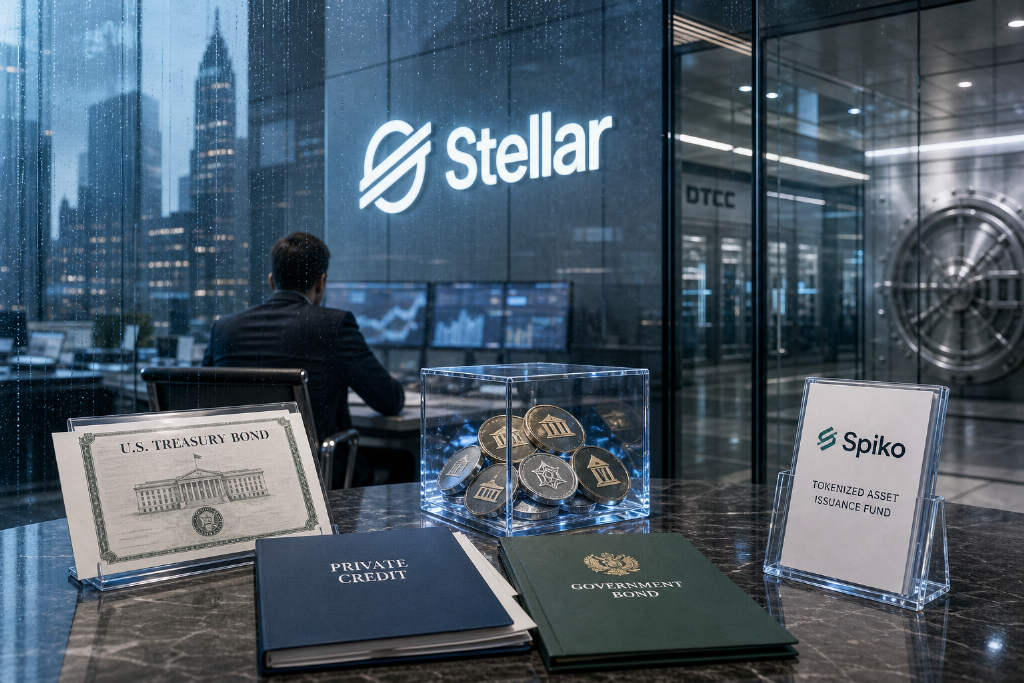
Stellar Tokenized RWA Market Cap Surges 360% to Nearly $4B

According to Cointelegraph, the market capitalization of tokenized real-world assets (RWA) on the Stellar network has grown by roughly 360% in 2026, climbing from $868.8 million at the end of last year to close to $4 billion. A Dune Analytics dashboard maintained by Stellar shows that as of Aug. 29, the network's RWA market cap stood at $3.996 billion, covering asset categories such as U.S. Treasuries, private and public credit, and non-U.S. government debt. Issuer concentration remains high: Spiko leads with $1.55 billion, followed by Realiz ($559 million), Tradable ($548 million), Franklin Templeton ($546 million) and Ondo ($535 million). The Stellar Development Foundation, citing RWA.xyz data, said the network held about $490 million in non-U.S. government debt as of Aug. 20, including tokenized Mexican CETES and Brazilian government bonds issued via Etherfuse. Institutional adoption is building momentum. In May, the Depository Trust & Clearing Corporation (DTCC) announced plans to connect its tokenization service to Stellar, with tokenized assets expected to go live in the first half of 2027. In July, Tradable said it planned to bring up to $1 billion in private credit assets onto Stellar.

910
Stellar Tokenized RWA Market Cap Surges 360% to Nearly $4B
Korean invest
2026-08-19 23:12:09

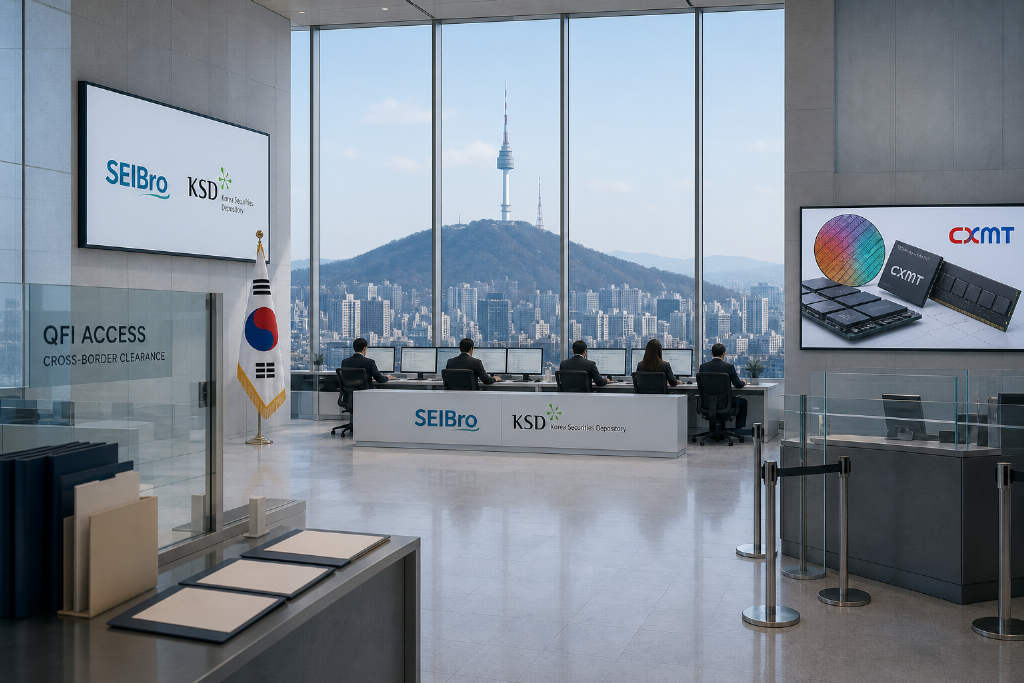
Korean investors bought CXMT Tech through QFI, topping net A-share purchases over the past month

Data from SEIBro, operated by the Korea Securities Depository, shows that Korean investors used the Qualified Foreign Investor, or QFI, channel to buy CXMT Tech, making it the most heavily net-bought A-share among Korean investors in the past month as of Aug. 18. Net purchases totaled $45.322233 million, or about RMB 307.53 million, and the stock also ranked first over the past three months. The case drew attention because the security appeared in SEIBro without an ISIN code. KSD’s securities data division told China Fund News that the stock has not yet been assigned an ISIN, even though QFI settlement instructions submitted to KSD require one. As a result, Korean brokerages involved in the trade temporarily used a virtual code, and the name displayed in the system followed that temporary virtual ISIN. KSD said the stock trades only on Shanghai’s STAR Market and has not been added to the Shanghai-Hong Kong Stock Connect mechanism, meaning Korean investors can currently access it only through QFI rather than Stock Connect. The local code used to identify the stock is 688825, which corresponds to newly listed CXMT Tech. The report also said Tema ETFs added CXMT Tech to Tema Memory ETF (DISK) on its listing day, July 27, with a 10.56% weight, while Roundhill Memory ETF and MSCI China All Shares Index also moved to include the company later.

1380
Korean investors bought CXMT Tech through QFI, topping net A-share purchases over the past month
China
2026-08-19 02:51:53

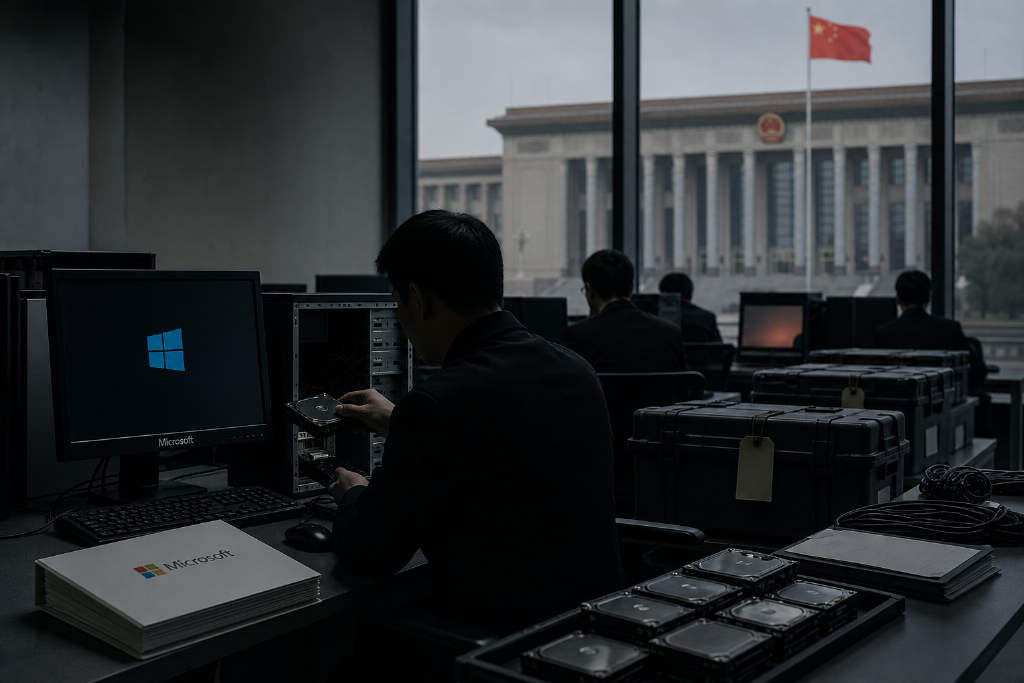
Bloomberg says China moved up removal of Microsoft’s government-tailored Windows 10 at some state-linked agencies

Bloomberg reported that China’s Ministry of State Security has ordered some government-linked institutions to remove a customized government edition of Microsoft Windows 10 months earlier than previously planned. The system, formally called Windows 10 CMIT Government Edition, had been scheduled to exit in February 2027, according to the report. Bloomberg said the software was developed by CMIT, a joint venture set up in 2016 by Microsoft and China Electronics Technology Group, to adapt Windows 10 for Chinese government use with certain native functions disabled and locally developed security modules added. Markets reacted quickly after the report appeared. Kylinsec and Archermind Technology both hit the 20% daily limit, while China National Software rose 10%. The report placed the move within Beijing’s broader push to replace foreign technology in sensitive public-sector environments, including earlier efforts involving foreign-branded computers, iPhones in some sensitive offices, and a wider shift toward domestic operating systems and chips.

1050
Bloomberg says China moved up removal of Microsoft’s government-tailored Windows 10 at some state-linked agencies