Ondo Drops Its Own Chain Plan and Moves RWA Trading Settlement Back to Ethereum
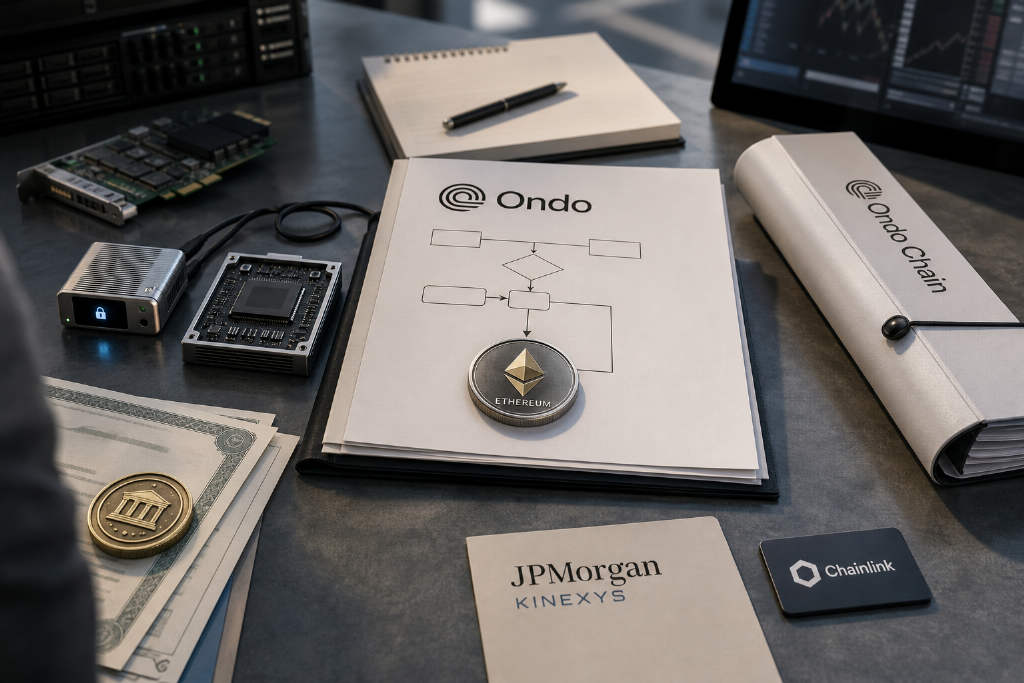
Ondo Finance has decided not to keep building a standalone blockchain for its tokenized real-world asset business, opting instead to retain Ethereum as the settlement layer while moving execution and verification off-chain into trusted execution environments. The shift marks a reversal from the earlier Ondo Chain vision, which had been pitched as a Layer 1 for tokenized assets with permissioned validators, staking rewards, and native bridging, and had already seen testing activity involving JPMorgan’s Kinexys and Chainlink on tokenized Treasuries. The article traces why Ondo made that change and places it in a broader market context. It argues that blockchains bundle consensus, replication, transparency, and final settlement into one system, and that this package can become a burden for order matching engines that need deterministic sequencing and low latency. It also compares Ondo’s redesign with traditional market infrastructure such as the NYSE, Nasdaq, and DTCC, and with crypto-native examples including Base, Robinhood Chain, dYdX, Hyperliquid, and Unichain. The piece also raises a second issue: whether trusted execution environments actually solve the trust problem. While Ondo plans to split code verification, key custody, and server hosting across separate parties and later add proof-of-stake and slashing, recent hardware attacks on secure enclaves show that the model still carries physical-world risk, even if final state remains posted on-chain.