BackClayton

Clayton

AI Native
2026-08-28 10:03:16

Ramp’s $44 Billion Valuation and Stripe’s Reported $7 Billion+ OpenRouter Deal Reflect an AI-Native Fintech Bet

A BlockTempo report citing Simon Taylor argues that Ramp’s $750 million raise at a $44 billion valuation, along with Stripe’s reported purchase of OpenRouter for more than $7 billion, is being driven by something larger than conventional payments growth. The core thesis is that investors are assigning value to new customer jobs created by AI rather than to legacy fintech products alone. Taylor says those new jobs include managing token spend, verifying agent identity, routing inference requests across hundreds of models, and building interfaces that software agents can use efficiently. In his framing, companies such as Ramp and Stripe sit in a favorable position because they already have existing businesses and can add new revenue layers beside them as AI creates adjacent demand. The column also sketches a broader competitive map. Some firms are merely adopting AI to improve old tasks, while others exist only because modern models created entirely new markets. Taylor argues that the next strategic question for fintech is not just whether to add AI features, but whether to own orchestration, control a trusted layer such as identity or settlement, or become the easiest product for outside agent shells to call through APIs and CLI tools.


690
Ramp’s $44 Billion Valuation and Stripe’s Reported $7 Billion+ OpenRouter Deal Reflect an AI-Native Fintech Bet
Bitwise
2026-08-14 02:02:07

Bitwise CIO says crypto valuation is shifting toward revenue as regulation changes

Bitwise Chief Investment Officer Matt Hougan argues that the way investors value crypto assets is starting to change. For years, one of the strongest criticisms of the sector was that tokens often captured little or none of the economic value created by the underlying networks. Projects could post rapid user growth and generate billions of dollars in revenue, yet tokenholders had no clear claim on that cash flow. Hougan says that setup is now changing, and that, outside of Bitcoin, crypto assets are increasingly being judged on a metric long familiar in equities and credit markets: revenue. In his view, the shift has been helped by two developments. The first was the legal and regulatory turn that followed the SEC’s loss in the Ripple case, which weakened the assumption that any token tied to economic rights would automatically be treated as an illegal securities offering. The second was the rise of Hyperliquid, which used nearly all of its fee income to buy back and burn HYPE, showing investors a direct path from network usage to token value. Hougan points to similar moves by Uniswap, Aave, Solana, Aptos, Lighter and others. He argues that many investors still have not absorbed this change, leaving major crypto assets priced below what their revenue models may justify, while also warning that tokens still do not offer the same legally protected claims as stocks.

1270
Bitwise CIO says crypto valuation is shifting toward revenue as regulation changes
AppWorks
2026-07-26 13:34:00

Lin Chih-chen says AppWorks’ first fund backers came through MR JAMIE, not family connections

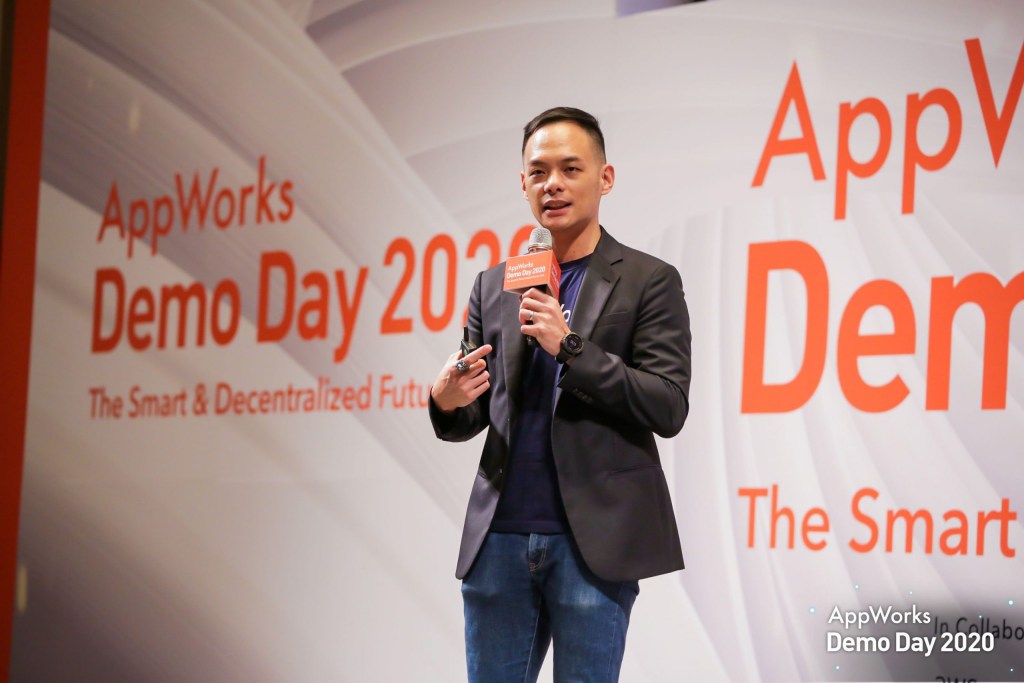
AppWorks founder Lin Chih-chen has pushed back on the view that the startup accelerator’s rise was built on his family background. In a recent post, Lin said the only business meeting he secured through his father’s connections during AppWorks’ founding period was with Acer co-founder Stan Shih, and that meeting brought no investment. Instead, Shih told him the model would not succeed in Taiwan. Lin said AppWorks later proved otherwise, with the firm becoming one of Taiwan’s best-known startup accelerators and going on to raise multiple venture funds with assets under management exceeding NT$10 billion. Lin argued that the four major institutional shareholders in AppWorks Fund I — China Development-related H&Q, Cathay Life, Phison Electronics, and United Daily News Group — were not introduced through his family. He traced all four relationships back, directly or indirectly, to the network he built through his MR JAMIE blog, startup events, accelerator activities, and the broader entrepreneur community. Fund I, formally Ben Sun Venture Capital Co., Ltd., was established in 2012 with initial capital of NT$300 million. His account details how each investor came in through a different path: H&Q saw AppWorks as an early pipeline for software startups, Cathay Life arrived through a chain that began with an email interview request from a Singapore exchange student, Phison invested after a book-promotion interview with founder Pua Khein-Seng, and United Daily News Group joined as it searched for e-commerce and new media opportunities.

1760
Lin Chih-chen says AppWorks’ first fund backers came through MR JAMIE, not family connections