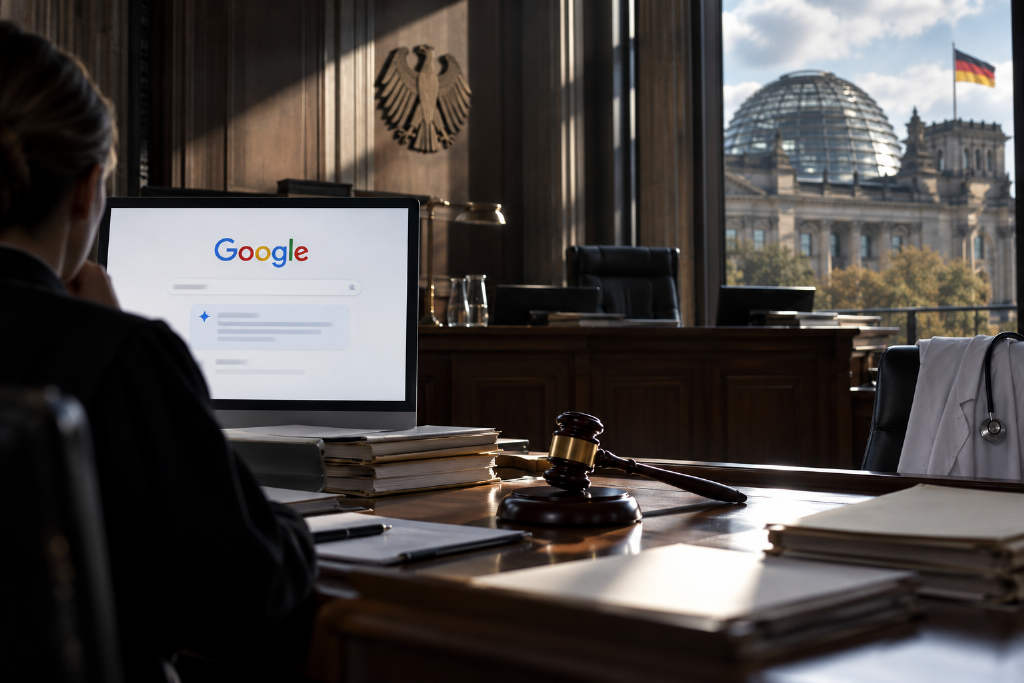
Germany2026-10-18 10:59:54Two German courts say Google can be held liable for AI search summariesGerman courts are moving toward a common legal view that Google can be held responsible for content generated in its AI search summaries. A Munich court had earlier issued what was described as a landmark ruling requiring Google to bear legal responsibility for those AI-generated answers. After appealing, Google chose to settle the case. That approach did not stop similar decisions from emerging. In a separate case, the Aachen Regional Court applied the same legal reasoning after Google’s AI wrongly attributed a criminal offense to a doctor, even though another person was actually involved. According to The Decoder, the rulings suggest German courts are increasingly treating Google’s AI answers as the company’s own content rather than as neutral third-party material.30
Policy and Re2026-07-30 11:24:38Taoyuan court ruling sparks debate as lawyer says judges were warning amateurs, not rejecting AIA civil ruling from the Taoyuan District Court has stirred debate in Taiwan’s legal community after the judge opened the decision with an unusually blunt warning: do not ask AI, do not use AI to draft appellate briefs, and do not assume others cannot tell the text was written by AI. The plaintiff’s claim was dismissed, and many lawyers circulated the ruling as evidence that AI should be kept out of legal drafting. Lawyer Lin Shang-Lun argues that reading goes too far. In his view, the case does not show that AI has no place in legal work; it shows the danger of non-lawyers relying on free or consumer-grade tools to handle professional litigation tasks. He says such tools face hard limits in legal use, including token constraints, the “lost in the middle” problem when processing long case files, and a tendency to hallucinate citations or rulings when they are not connected to proper legal databases such as RAG-based systems or newer MCP real-time retrieval tools. Lin’s broader point is that AI output tracks the skill of the operator. He describes AI as a productivity tool for trained professionals, especially in drafting first versions, rather than a shortcut for people with no domain knowledge. He also notes that leading law firms in the US and UK, as well as institutions in Singapore and South Korea, have already moved to treat AI as part of their legal infrastructure.2000