DDR

ChainCatcher
2026-08-12 06:21:23

Server DDR5 prices rise 15% to 23% this month as 96GB spread narrows

Server DDR5 prices rose 15% to 23% this month as original manufacturers pushed prices higher in the third quarter, according to a report cited by ChainCatcher from the Science and Technology Innovation Board Daily. Contract prices for 32GB, 64GB and 96GB DDR5 RDIMM climbed to $900, $1,590 and $2,650, respectively. In the spot server RDIMM market, trade-side quotes for 32GB D5 were at $1,800 to $2,100, while 64GB D5 traded at $3,000 to $3,200 and 96GB D5 at $3,800 to $4,100. The report said the gap between contract and spot DDR5 prices, especially for 96GB products, has been narrowing. Supply from original manufacturers remains tight and continues to lag demand. At the same time, server mega-clients have become more sensitive to rising memory costs as contract prices move up quarter by quarter. With long-term agreements being finalized, supply for large customers has gained some support, and the pace of DDR5 price increases is expected to turn more moderate.

510
Server DDR5 prices rise 15% to 23% this month as 96GB spread narrows
Changxin Memo
2026-08-11 07:49:54

Changxin DDR5 Yield Rate Tops 90%, PC Makers Split on Adoption

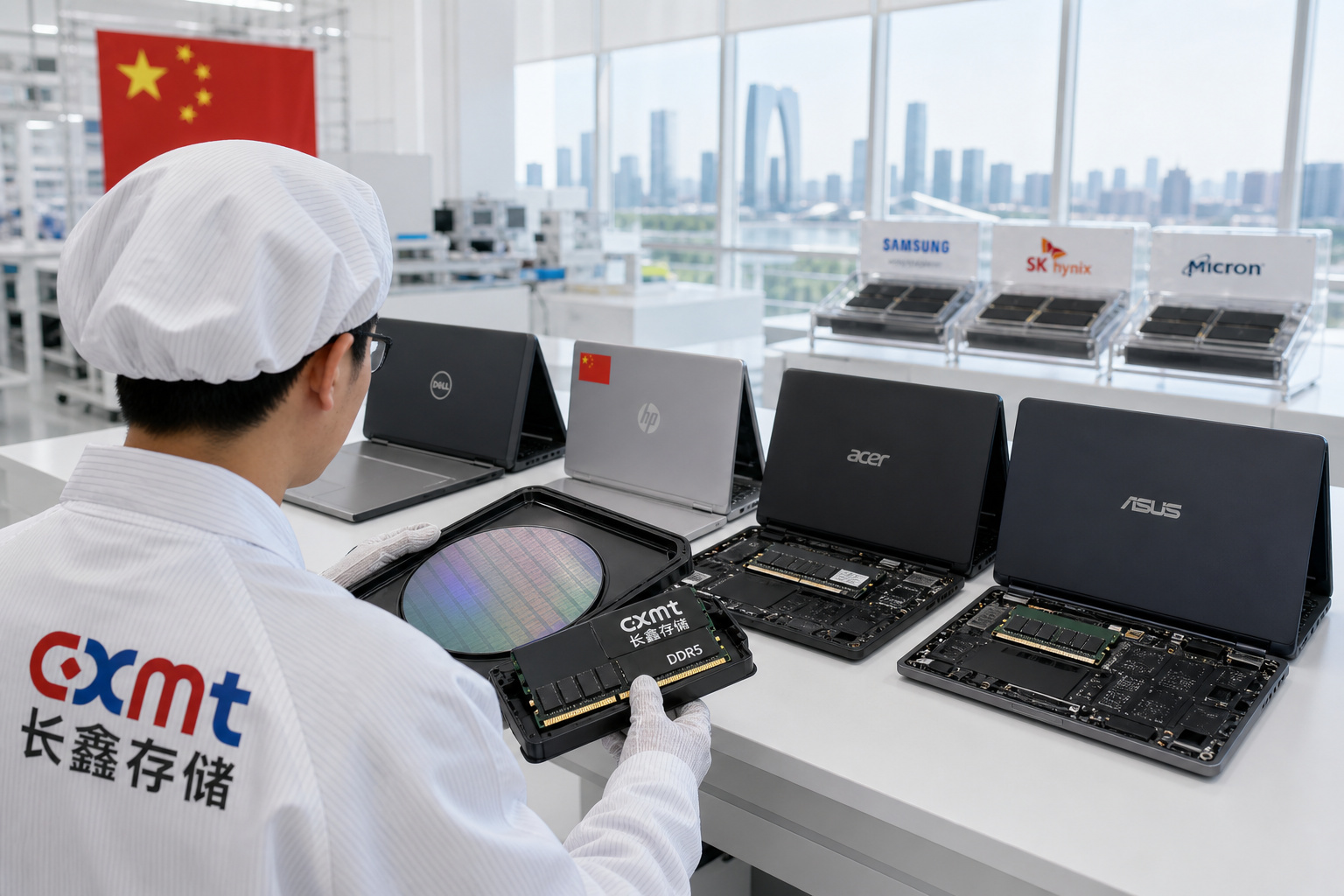
According to Kuai Technology via ChainCatcher, Changxin Memory's 17nm DDR5 chips have reached a yield rate above 90%, leaving the company just about two percentage points behind Samsung's 92-93% yield for comparable generation products. That places Changxin's technical indicators in the global first tier. Several leading PC manufacturers completed certification for Changxin DRAM around mid-year and have started small-batch deployments in some notebook lines. Adoption strategies, however, are far from uniform: Dell has completely prohibited the chips, HP only uses them in mainland China, while Acer and Asus are fitting them into models aimed at mainland China and other emerging markets. The immediate impact on prices from Samsung, SK Hynix and Micron remains limited, mainly because those three are still prioritizing LPDDR5 supply, whereas Changxin is concentrating on expanding DDR5 shipments. PC executives caution that the top three memory suppliers hold more than 90% of the global DRAM share, meaning large-scale adoption requires extreme care. For now, both the number of models using Changxin chips and the total quantities involved are very small.

940
Changxin DDR5 Yield Rate Tops 90%, PC Makers Split on Adoption
UBS
2026-08-11 05:31:27

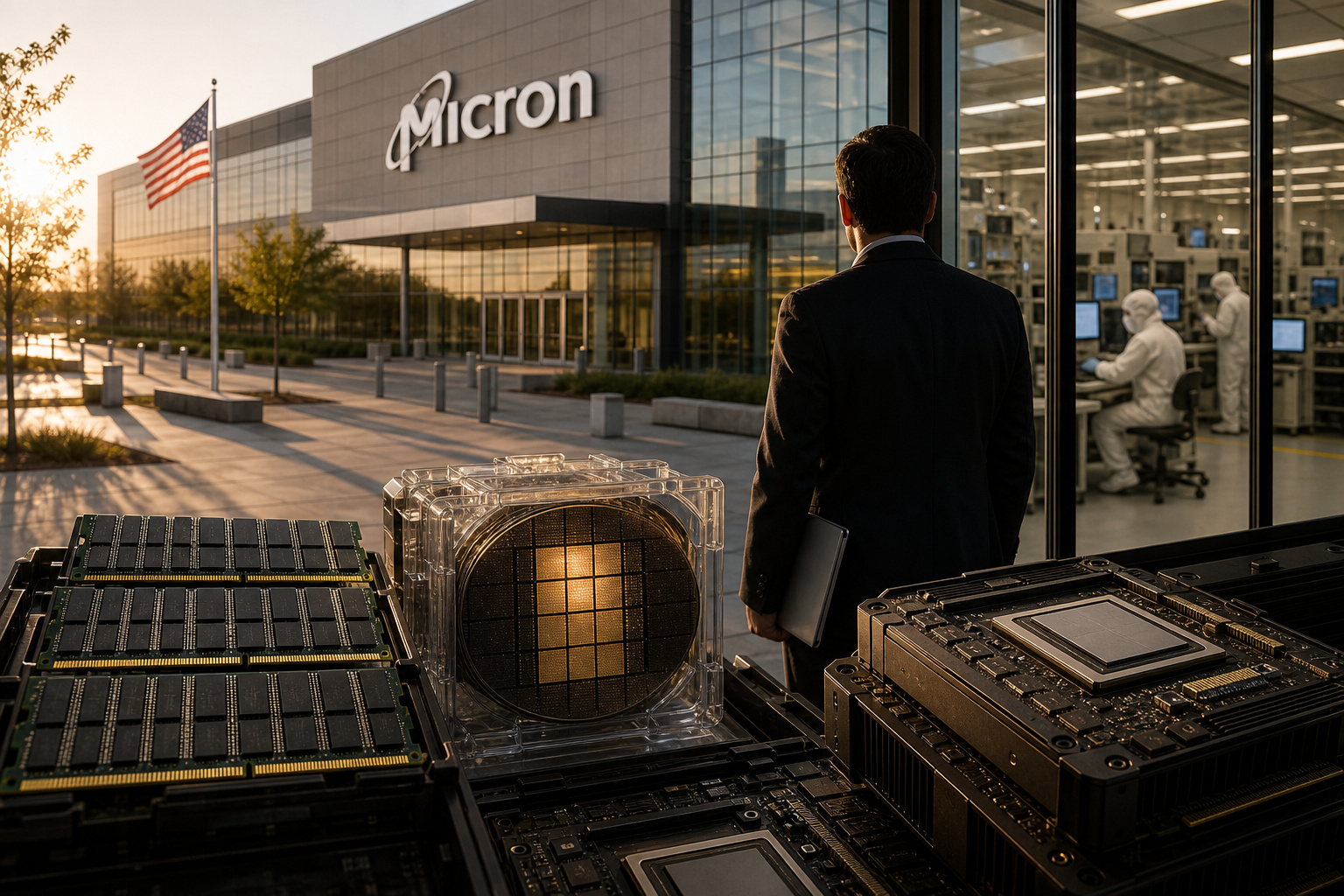
UBS keeps Buy on Micron, says AI memory shortage still supports earnings re-rating

UBS maintained its Buy rating on Micron and kept a $1,625 price target in its latest report, implying about 85% upside from the stock’s Aug. 7 close of $877.57. The bank said short-term noise has emerged in NAND pricing, but supply-demand tightness in DRAM, especially high-bandwidth memory, has exceeded its earlier expectations. The note came after a sharp swing in storage names. SanDisk and Western Digital fell after earnings guidance missed elevated expectations, weighing on sentiment around the AI memory supply chain. Micron then slipped modestly after reports that Apple had tested memory chips from China’s CXMT. Even so, UBS said the market’s pricing of the AI memory cycle has not broken down. UBS centered its thesis on HBM, raising its estimate for 2027 total HBM consumption to 61.5 billion Gb from 58.7 billion Gb as more VR300 units enter the supply chain, despite lower HBM capacity per GPU than previously expected. It also projected stronger pricing across HBM and DDR, while arguing DRAM will remain in undersupply at least through the second quarter of 2028. On earnings, UBS trimmed Micron’s fiscal 2026 and 2027 EPS forecasts, raised its fiscal 2028 EPS estimate, and said cumulative free cash flow could exceed $450 billion by 2028.

960
UBS keeps Buy on Micron, says AI memory shortage still supports earnings re-rating
SK Hynix
2026-08-11 02:03:00

JPMorgan says SK Hynix selloff overstates HBM pricing worries and capex concerns

SK Hynix fell 15% last week, underperforming both the KOSPI, which dropped 5%, and Samsung Electronics, which lost 9%. That pullback pushed three issues to the center of the debate: uncertainty around HBM specifications and pricing, the timing of a new shareholder return plan, and the company’s disclosed 54 trillion won infrastructure capex program. In a research note dated Aug. 9, JPMorgan argued those concerns have been overstated rather than driven by a change in fundamentals. The bank said media reports suggesting SK Hynix could price its 2027 HBM4 products at a 50% discount to rivals were inaccurate. Its own conservative model assumes HBM average selling prices in 2027 rise by less than 40% year over year, supported by product mix decisions, the company’s long-running relationship with Nvidia, and annual price renegotiation flexibility. JPMorgan also said SK Hynix is now expected to unveil an updated shareholder return plan by the end of September, earlier than management’s previous guidance of before year-end. On capex, the bank said the 54 trillion won plan should be read as part of the company’s path toward its 2030 target of one million wafers of capacity rather than as a near-term expansion push. JPMorgan kept its Overweight rating and 2.75 million won target price on the stock.

440
JPMorgan says SK Hynix selloff overstates HBM pricing worries and capex concerns
Apple
2026-08-10 12:15:05

MacBook Air shortages deepen as Apple tests new memory suppliers under DRAM squeeze

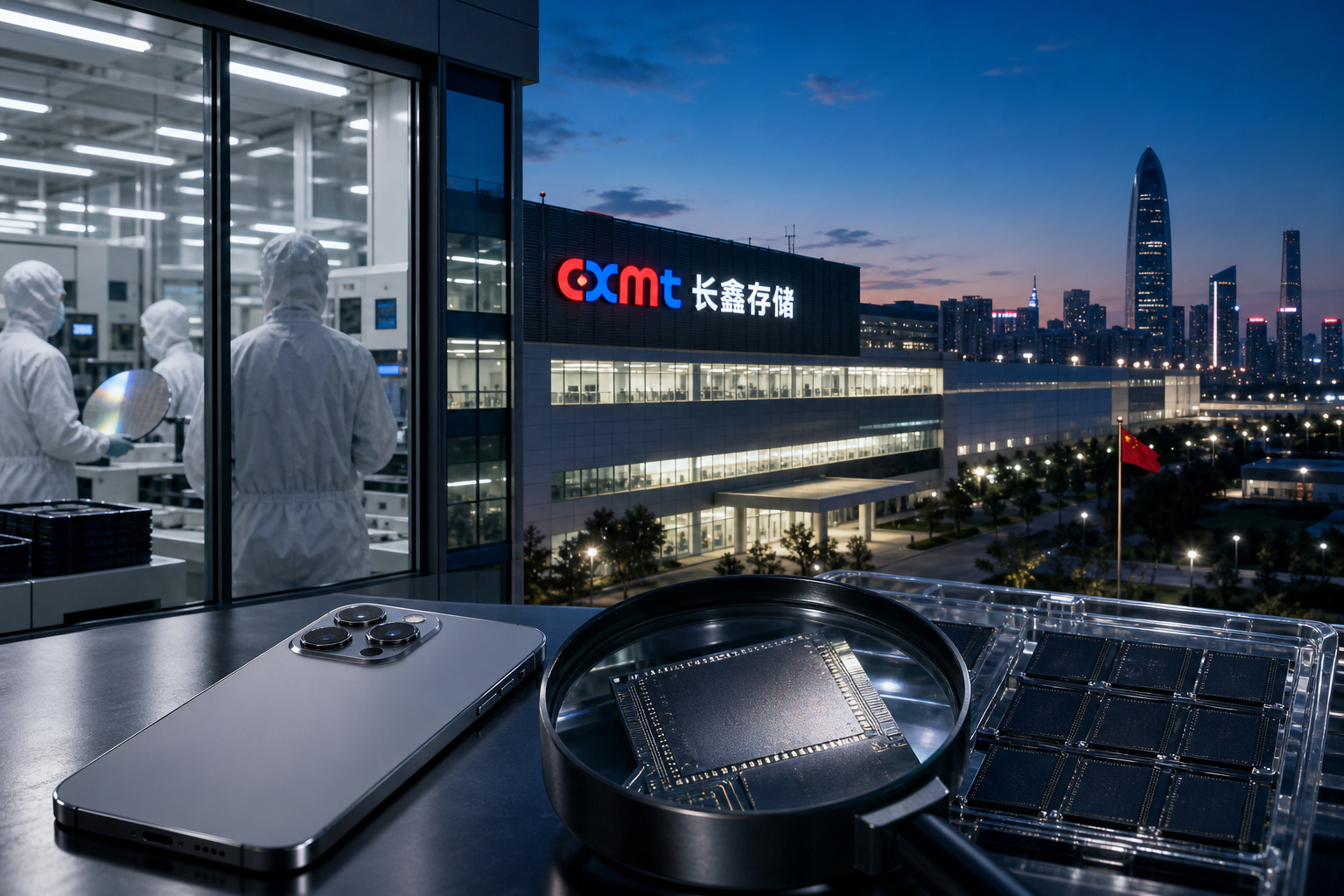
Apple is facing tighter supply conditions for the MacBook Air as a global memory shortage ripples through its hardware lineup during the back-to-school season. Chinese consumers and retailers are reporting longer delivery times, scarce in-store inventory, and especially severe shortages for higher-memory M5 MacBook Air configurations. Apple CEO Tim Cook said on the company’s fiscal third-quarter earnings call that supply constraints in the quarter ended in June mainly hit the Mac business, while also affecting the iPhone and iPad to a lesser extent. He warned that the impact is expected to worsen in the September quarter as supply-chain flexibility declines. The supply crunch has also pushed Apple to look for additional DRAM sources. A report cited by Zhongxin Jingwei said Apple is testing memory chips from ChangXin Memory Technologies, or CXMT, in product lines including the iPhone and MacBook. At the same time, rising AI infrastructure demand has driven up prices for DRAM, NAND, HBM, DDR5 and enterprise SSD products, tightening available capacity across the memory market. Apple said it is evaluating all sourcing options, even as its latest quarterly revenue and Mac sales remained strong.

660
MacBook Air shortages deepen as Apple tests new memory suppliers under DRAM squeeze
Claude Code
2026-08-10 14:03:23

Claude Code switches on auto by default as Upbit expands listings and AI model chatter grows

TechFlowPost’s latest roundup tracked a wide set of developments across AI, crypto, chips, big tech and macro markets. In AI, Claude Code has made its autonomous mode the default setting, shifting the tool from a coding assistant toward a system that can execute commands on its own. At the same time, SemiAnalysis was cited in community discussion claiming Google’s Gemini 3.5 Pro was quietly shelved internally before launch, while another rumored model, Hark Handoff, spread through social channels on unverified benchmark screenshots. Meta was also said to be preparing an open release of its 30B model Muse Glimmer, with 4-bit quantization allowing it to run on a single 24GB GPU. On the crypto side, Upbit listed six tokens including CYS, ICNT and XAN, opening BTC and USDT pairs and putting fresh focus on smaller-cap sectors such as DePIN, chain-wide operating systems and AI networks. Community debate also turned toward the value of on-chain AI agents, with one popular post arguing that many projects simply route AI output into smart contracts without creating new trust assumptions. Elsewhere, traders cut the perceived odds of a September Fed hike ahead of CPI data, a setup that Cointelegraph said could matter for Bitcoin and other risk assets.

600
Claude Code switches on auto by default as Upbit expands listings and AI model chatter grows
Changxin Tech
2026-08-10 08:31:13

Changxin Tech Responds to Reports of Apple Sourcing Storage Chips

On August 10, Changxin Technology's securities department addressed reports that Apple may procure storage semiconductors from Chinese suppliers. The response follows a Wall Street Journal report citing cost pressures from "Chipflation" driven by the AI investment boom. Changxin said all major partnerships and capacity progress will be disclosed via official announcements, prospectus and interim reports. It declined to provide details on DDR6 capacity planning and mass production progress, citing information compliance. The company pledged to follow listing disclosure rules for market rumors.

560
Changxin Tech Responds to Reports of Apple Sourcing Storage Chips
memory chips
2026-08-10 05:49:15

Memory makers are rewriting the cycle with long-term contracts, but the real test comes after 2028

Samsung Electronics, SK hynix and Micron Technology have all posted record quarterly results, yet their shares have pulled back over the past month as investors question whether the memory sector is heading toward the familiar boom-bust pattern of rising prices, aggressive capacity additions, oversupply and collapse. Public disclosures and comments from executives suggest this cycle is different in one important way: spending is rising, but the new capacity is being directed mainly toward AI products such as HBM and server DRAM rather than broad-based expansion across end markets. At the same time, the three suppliers are shifting away from quarterly pricing and into three- to five-year supply agreements that include floor prices, take-or-pay commitments, prepayments, deposits and, in some cases, minimum revenue guarantees. Micron has disclosed 16 five-year strategic customer agreements, while Samsung said it plans to place 60% to 70% of capacity under multi-year contracts. Industry researchers and company executives cited in the report expect supply tightness to extend through 2027 and potentially into 2028, with EUV delivery times and wafer reallocation to HBM limiting near-term relief. The article also points to a second layer of change after 2028: how quickly new capacity arrives, whether long-term contracts can keep earnings stable even if spot prices soften, and how much influence CXMT and domestic Chinese suppliers gain in consumer DRAM, LPDDR and eventually HBM-related manufacturing chains. Those factors, rather than the current price spike alone, may determine whether the sector truly breaks from its historical “death spiral.”

920
Memory makers are rewriting the cycle with long-term contracts, but the real test comes after 2028