DDR

Apple
2026-08-06 04:10:44

Apple’s blowout quarter couldn’t stop a sell-off as AI supply strains cloud the outlook

Apple reported a standout quarter on July 30 for fiscal 2026 third quarter, posting $109.42 billion in revenue, up 16% year over year, diluted EPS of $2.02, up 29%, and gross margin of 50.1%. Nearly every major metric topped Wall Street expectations. Yet the stock fell about 5.5% in after-hours trading and slid nearly 10% at one point in the following session, wiping out close to $500 billion in market value. Investors focused less on what Apple had just delivered and more on what management said comes next: September-quarter revenue growth is expected at 9% to 11%, below the roughly 12% consensus, while gross margin is guided to 47% to 48%. The report argues that the market reaction reflects a broader shift in the AI trade. Apple is now being pulled into the global fight for semiconductor resources as AI infrastructure absorbs more high-quality memory capacity and advanced manufacturing supply. That pressure shows up in two places at once: rising DRAM and LPDDR costs, and tight advanced-node capacity for Apple Silicon. Apple has tried to smooth the hit by building inventory, with total inventory reaching $11.09 billion at the end of June 2026 and components rising to about $7.65 billion. But inventory cannot create new capacity. The debate around Apple now centers on whether it can protect volume, pricing and margins at the same time, and whether Apple Intelligence and Siri AI can turn into device upgrades, subscriptions and higher lifetime user value quickly enough to justify its valuation.

770
Apple’s blowout quarter couldn’t stop a sell-off as AI supply strains cloud the outlook
Goldman Sachs
2026-08-05 04:02:11

Goldman Sachs Sticks With Buy Calls on Samsung and SK Hynix, Betting on HBM Repricing and Long-Term Supply Deals

Goldman Sachs has reaffirmed its buy ratings on Samsung Electronics and SK Hynix even after the two stocks fell 23% and 35% over the past month. The bank’s case rests on three points: HBM pricing could reset higher in 2027, multi-year long-term agreements are locking in capacity and improving revenue visibility, and low inventory levels across suppliers are reducing the odds of a near-term downcycle. Goldman expects both companies’ blended HBM average selling prices to approach $2.9/Gb in 2027, with roughly 60% of the increase coming from repricing of comparable products and the rest from a richer mix of newer, higher-layer HBM. It also sees HBM taking a larger share of DRAM revenue for both companies through 2028. At the same time, the report says risks remain clear: AI server demand could disappoint, the final terms of long-term agreements may end up weaker than expected, capacity additions could still pressure legacy memory pricing, and China-based CXMT remains a supply-side variable over the longer run even if it is unlikely to change the tight global balance in the near to medium term.

940
Goldman Sachs Sticks With Buy Calls on Samsung and SK Hynix, Betting on HBM Repricing and Long-Term Supply Deals
DRAM
2026-08-05 06:20:37

Apple's CXMT Price-Cut Demand Rejected; Samsung, SK Hynix Gain DRAM Leverage

Apple's demand for lower prices on LPDDR5X and other mobile DRAM from Chinese chipmaker CXMT has been rejected, South Korea's Digital Daily reports. The move was part of Apple's effort to cut component costs for its next-generation iPhone and smart devices. CXMT is keeping quotes at or above the levels offered by Samsung Electronics and SK Hynix, backed by long-term high-priced supply agreements with Huawei, Xiaomi and other Chinese manufacturers. The broader DRAM market is tightening: major vendors are shifting capacity to HBM, trimming output of commodity DDR5 and LPDDR5X and pushing prices higher, which erodes the long-standing strategy of using cheap Chinese components to cut procurement costs. CXMT's absorption of China's commodity DRAM demand also relieves Samsung and SK Hynix of pressure to clear low-margin inventory. Both Korean firms are now focusing on AI memory products including HBM4, LPCAMM2 and enterprise SSDs, strengthening their hand in long-term pricing talks with global tech companies in the second half.

790
Apple's CXMT Price-Cut Demand Rejected; Samsung, SK Hynix Gain DRAM Leverage
DRAM
2026-08-05 02:59:43

DRAM pricing surge lifts July revenue at Nanya and ESMT to record highs

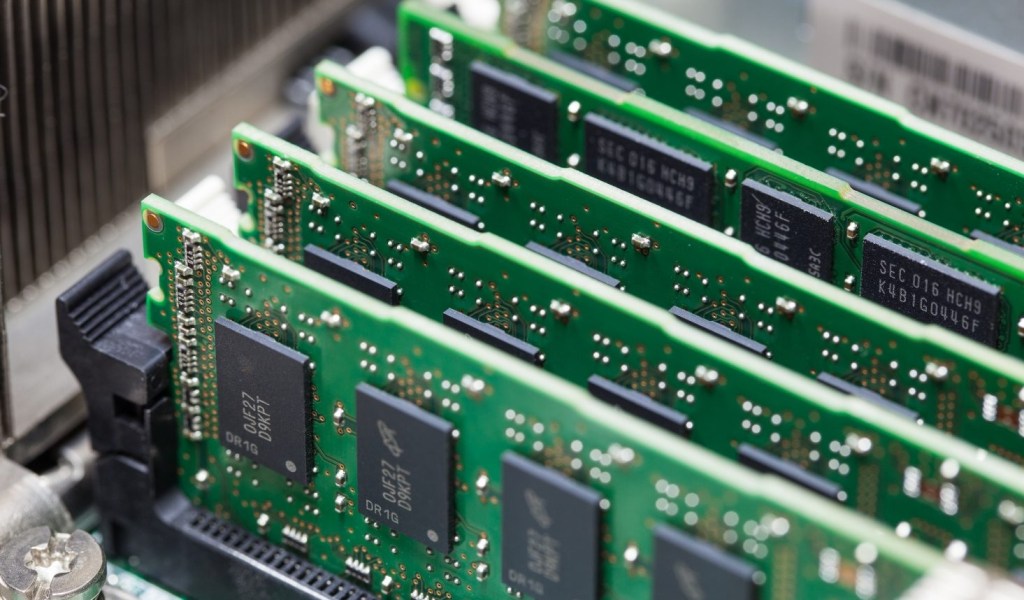
Taiwan memory makers Nanya Technology and ESMT both posted record monthly revenue in July as the DRAM upcycle continued, with higher prices doing most of the work. Nanya reported consolidated revenue of NT$43.868 billion for the month, up 49.27% from June and 719.61% from a year earlier, marking its ninth straight monthly high. ESMT posted NT$6.785 billion, up 40.02% month over month and 491.06% year over year, also a record. The report said the latest rally is being driven by pricing rather than shipment growth. In Nanya’s case, second-quarter DRAM average selling prices rose more than 60% from the previous quarter while bit shipments were nearly flat, meaning the jump in revenue and profit came largely from stronger pricing. Supply remains tight as AI infrastructure demand keeps pulling wafer capacity and R&D resources toward HBM, LPDDR5 and DDR5 at Samsung, SK hynix and Micron, squeezing legacy DRAM lines such as DDR4, LPDDR4, DDR3 and DDR2. Spot prices have moved in the same direction. CFM Memory data showed DDR4 8Gb 3200 rose 12.82% in a single week, while DDR5 24Gb and DDR5 16Gb both climbed 14.29%.

790
DRAM pricing surge lifts July revenue at Nanya and ESMT to record highs
ChangXin Tech
2026-08-04 12:24:08

Who backed ChangXin Technology to its blockbuster listing? Hefei state capital, follow-on investors and Zhu Yiming stand out

ChangXin Technology made its STAR Market debut on July 27 and immediately reached a market value of RMB 3 trillion, making it the most valuable listed company in China’s A-share market and the largest technology company ever listed there by market capitalization. The story behind that listing is not a single investor win. It is the result of a decade-long funding chain that started with Hefei state-owned capital, expanded through nine financing rounds from 2018 to June 2025, and eventually involved 60 pre-IPO shareholders plus 30 strategic investors at the IPO stage. According to the report republished by MarsBit from the WeChat account Dushuyizhi, Hefei state capital emerged as the biggest financial winner, holding about 22.138 billion shares, or roughly 33.1% of the company, through several entities after the offering. Based on the first-day closing price of RMB 49 per share, that stake was worth RMB 1.08476 trillion. The report said that figure is roughly 70% of Hefei’s 2025 GDP of about RMB 1.421 trillion. The report also highlighted the role of founder Zhu Yiming and the management team, whose holdings approached RMB 98.6 billion on the first trading day, with Zhu’s personal stake valued at RMB 77.9 billion. External investors also posted outsized gains. Alibaba-related entities held more than 3.013 billion shares in total, valued at RMB 147.6 billion at the first-day close. Behind the listing, the report described three core forces: Hefei state capital, relay financing from state, industrial and insurance investors, and a founder-led operating team under a no-controlling-shareholder governance structure.

770
Who backed ChangXin Technology to its blockbuster listing? Hefei state capital, follow-on investors and Zhu Yiming stand out
TrendForce
2026-08-04 07:25:54

TrendForce says DRAM tightness may last through 2027 as Nvidia weighs lower HBM options for Rubin Ultra

TrendForce said in its latest research that tight DRAM supply is expected to continue through 2027, while uncertainty around the HBM4e validation schedule is pushing AI chipmakers to reconsider the memory stack used in next-generation products. According to the report, Nvidia has been evaluating multiple HBM options for Rubin Ultra since the third quarter of 2026, expanding beyond the original 12-Hi HBM4e design to include 8-Hi HBM4e, 12-Hi HBM4, and 8-Hi HBM4 alternatives, with final specifications still undecided. The firm also noted that Nvidia had already decided to halve SOCAMM capacity in its next-generation Vera Rubin Superchip module because the LPDDR5X supply bottleneck is expected to persist through 2027. TrendForce said the shift away from 12-Hi HBM4e is tied to broader DRAM shortages in 2027, which could constrain wafer allocation to HBM, as well as uncertainty over the mass-production schedule and yield ramp for 12-Hi HBM4e. It expects HBM bit shipments to grow about 50% to 60% year over year in 2027, but still fall short of demand, leaving suppliers with pricing power and likely driving HBM prices sharply higher.

740
TrendForce says DRAM tightness may last through 2027 as Nvidia weighs lower HBM options for Rubin Ultra
NVIDIA
2026-08-03 16:04:54

NVIDIA says Vera BlueField-4 STX lifts AI storage performance by as much as 3.67x

NVIDIA has released new benchmark results for its Vera BlueField-4 STX storage processor, saying the company’s Vera CPU-based AI-native storage platform posted clear gains over traditional x86 CPUs across a range of storage tasks. According to NVIDIA, the tests covered encryption, compression, data integrity checks, and recovery workloads that are becoming more demanding as AI agent applications scale and storage systems handle enterprise knowledge bases, long-term memory, KV cache, tool-call data, and model outputs. In the benchmark figures disclosed by the company, AES-128 encryption throughput improved by as much as 1.43x and decryption throughput by up to 1.29x. Reed-Solomon recovery reached up to 3.26x, CRC32C data integrity checks rose by as much as 3.67x, compression throughput increased by up to 3.29x, and decompression performance improved by as much as 1.72x. NVIDIA also said overall throughput in a combined compression-and-encryption storage pipeline improved by as much as 3.21x. The company said Vera CPU uses its in-house Olympus core architecture with 88 Armv9.2-compatible CPU cores, 176 threads, Scalable Coherency Fabric, and a SOCAMM2 LPDDR5X memory system, with up to 3.4 TB/s of interconnect bandwidth and up to 1.2 TB/s of memory bandwidth.

590
NVIDIA says Vera BlueField-4 STX lifts AI storage performance by as much as 3.67x
AMD
2026-08-03 05:02:52

AMD plans at least a 10% increase for GPU memory kits in August

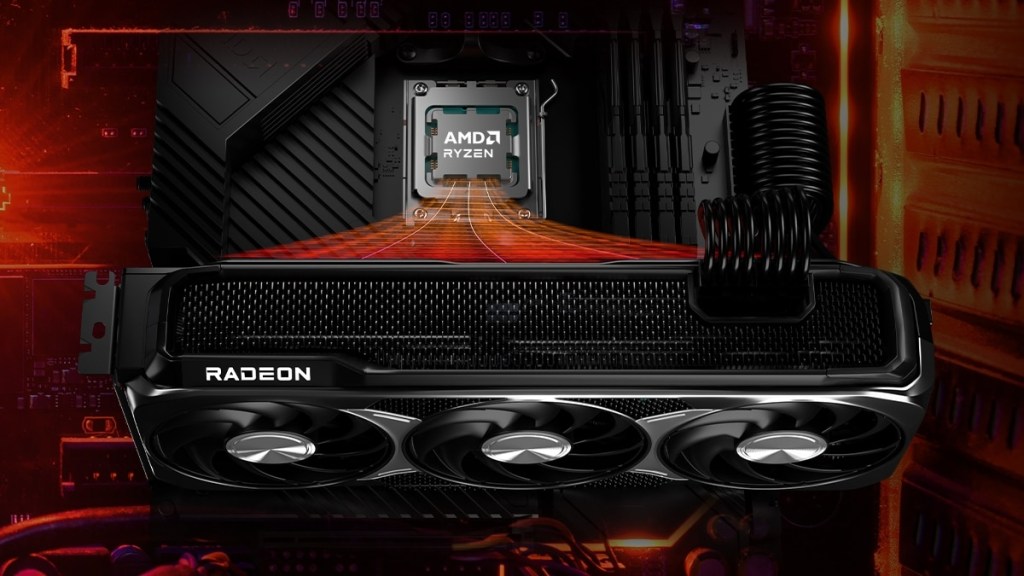
AMD has notified its add-in-board partners that it plans to raise GPU memory kit pricing by at least 10% in August, according to ABMedia, citing Wccftech and a screenshot obtained by ChannelGate on July 31, 2026. The report says the move will hit board makers’ component costs first and could later show up in retail graphics card prices, with the RX 9000 series expected to be among the most affected product lines. ABMedia said AMD had been considering a price increase about a month earlier but held back because NVIDIA still dominates the discrete GPU market in many regions. The company reportedly moved only after NVIDIA raised pricing on its RTX 50 series, a step that was followed by price increases in China. The article ties the change to sharply higher upstream DRAM costs this year, with some DRAM items nearing a doubling in price. Because AMD’s RX 9000 series and prior-generation products use GDDR6, the report says the increase may affect multiple generations. ABMedia also pointed to AMD’s recent Helios AI rack pricing as a sign that the company’s broader pricing strategy may be shifting beyond pure low-price competition.

780
AMD plans at least a 10% increase for GPU memory kits in August