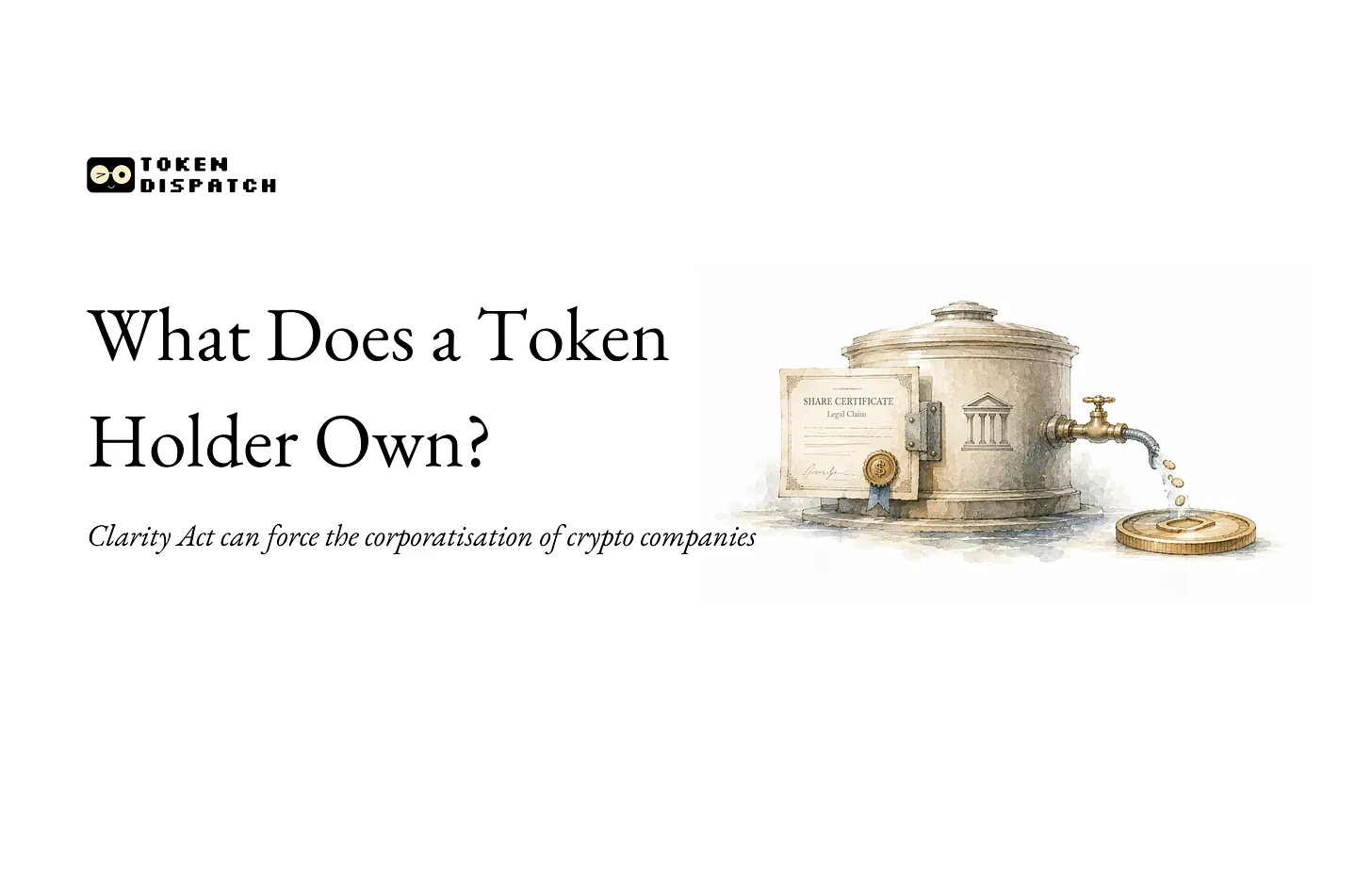
Venice and Aave put token-holder rights under scrutiny as buybacks collide with equity claims
A new debate is taking shape across crypto as token buybacks, governance rights and equity financing begin to overlap in ways that expose a basic legal gap: token holders are not shareholders. Using Venice AI, Aave, Hyperliquid and Houdini Swap as examples, the article argues that many value-accrual mechanisms marketed to token holders remain policy choices rather than enforceable claims on revenue, assets or sale proceeds. The issue has become sharper as mature protocols seek outside capital. Venice AI’s $65 million Series A on July 1, led by Dragonfly and Coinbase Ventures at a $1 billion valuation, created a capital structure in which equity investors received 8.98% ownership plus token incentives, while VVV holders were left relying on a voluntary burn program. The contrast, the piece argues, shows how equity comes with contracts, board rights, information access and anti-dilution protection, while token holders often depend on management discretion. The article also ties the problem to the proposed CLARITY Act, which would separate digital commodities from investment contract assets. In that framework, tokens may carry governance and staking features, but not legal claims on company revenue or assets. That would make it harder for crypto projects to present tokens as quasi-equity while staying outside securities rules.