DMA

Anthropic
2026-08-19 13:04:37

Anthropic’s annualized revenue hits $11.6 billion as Unitree surges 460% on A-share debut

TechFlow’s Aug. 19 market roundup put artificial intelligence, crypto, semiconductors, U.S. equities and macro headlines into one tape. The standout AI update came from Anthropic, whose annualized revenue reportedly doubled to $11.6 billion, overtaking OpenAI for the first time, with Claude Code cited as the main growth driver. Another Claude-related thread drew attention at the same time: users shared a case in which Claude wrote a macOS driver for a HP printer that only officially supports Windows, while Reddit users were also discussing another apparent Claude outage. In crypto, spot Bitcoin ETFs added $189 million in a single day, bringing August net inflows close to $1 billion before the month has ended. Cointelegraph also reported that BlackRock believes Bitcoin has largely worked off the speculative excess that previously led to a 50% drawdown. Ripple raised $275 million to target U.S. prime brokerage demand, while Arthur Hayes became CEO of Flop Labs, a project expected to hold an airdrop in the fourth quarter. Outside crypto, semiconductor selling intensified, with SOXL down about 14% and South Korea’s KOSPI triggering a sidecar halt after early losses deepened. In China’s A-share market, Unitree closed up 460% after surging as much as 629% intraday.


570
Anthropic’s annualized revenue hits $11.6 billion as Unitree surges 460% on A-share debut
AI Agents
2026-08-11 00:17:09

AI agents are pushing storage into the runtime loop, reshaping the role of SSDs, HBM and memory tiers

A MarsBit report argues that AI agents are changing storage from a passive persistence layer into part of the execution path itself. As agents continuously observe, reason, call tools, write back results and preserve state, the value of storage is no longer limited to saving data after a task is complete. The report says SSDs are beginning to take on functions tied to model weights, KV cache spillover, indexing, encryption, compression, lifecycle control and long-term memory, pointing to a broader shift toward programmable, functional SSDs. The piece lays out how this transition could play out on both devices and in the cloud. On the edge, SSDs may become the long-lived state layer for personal agents, holding local models, adapters, vector indexes, personal memory and tool traces. In cloud deployments, storage nodes could move closer to the inference path, handling shared prefixes, KV data, adapters, vector search and governance. The report cites Mooncake and NVIDIA CMX as examples of systems where storage is already participating in token production rather than merely holding cold data. It also argues that the rise of agent systems does not diminish HBM. Instead, HBM, HBF, DRAM/CXL and SSDs are likely to be re-tiered by speed, mutability, capacity, cost and governance needs. Existing AI SSD efforts from Phison, Longsys, Maxio and partners are presented as early industrial samples of this shift, where the focus is moving from faster disks for AI workloads to a reallocation of responsibilities across runtime, memory hierarchy, controllers and flash.

1400
AI agents are pushing storage into the runtime loop, reshaping the role of SSDs, HBM and memory tiers
European Comm
2026-07-27 04:54:33

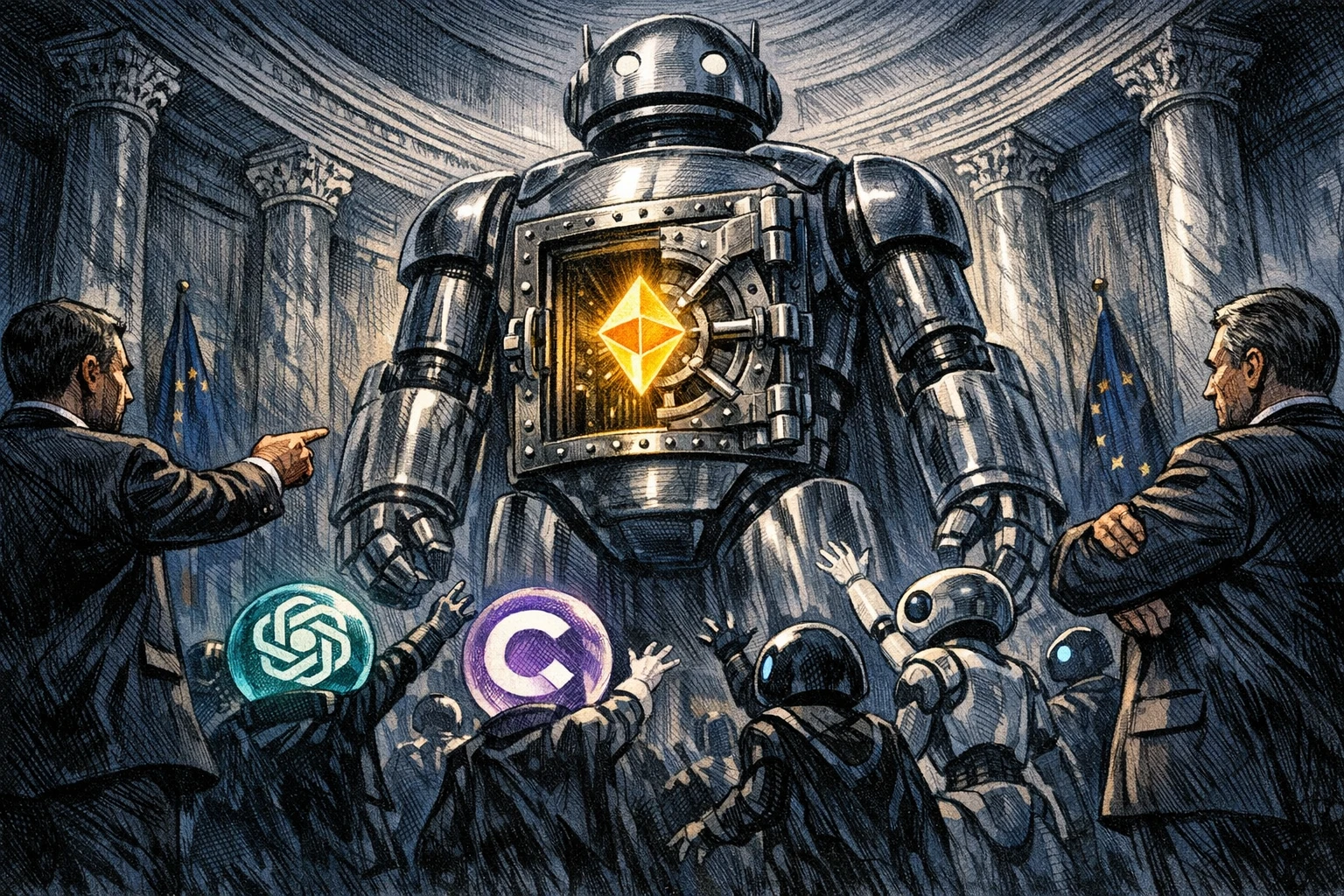
EU Commission fines Google €890 million under DMA

The European Commission said on July 23 that it had fined Google a total of €890 million under the Digital Markets Act, marking the first time the company has been penalized under the law. The decision covers two violations: self-preferencing in search and restrictions tied to app store payments. Of the total, €460 million was linked to Google steering users in search toward its own services, while €430 million addressed conduct that prevented app developers from directing users to cheaper payment options outside the app. The ruling has direct operational implications for crypto exchanges and fintech apps, as developers can now inform users that subscriptions may be completed through a browser to avoid in-app purchase fees. The item was published by Techub and cited CryptoBriefing.

1150
EU Commission fines Google €890 million under DMA