Doom

Anthropic
2026-08-10 05:51:22

Anthropic CEO Dario Amodei Cast as Both AI Doomsayer and Builder in The Information Profile

A lengthy profile cited by MarsBit paints Anthropic chief executive Dario Amodei as one of Silicon Valley’s most contradictory figures: a leader who has spent years warning that artificial intelligence could pose an existential threat to humanity, while also pushing aggressively to build ever more powerful AI systems himself. According to The Information article by Cory Weinberg, reported over 42 days through interviews with subordinates, rivals and investors, Amodei’s worldview has shaped nearly every layer of Anthropic’s culture, from secrecy practices and internal governance to its public messaging around AI risk. The report says Amodei had been focused on AGI safety as early as 2017 and later pushed strict “information hazard” reviews inside OpenAI before research could be published. It also recounts how his security team reportedly paused key funding talks in 2019 over concerns tied to GPT-3. After leaving OpenAI and founding Anthropic, that same emphasis on existential risk remained central. At the same time, investors and employees describe him as intensely focused on the “singularity,” less interested in day-to-day corporate administration than in the long-range consequences of AI for economics, politics, war and society. The profile also highlights Anthropic’s rapid commercial rise: five years after launch, the company has more than 3,000 employees and a reported valuation of $965 billion. That combination of extraordinary growth and unusually stark risk rhetoric has left some investors uneasy.


640
Anthropic CEO Dario Amodei Cast as Both AI Doomsayer and Builder in The Information Profile
whale movemen
2026-08-05 06:00:00

GMGN Data: Top 5 Smart-Money Net Inflows in 24H; CATE Leads, Niggolas Surges 7,196%

Data provider GMGN tracked wallet flows showing which tokens drew the most attention from smart-money addresses over the latest 24-hour window. The list, relayed by ChainCatcher, is led by CATE (Ai66....ump), which took in $30,000 in net inflows. Over the same stretch, however, CATE fell 39.9% to last trade at $0.0172. Niggolas (9VKC....ump) followed with $2,000 in net inflows and a 7,196.3% surge, last quoted at $0.0002. BOARD (CiPx....ump) also recorded $2,000 in net inflows, climbing 778.4% to $0.0001. Doom (Gymb....ump) captured $962 in net inflows and rose 9.9% to $0.0026. YES (9GyR....Vpo) rounded out the top five with $650 in net inflows, slipping 6.1% to $0.0001. CATE was the only token with inflows above $10,000, while the remaining four drew less than $2,100 each. Tokens are listed with truncated GMGN labels, and all price changes are measured over the trailing 24 hours.

750
GMGN Data: Top 5 Smart-Money Net Inflows in 24H; CATE Leads, Niggolas Surges 7,196%
BitMEX
2026-07-23 09:34:03

BitMEX to shut down trading on Sept. 23, but the perpetual futures model it popularized lives on

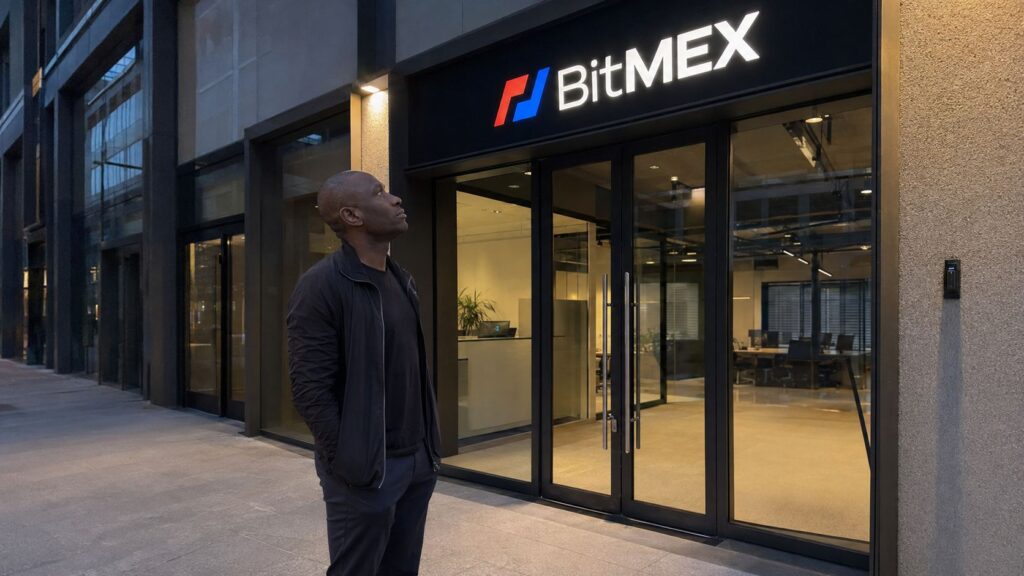
BitMEX said on July 23 that it will stop providing trading services on Sept. 23, 2026, drawing a formal end to one of the most influential names in crypto derivatives. The exchange did not give a detailed reason in its farewell message, saying only that its board had decided to close the venue after reviewing the company and the broader crypto industry. Its market position had faded long before the shutdown announcement. Binance, OKX and Bybit now dominate centralized crypto derivatives, while on-chain venues such as Hyperliquid have captured a newer generation of traders. Even so, BitMEX remains central to the history of the market because it turned perpetual futures into a usable product and spread that structure across the industry. Founded in Hong Kong in 2014 by Arthur Hayes, Ben Delo and Samuel Reed, BitMEX became known for offering 100x leverage and for operating in an era with limited regulation and no KYC requirements. In May 2016, it launched XBTUSD, described in the source article as the first perpetual contract in financial history. The product removed expiry dates and used an eight-hour funding mechanism to keep contract prices aligned with spot. The exchange’s decline accelerated after the March 12, 2020 market crash and U.S. enforcement action on Oct. 1, 2020. Founders later pleaded guilty, the company was fined, and compulsory KYC erased one of its earliest advantages. BitMEX is leaving the market, but perpetuals remain one of crypto’s most enduring exports to modern finance.

690
BitMEX to shut down trading on Sept. 23, but the perpetual futures model it popularized lives on
BitMEX
2026-07-23 09:23:06

BitMEX to shut down on Sept. 23, 2026, closing the exchange that helped define crypto perpetuals

BitMEX said it will shut down on Sept. 23, 2026, ending an 11-year run for one of the most influential exchanges in crypto history. The platform, founded in 2014 by Arthur Hayes, Ben Delo, and Samuel Reed, introduced the perpetual swap format and 100x leverage that later became standard across crypto derivatives venues. BitMEX said the closure followed a strategic review by parent company HDR Global Trading and stressed that the exchange is not insolvent and has assets exceeding liabilities. The company’s rise and decline track a major chapter in crypto market structure. BitMEX became the world’s largest crypto derivatives exchange by 2018, but its position weakened after U.S. authorities charged its founders and executive Gregory Dwyer in 2020 with violating the Bank Secrecy Act over anti-money laundering and KYC failures. Arthur Hayes later surrendered, pleaded guilty, and was sentenced in 2022. In March 2025, Donald Trump granted full and unconditional pardons to Hayes, Delo, Reed, and Dwyer. After leaving BitMEX’s daily operations, Hayes shifted to Maelstrom, his family office, which the report said raised a $250 million fund in 2025 focused on early-stage infrastructure, DeFi, and Web3 protocols.

630
BitMEX to shut down on Sept. 23, 2026, closing the exchange that helped define crypto perpetuals