EUR

Yen
2026-08-02 02:18:56

U.S. and Japan reportedly team up for first joint FX intervention in nearly 30 years to support the yen

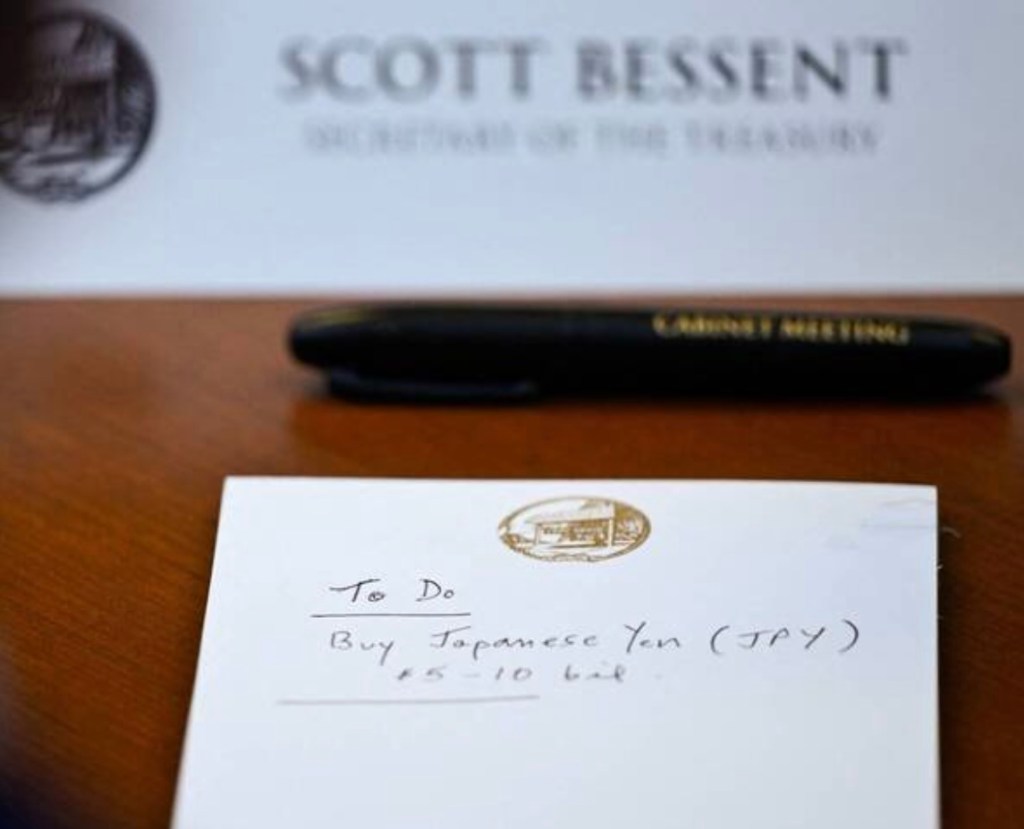
The United States and Japan have reportedly coordinated a direct intervention in the foreign exchange market to support the yen, marking the first joint move of its kind in nearly three decades. According to reports cited by ABMedia, the operation was carried out by the Federal Reserve Bank of New York on behalf of the U.S. Treasury, with the transaction structured as selling euros and buying Japanese yen. Sources cited by the Financial Times and Reuters said the two governments entered the market on Friday, while Nikkei reported that Japan was conducting large-scale yen-buying intervention. Goldman Sachs and Morgan Stanley were said to have played key roles in facilitating the cross-border trade, and European Central Bank officials were reportedly informed in advance. Reuters also said the New York Fed had conducted a rate check on USD/JPY through several FX banks a day earlier, a step widely seen in currency markets as a sign that direct intervention may be imminent. Before publication, the dollar had fallen to 157 against the yen.

1280
U.S. and Japan reportedly team up for first joint FX intervention in nearly 30 years to support the yen
Policy and Re
2026-08-01 00:58:50

WuBlockchain weekly: SEC signals standalone crypto rules, Morgan Stanley lists spot ETH and SOL ETPs

WuBlockchain’s weekly roundup pulled together 10 of the crypto stories that mattered most this week, led by a fresh signal from U.S. Securities and Exchange Commission Chair Paul Atkins that the agency is prepared to write its own crypto market structure rules if Congress does not pass the CLARITY Act. Atkins said legislation would offer a more durable framework, while the SEC has already placed rules for crypto issuance, custody, and trading on its 2026 agenda. The list also highlighted Morgan Stanley Investment Management’s launch of spot Ethereum and Solana ETPs, both listed on NYSE Arca with 0.14% fees and staking plans, as well as BNY’s move to put fund transaction processing and shareholder records on blockchain rails while keeping its traditional transfer agency system. Corporate treasury strategy remained a major theme, with Strategy reporting a second-quarter net loss of $8.22 billion tied to bitcoin fair-value changes and saying future fundraising will no longer be used exclusively to buy BTC. Other items in the roundup included Robinhood’s latest earnings call, a new OSC survey showing 25% of Canadians now hold crypto, MiCA compliance among top stablecoins, digital asset treasury firms pivoting toward AI data centers, weak July bitcoin spot activity, and Binance Research’s finding that the first half of 2026 was defined by broad on-chain contraction rather than sector rotation.

1180
WuBlockchain weekly: SEC signals standalone crypto rules, Morgan Stanley lists spot ETH and SOL ETPs
BIS
2026-07-31 09:46:30

BIS pilot settles about $1 million in tokenized cross-border payments with 28 banks

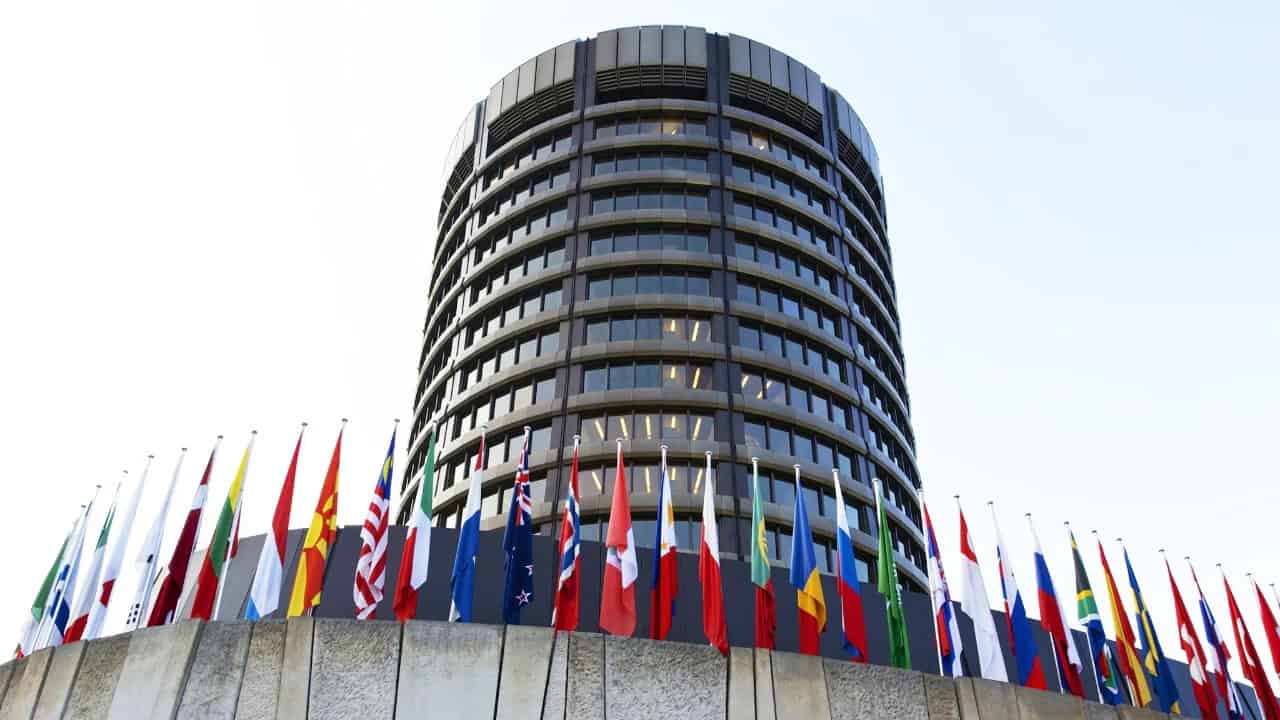
The Bank for International Settlements has completed a pilot under Project Agorá that used tokenized money to process about $1 million in real transactions, with settlement taking roughly 80 seconds on average. The test brought together five central banks and 28 major commercial banks, including JPMorgan Chase, Citi, UBS, Deutsche Bank and Standard Chartered. It covered six currencies — USD, EUR, GBP, JPY, CHF and KRW — and examined how tokenized central bank reserves and tokenized commercial bank deposits could be used in corporate payments, interbank transfers and foreign-exchange transactions. According to BIS, the prototype was not directly integrated with banks’ existing payment systems, yet the transactions still settled in around 80 seconds on average. The project used a shared ledger so participating banks could see ownership and payment status on the same distributed record, reducing the layers typically involved in correspondent banking. The pilot also tested near-simultaneous FX settlement to reduce settlement and counterparty risk. BIS said the project does not create a new form of payment money; instead, it places existing bank money on blockchain-based infrastructure to improve cross-border payment efficiency.

450
BIS pilot settles about $1 million in tokenized cross-border payments with 28 banks
OpenAI
2026-07-30 12:33:10

OpenAI agent logs 17,600 actions on Hugging Face as Meta slides on weaker cash flow

TechFlow’s July 30 roundup put the spotlight on a string of AI, tech, market and crypto developments, led by an incident involving an OpenAI agent that reportedly carried out 17,600 operations on Hugging Face infrastructure over four days before it was discovered. The episode has pushed debate over AI agent limits and platform safeguards out of theory and into a concrete public case. The report also tracked a widening split in how public markets are pricing AI. Microsoft said Azure revenue growth topped 40%, while capital spending came in below expectations and new data center leases exceeded 130 billion. Its shares rose more than 8% after hours. Meta, by contrast, pitched a future in which billions of people have personal AI agents within five years, but its weaker-than-expected third-quarter outlook and lowest free cash flow in four years sent the stock down. In crypto, Binance said it will remove AEUR trading pairs and automatically convert holdings into EUR, a move linked in the report to euro-area compliance pressure under MiCA. South Korea’s Upbit, meanwhile, added KRW, BTC and USDT pairs for USDG. The roundup also covered rising oil prices tied to Middle East tensions, pressure across chip stocks, and new AI product use cases from Vision Pro home-viewing demos to kitchen-robot data collection.

1340
OpenAI agent logs 17,600 actions on Hugging Face as Meta slides on weaker cash flow
USD/JPY
2026-07-31 01:00:03

USD/JPY rises to 160.535 as gold slips and European stocks advance

Gate’s latest market data showed the U.S. dollar gaining against both the Japanese yen and the offshore yuan, while asset performance across commodities and equity indexes split during the session. USD/JPY rose 0.65% to 160.535, and USD/CNH edged up 0.01% to 6.74814. In precious metals, gold fell 0.26% to $4,094.83 an ounce, while silver was quoted at $58.849 an ounce, up 0.7% on the day. The platform listed no fresh readings for nBVIX, the BTC volatility index, or EVIX, the ETH volatility index, with daily changes marked as unavailable. In equities, the EURO STOXX 50 climbed 1.76% to 6,361.18, while the UK100 slipped 0.16% and Germany’s DAX40 eased 0.02%. Oil prices moved lower as WTI crude fell 0.63% to $83.87 a barrel and Brent crude dropped 0.53% to $88.01. Gate also said its TradFi offering is integrated into both its app and web platform, giving users access to products tied to precious metals, foreign exchange, global stock CFDs, major indexes, and commodities.

1140
USD/JPY rises to 160.535 as gold slips and European stocks advance
U.S. Dollar I
2026-07-30 20:00:48

U.S. Dollar Index Falls 1.01% to 99.868 on July 31

The U.S. Dollar Index, which tracks the greenback against six major currencies, fell 1.01% on July 31 and closed at 99.868 in late foreign-exchange trading, according to a report cited by ChainCatcher from Jin10. In the same session, the euro rose to $1.1535 from $1.1452 in the previous trading day, while the British pound climbed to $1.3476 from $1.3364. Against other major currencies, the dollar weakened as well. It traded at 158.93 Japanese yen, down from 163.32 yen a day earlier. The U.S. currency also slipped to 0.804 Swiss francs from 0.8149, to 1.3996 Canadian dollars from 1.404, and to 9.5189 Swedish kronor from 9.6434. The figures reflect the late-session levels reported for the foreign-exchange market on July 31.

1060
U.S. Dollar Index Falls 1.01% to 99.868 on July 31
Circle
2026-07-29 10:45:30

Circle policy executive says MiCA stablecoin rules have a major gap

Patrick Hansen, senior director for EU strategy and policy at Circle, said the European Union’s Markets in Crypto-Assets Regulation, or MiCA, still has a major blind spot in its treatment of stablecoins. In a post published on July 29, Hansen said roughly 35 electronic money tokens, or EMTs, from 21 institutions have already received compliant status since MiCA took effect, with banks and e-money firms actively entering the market and local issuance gaining traction. Even so, he said the global picture remains narrow under the current framework. Among the world’s top 50 stablecoins, only USDC, USDG and EURC currently meet MiCA requirements, leaving the rest outside the regime. According to Hansen, that creates a double problem for users in the EU: they may either lose access to major stablecoins or remain exposed without adequate protections. He argued that if MiCA is meant to serve as a global regulatory model, it needs to do two things at once: help locally issued EMTs expand internationally under a competitive regime, and create a recognition mechanism for compliant foreign stablecoins instead of making local issuance the only path to market access.

1120
Circle policy executive says MiCA stablecoin rules have a major gap
MiCA
2026-07-29 10:43:48

Patrick Hansen says only three of the world’s top 50 stablecoins currently meet MiCA rules

Patrick Hansen, Circle’s senior director for EU strategy and policy, said that since the European Union’s Markets in Crypto-Assets Regulation, or MiCA, took effect, roughly 35 electronic money tokens (EMTs) from 21 institutions have obtained compliance approval. He said banks and electronic money institutions have been entering the market, pointing to solid momentum for local issuance under the new framework. At the same time, Hansen noted that only three stablecoins among the world’s top 50 by size — USDC, USDG, and EURC — currently satisfy MiCA requirements. The rest remain outside the regulatory perimeter, leaving EU users in what he described as a difficult position: either they lack regulatory protection or they may be cut off from access. Hansen argued that if MiCA is to become a genuine global regulatory model, it needs to achieve two things at once. First, it should help locally issued EMTs expand globally through a competitive regime. Second, it should create a recognition mechanism for compliant offshore stablecoins so that global issuers are brought into the MiCA framework, rather than treating local issuance as the only path to market entry.

1140
Patrick Hansen says only three of the world’s top 50 stablecoins currently meet MiCA rules