Taiwan dollar2026-08-14 03:04:09Taiwan dollar breaks 32 as foreign buying and MSCI reweighting lift demandThe Taiwan dollar strengthened past the 32-per-U.S.-dollar mark, with USDTWD at 31.991 at press time, as overseas investors extended their buying streak in Taiwanese equities and MSCI raised Taiwan’s weighting across three major indexes. Data from Taiwan’s stock market showed foreign investors were net buyers for four straight trading sessions from Aug. 10 to Aug. 13, with cumulative net purchases of NT$160.786 billion over the period and NT$187.455 billion so far in August. MSCI’s latest quarterly review lifted Taiwan’s weight in the MSCI Global Standard Indexes, the MSCI Emerging Markets Index, and the MSCI AC Asia ex Japan Index. In the MSCI Emerging Markets Index alone, Taiwan’s weighting rose from 26.60% to 26.85%, a 0.25 percentage-point increase, setting up passive fund rebalancing flows ahead of the effective date. Bloomberg, citing DTCC-compiled data, also reported a shift in derivatives positioning. Traders built large U.S. dollar-Taiwan dollar put option positions, pushing July notional derivatives turnover to nearly $8 billion. It was the first month this year in which put volume exceeded call volume. Citigroup said some client trades were targeting 31.5, while broader support also came from Asian central bank intervention and expectations that the Federal Reserve would pause rate hikes.1650
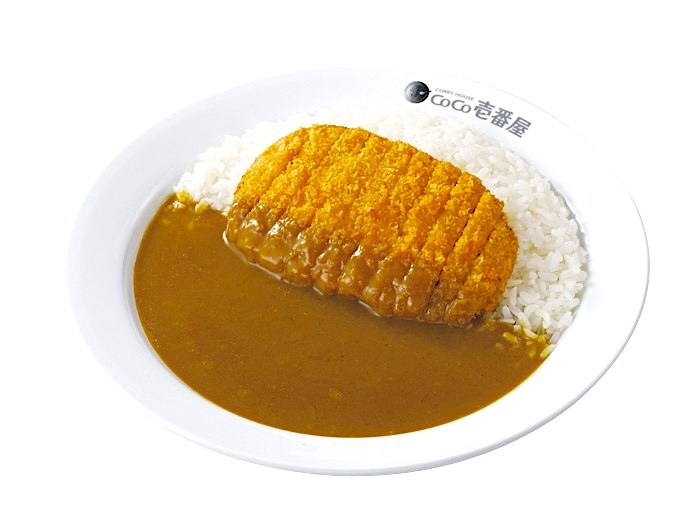
Japanese yen2026-08-12 08:03:58BNY strategist’s Katsu Curry Index suggests the yen is undervalued by about 61%A senior strategist at Bank of New York Mellon has proposed a new purchasing-power gauge built around katsu curry prices, arguing it shows the Japanese yen is trading far below its implied value. According to Bloomberg-cited calculations by Geoff Yu, the so-called Katsu Curry Index puts a fair exchange rate at ¥62.18 per U.S. dollar, versus around ¥159.23 in Wednesday morning trading. That points to yen undervaluation of roughly 61%. The comparison is even more aggressive than the long-running Big Mac Index. Based on McDonald’s burger prices across countries, that measure implies a fair rate of ¥80.30 per dollar, which still signals deep yen weakness but not to the same extent. The discussion comes as the yen remains in focus after a joint U.S.-Japan intervention that pulled the currency off its weakest dollar level in more than 40 years. Bloomberg said about half of that intervention-driven rebound has since been erased. The report also notes that food-based PPP indicators can help illustrate cost-of-living gaps, but structural pricing differences mean they should not be treated as direct trading targets for foreign exchange markets.460
EUR/USD2026-07-29 08:40:45ING analyst says EUR/USD needs more support to hold above $1.15According to a report cited by Jin10 and carried by ChainCatcher, ING analyst Francesco Pesole said the resumption of military strikes in the Middle East is a reminder for investors to stay cautious on the euro-dollar exchange rate. In his view, the euro would need several conditions to be met in order to secure a sustained move above $1.15. Those include data or Federal Reserve communication that reduces expectations for U.S. rate hikes, along with a stabilization in broader risk sentiment. Pesole also said that if the market’s broadly optimistic view that the conflict will ease proves correct, EUR/USD has likely already found a bottom. The comments focused on how geopolitical developments and shifting expectations around U.S. monetary policy may shape the near-term path of the currency pair.2020
South Korea2026-07-27 02:31:07South Korea seized KRW 7.2 trillion in illegal foreign exchange transactions in the first halfSouth Korea’s customs agency said Monday that it uncovered KRW 7.2 trillion, or about $4.92 billion, in illegal foreign exchange transactions during the first half of the year. The Korea Customs Service said it detected 792 cases from January through June, covering violations such as illegally moving foreign currency overseas and concealing overseas assets. Some of the cases involved exporters receiving export payments in cryptocurrencies instead of legal tender such as the U.S. dollar. Lee Jong-wook, commissioner of the customs agency, said the agency will strengthen cooperation with the Ministry of Economy and Finance and other relevant authorities to respond to risks tied to volatility in the foreign exchange market.1840
South Korea2026-07-27 02:46:12South Korea uncovers $4.92 billion in illegal FX trading in H1, with some cases tied to crypto export paymentsSouth Korea’s Korea Customs Service said it uncovered 7.2 trillion won, or about $4.92 billion, in illegal foreign exchange transactions in the first half of the year, according to Yonhap News Agency. The agency said authorities found 792 cases between January and June involving offenses such as illegally moving foreign currency overseas and concealing offshore assets. Some of the cases involved exporters receiving payment for overseas shipments in cryptocurrency instead of fiat currencies such as the U.S. dollar, which meant export proceeds in foreign currency were not repatriated to South Korea. Korea Customs Service Commissioner Lee Jong-wook said the agency will step up cooperation with the Ministry of Economy and Finance and other related departments, citing recent volatility in the foreign exchange market as one of the key risks facing the South Korean economy.1940
South Korea2026-07-19 03:26:23South Korea plans broader access to won funding and won-denominated bond collateral for foreign institutionsSouth Korea’s Finance Ministry said Sunday it plans to let foreign financial institutions borrow the won through temporary overdraft arrangements and use won-denominated bonds as collateral in financial transactions. The measures form part of a broader policy push aimed at encouraging greater use of the Korean won and moving it from a restricted domestic currency toward a more global one. The announcement follows another recent market-opening step: starting July 6, South Korea extended trading hours in the dollar-won market to a 24-hour system. Together, the measures show Seoul continuing to loosen parts of its traditionally closed currency framework as it seeks wider international use of the won. The update was carried by Odaily, citing Jin10.2090
US Dollar2026-07-17 14:27:42Dollar hedging costs fall to the lowest level this year as traders see limited near-term riskThe cost of hedging against swings in the U.S. dollar has dropped to its lowest level of the year as investors scale back expectations of a near-term shock to the greenback. Data cited by Bloomberg show that the one-month implied volatility measure tied to the Bloomberg Dollar Spot Index fell this week to its lowest point since December last year, a sharp retreat from the spike seen after the outbreak of the Iran war in March. Market participants said traders are not currently pricing in severe dollar volatility, even with uncertainty around the Federal Reserve’s policy path and rising geopolitical tensions in the Middle East. As the world’s main reserve currency, the dollar remains closely watched for both its haven demand and interest-rate sensitivity. The latest move in volatility suggests worries over the near-term foreign-exchange environment have eased, while investors wait for a fresh macro catalyst to drive the next move.1870
Goldman Sachs2026-07-06 03:26:55Goldman Sachs Cuts Yen Outlook, Sees USD/JPY Reaching 165 Within a YearGoldman Sachs has turned more bearish on the Japanese yen, revising its 12-month USD/JPY forecast to 165 from 155 previously. The bank cited the persistent U.S.-Japan rate differential, fiscal pressure in Japan, elevated U.S. Treasury yields, and the Bank of Japan’s slow pace of rate hikes as the main forces keeping the yen under pressure. Strategist Fishman said that even though the yen appears deeply undervalued, positioning and macro conditions still point to further weakness rather than a sustained rebound. Goldman also lifted its shorter-term forecasts, now expecting USD/JPY at 162 in three months and 163 in six months, versus prior estimates of 160 and 158. The bank added that any official intervention is likely to have only a temporary effect because the underlying drivers of yen weakness remain in place. Market positioning supports that view: hedge funds’ bearish yen bets hit the highest level since 2017 last month, while markets are pricing roughly a 72% probability that USD/JPY reaches 165 by June next year. Goldman also remains constructive on carry trades funded in yen.1300