GBP

JPMorgan
2026-09-03 07:33:42

JPMorgan Says the Global Economy Is Entering a New Investment Cycle, Flags Fed Hike Risk and AI Chip Shortage

JPMorgan said in its early-September global market outlook that the world economy is positioning for a new investment cycle. The bank expects the Federal Reserve to raise rates by 25 basis points in December, lifting the fed funds target range to 3.75% to 4.00%. It also forecasts 2026 U.S. GDP growth of 2.0%, core PCE inflation at 3.5% and unemployment at 4.1%. The report says the gap between market pricing and the Fed’s own policy path is widening and could drive volatility in the coming quarters. JPMorgan sees the 2-year Treasury yield at 4.30% and the 10-year at 4.85% by the end of 2026, with the curve steepening to 55 basis points. On assets, the bank expects the U.S. dollar to retain support into a possible December hike, while oil and copper reflect a mixed supply-demand picture. It also argues that AI infrastructure spending remains in a multi-year supercycle, with GPU scarcity, grid investment and regional localization shaping the next phase of growth.


170
JPMorgan Says the Global Economy Is Entering a New Investment Cycle, Flags Fed Hike Risk and AI Chip Shortage
BiFu
2026-09-03 03:43:10

BiFu pitches one-account access to gold and FX as crypto traders look beyond digital assets

A Foresight article argues that more crypto traders are paying attention to gold and foreign exchange as macro drivers increasingly move digital assets and traditional markets at the same time. The piece points to gold’s sharp 2026 swing — from a record $5,589 per ounce on Jan. 28 to below $4,000 on June 24, its first break of that level since November 2025, according to data cited from Reuters and Bloomberg — as a sign that major opportunities are no longer confined to crypto. The report says BiFu is trying to lower the barrier for crypto-native users to trade traditional products through BiNet, its network for connecting asset classes under a unified account structure. Under that setup, users can trade BTC contracts and instruments such as XAU/USD from the same account without moving funds across separate platforms. The article also says FX and commodities on BiFu are offered as CFDs, with margin trading and long-short functionality. Foresight frames the pitch around three use cases: hedging crypto exposure around Federal Reserve decisions, rotating into gold when crypto markets go sideways, and turning macro views on the dollar or rates into direct positions in FX or gold. It adds that a previous gold-themed trading campaign on the platform attracted about 3 million USDT in cumulative participation.

150
BiFu pitches one-account access to gold and FX as crypto traders look beyond digital assets
Ethena
2026-09-01 13:41:42

Ethena launches Ethena Pay with up to 6% dollar savings yield and 5% card cashback

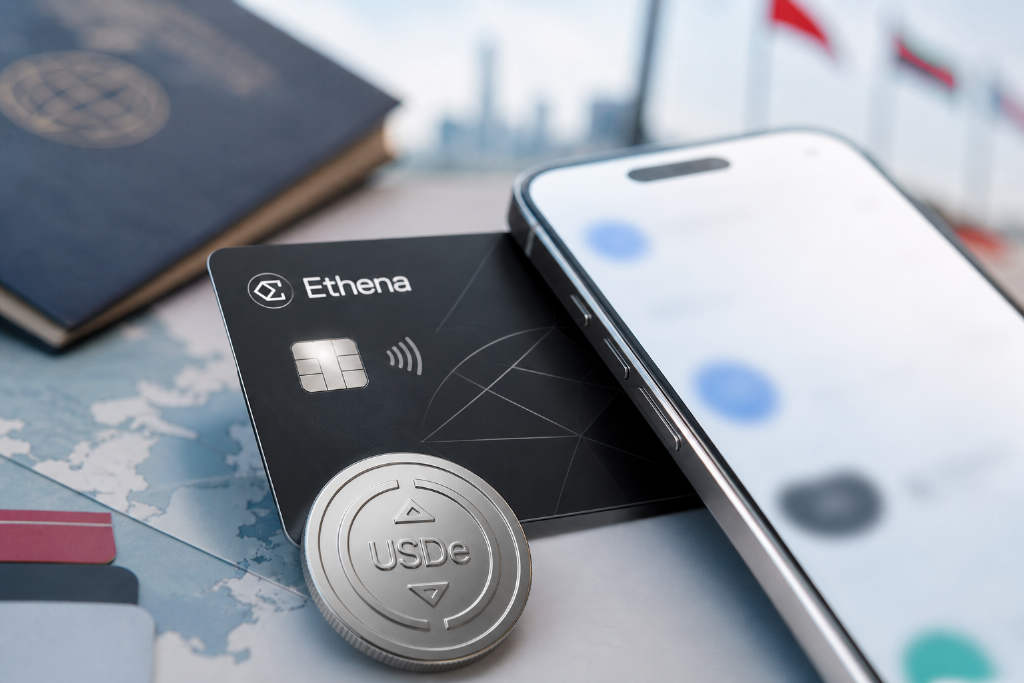
Ethena said on Sept. 1 that it has launched Ethena Pay, a self-custodial finance app built around stablecoin payments, savings, and cross-border transfers. The product is described as a "new bank for internet money" and combines USDe with spending and account functions. It is now live on iOS and is being rolled out in phases across 48 countries and regions. According to the announcement, Ethena Pay offers up to 6% annualized yield on dollar savings and up to 5% card cashback. The app also supports free instant global transfers and includes fiat on-ramp options for USD, GBP, and EUR, along with IBAN accounts. Users can deposit either fiat or crypto, hold balances in USDe, and withdraw funds to bank accounts in local currency. Ethena also introduced a tiered membership system. Users can unlock higher yield and cashback levels by locking ENA or referring other users. Cashback at selected merchants can reach as high as 10%. The product currently runs on Avalanche, while the United States and the European Union are not part of the first batch of supported regions.

150
Ethena launches Ethena Pay with up to 6% dollar savings yield and 5% card cashback
U.S. Dollar I
2026-08-20 19:52:42

U.S. Dollar Index Closes at 98.894 as Major Currency Rates Update

ChainCatcher reported that the U.S. Dollar Index, which tracks the dollar against six major currencies, rose 0.06% and finished late trading at 98.894. The currency update also listed key exchange rates across major pairs. One euro traded at $1.1676, while one British pound was worth $1.3628. Against other currencies, one U.S. dollar bought 159.14 Japanese yen, 0.8007 Swiss francs, 1.379 Canadian dollars, and 9.4908 Swedish kronor. The report was published as a 7x24 flash update and focused on end-of-session foreign exchange pricing rather than crypto market moves. No additional market context or commentary was provided in the original brief.

370
U.S. Dollar Index Closes at 98.894 as Major Currency Rates Update
crypto stocks
2026-08-20 05:03:01

How Major CEXs Are Building Crypto Stock Products Across Brokerage, Tokenization and Perpetuals

Crypto stock products are turning into one of the clearest expansion paths for centralized exchanges as they push beyond digital assets and into traditional finance. The competitive set is no longer limited to synthetic price exposure. By 2026, major platforms had rolled out a mix of real stock brokerage, tokenized equities, stock perpetuals, CFDs and pre-IPO products, often inside a single account system. According to CoinGecko figures cited in the source article, monthly trading volume for stock perpetuals across the top 13 crypto trading platforms climbed from about $831 million in July 2025 to roughly $34 billion in May 2026, an increase of nearly 40 times in less than a year. The article also notes that cumulative stock-perpetual volume in the first five months of 2026 had already surpassed the whole of 2025. On the tokenized spot side, xStocks had logged more than $35 billion in cumulative trading volume by July 2026 and nearly 200,000 holders globally, while expanding beyond U.S. stocks and ETFs into Hong Kong, the U.K., Europe and South Korea. The report reviews how Binance, OKX, Bitget, Gate, Kraken, Coinbase and Backpack approach the market through different legal and product structures. It argues that the category now spans four distinct models: traditional brokerage access to real shares, tokenized securities backed by underlying stocks, total-return or synthetic equity tokens, and stock perpetuals or CFDs that do not require 1:1 share backing. The result is a market that is still early by global equity standards, yet increasingly central to how exchanges compete for the next phase of user growth.

650
How Major CEXs Are Building Crypto Stock Products Across Brokerage, Tokenization and Perpetuals
FCA
2026-08-13 14:31:56

FCA and HTX enter settlement talks over unlawful UK crypto promotions

The UK Financial Conduct Authority and HTX are in settlement talks over a case tied to unlawful crypto promotions aimed at UK consumers, according to Reuters, which cited court filings. London’s High Court has paused the proceedings until late August to give both sides time to try to reach terms. The discussions began after the parties exchanged emails in March, followed by a three-month negotiation period that was extended by another two months on June 25. The FCA filed the case on October 21 last year in the Chancery Division, describing it as its first enforcement action of this type against a crypto exchange over marketing. The regulator is seeking an injunction and a court declaration that the defendants breached Section 21 of the Financial Services and Markets Act. The claim names Huobi Global S.A. and several categories of unnamed parties connected to HTX’s ownership, operations, website, and social media. Court documents also say an FCA staff member using a UK IP address was able to buy crypto through HTX’s peer-to-peer service and place futures trades after verifying identity with a UK driving license. Reuters said the case is separate from UK and EU sanctions matters involving HTX and Justin Sun.

270
FCA and HTX enter settlement talks over unlawful UK crypto promotions
US Dollar Ind
2026-08-12 20:19:48

US Dollar Index Edges Up 0.19% to 100.014; Euro and Pound Slip

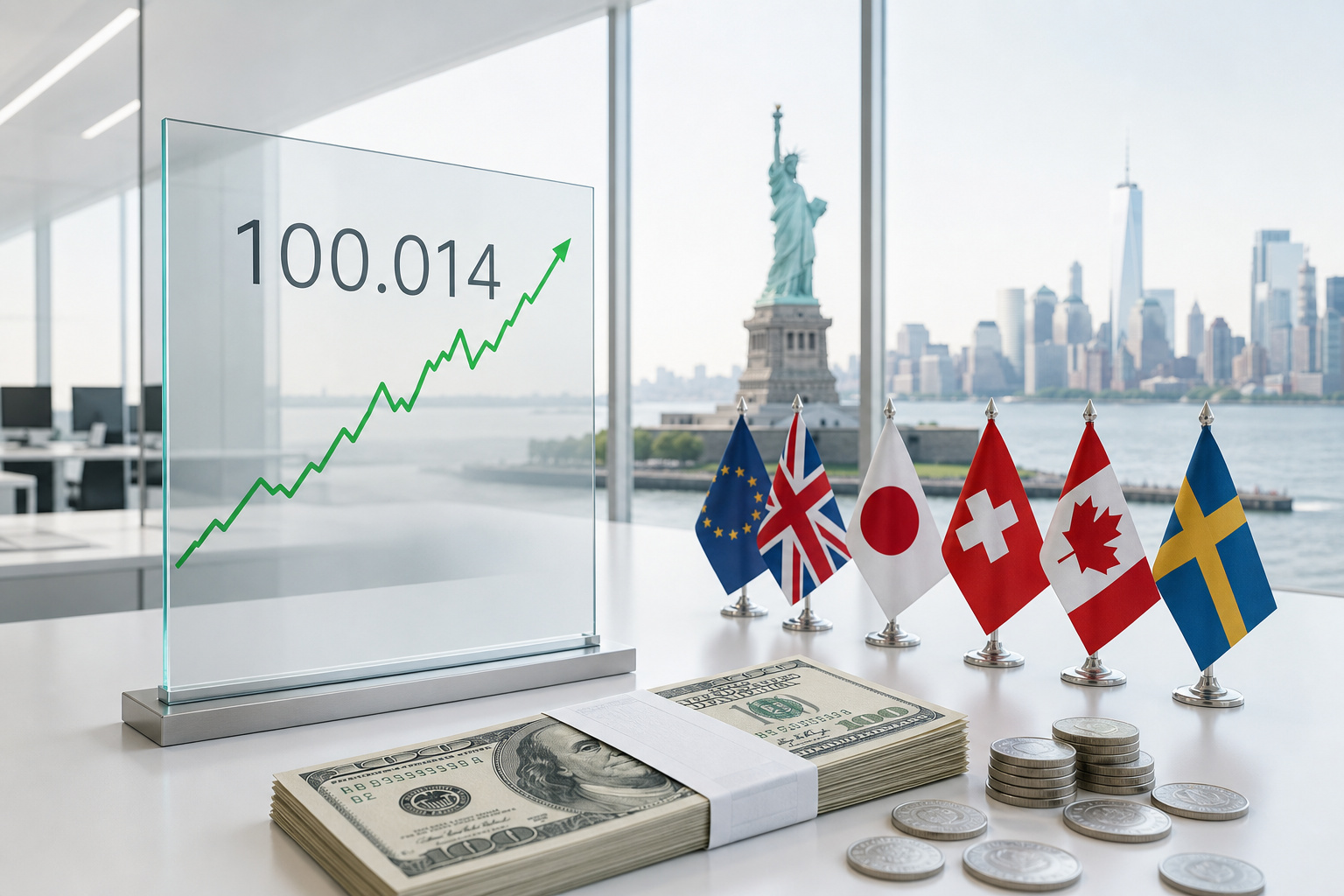
According to ChainCatcher, the US Dollar Index rose 0.19% on August 12 and settled at 100.014 in late foreign-exchange trading. The index tracks the dollar against a basket of six major currencies. Four of those currencies moved in the dollar's favor, while the euro and the British pound declined. EUR/USD traded at 1.1521, down from 1.1540 in the previous session. GBP/USD slipped to 1.3488 from 1.3503. Against the Japanese yen, the dollar climbed to 159.49 from 159.26. The greenback also gained against the Swiss franc, moving to 0.8137 from 0.8112, against the Canadian dollar, rising to 1.3947 from 1.3920, and against the Swedish krona, advancing to 9.5858 from 9.5244. The data covers the full set of currencies that make up the dollar index, giving a complete picture of the dollar's moves on the day.

800
US Dollar Index Edges Up 0.19% to 100.014; Euro and Pound Slip
Payments
2026-08-12 07:12:34

Why payment companies keep moving toward accounts

The article argues that the most important battleground in payments is no longer the transaction alone, but the account layer that sits before and after it. In the author’s framework, payment is an event — a moment when money moves — while an account is a state that records where funds sit, who owns them, what balance remains, and what can happen next. That distinction carries legal, regulatory, and commercial consequences, especially once providers begin holding customer funds rather than simply processing movement. The piece traces how large payment firms including Stripe, Adyen, and Airwallex have expanded from payment processing into accounts, balances, cards, financing, foreign exchange, and treasury products. It links that shift to a deeper commercial logic: transaction revenue is tied to one payment, while account infrastructure opens the door to longer-term balance economics, richer cash-flow data, and tighter customer relationships. The analysis also explains why this trend is particularly strong in cross-border payments, where businesses must manage multi-currency positions rather than isolated transfers. It then broadens the frame to banks, fintechs, neobanks, and stablecoins, arguing that while account forms may change, the core competition remains the same — control over the customer’s primary financial relationship and the next financial action that follows.

340
Why payment companies keep moving toward accounts