HKD

crypto stocks
2026-08-20 04:51:13

How Major CEXs Are Building Crypto Stock Products Across Brokerage, Tokenized Equities and Perpetuals

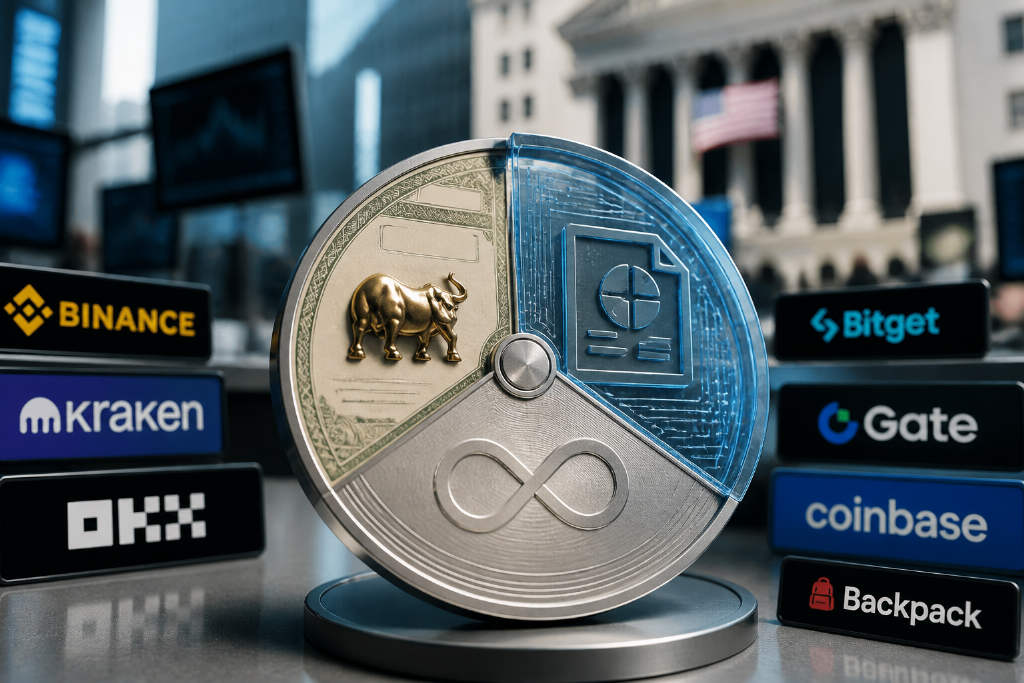
Crypto exchanges are pushing deeper into equities, turning stocks into one of the clearest product expansion paths in this market cycle. CoinGecko data cited in the report shows monthly stock perpetual volume across the top 13 crypto trading platforms climbed from about $831 million in July 2025 to roughly $34 billion in May 2026, a jump of nearly 40 times in less than a year. TradFi and RWA perpetuals spanning stocks, commodities and indexes reached $347.17 billion in May 2026 alone, with year-to-date volume above $1.32 trillion. The landscape is no longer limited to synthetic price exposure. Binance, Kraken, OKX, Bitget, Gate, Coinbase and Backpack are each combining different layers of product infrastructure, including direct access to real U.S. stocks and ETFs, tokenized stocks backed 1:1 by underlying securities, onchain-transferable equity tokens, stock perpetuals, CFDs and pre-IPO contracts. Their structures differ in important ways, especially around custody, investor rights, redemption and whether users actually own shares or only gain economic exposure. The report argues that crypto stocks remain early relative to traditional equity markets, with CoinGecko data indicating activity in crypto stock derivatives is still less than 1% of traditional stock market volume. Even so, the segment is moving from a niche RWA experiment toward a core competitive arena for centralized exchanges that want to extend from crypto into broader financial trading.

2340
How Major CEXs Are Building Crypto Stock Products Across Brokerage, Tokenized Equities and Perpetuals
crypto stocks
2026-08-20 05:03:01

How Major CEXs Are Building Crypto Stock Products Across Brokerage, Tokenization and Perpetuals

Crypto stock products are turning into one of the clearest expansion paths for centralized exchanges as they push beyond digital assets and into traditional finance. The competitive set is no longer limited to synthetic price exposure. By 2026, major platforms had rolled out a mix of real stock brokerage, tokenized equities, stock perpetuals, CFDs and pre-IPO products, often inside a single account system. According to CoinGecko figures cited in the source article, monthly trading volume for stock perpetuals across the top 13 crypto trading platforms climbed from about $831 million in July 2025 to roughly $34 billion in May 2026, an increase of nearly 40 times in less than a year. The article also notes that cumulative stock-perpetual volume in the first five months of 2026 had already surpassed the whole of 2025. On the tokenized spot side, xStocks had logged more than $35 billion in cumulative trading volume by July 2026 and nearly 200,000 holders globally, while expanding beyond U.S. stocks and ETFs into Hong Kong, the U.K., Europe and South Korea. The report reviews how Binance, OKX, Bitget, Gate, Kraken, Coinbase and Backpack approach the market through different legal and product structures. It argues that the category now spans four distinct models: traditional brokerage access to real shares, tokenized securities backed by underlying stocks, total-return or synthetic equity tokens, and stock perpetuals or CFDs that do not require 1:1 share backing. The result is a market that is still early by global equity standards, yet increasingly central to how exchanges compete for the next phase of user growth.

830
How Major CEXs Are Building Crypto Stock Products Across Brokerage, Tokenization and Perpetuals
Hong Kong dol
2026-08-16 01:25:00

One Year After Hong Kong’s Stablecoin Licensing, the Market Still Looks Lukewarm

Nearly a year after Hong Kong moved ahead with its first Hong Kong dollar stablecoin licenses, industry sentiment remains cautious rather than enthusiastic. People close to the local stablecoin business told the author that Standard Chartered-backed AnchorPoint Fintech has shown a more proactive stance, while HSBC has been far less eager. Several licensed crypto exchanges in Hong Kong are also testing or participating tactically, but many do not yet see a clear path to profits. The report argues that the current setup has created a mismatch: some institutions that strongly want to explore Hong Kong dollar stablecoin use cases have not been given a leading role, while some institutions that did receive licenses or central positions are seen as lacking strong commercial motivation. That gap, in the view of market participants cited in the piece, has left the sector with licenses in hand but limited momentum. The article also places Hong Kong in a broader global context. Euro, yen and won stablecoin efforts are described as facing their own structural limits, from low market share and slow adoption to restrictive institutional design and unresolved regulatory disputes. Against a global stablecoin market of nearly $308.3 billion, with dollar stablecoins accounting for 98%, non-dollar stablecoins continue to lag.

490
One Year After Hong Kong’s Stablecoin Licensing, the Market Still Looks Lukewarm
Hong Kong dol
2026-08-14 14:00:00

Hong Kong dollar stablecoin race opens with HKDAP and HSBC taking opposite routes

Hong Kong’s licensed stablecoin market has entered its opening phase, but the contest over distribution and user access is still wide open. On Aug. 12, Anchorpoint Financial, led by Standard Chartered, began the institutional-phase issuance of HKDAP, a Hong Kong dollar stablecoin pegged 1:1 to HKD. HashKey Exchange and OSL Group were named as the first distributors, and HashKey completed the first HKDAP mint and redemption transaction. HSBC, which received a license on the same day as Anchorpoint in April, has chosen a very different path by integrating its stablecoin offering into PayMe and the HSBC HK App, aiming at direct retail reach in the second half of the year. HKDAP is positioned as a non-interest-bearing payment and settlement instrument backed by 100% reserves of high-quality, highly liquid assets held in segregated trust accounts. At the same time, a Aug. 14 review by blockchain security firm BlockSec raised questions about the quality of HKDAP’s Ethereum mainnet contracts, citing flaws in KYC revocation logic, concentration of high-risk permissions under a single key in some cases, no timelock in the governance engine, and overlap between execution and audit roles. Those findings did not allege losses, attacks, or reserve problems, but they introduced a new variable into the market: whether the underlying smart-contract infrastructure can keep up with regulatory and security scrutiny as distribution expands.

460
Hong Kong dollar stablecoin race opens with HKDAP and HSBC taking opposite routes
Ireland
2026-08-14 13:52:10

Ireland AML strategy tightens scrutiny on self-custody wallet transfers as Binance curbs dealings with selected platforms

Ireland has published its first national anti-money laundering strategy, setting out tighter oversight for crypto activity as the remaining parts of the European Union’s Transfer of Funds Regulation, or TFR, take effect. The strategy says crypto-asset service providers will face enhanced scrutiny when handling transfers involving private or self-hosted wallets, while dealings with overseas crypto companies will be subject to stricter due diligence. It also states that TFR extends the Financial Action Task Force’s Travel Rule to crypto transfers by requiring originator and beneficiary information to accompany transactions, with the stated aim of improving transparency and traceability of fund flows. The WuBlockchain roundup also covered several other industry developments. HashKey Exchange said it completed real-fund subscription and redemption tests for the Hong Kong dollar stablecoin HKDAP with YF Life, exploring insurance payment use cases. Binance said it will stop processing transactions involving a list of crypto service providers and platforms on a phased timetable beginning August 7, August 13, and August 23. In the United States, the City of Baltimore sued Kalshi and Polymarket over allegations that they offered unlicensed sports betting services. Separately, Binance founder CZ commented on a Trezor logistics vendor data breach, saying the exposure could create phishing, social engineering, and personal safety risks for affected customers.

700
Ireland AML strategy tightens scrutiny on self-custody wallet transfers as Binance curbs dealings with selected platforms
RWA
2026-08-14 10:25:00

RWA Weekly: Hong Kong’s regulated HKD stablecoin moves into rollout as the EU prepares MiCA access changes

Real-world asset activity and stablecoin policy both moved this week. As of Aug. 14, 2026, on-chain RWA market capitalization reached $38.29 billion, while the number of holders climbed to 1.7935 million, according to RWA.xyz data cited by PANews. In stablecoins, total market value slipped slightly to $297.91 billion, but transfer volume and monthly active addresses both fell, pointing to a quieter on-chain period even as holder counts kept growing. On the policy side, the People’s Bank of China said in its 15th Five-Year reform and development plan that it will steadily develop the digital yuan. In Europe, officials decided to revise the Markets in Crypto-Assets framework, or MiCA, with a focus on the market access rules that have left non-EU stablecoin issuers such as Tether outside the bloc. The U.K. advanced the second phase of its digital pound lab and also began work on a regulatory framework for tokenized gold. At the project level, Anchorpoint, the Hong Kong licensed stablecoin issuer backed by Standard Chartered, HKT and Animoca Brands, launched the first phase of issuance and institutional use for HKDAP. HashKey Exchange and OSL joined as recognized distributors. Elsewhere, NYSE, Itaú Unibanco, Coinbase, LG CNS, Miden, Dow Protocol and Rain each disclosed new tokenization, stablecoin or funding developments during the week.

920
RWA Weekly: Hong Kong’s regulated HKD stablecoin moves into rollout as the EU prepares MiCA access changes
HashKey Excha
2026-08-14 10:50:00

HashKey Exchange and YF Life complete Hong Kong’s first live HKDAP insurance payment use-case test

HashKey Holdings Limited said its licensed trading platform, HashKey Exchange, has completed Hong Kong’s first live transaction involving the regulated Hong Kong dollar stablecoin HKDAP together with YF Life Insurance International. The test used real funds and covered both subscription and redemption of HKDAP, setting up a foundation for potential insurance payment use cases. According to the announcement, HashKey Exchange is one of the main approved distributors for HKDAP, which is issued by RD InnoTech Limited, described as one of Hong Kong’s first licensed stablecoin issuers. Subject to relevant regulatory requirements, YF Life plans to support customers paying premiums with HKDAP in the future and said it aims to become one of the first insurers in Hong Kong to do so. The companies said the validation focused on two areas: settlement speed and payment flexibility. Traditional premium payments usually require two to three business days for settlement confirmation, while HKDAP on-chain transfers can arrive almost in real time. Customers may also subscribe to HKDAP with Hong Kong dollars through HashKey Exchange or use existing HKDAP balances and withdraw them to a wallet before paying premiums.

640
HashKey Exchange and YF Life complete Hong Kong’s first live HKDAP insurance payment use-case test
OSL HK
2026-08-14 07:38:29

OSL HK rolls out zero-fee spot trading across all stablecoin pairs for professional and institutional clients

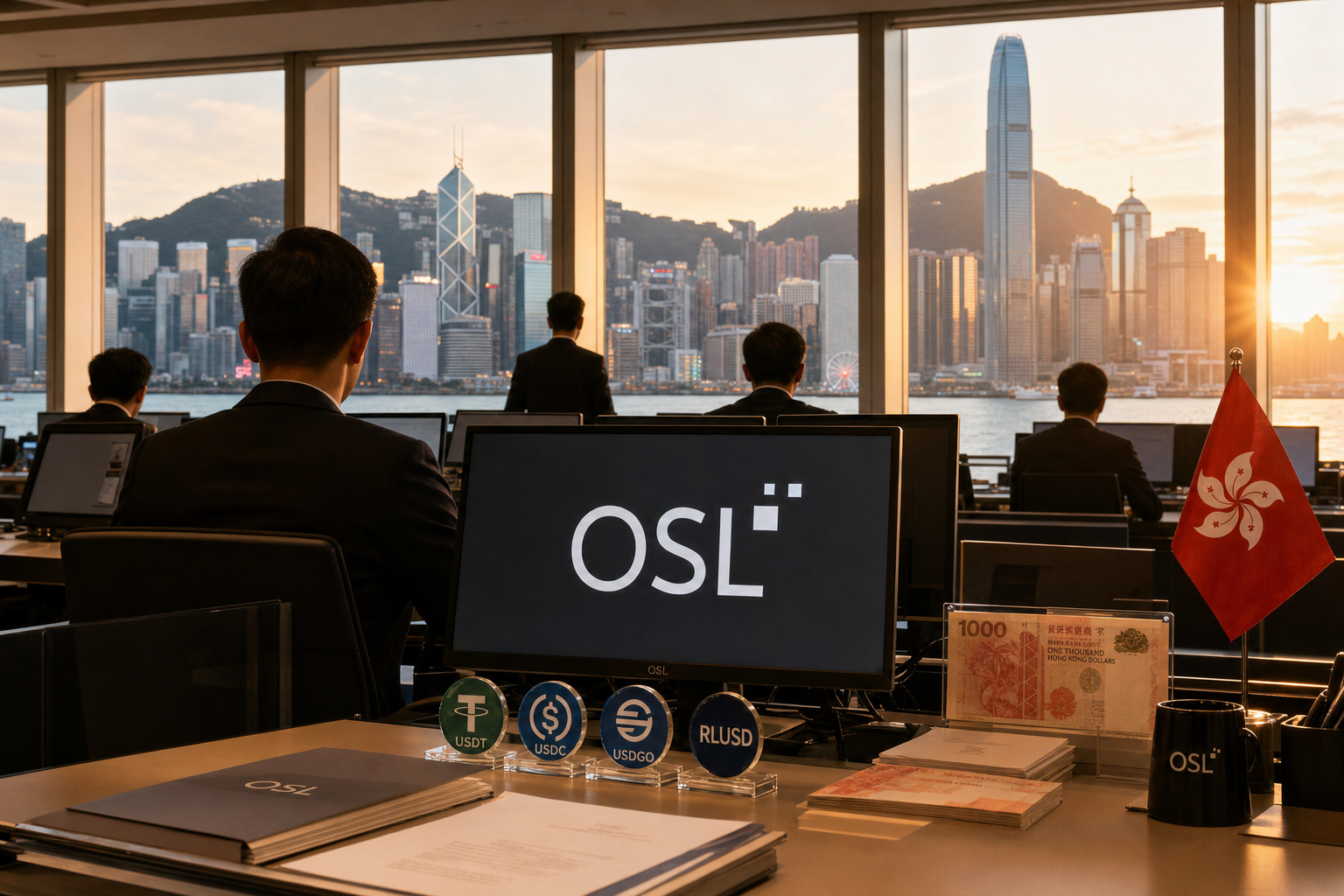
OSL HK, the Hong Kong-licensed digital asset exchange under OSL Group, said it has become the only platform in Hong Kong to offer zero maker and taker fees on spot trading for all stablecoin-to-stablecoin and stablecoin-to-fiat pairs available to professional investors and institutional clients. The policy currently covers six pairs: USDT/USD, USDT/HKD, USDGO/USD, USDGO/USDC, USDGO/USDT, and RLUSD/HKD. Eligible clients can use these pairs for spot trades between stablecoins and fiat currencies, as well as between stablecoins, without paying trading fees. According to the announcement, the fee waiver is designed to reduce trading costs for clients, with the effect seen more clearly in large-volume and high-frequency trading activity. The company described OSL HK as the only platform in Hong Kong offering this structure across all of its stablecoin trading pairs for the client groups mentioned.

1140
OSL HK rolls out zero-fee spot trading across all stablecoin pairs for professional and institutional clients