HSK

HashKey
2026-07-15 04:04:11

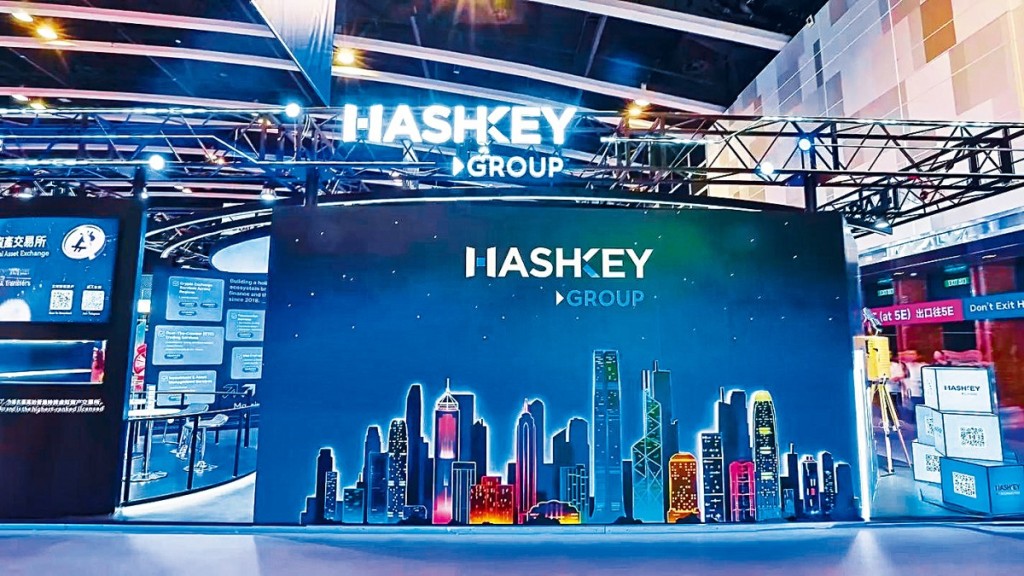
HashKey uses WebX Tokyo events to push institutional and developer engagement in Japan

HashKey Group used WebX Tokyo 2026 to stage two back-to-back side events in Japan, one focused on institutional on-chain finance and the other on developer activity around AI and DeFi. The company hosted the On-Chain Finance Forum Tokyo, where executives from HashKey, Ethereum Foundation, and firms including Ondo Finance, DigiFT, Franklin Templeton Japan, OKJ, BitGo, and Babylon discussed institutional adoption, RWA integration, on-chain liquidity, and yield strategies linking traditional finance with blockchain-based markets. The forum also highlighted the newly released HSK 2.0 white paper, which outlines HashKey Chain’s approach to institutional-grade on-chain finance. Separately, HSK Chain hosted the Japan Horizon hackathon Demo Day with FEB Event and AKINDO after nearly a month of selection, featuring finalist presentations and panel discussions on whether on-chain finance can become widely used financial infrastructure and how AI Agent-era Web3 products should define user boundaries. According to the article, the paired events reflect HashKey’s ongoing effort to deepen its presence in Japan by engaging local financial institutions, ecosystem partners, developers, and potential clients through both infrastructure and application-layer initiatives.

1080
HashKey uses WebX Tokyo events to push institutional and developer engagement in Japan
HashKey On-Ch
2026-07-15 01:45:53

HashKey On-Chain sets out RWA infrastructure push with HIP, HTP and HSP

HashKey On-Chain used the WebX conference to unveil three platforms — HIP, HTP and HSP — in a move framed as a broader infrastructure buildout for real-world assets rather than a routine product expansion. In the source article, author Alvin Liu argues that the company is trying to create a system that can continuously bring real-world assets, institutional capital and business activity on-chain. HIP is positioned for issuance of tokenized real-world assets, HTP for secondary trading and liquidity, and HSP for payments and settlement. Together, the three are described as covering asset entry, circulation and fund settlement across a fuller on-chain finance workflow. The article also lays out HashKey On-Chain’s broader thesis: RWA is not simply about turning off-chain assets into tokens. It requires legal structuring, compliance, disclosure, trading venues, price discovery, liquidity and lifecycle management. Against that backdrop, the piece says HashKey’s path has moved from permissioned-chain thinking toward a CeDeFi model, with permissioned environments handling identity, accountability and risk boundaries, while DeFi protocols and exchange connections handle liquidity. HSK Chain, in this framing, is no longer just a smart-contract network, but an interface linking regulated institutions, open markets and on-chain capital.

1120
HashKey On-Chain sets out RWA infrastructure push with HIP, HTP and HSP
Gate
2026-07-14 11:36:12

Gate shifts stance in $1.7 million user theft dispute, says it formed team to trace funds

Gate, a cryptocurrency exchange, is facing backlash after a user said their account was compromised and roughly $1.7 million in assets were withdrawn. The exchange initially said the case was not caused by a systemic platform or website security failure and maintained that the account’s key actions had passed multiple verification checks. As criticism intensified, Gate changed its public response, saying it had established direct contact with the user, formed an internal expert team, and was helping trace fund flows, file freeze requests, and support recovery efforts. The company also said it would cooperate fully if the case enters formal legal proceedings. Gate’s apology focused on communication and customer service rather than admitting a breach. The exchange said it took criticism of its support process seriously and would improve internal communication standards and user community engagement. At the same time, it did not concede that its systems had been hacked or accept compensation liability. The user disputes Gate’s account, saying the actions were unauthorized despite strict personal security practices, and suggested deepfake material may have been used to pass facial verification. The gap between the two sides’ accounts remains unresolved, and the case is still under investigation.

1010
Gate shifts stance in $1.7 million user theft dispute, says it formed team to trace funds
HSK Chain
2026-07-13 13:00:00

HSK Chain launches phase three of HSK Staking with added rewards for past participants

HSK Chain has launched the third phase of its HSK Staking program on July 13, according to an official announcement cited by BlockBeats. The new round introduces a capped total staking quota and a multi-layer incentive structure, with participants set to receive expected ecosystem rewards based on on-chain rules. Users who joined earlier staking rounds and continued supporting ecosystem development will also be eligible for extra subsidies tied to their historical locked positions. The project said the updated design is intended to reward both HSK holders and returning participants while strengthening long-term engagement on the network. It added that, as developers, quality projects, and institutional-grade assets continue to enter the chain, the upgraded long-term incentive mechanism is being positioned as a core measure for ongoing ecosystem building.

1090
HSK Chain launches phase three of HSK Staking with added rewards for past participants
Foresight New
2026-07-11 02:00:00

Foresight’s weekly Web3 roundup tracks Robinhood Chain, Strategy, WLFI and the Clarity Act

Foresight News published a broad weekly roundup of crypto stories drawing the most attention across the market, spanning chain activity, corporate treasury moves, governance failures, exchange security disputes and U.S. regulation. One major focus was Robinhood Chain, where a surge in Meme token activity pushed CASHCAT’s market capitalization above $100 million and brought launch platform Noxa.fi into the spotlight. The outlet also highlighted Robinhood Chain’s early-stage ecosystem buildout, including its 90-day gas fee waiver and a total value locked figure of about $76.73 million as of July 6, 2026. The roundup also revisited several high-profile disputes and balance-sheet events. Strategy sold 3,588 BTC at an average price of about $60,200, marking its largest net sale since adopting its Bitcoin strategy in 2020 and its first institutional-style reduction in six years. The report said the sale implied a loss of roughly $54.81 million against a cost basis of about $75,476 per coin. Elsewhere, according to The Wall Street Journal, AI Financial was in talks to sell Alt5 Sigma Canada for up to $15 million after its heavy WLFI exposure left it with locked tokens, limited cash and an SEC going-concern warning. Other stories in the package included Polymarket’s dispute over whether Cristiano Ronaldo cried after Portugal’s World Cup exit, Paradigm’s new $1.2 billion fund and broader focus on AI and robotics, Zapper’s planned shutdown, YGG’s closure of YGG Play, a governance attack on BonkDAO, a Gate user’s reported $1.7 million loss, Ondo’s move into perpetuals, controversy around OUSD partner claims, and weakening odds for the Clarity Act this year.

1110
Foresight’s weekly Web3 roundup tracks Robinhood Chain, Strategy, WLFI and the Clarity Act