Huxiu

AI Hardware
2026-09-21 09:45:09

AI hardware startups are moving from ski slopes to tennis courts to rebuild sports training

A new crop of founders from ByteDance, DJI, Tencent, Amazon Lab126, Smartisan and other major tech companies is pushing AI hardware into narrow sports-training niches, from skiing and golf to tennis and basketball. The report centers on startups such as Heygo, BirdieSense, PomBot, LUMISTAR, MossCode, BleeqUp and XbotGo, and tracks their products, funding rounds and go-to-market strategies over the past two years. The common thread is not general fitness tracking. These companies are trying to answer a harder question: whether a movement is correct, where it breaks down, and how to turn that judgment into usable feedback. In skiing, Heygo uses two IMU sensors clipped to ski boots and a model trained on million-level skiing data to infer ski posture. In golf, BirdieSense uses a monocular camera and on-device 3D pose analysis. In tennis and table tennis, robot trainers are replacing repetitive ball-feeding sessions, a use case that is easier for users to pay for immediately. The article also points to a second branch of the market focused on recording sports activity rather than judging technique, including AI watches, sports glasses and auto-tracking cameras. Across both branches, falling edge-compute costs, large-model-based natural-language feedback and crowdfunding-led overseas distribution are helping the category gain momentum, even though no single blockbuster financing has yet defined the sector.

200
AI hardware startups are moving from ski slopes to tennis courts to rebuild sports training
Embodied AI
2026-09-20 01:20:48

Survey says China has 106 disclosed embodied AI data collection centers, with the sector shifting into operations

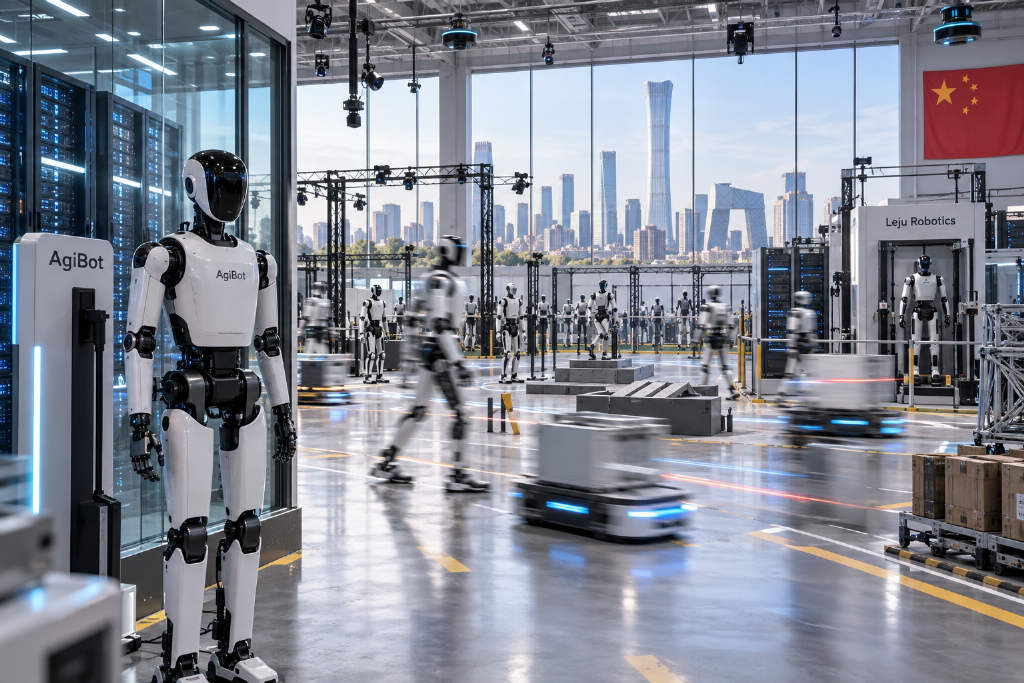
A research report released by Huxiu on Sept. 20 said that, as of August 2026, China had 106 publicly disclosed centralized embodied AI data collection centers. Of those, 84 were already in operation, accounting for 79.25% of the total. Among 52 centers that disclosed robot deployment figures, the combined number reached about 3,972 units, leading the report to estimate that more than 5,000 robots are currently running across such facilities nationwide. The report said construction peaked in the first quarter of 2026, after which the number of newly launched projects fell sharply. That points to a shift from a phase of intensive project starts to one centered on operations. Regionally, Jiangsu, Zhejiang, and Guangdong led the count with 18, 17, and 11 centers, followed by Sichuan with 8 and Beijing with 7. On robot brands, AgiBot appeared 31 times, Leju 15 times, UBTECH 13 times, while Unitree Robotics and Galbot each appeared 10 times. It also found that 65.96% of centers used a single robot brand, while 34.04% adopted a multi-brand strategy, with cross-embodiment data reuse still described as a challenge. In pricing, real-robot data was quoted at roughly 500 to 1,000 yuan per hour, non-embodied data such as UMI at about 300 to 400 yuan per hour, and simulated synthetic data at around 200 to 500 yuan per hour. Teleoperation-based collection accounted for 79.05%.

230
Survey says China has 106 disclosed embodied AI data collection centers, with the sector shifting into operations
Xiaomi
2026-08-21 10:17:12

Xiaomi Defends Phone Margins, but Still Needs a New Profit Engine

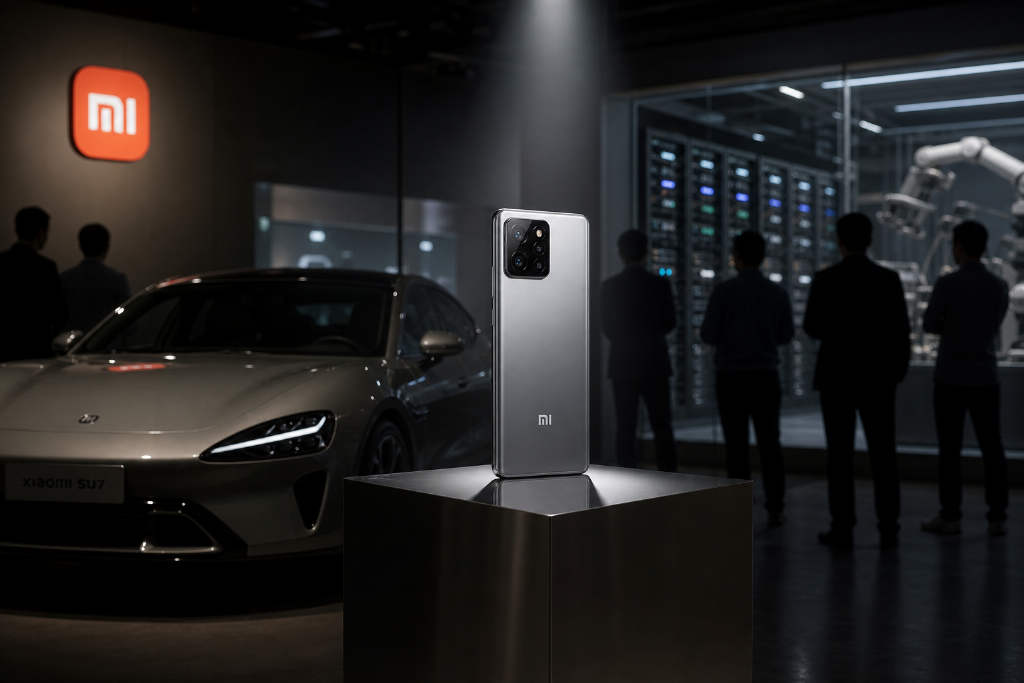
Xiaomi held its smartphone gross margin at 8.5% in the second quarter, even as rising memory costs pushed the company to lift average selling prices by nearly 300 yuan. That helped protect profitability, but global smartphone shipments fell 26.5% year over year. The company’s electric vehicle business delivered more than 104,000 cars and generated 23.9 billion yuan in revenue, yet the automotive and AI division still posted losses. Internet services remained the main profit anchor, with gross margin at 76.8% and revenue of 9 billion yuan. Management also used the earnings call to discuss MiMo, system upgrades, and humanoid robots, but those businesses are still early. The key issue for Xiaomi now is timing: its growth engines are moving on different schedules, and the next one has not fully taken over from the old one.

500
Xiaomi Defends Phone Margins, but Still Needs a New Profit Engine
Sequoia China
2026-08-13 07:22:00

Sequoia’s Li Yannan says AI hardware bets hinge on founders, product autonomy and the path to real economics

As Unitree Technology moves into the IPO subscription stage and attention turns to the firms that backed it early, Huxiu published an extended interview with Li Yannan, managing director at Sequoia China and one of the earliest investors behind the robotics company. According to the report, Sequoia China was the first institutional shareholder in Unitree to reach a 10% stake and continued to add in later rounds. After dilution from multiple financings, Unitree’s prospectus shows Sequoia China still held more than 7% before the listing, making it the company’s second-largest institutional investor. In the interview, Li laid out a broad framework for evaluating AI hardware. He argued that truly AI-native devices are not defined by simply connecting to a model, but by whether they gain new autonomy — the ability to stay on long enough to sense, understand and act, rather than wait for a user prompt. He also said smartphones are unlikely to disappear soon, but their role will shift from the single gateway to the core node in a multi-device system. On business models, Li warned startups not to assume they must lose money on hardware and make it back later on software subscriptions. He also said data alone may not be a durable moat, and that a more telling market risk signal would be a visible slowdown in model capability gains. Throughout, Li returned to the same principle: early-stage investing still starts with judging people.

1780
Sequoia’s Li Yannan says AI hardware bets hinge on founders, product autonomy and the path to real economics
Alibaba
2026-08-04 08:46:27

Alibaba folds three AI office products into QwenWork and puts the new unit in charge of DingTalk

Alibaba has internally elevated "AI office" to one of its strategic directions and has already carried out an organizational and product restructuring, according to an exclusive report by Huxiu cited by ChainCatcher. The former Wukong business unit has been upgraded into the Qwen Office business unit, led by Chen Yusen. At the product level, QoderWork, Wukong, and MuleRun have been merged through what the report described as a technical three-in-one integration under Qwen Office, or QwenWork, and the three previous products and teams will no longer exist as separate entities. QwenWork entered public beta on Aug. 3, with its web version and PC client already available, while a DingTalk entry point is set to go live soon. Alibaba also released the Qwen3.8 model on the same day, with stronger Coding and Cowork capabilities. The company positions QwenWork as an enterprise-grade AI productivity platform for organizations rather than an individual office tool, and is not using user count or monthly active users as a core short-term target. The unit will also oversee DingTalk, in a move aimed at connecting with the platform’s million-level enterprise customer base.

2270
Alibaba folds three AI office products into QwenWork and puts the new unit in charge of DingTalk
StepFun
2026-08-04 08:52:16

StepFun splits smartphone unit into standalone company as it pushes model and agent-device strategy

StepFun is pursuing two strategic tracks internally, according to a Huxiu Tech report cited by ChainCatcher: one centered on large language models and another focused on agent-driven devices. Its smartphone business has been moved into a standalone company called Zhiyue Xingchen, with a team that has Huawei and Honor backgrounds taking the lead. Ni Jiayue, the company’s terminal president, is overseeing the effort. The report said StepFun’s first agent smartphone, STEPX Neo, was shown during WAIC, though the company did not disclose pricing or a mass-production timeline. Huxiu also reported that StepFun is assembling an overseas commercialization team and plans to sell large-model APIs abroad, mainly voice models. The smartphone line is also part of that overseas sales plan. Chairman Yin Qi had previously explored an “AI + car” route at Qianli Technology, formerly Lifan Technology. This time, the company is treating smartphones as the first piece of its terminal strategy, aiming to build a closed loop spanning models, operating systems, and devices. The phone runs the Step AOS agent operating system, and the report said the business model ultimately returns to Token consumption. StepFun also continues model partnerships with 60% of China’s leading smartphone brands, covering an installed base of more than 42 million devices. As of publication, the company had not commented.

1740
StepFun splits smartphone unit into standalone company as it pushes model and agent-device strategy