
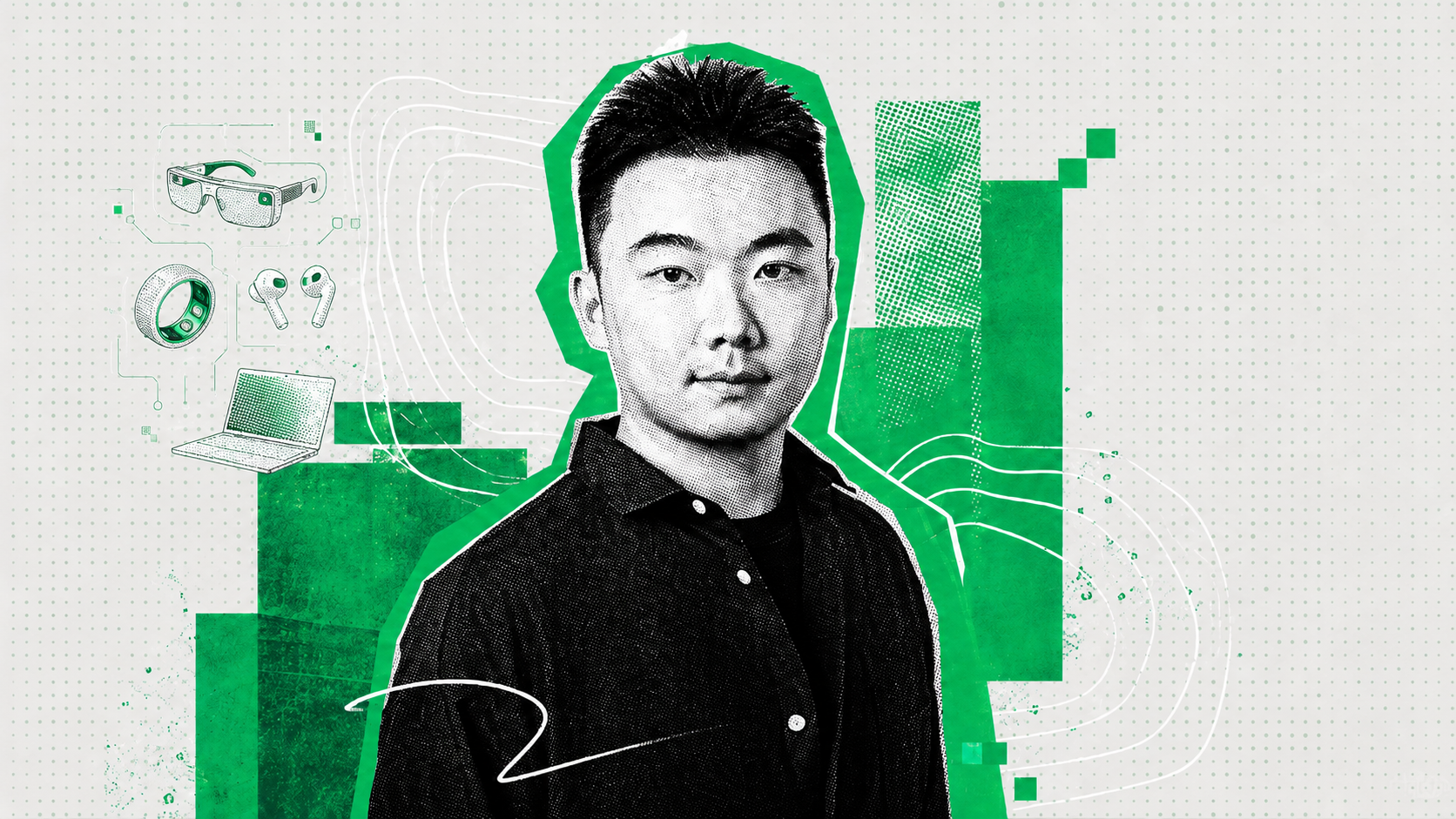
Unitree Technology’s IPO process has pushed its early backers back into view, and one of the investors drawing attention is Li Yannan, managing director at Sequoia China, who led a series of investments in the robotics company.
According to Huxiu, Sequoia China became the first institutional shareholder in Unitree to reach a 10% stake and kept investing in later rounds. Unitree’s prospectus shows that after dilution from multiple financings, Sequoia China still held more than 7% before the listing, making it the company’s second-largest institutional investor.
In a recent interview with Huxiu, Li discussed not only the Unitree investment but also how he is thinking about embodied intelligence, AI hardware, valuation risk and what separates durable companies from short-lived themes. His views were direct. A real AI-native device, he said, is not just a piece of hardware with AI added to it; it needs a level of initiative older consumer electronics did not have. Smartphones are not going away, but they will shift from being the only entry point to being the core node in a broader device system. Hardware companies also need to make the hardware math work first, rather than assume they can subsidize devices and recover the economics through software later. Data, in his view, does not automatically create an exclusive moat. What matters more is who has the strongest incentive to turn that data into a product experience that keeps improving.
Why Sequoia backed Unitree early
Li said he first came across Unitree through a university senior in mechanical engineering, who told him there was a well-known robotics enthusiast in Hangzhou building quadruped robots. Li then found founder Wang Xingxing’s QQ email address on Unitree’s website and reached out through WeChat. In their first exchange, Wang described a vision of “using robots to build robots,” which left a strong impression on him.
Li said the investment did not force a complete rewrite of his early-stage playbook, because he had already rated Wang highly from the first round of judgment. In fact, he said, failed deals that once looked like “model answer” companies often teach investors more. Those are the projects where the background looks strong, the founder appears impressive and the market opportunity sounds large, yet the company still does not succeed. For Li, that is a reminder that startup success remains a low-probability outcome.
He compared investing, somewhat loosely, to choosing a partner: no investor can back every company in the market, even at a firm like Sequoia. The real task is to raise the hit rate inside the limited set of opportunities one actually sees. Over time, he said, that has made him appreciate how unusual founders like Wang can be — the people who stand out almost immediately.
On keeping judgment fresh, Li split the process in two. One is a smaller reset: continue to track a company even if it was not recommended internally at first, then revisit it a month or two later. The other is a larger reset tied to cycles. Financial markets have peaks and troughs, and so do technology waves. Investors need to be able to sense bubble risk near the top while staying engaged enough during the low points to find strong founders.
His time horizon can stretch to 10 to 15 years, but in actual deal work he focuses first on the company’s earliest milestone. In consumer electronics, that often means whether the product can reach PMF, or product-market fit — whether a meaningful group of users accepts it and uses it frequently. That stage alone may take 1 to 3 years. After that come expansion beyond the initial niche, iteration, competition and the search for second and third growth curves.
Li also acknowledged that there were projects he regretted missing, though he did not name them. Looking back, he said that if a founder feels “mysteriously strong” in the first meeting, that usually justifies spending more time to understand the company, even if conviction on the business itself is not there yet.
What makes hardware truly AI-native
Asked how Sequoia screens AI hardware projects in a market full of glasses, rings, earbuds, AI PCs and companion devices, Li said the firm does not start by dividing the space into rigid product categories. Hardware innovation, in his view, often appears outside existing labels.
He pointed to imaging devices now grouped into “handheld” use cases. Before products from Insta360 and DJI, that category had not been clearly defined. New categories often do not emerge from a neat product catalog; the product comes first, and only then does the market come up with a name for it.
That is why, for him, the more useful question is whether a device is truly AI Native. One quick test is simple: if AI were removed, would the product still be able to deliver its core function? The other standard is initiative. Can the device stay online long enough to actively record, understand its surroundings and produce feedback, instead of waiting for the user to click a button before anything starts?
Li said initiative sits at the center of the AI-native idea because most older consumer electronics could recognize information but still required people to trigger the next step. AI opens the door for terminals that can watch the world, process context and take action when needed. He added that “Always On” should not be read too literally as 24-hour operation in every case. The real question is whether the device can sense and process information over a long enough period to take over tasks that previously depended on human initiation.
Start with the hardware economics
Li said the ideal setup is obvious: both hardware and software make money, and in the best case hardware alone can generate strong profits. But he did not present that as the default.
He noted that hardware gross margins are often lower in theory, yet the market still has many hardware companies with respectable net profit and healthy operations. For an early-stage startup, his advice was blunt: do not begin with the assumption that hardware must lose money. A product can earn a little less upfront if that keeps adoption barriers and education costs lower, but the hardware economics still need to stand on their own to some extent. Then software and AI can deepen the relationship and support ongoing payments from users.
He used smart rings as an example. The ring itself, he said, can be profitable. If the software layer then improves over time and expands beyond health features into broader functions, the overall business becomes much more attractive.
When asked which AI terminal category might offer the best investment return, Li declined to reduce it to a formula. In early-stage investing, he said, many of the most successful companies started with small ideas, while many grand narratives failed to make money. That uncertainty is part of what he enjoys about the job.
Where “pseudo AI-native” products break down
Li said the market will likely produce devices that look AI-native on paper but are not viable in practice. These projects usually share one trait: the concept is huge and often science-fiction-like, while current physical constraints do not support it.
His example was a deeply immersive VR device with 360-degree display, full portability and all-day battery life. Such a form factor makes sense in a movie. In reality, it runs straight into limits in computing power, heat dissipation, battery capacity and weight. Those bottlenecks are still unresolved, which is why products of that kind remain far harder to build than they are to imagine.
Smartphones stay, but their role changes
On whether the AI era can still produce a new terminal giant comparable to Xiaomi, Li said Xiaomi’s rise depended on a specific mix of timing, market conditions and execution. He does not think AI hardware has reached its “smartphone moment” yet, meaning the market still lacks a truly native AI form factor. In that sense, he compared the current stage to the phone market before the iPhone, when devices had already existed for years but the shape of the category was still unsettled.
Even so, he said users in the AI era may be more open to trying new electronics, and some products face a lower purchase barrier than earlier generations of devices did.
Li’s distinction between smartphones as the “only entry point” and smartphones as the “core node” was practical rather than abstract. He described the phone as the most complete personal electronics product available today, combining a mature screen, computing power, camera stack, operating system, software ecosystem, identity layer and the account and social graph infrastructure built up over years of the internet economy. Other devices might beat a smartphone in one function, but few can match its combined capability, which is why he does not expect phones to be displaced in the near term.
At the same time, some functions will migrate outward. Wristbands can collect sleep and heart-rate data more continuously than phones can. Other devices may be better suited to recording and exploring the environment over long periods, while the smartphone still depends on the user picking it up, unlocking it and initiating many interactions once the screen is off.
Li said Sequoia does not sort investment cases into neat buckets such as phone-centric accessories versus independent decentralized devices. Rings and wristbands still usually need the phone for interaction and display. Glasses may have a stronger case for standalone use in theory, but current limits in battery and compute still tie them closely to the phone. For early-stage investors, he said, the point is to preserve uncertainty rather than let existing categories become a constraint.
Mature categories are not closed, but they are hard
Li described the PC business as a highly mature industry. A good AI PC, he said, has to be a good PC first. Large companies have spent years building capabilities there, so a startup trying to compete at that level faces a high bar from the start.
Still, he said some companies are aiming at a more radical story by rebuilding the experience from the operating system layer: open the screen and the interface itself is AI, without the old assumption that software has to be installed app by app. If computing becomes cheap enough and intelligence becomes strong enough, he said, people may eventually need little more than screens and input devices, with AI handling the rest.
He was careful not to overstate that possibility. Difficult categories often still produce investment-worthy outcomes. He compared it to Pinduoduo’s emergence, when many people assumed e-commerce no longer had room for a new winner, yet a new opening still appeared.
Data is not automatically a moat
Li said he has long believed that even before AI, data itself rarely amounted to something one company alone could possess. Phones, software companies and even input-method apps all collected large volumes of user data in earlier internet cycles.
That does not mean data is useless. He said a data flywheel can become a barrier and can support adjacent products. But in the digital world, it is hard to turn data into an absolute “nobody else has this” advantage. In the AI era, the sharper question is which layer — model company, system company or device company — has the strongest will to use the data well enough to deliver a better experience.
Platforms like WeChat, he said, have a clear reason to maximize the compounding value of user data because their business depends on retention and stickiness. Model providers also want users to become more dependent over time. A pure hardware company has a weaker natural incentive if its business is mainly device sales, because data may not do much to change the user’s replacement decision when it can be migrated with one click.
Li said a hardware company that hands all data stewardship to a model provider may still have investment value in some cases, but the long-term competitive pressure would be substantial. Pure hardware tends to be pulled into direct competition. Even with an early lead, price wars can flatten those advantages quickly. He pointed to DJI and Bambu Lab as examples of hardware companies that have both expanded beyond hardware; Bambu’s community, he said, is part of its moat. The same trend shows up in successful phone and PC makers, where software revenue has become increasingly important.
Why model and application companies may move into hardware
Li said some companies start with the idea of managing the agents users rely on every day. They may begin as software on top of an operating system, then try to build the OS itself, and eventually decide they need hardware too in order to support specific functions.
In other cases, the demand itself depends on proactive recording and continuous sensing, which phones and computers cannot fully deliver. That naturally leads teams toward new hardware forms.
Most founders he speaks with, he said, do not begin with a fixed device concept. They begin with a problem. If the phone or computer cannot solve it, then they consider building hardware.
For now, model companies are still more focused on pushing the ceiling of intelligence higher, and hardware products remain limited. But Li said that if a company can build such a product, someone will pay for it. He added that mobile internet changed many industries but did not create a very broad set of business models, with advertising and gaming still dominating. AI may be different if users start paying directly for “intelligence,” which helps explain why model companies put so much priority on model capability first.
Li sees clear valuation strain in this year’s market
When asked whether the AI bubble could burst next year, Li said market sentiment is inherently hard to predict. What investors can often feel, though, is the tone of the market over the past one or two months and the next one or two months.
His assessment of the current environment was sharp: many projects this year already look “very unreasonable” on valuation. Some startup teams, he said, are not even fully ready yet but are being priced in the hundreds of millions of dollars, something he described as rare in the history of China’s VC market. Part of the reason, in his view, is that US comparables have made these numbers seem familiar during periods of stronger sentiment.
He also pointed to situations where public-market valuations for comparable companies are lower than private-market pricing, creating an inversion between primary and secondary markets. Another pattern he mentioned is investor preference for novelty — a tendency to chase the new company simply because it is new.
As for what matters most in judging whether the market is entering a dangerous phase, Li said the key signal is the model layer itself. If model intelligence stops improving, or the rate of improvement slows very sharply — for example, if new models released over a period look little different from those launched six months earlier — that would be a reason for caution.
Li still sees large models as a generational opportunity, perhaps even larger than the mobile internet era. But he also said many of today’s hottest companies carry some degree of survivor bias, having benefited from hitting AI at the right time, in a period shaped by global competition and capital expansion, especially in public markets. The question he keeps asking is what happens if the market falls. If that happens, can the growth spiral continue? Financial markets always have peaks and valleys, he said, and companies that can make it through the valleys are the ones that start to look truly great.
He was similarly cautious about the current pace of expectations. Either the world has genuinely shifted into this permanently accelerated state, he said, or there is some bubble embedded in the system because the market keeps demanding a faster next six months than the previous six months. He does not believe every company can succeed in 3 to 4 years the way some large language model companies have. Many will need to pass through multiple cycles first.
Professor founders, valuation methods and founder risk
Li said the number of professors and academics starting AI companies has risen noticeably this year for three reasons. First, cases such as DeepSeek have strengthened confidence in academic founders. Second, universities have become more supportive of commercialization and introduced policies to encourage it. Third, AI’s combination with vertical industries — including areas such as AI drug development and AI materials — fits naturally into the current model-driven narrative.
He added that these founder profiles are still more common in research-heavy projects and vertical model efforts than in consumer-facing applications.
On valuation, Li said early-stage pricing for such teams still depends heavily on market sentiment and the influence of public markets. The practical method is to ask how much money the team needs over the next 12 to 18 months, how much equity it is willing to give up, and then back into a valuation. As for whether he currently prefers model companies, hardware or applications, his answer was simply: case by case.
He also said Sequoia does not have a fixed preference between independent founders and teams spun out of large companies. In early-stage investing, the starting point remains the person. That can be a big-tech veteran, a small independent founder or a complete nobody. In reality, many strong companies do emerge from large-company talent, and there are also many cases where the spun-out company is valued not far below the parent.
Asked which kind of founder makes him especially cautious, Li used one word: “wangren,” which he described as someone who is arrogant without realizing it. These founders often want to take on an extremely grand mission while remaining blind to their own limits. In his view, their odds of success are low.
Four questions behind Li’s AI hardware framework
Huxiu summed up Li’s approach to AI hardware with four questions:
- Without AI, does the product’s core function still hold?
- Has it truly gained the ability to sense continuously and act proactively?
- Do compute, thermal constraints, battery and cost allow it to move from demo to mass production?
- Once the hardware can be copied and prices start to fall, what does the company still have left?
That framework leaves little room for superficial AI branding. For Li, the opportunity in AI hardware is not about making another familiar device with a model attached. It is about building a product and business system that can close the loop over time.