IQE

Serenity
2026-08-30 06:34:06

Serenity Slams Paid Walls in Research Circles, Keeps Subscription at $1

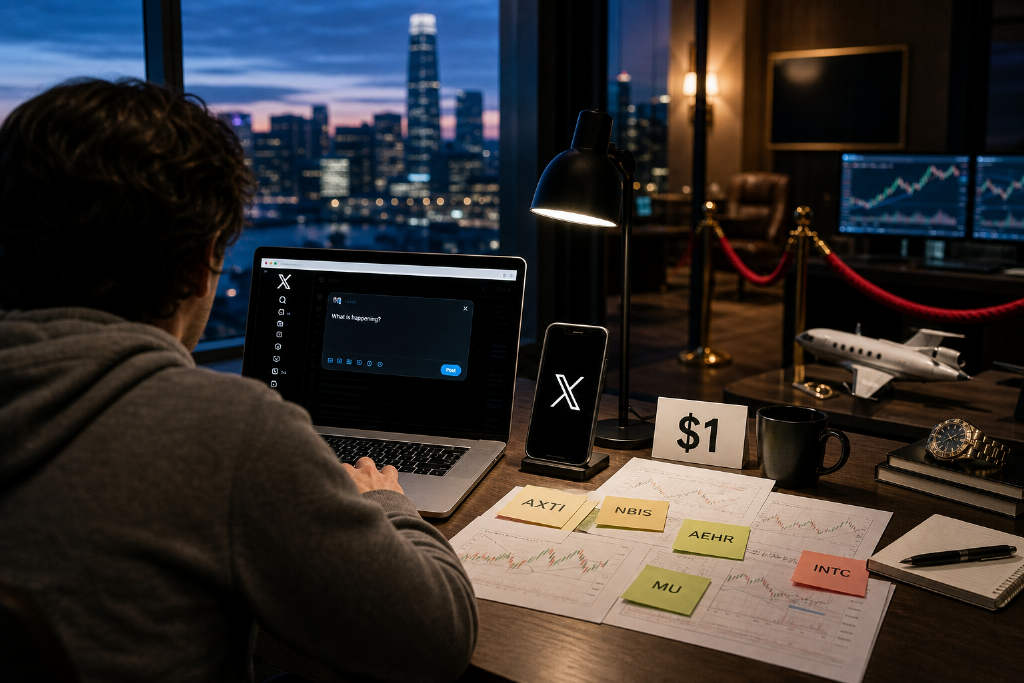
Serenity said on X that when he first joined the platform, finance content was dominated by luxury watches, private jets, options trades, "Wall Street secrets" paid groups, and technical analysis charts. That experience, he said, pushed him to share his research and investment logic openly so anyone can read it for free and decide for themselves. He said his subscription price has stayed at $1 for months and will remain at the minimum level. He also described a pattern he sees in the space: creators compete for the same audience, then quickly funnel traffic to paid groups or expensive services; after he refuses to join or promote those groups, they attack him personally and frame it as a disagreement over fundamentals. Serenity listed a long set of investment ideas he has previously shared, including AXTI, NBIS, AEHR, MU, INTC, EWY, MRVL, LITE, RPI, IQE, SOI, TSEM, ARM, and COHR. He said some have performed well, while others are still waiting on industry developments, such as LPKF’s glass substrates and Auros’ hybrid bonding. He also said some themes may not be tested until 2027-2028, including Sivers, Foci, Shunsin, CCXI, XFAB, CPO, humanoid systems, and his latest work on Etron/ESMT DDR2 and DDR3.

170
Serenity Slams Paid Walls in Research Circles, Keeps Subscription at $1
WuBlockchain
2026-08-12 11:37:09

AI capital is tracking time-to-compute as SMCI and Lumentum earnings highlight new infrastructure bottlenecks

WhiteLine Daily, published by WuBlockchain, argues that recent earnings from CoreWeave, Supermicro and Lumentum point to the same shift in AI infrastructure: demand has not cooled in a meaningful way, but the main constraints on bringing capacity online are no longer just GPUs. The bottlenecks are moving toward financing, power, cooling, networking and optical interconnects. For Supermicro, the report says demand remains firm. Fourth-quarter revenue reached $11.1 billion, up about 93% year over year, new orders topped $60 billion, and the company guided for $65 billion to $72 billion in FY2027 revenue. Management said some revenue delays were tied not to GPU or server readiness, but to customer-side power, cooling and networking conditions. WhiteLine Daily said the next key variable is margin stability, with Q4 gross margin recovering to 17.5% from 9.9% in the prior quarter while FY2026 gross margin stood at 10.8%. Lumentum’s results showed a similar pattern from the optical side. Fourth-quarter revenue rose to $1.01 billion, up 109% year over year, while non-GAAP gross margin climbed to 50.4%. The note said tight supply in AI optical interconnects is now showing up not only in orders but also in profitability, with Sivers and IQE identified as downstream and upstream names to watch.

890
AI capital is tracking time-to-compute as SMCI and Lumentum earnings highlight new infrastructure bottlenecks
Policy Regula
2026-08-05 11:39:35

FCC draft on Chinese data-center optical modules puts focus on non-China suppliers and InP bottlenecks

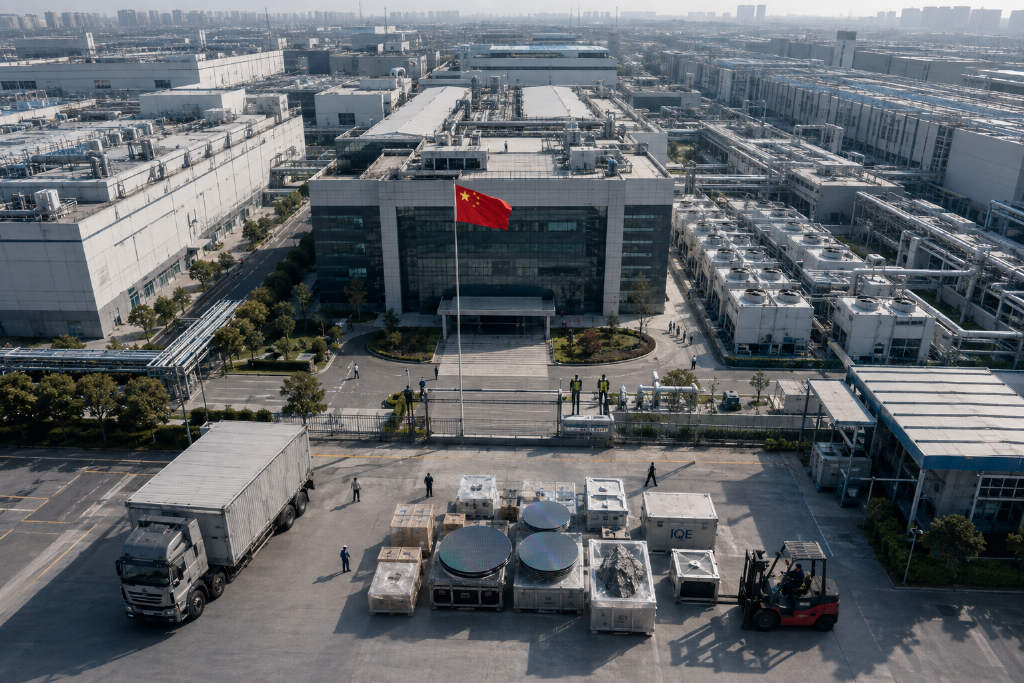
The U.S. Federal Communications Commission is considering restrictions on some new data-center optical modules made by Chinese vendors, but the proposal is still in draft form and several core definitions remain unsettled. The biggest open questions are whether the FCC will define "Chinese origin" by brand, manufacturing location, or component source, whether older models can still enter the U.S., and whether non-Chinese brands using Chinese-made substrates or lasers could still qualify for exemptions. For now, the market is trading the possibility that orders shift toward non-Chinese suppliers. WhiteLine Daily identified Coherent, Lumentum, and Applied Optoelectronics as the most direct potential beneficiaries if U.S. cloud companies continue building AI data centers while Chinese new-model supply faces limits. Marvell and Broadcom could benefit later, but only if demand passes through to DSP, driver-chip, and connectivity layers after module makers actually expand output. Over a longer horizon, the report says the more important constraint may not be module assembly capacity but the supply of indium phosphide, or InP, across substrates, epitaxial wafers, and lasers. AXT, IQE, and Sivers map to different parts of that chain, though each carries a different mix of policy risk and commercial visibility. The report argues that the real test will be the final FCC rule, confirmed customer orders, and whether non-China capacity can scale fast enough.

1420
FCC draft on Chinese data-center optical modules puts focus on non-China suppliers and InP bottlenecks