ITER

nuclear fusio
2026-08-30 10:08:43

Nuclear fusion may not arrive in time for the current climate fight, BlockTempo says

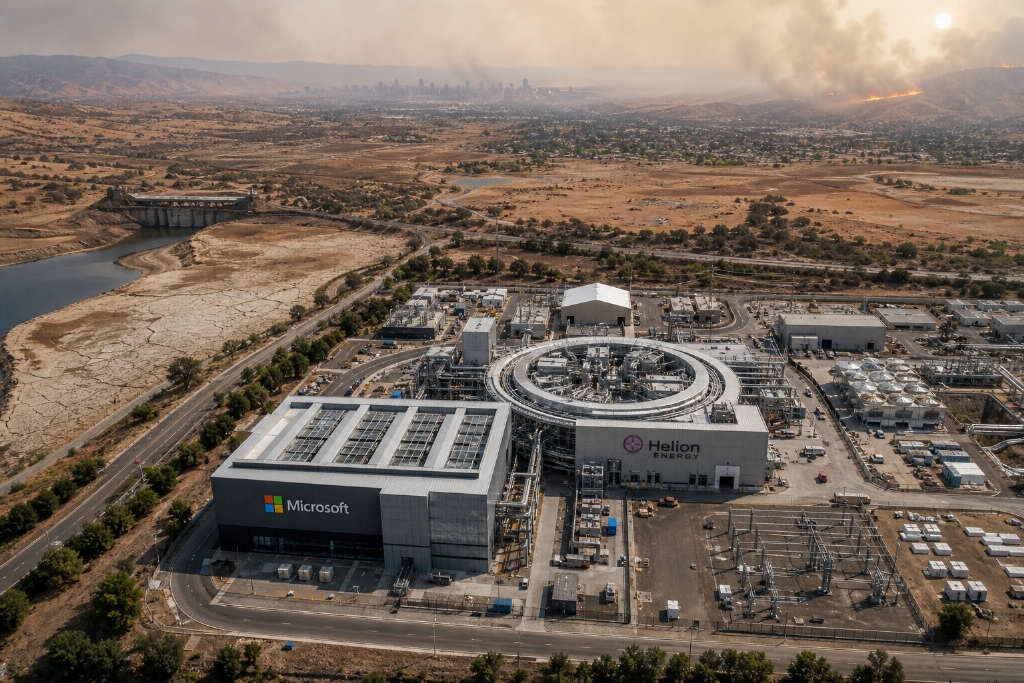
A BlockTempo article argues that nuclear fusion, despite a string of technical advances and growing investor backing, is unlikely to play a meaningful role in cutting global emissions during the most critical decades of climate action. The piece ties renewed interest in fusion to intensifying El Niño conditions, noting that NOAA assessed a more than 90% chance of the event developing into a “super El Niño” after the Niño 3.4 index reached +2.7°C in mid-August. Against that backdrop of heatwaves, drought and extreme rainfall, fusion is again being framed as a possible long-term clean energy answer. The article lays out why fusion attracts such optimism: no greenhouse gas emissions during the reaction, fuel sources centered on deuterium and tritium, no meltdown scenario comparable to Chernobyl or Fukushima, and a much lighter waste burden than fission. It also points to more than $7 billion invested in private fusion companies over the past decade, along with Microsoft’s 2023 power purchase agreement with Helion for electricity starting in 2028. Still, the report says climate deadlines come much sooner than fusion deployment. It places engineering net gain in the late 2020s or early 2030s, first demonstration plants in the mid-to-late 2030s, and large-scale commercial buildout much later. With ITER’s first plasma pushed beyond 2034 and major hurdles still unresolved, BlockTempo concludes fusion is more likely to matter after 2050 than before it.

50
Nuclear fusion may not arrive in time for the current climate fight, BlockTempo says
AMD
2026-08-04 11:15:08

Wafer says Kimi K3 fits on one 8x AMD MI355X server, while B200 needs 16 GPUs across two nodes

Wafer AI said it deployed Kimi K3 on AMD’s MI355X, claiming the model can run on a single server with eight GPUs, while the same workload requires 16 NVIDIA B200 GPUs spread across two servers because of memory limits. In Wafer’s test with 1,024 input tokens and 400 output tokens, the MI355X setup delivered 952 tokens per second of aggregate throughput and 118 tokens per second for single-user generation. The article says that, on a single-node basis, this works out to roughly 3.8 times the throughput of the 16-card B200 deployment’s average per-node figure, while B300 still leads on absolute speed at 1,568 tokens per second and 172 tokens per second for single-stream generation. Wafer also published a cost comparison using hourly prices of $2.5 for MI355X, $4.25 for B200, and $6 for B300, under which MI355X offered about 48 tokens per second per dollar, ahead of B200’s roughly 7 and B300’s roughly 33. The report also highlights ROCm software progress, saying Kimi K3 was largely able to run directly on MI355X, with follow-up work focused on a small number of compatibility issues and performance tuning, including speculative decoding fixes and a prefill optimization that reduced cold-start latency on a 172,000-token task.

1960
Wafer says Kimi K3 fits on one 8x AMD MI355X server, while B200 needs 16 GPUs across two nodes