LPU

Nvidia
2026-08-21 14:18:32

Nvidia Denies Developing a China-Only AI Chip

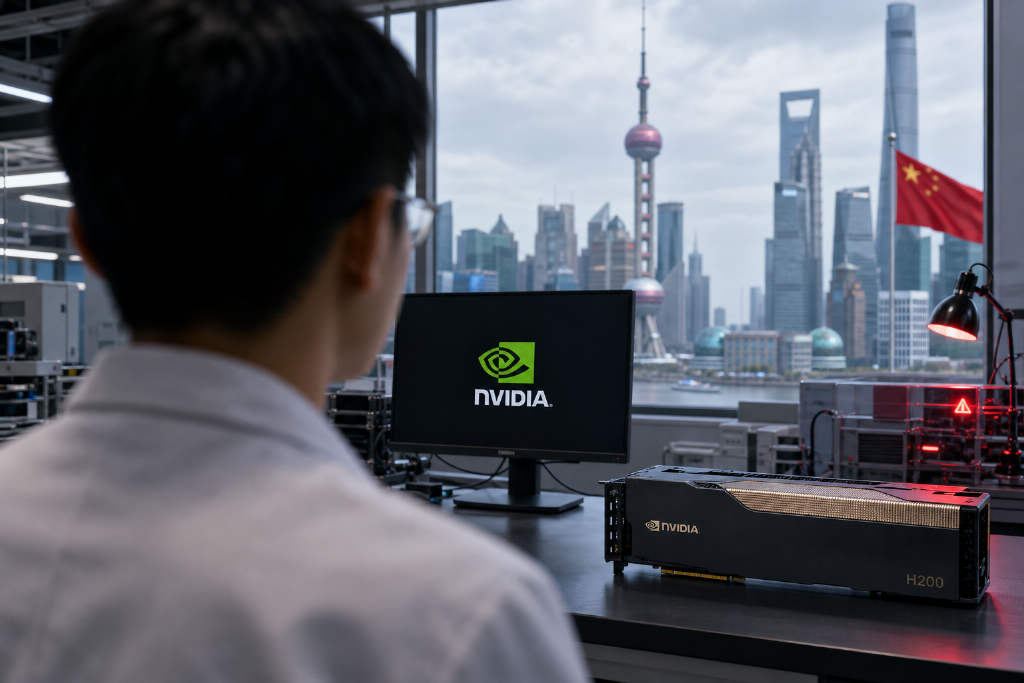
Techub News reported that Nvidia denied it is developing an LPU chip based on Groq technology for the China market. The company said it has no such product for sale and no plan to add one to its roadmap. The denial follows earlier reports that the chip could begin small-scale shipments before year-end. Nvidia remains under U.S. export control pressure in China, where the market once accounted for at least one-fifth of its data center revenue. The company currently has only limited sales approval for the H200 chip, leaving its long-term strategy in China uncertain, according to CryptoBriefing.

30
Nvidia Denies Developing a China-Only AI Chip
Samsung Elect
2026-08-05 10:52:15

Samsung foundry’s 4nm capacity is booked out through next year, report says

Samsung Electronics’ 4nm foundry lines are fully booked through next year, according to a report from South Korean media outlet ZDNet Korea cited by ChainCatcher. The report said the capacity crunch has been driven mainly by a surge in HBM4 orders and stronger-than-expected demand tied to Nvidia’s inference-focused LPU, referred to as “Grok3.” To deal with the bottleneck, Samsung is said to be recommending its verified 5nm process to customers as an alternative. That node was originally aimed largely at automotive chips, but the report said its use is now expanding into servers and high-performance AI and NPU chips. ZDNet Korea also said demand from 5nm customers has risen sharply over the past three to four months. The increase reportedly came mainly from Chinese and Indian fabless companies that shifted orders as TSMC’s advanced-node supply remained tight and geopolitical factors weighed on sourcing decisions. The report added that customer inquiries around Samsung’s 2nm process are continuing as well.

840
Samsung foundry’s 4nm capacity is booked out through next year, report says
AI Inference
2026-07-23 09:42:12

AI inference shifts the memory stack as HBF, SSD POD and SRAM take on new roles

A TrendForce research note says the memory hierarchy behind AI systems is being redrawn as the industry shifts from training to inference. High Bandwidth Memory, or HBM, dominated the training era because it solved a bandwidth problem. In inference, the pressure point has changed. Key-value cache growth during prefill and decode is pushing capacity to the forefront, creating room for three different approaches: HBF for larger-capacity memory between HBM and SSD, SSD POD for offloading cache into lower-cost storage tiers, and SRAM for ultra-fast on-chip access in decode-heavy workloads. The report walks through how each technology fits into the stack rather than framing them as direct substitutes. HBF, being developed by SanDisk and SK hynix, is aimed at much larger capacity than HBM but has not reached mass production. NVIDIA’s SSD POD concept, tied to its Dynamo framework and NIXL transport library, is designed to move KV cache from limited GPU memory into CPU RAM, local SSDs, and remote storage without stopping inference. SRAM, used aggressively by companies such as Groq and Cerebras, trades capacity for speed by keeping memory on chip. The piece also points to recent product moves from NVIDIA, Google, SambaNova, Cerebras and Etched as evidence that inference-focused hardware design is accelerating.

660
AI inference shifts the memory stack as HBF, SSD POD and SRAM take on new roles
Nvidia
2026-07-21 08:00:00

Nvidia’s dark fiber buildout points to a deeper moat than GPUs

Nvidia is reportedly pursuing a nationwide dark fiber strategy in the U.S., a move that analysts at Needham and Wolfe Research say could cost $5 billion to $10 billion over the next three years and support as much as 7.6 petabits per second of total bandwidth. The plan centers on buying already-laid but inactive fiber and building carrier-grade network infrastructure on top of it, giving Nvidia direct control over optical equipment choices and network design rather than simply leasing bandwidth. Wolfe Research described the project as Nvidia’s “ultimate insurance” against the rise of custom AI chips, or ASICs, from suppliers such as Broadcom and Marvell for major cloud groups including Google and Amazon. The idea is that even if customers increasingly adopt non-Nvidia chips in some workloads, Nvidia could still retain influence and economics at the delivery layer by controlling the network that moves compute to end users. The reported push also signals a broader shift in Nvidia’s role, from upstream chip supplier to AI infrastructure operator with more direct access to customers. That has implications for cloud providers such as AWS, Azure, and Google Cloud, and may also affect dark fiber asset valuations for telecom infrastructure owners including Zayo and Crown Castle. At the same time, commercializing such a network would bring execution challenges in operations, transport equipment deployment, and last-mile connectivity.

690
Nvidia’s dark fiber buildout points to a deeper moat than GPUs