Ethereum2026-09-19 14:31:10Ethereum’s EIP-8198 aims to make block times configurable before cutting slotsEthlabs is pushing Ethereum Improvement Proposal 8198, known as Quick Slots, as a candidate for the Hegotá upgrade, arguing that Ethereum can move faster without giving up censorship resistance, decentralization, or credible neutrality. The proposal does not call for an immediate aggressive cut in block times. Instead, it starts with a structural change: removing the assumption across specs and clients that Ethereum blocks always arrive every 12 seconds. Once that work is in place, slot times could be shortened gradually, with 10 seconds presented as the initial step and every later reduction requiring separate testing and consensus. The case for the change, as laid out in interviews with roughly 20 DeFi founders, application builders, and infrastructure researchers, spans market structure, user experience, censorship resistance, and L2 coordination. Supporters say fresher state updates would tighten quoting windows, reduce stale pricing, improve execution conditions, and help products ranging from DEX aggregators and options venues to tokenized stocks and ETFs. Others argue that faster slots would shorten the wait for censored transactions to find another inclusion path and make Ethereum’s base layer a more responsive settlement clock for rollups. At the same time, the proposal’s backers say the tradeoff only works if decentralization is preserved. That is why current work is focused on specifications, client implementations, downstream dependency checks, and compatibility with future consensus changes rather than on rushing a hard cut in slot time.520
Ethereum2026-09-19 14:31:03Ethereum’s EIP-8198 aims to make block times adjustable before shortening themEthlabs is making the case for EIP-8198, or Quick Slots, as a way to speed up Ethereum without trading away censorship resistance, decentralization, or credible neutrality. The proposal would first remove the hard-coded 12-second block assumption from clients and specifications, then let the network shorten slot times in measured steps, starting with a move from 12 seconds to 10 seconds. Supporters interviewed by Ethlabs — including DeFi founders, infrastructure builders, and researchers — argue that fresher state updates could improve DEX execution, tighten quotes, reduce risk for arbitrageurs and market makers, and make tokenized assets and cross-rollup interactions work better on Ethereum’s base layer. They also say faster slots could strengthen censorship resistance, especially when paired with FOCIL, by increasing how often censored transactions get another chance to be included. At the same time, the proposal’s backers stress that none of this is worth doing if it raises barriers for geographically distributed validators or pushes staking and block production toward better-connected data centers. Work is now focused on turning the specification into running client code, testing transition paths, auditing downstream systems that assume 12-second timing, and checking compatibility with future consensus changes such as decoupled consensus.390
Robinhood2026-09-16 02:25:00Robinhood Chain’s Breakout May Be Robinhood’s Own iPod MomentPANews argues that Robinhood Chain’s recent surge is about more than meme-stock frenzy onchain. In the past two months, RH Chain has moved into the spotlight as tokenized U.S. stock trading and meme-driven activity accelerated, with daily chain fees at one point topping $6 million, DEX daily volume reaching $3.7 billion, and total value locked nearing $1 billion only two months after launch. Over the past seven days, the network generated about $21.4 million in revenue, according to the article, putting it at the top among public chains for that period. The report says the economics are unusually attractive for Robinhood because RH Chain is an independent Layer 2 built on the Arbitrum stack, using Ethereum for data availability and security while allowing Robinhood to retain control over its own sequencer economics. After accounting for Ethereum settlement and blob costs as well as Arbitrum’s 10% protocol share, Robinhood could keep close to 90% of network revenue, the article says. Even after normalizing for the recent meme surge, PANews estimates annualized revenue at roughly $200 million. The article’s broader point is that RH Chain may reshape how investors view Robinhood. Instead of charging once around a trade, the company could increasingly capture value throughout an asset’s lifecycle across trading, settlement, DeFi, and financial applications. PANews frames that shift as a move from financial product distribution toward deeper blockchain-based financial infrastructure.1860
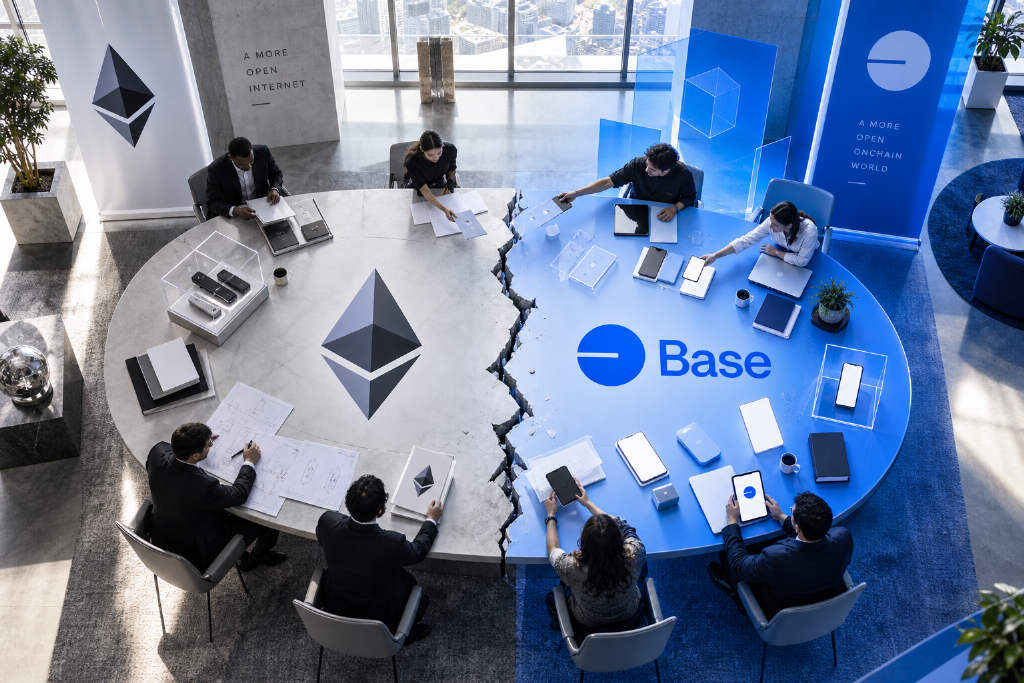
Ethereum2026-09-15 13:57:57Ethereum and Base split on wallet standards, sending account abstraction down two tracksEthereum and Coinbase-backed Layer 2 Base have abandoned efforts to align on a shared Account Abstraction standard for wallets, opening a split that could reshape how developers support users across chains. Derek Chiang, a researcher at Ethlabs and co-author of Ethereum Improvement Proposal EIP-8141, said the talks broke down last week and that the practical burden now shifts to wallet builders, who may need to support two transaction formats instead of one. The divide is now clear. Ethereum is moving ahead with EIP-8141, also known as Frame Transactions, as a priority proposal for its Hegotá upgrade. Base is backing EIP-8130, or Keystore, for native AA and has already run it on devnet. The Ethereum Foundation said in a Sept. 7 blog post that EIP-8141 is one of Hegotá’s priority items, alongside EIP-7702. Chiang framed the split as a reflection of deeper architectural differences between Layer 1 and Layer 2 networks. Ethereum, in his view, prioritizes censorship resistance, anti-takeover protections, open source development, privacy, and security. Base, by contrast, is more focused on scalability and user experience. That leaves the ecosystem with more room to experiment, but also raises the risk that wallets and users will face a more fragmented experience if other networks adopt different AA paths.660
Arbitrum2026-09-15 12:27:07Standard Chartered Starts ARB Coverage With a $10 2030 Target, Citing Robinhood Chain and TokenizationStandard Chartered has initiated coverage on Arbitrum’s ARB token with a year-end 2030 target of $10, framing Arbitrum as infrastructure for traditional finance rather than only a Layer 2 network. In the bank’s view, the core business is licensing Arbitrum’s technology stack to financial firms and taking a share of what those firms make. That thesis leans heavily on the Arbitrum Expansion Program, under which licensees pay 10% of net protocol revenue, with 8% going to the Arbitrum DAO and 2% to developers. Robinhood Chain, which went live on July 1, is the clearest example and now generates far more fees than Arbitrum One on several recent measures. The note from Geoff Kendrick, Standard Chartered’s global head of digital assets research, sets ARB targets of $0.50 by the end of 2026, $1.50 by end-2027, $3.50 by end-2028, $6.50 by end-2029, and $10 by end-2030. The report also points to treasury management income, Timeboost auctions, and tokenization growth across stablecoins, real-world assets, and tokenized equities. At the same time, it highlights a key structural problem: ARB does not directly capture protocol revenue today. The bank also lists slower tokenization, competition from other chains, and unresolved US regulatory questions as major risks.1020
Ave2026-09-15 04:00:00Ave adds Ink support for cross-chain swaps and on-chain tradingAve has integrated the Ink ecosystem and now supports cross-chain instant swaps and on-chain trading for assets on the network, giving users a single access point for trading within Ink. Ink is an Ethereum Layer 2 network launched by crypto trading platform Kraken. It is built on the OP Stack and is part of the Optimism Superchain. According to the announcement, the network is focused on DeFi use cases and offers low transaction costs, fast block production, EVM compatibility, and Superchain interoperability. Ave also said it already supports price tracking and trading for assets from major launch platforms. With the Ink integration now live, the platform’s coverage has expanded to include both major and emerging Layer 2 networks, allowing users to directly take part in DeFi trading across the Ink ecosystem.750
Ethereum2026-09-14 15:38:47Base and Ethereum Fail to Align on Native Account Abstraction Standards, Developer SaysA coordination effort between Base-backed EIP-8130 and Ethereum’s EIP-8141 Frame Transactions ended last week, according to Derek Chiang, the ZeroDev founder and an Ethlabs developer. The breakdown leaves the two camps pursuing separate native account abstraction standards, with both proposals still listed as drafts in Ethereum’s official EIP registry. Ethlabs is backing Frame Transactions for Hegotá, which it describes as an upcoming Ethereum hard fork, and says it plans to work with Layer 2 networks and wallets on deployment. The split does not automatically make 8130-style accounts unusable across EVM chains, because the proposal still points to ERC-4337 or other transport mechanisms where the native transaction type is unavailable. But if the drafts move ahead independently, wallets and applications would need to choose different transaction transport and validation rules on a chain-by-chain basis. Chiang said the failed push was effectively shifting the burden of fragmentation onto wallets, even as he argued software could still shield end users from those differences.850
Uniswap2026-09-14 15:06:01Uniswap adds Ink support across web app, wallet and APIUniswap said in a post on X that its web app, wallet, and API are now live on Ink, expanding the protocol’s reach to the Layer 2 network. The launch allows users to swap tokens and provide liquidity directly on Ink through Uniswap’s existing product suite. It also opens the door for developers to plug Uniswap functionality into other products using the Uniswap API. According to the post, that includes integration into wallets, aggregators, and trading products. The update centers on product availability and network support, with no additional rollout details included in the announcement. The source cited for the update is Uniswap’s official X account.800