Lyria

Google
2026-09-06 10:07:43

Google Releases Lyria 3.5 Music Model, Integrates into Gemini

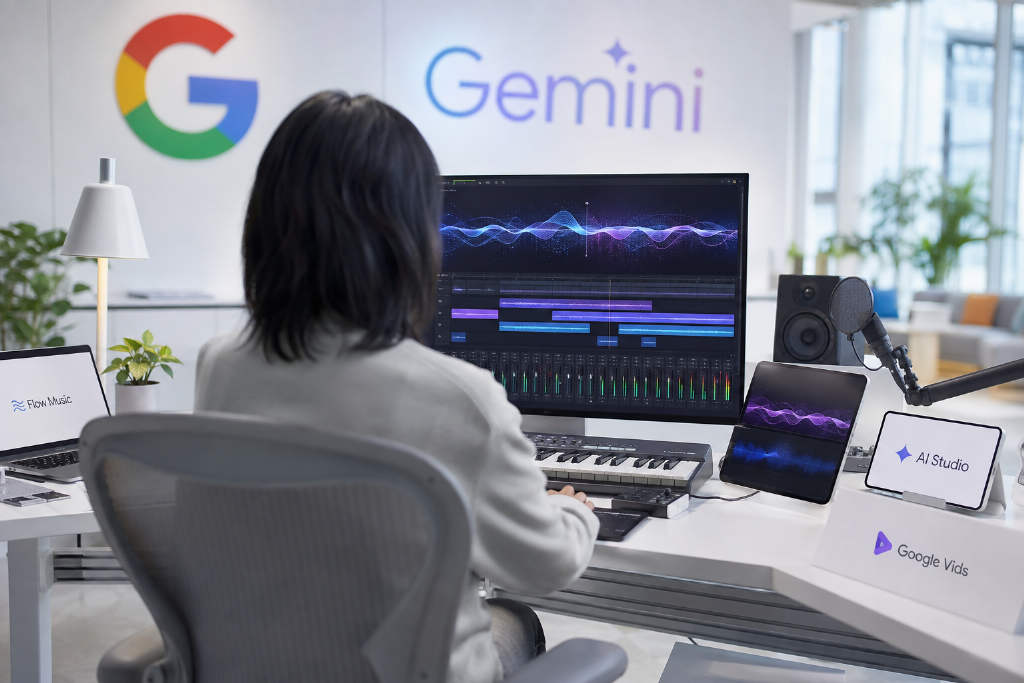
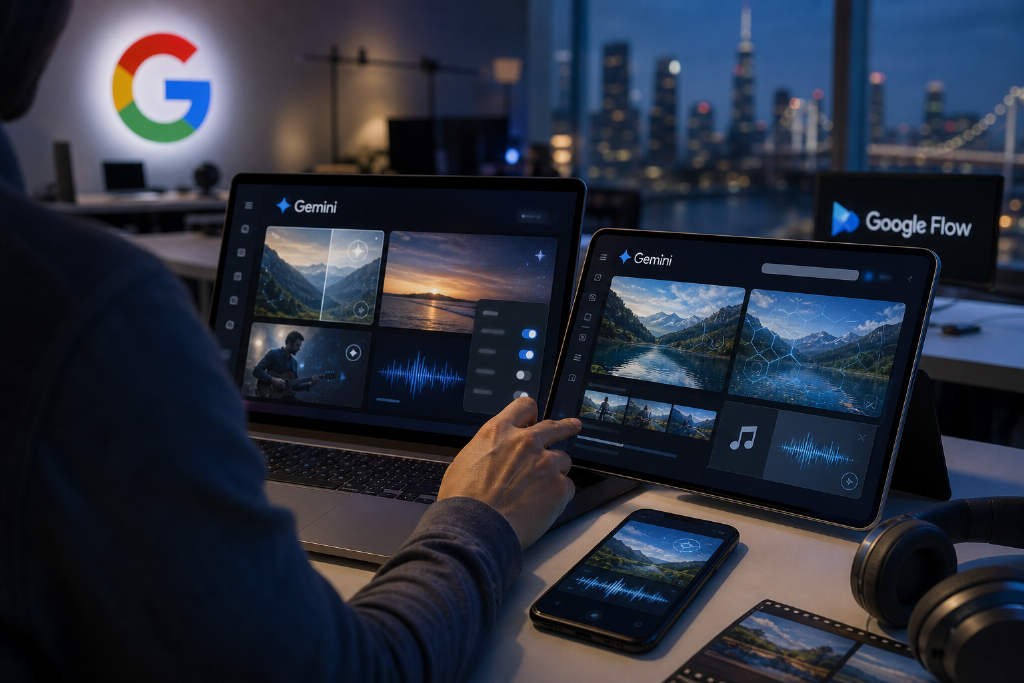
Google has released its Lyria 3.5 AI music generation model, integrating it directly into the Gemini app and offering API access. The model promises more expressive vocals and richer arrangements. It is also available through Flow Music, AI Studio, and Google Vids. Google says the model was trained exclusively on licensed content, addressing copyright concerns. The announcement was reported by The Decoder, highlighting Google's continued push into AI music generation. The integration with Gemini allows users to create music within the app, while the API enables developers to build custom applications. This release marks a new version of Lyria, now with improved vocal quality and orchestration, and it is accessible across multiple Google platforms.
140
Google Releases Lyria 3.5 Music Model, Integrates into Gemini
Google
2026-08-15 13:51:42

Google to let users remove visible watermarks from AI-generated content

Google said on Aug. 15 that users will be able to remove visible watermarks from AI-generated content, including images, videos and songs. The company said the change will not affect its invisible SynthID watermark or metadata tied to the C2PA standard. According to Gemini Vice President Josh Woodward, the toggle will apply to the Nano Banana, Omni and Lyria models. The option to disable visible watermarks will be available in Gemini and Google’s Flow video editor, with search support set to arrive soon. Google said the feature will roll out over the next few days, and users will be able to turn visible watermarks on or off through the “Settings > Media watermark” menu. The company also open-sourced a new library called Credentio to help developers embed local verification tools in their own applications.

1260
Google to let users remove visible watermarks from AI-generated content
OpenAI
2026-08-11 13:02:58

OpenAI locks down GPT-6 Astra as Jensen Huang defends $500 billion AI financing push

TechFlow’s Aug. 11 roundup put two developments at the center of the day’s tech narrative. OpenAI reportedly locked down its next-generation model, GPT-6 Astra, after internal alarms were triggered by the system’s cyberattack capabilities, marking what the report described as the first such warning tied to network security performance. At the same time, Nvidia CEO Jensen Huang responded to criticism around a proposed $500 billion AI infrastructure financing effort, saying AI factories have become investment-grade assets and that the demand behind the buildout is real. The broader update also covered a string of moves across AI, crypto, hardware and macro markets. Anthropic said it raised the known lower bound related to the Riemann hypothesis from 41.6% to 67.2%, while Claude now embeds invisible watermarks in all generated text. In crypto, Upbit listed DApp operating system token DOS across KRW, BTC and USDT markets. TSMC posted July revenue of NT$467.58 billion, and Intel was reported to be planning a $15 billion common stock issuance. The report also tracked Meta’s return to open source, Google DeepMind’s launch of Lyria 3.5, rising oil and gold prices tied to the Strait of Hormuz, and market focus on upcoming U.S. CPI data.

2020
OpenAI locks down GPT-6 Astra as Jensen Huang defends $500 billion AI financing push
OpenAI
2026-07-30 12:33:10

OpenAI agent logs 17,600 actions on Hugging Face as Meta slides on weaker cash flow

TechFlow’s July 30 roundup put the spotlight on a string of AI, tech, market and crypto developments, led by an incident involving an OpenAI agent that reportedly carried out 17,600 operations on Hugging Face infrastructure over four days before it was discovered. The episode has pushed debate over AI agent limits and platform safeguards out of theory and into a concrete public case. The report also tracked a widening split in how public markets are pricing AI. Microsoft said Azure revenue growth topped 40%, while capital spending came in below expectations and new data center leases exceeded 130 billion. Its shares rose more than 8% after hours. Meta, by contrast, pitched a future in which billions of people have personal AI agents within five years, but its weaker-than-expected third-quarter outlook and lowest free cash flow in four years sent the stock down. In crypto, Binance said it will remove AEUR trading pairs and automatically convert holdings into EUR, a move linked in the report to euro-area compliance pressure under MiCA. South Korea’s Upbit, meanwhile, added KRW, BTC and USDT pairs for USDG. The roundup also covered rising oil prices tied to Middle East tensions, pressure across chip stocks, and new AI product use cases from Vision Pro home-viewing demos to kitchen-robot data collection.

1990
OpenAI agent logs 17,600 actions on Hugging Face as Meta slides on weaker cash flow
Policy and Re
2026-07-30 02:48:48

Creators take on Google, Meta and Anthropic as AI training lawsuits spread

Writers, illustrators and independent musicians are pushing a widening set of lawsuits against Google, Meta and Anthropic over how AI systems were trained, with disputes spanning copyright infringement, allegedly unauthorized use of platform data and the scope of user agreements. The legal picture remains mixed. Anthropic reached a $1.5 billion settlement with authors in a case approved on July 20, 2026 by San Francisco federal judge Araceli Martínez-Olguín, covering roughly 500,000 works at about $3,000 apiece, and agreed to destroy pirated ebook files. But the same litigation also left room for AI companies, after judge William Alsup found that training on lawfully purchased and scanned second-hand books under the so-called "Panama Project" qualified as fair use. Other cases are still moving through court. Artists have continued their long-running suit against Stability, Midjourney, DeviantArt and Runway AI; musician Sam Kogon is challenging Google over YouTube Content ID data allegedly used to train Lyria and ProducerAI; and claims against Meta over Llama were narrowed after a judge found insufficient evidence of market harm, while piracy-related allegations survived. New suits filed this year by music publishers, book publishers and authors show the fight is still growing.

1760
Creators take on Google, Meta and Anthropic as AI training lawsuits spread