BackMaxForAI

MaxForAI

Elon Musk
2026-09-03 05:48:10

Musk backs ARK view that AI infrastructure is pulling capital away from the rest of the economy

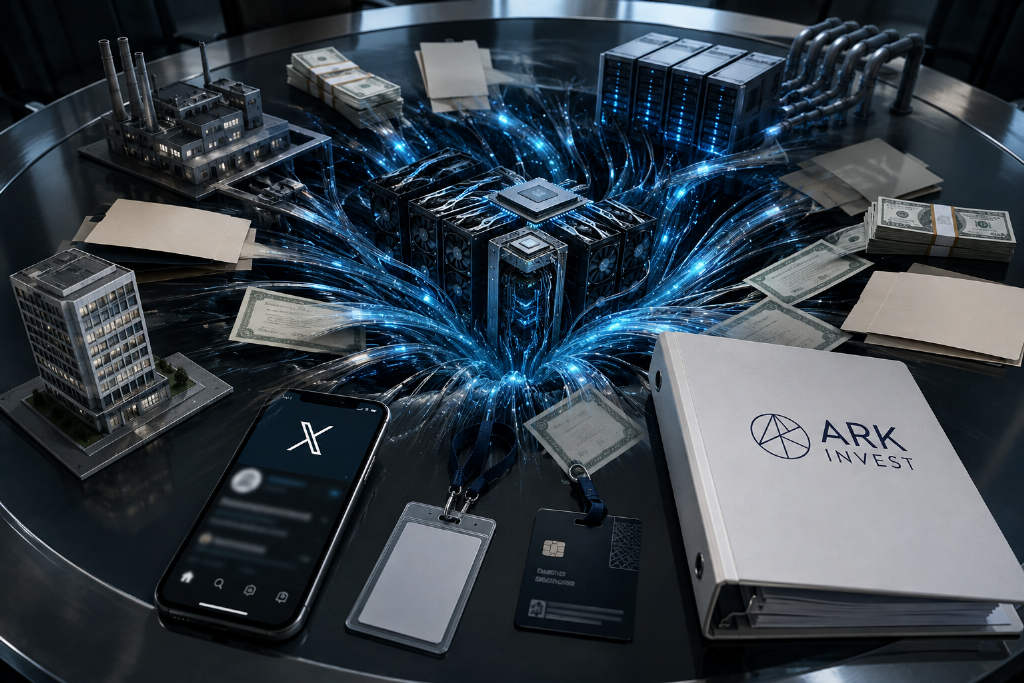
Elon Musk amplified a view from ARK Invest chief futurist Brett Winton, writing that 「The AI riptide is already underway.」 The discussion centers on a sharp rise in AI demand, with the article saying global AI inference token usage has increased about 25-fold over the past year and OpenRouter token volume is doubling roughly every 11 weeks. Cathie Wood argued that token consumption is growing exponentially and spreading across the economy, while frontier AI labs are seeing annualized revenue rise 5x to 10x within six months to one year. The article’s main claim is that AI infrastructure now offers unusually short payback periods and very high internal rates of return, drawing capital toward GPUs, data centers, and AI companies. It says this shift is not limited to venture funding. Debt markets and talent allocation are also being reshaped as builders of AI capacity can tolerate higher financing costs because compute remains scarce and profitable once deployed. The piece also states that Nvidia chips have become a form of collateral for debt tied to data center buildouts. According to the article, the pressure on traditional companies could show up in four ways: higher financing costs, weaker valuations and liquidity for non-AI stocks, more expensive debt refinancing, and a migration of talent toward AI-linked sectors. Musk replied to the broader argument with a short endorsement: 「You are right.」
120
Musk backs ARK view that AI infrastructure is pulling capital away from the rest of the economy
Ox Alpha
2026-08-23 02:15:10

Anonymous model Ox Alpha draws attention after coding tests place it near top-tier systems

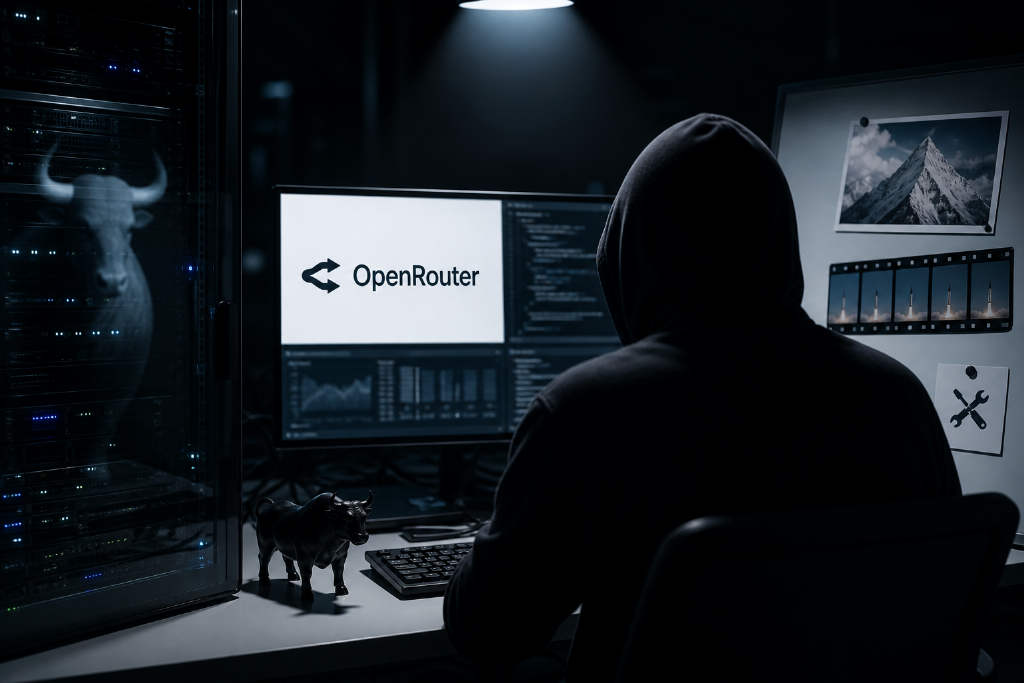
An anonymous model called Ox Alpha has quickly become a focal point in the AI community after appearing on OpenRouter with a 1 million-token context window, multimodal input support for text, images, and video, tool use, and free access for now. What pushed it into the spotlight was not its listing, but its coding performance. Developer Ben Davis tested the model on 10 DeepSWE tasks and reported that it solved eight, for an 80% pass rate. In the comparison he shared, Fable 5 Max scored 65%, GLM-5.3 Max and Grok 4.6 xhigh each scored 62%, and GPT-5.6 Sol Max came in at 52%. A later run by other developers on a different DeepSWE subset produced a result of about 63%, which left Ox Alpha’s exact standing unresolved because the task sets and runtime configurations were not identical. At the same time, speculation about the model’s identity has centered on Zhipu. Analysts pointed to matching video-token behavior with GLM-5V-Turbo, a consistent 75-token gap versus GLM-5.3 across 25 prompts, and other product traits that resemble GLM routing and agent behavior. Ben Davis said he was 99% sure the model was GLM-5.x, but neither OpenRouter nor Zhipu had publicly responded as of publication. Separate debate has also formed around another anonymous model, korrine, now being tested on Code Arena.

850
Anonymous model Ox Alpha draws attention after coding tests place it near top-tier systems
Tencent
2026-08-22 06:44:23

Tencent chip lead Gao Jianlin leaves to start a RISC-V AI CPU venture

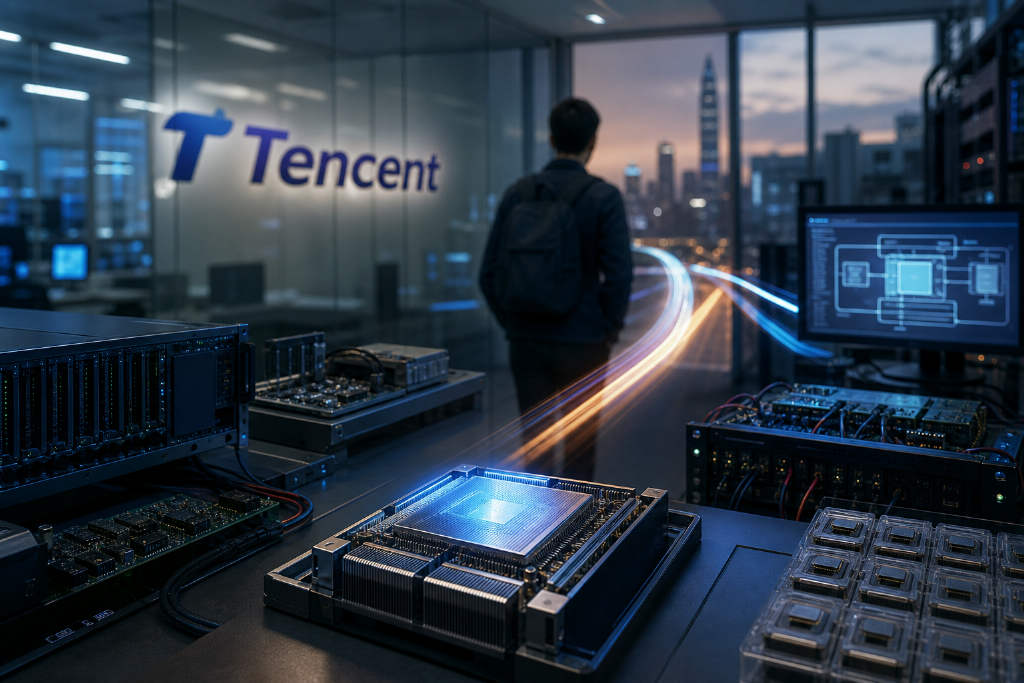
BlockBeats reported on August 22, citing MaxForAI, that Gao Jianlin, a core figure in Tencent’s chip R&D work, has left the company and started his own venture. The new startup is focused on high-performance CPUs built on the RISC-V architecture, with an emphasis on AI servers and Agentic AI. Gao previously helped build Tencent’s FPGA hardware team, moved into AI chips in 2018, and later founded the Penglai Lab in 2020. The report says he also worked on RISC-V-related projects at Tencent and was involved in chip architecture, verification, and backend work. The company name, fundraising status and product timeline have not been disclosed.

570
Tencent chip lead Gao Jianlin leaves to start a RISC-V AI CPU venture
J-Space
2026-08-18 15:31:29

J-Space Faces Fabrication Questions After Community Retest Contradicts Its Published AI Benchmark Claims

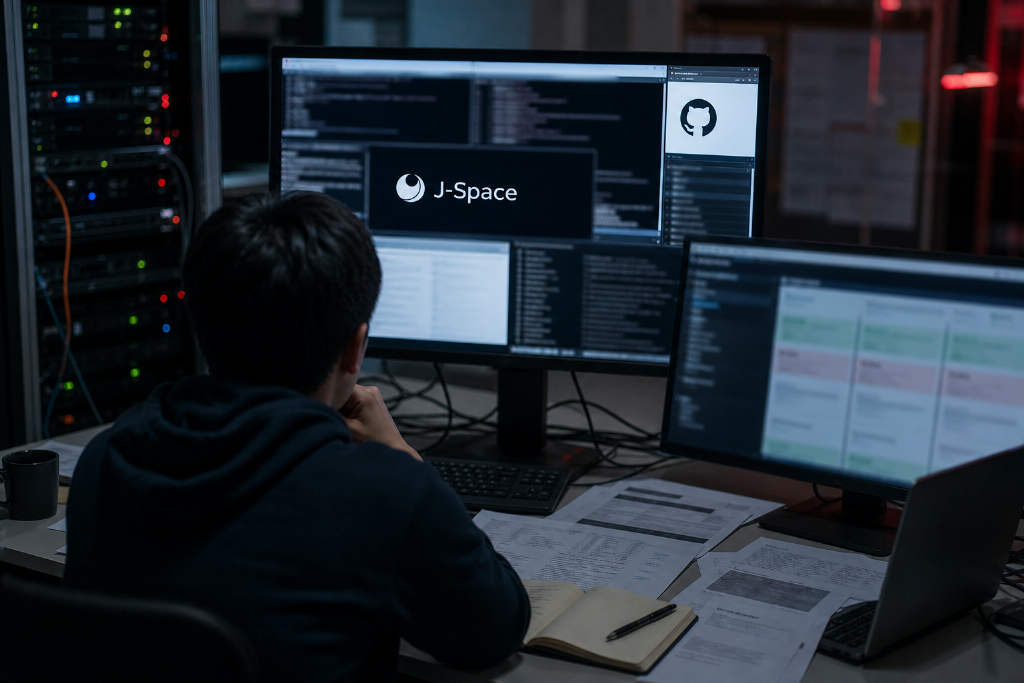
J-Space Cognition Suite, an AI project that gained rapid traction on X, is facing community scrutiny after a retest challenged the benchmark results it had promoted for DeepSeek V4. According to MaxForAI, the project had claimed that pairing V4 Flash with J-Space could match GLM-5.3, while V4 Pro could outperform Fable 5 across multiple agent benchmarks. It also advertised a 2.53x speed improvement and a 2.21x gain in token efficiency. A GitHub user, GoForceX, said they reran the test with an 87-question subset from Terminal Bench 2.1 under high concurrency and confirmed that J-Space-related modules were loaded. The retest reportedly showed the opposite direction from J-Space’s claims: benchmark scores fell slightly after adding J-Space, while token usage and costs increased. The community has since called on the project to release its full evaluation setup, per-question results, execution logs, raw timing data, and token consumption records. So far, the project has mainly published aggregated results, with no complete raw experimental records available to verify the precise figures. The project author had previously said the data was 「indeed exaggerated」 and estimated actual gains at roughly 1.6x to 3x. As of now, there has been no formal response to the latest criticism, and some related issue threads have been deleted.

570
J-Space Faces Fabrication Questions After Community Retest Contradicts Its Published AI Benchmark Claims