Bitcoin
Oct 31, 2026

NXTT authorized to sell or pledge 5,833 BTC in tranches

Nasdaq-listed software company Next Technology Holding (NXTT) said its board has authorized the company to sell or pledge, in tranches, about 5,833 Bitcoin valued at roughly $449 million. The company said the decision was made after weighing several factors, including the Binance hack, exchange vulnerabilities, and the potential threat quantum computing could pose to Bitcoin cryptography. It added that none of its Bitcoin is held on Binance. CEO Weihong Liu will determine the timing, price, and size of any transaction. The authorization covers sales on exchanges, privately negotiated transactions, and financing backed by Bitcoin collateral, though the company said there is no assurance any transaction will be completed. NXTT also said most of its Bitcoin came from a March 2025 acquisition of 5,000 BTC for total consideration of $158.1 million, consisting of shares, warrants, and cash prepayment, implying a price of about $31,600 per coin.


520
NXTT authorized to sell or pledge 5,833 BTC in tranches
OpenAI
Oct 31, 2026

OpenAI said to cut fundraising target to $20 billion as valuation drops to $1.25 trillion

OpenAI is reportedly scaling back its pre-listing fundraising plan as the selloff in U.S. AI stocks spills into private markets. According to BlockTempo, the company had previously aimed to raise $30 billion at a $1.4 trillion valuation, but current talks point to a smaller round of about $20 billion and a lower valuation of $1.25 trillion. The report said OpenAI has already pushed its IPO timeline to 2027. The shift comes as the Nasdaq 100 has fallen about 10% in the three weeks since hitting a record high on Oct. 6, including a 4.5% drop last Friday. BlockTempo also noted that Intel fell nearly 26% in a single session, adding to pressure on major technology names and sharpening investor focus on the payback period for AI capital spending. At the same time, rival Anthropic is expected to list on Nasdaq in November and is reportedly seeking as much as $100 billion in fundraising at a $1.5 trillion valuation. The contrast suggests that pricing in the private AI market is becoming more contested, with leading companies facing a tougher negotiating environment as buyers reassess how much they are willing to pay.

1010
OpenAI said to cut fundraising target to $20 billion as valuation drops to $1.25 trillion
US stocks
Oct 31, 2026

U.S. stocks close lower as AI names slide, with Twilio down 15.24%

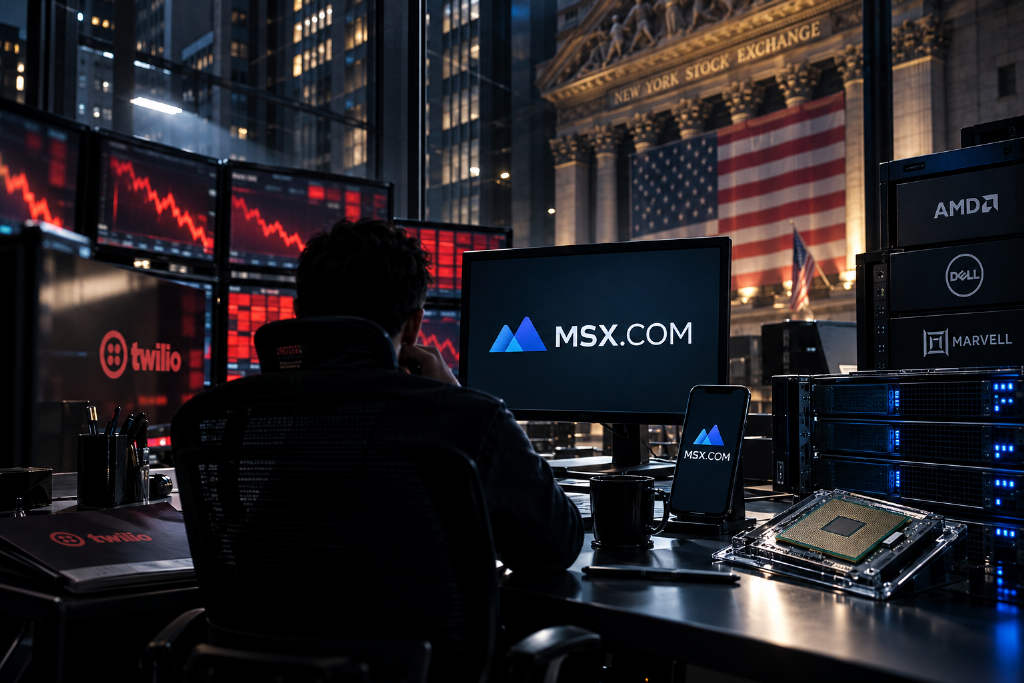
U.S. equities finished lower, according to data cited by Odaily from MSX.COM, with all three major indexes ending in the red. The Dow Jones Industrial Average fell 1.09%, the S&P 500 lost 1.82%, and the Nasdaq dropped 2.86%. At the same time, the VIX volatility index rose 12.91%. AI-related stocks were broadly weaker in the session. Twilio posted the steepest decline among the names listed, falling 15.24%. Astera Labs dropped 10.93%, AMD lost 10.88%, Dell fell 10.77%, and Marvell declined 10.05%. Odaily also said MSX is a major RWA trading platform. According to the report, the platform has listed hundreds of RWA tokens tied to popular U.S. stocks and ETF underlyings, including Nvidia, GOOGL, MSFT, AMZN, META, TSM, and AMD.

1210
U.S. stocks close lower as AI names slide, with Twilio down 15.24%
Franklin Templeton
Oct 31, 2026

Franklin Templeton’s dividend-to-Bitcoin ETFs open on Nasdaq with about $72,000 in first-day trading

Franklin Templeton’s two dividend-to-Bitcoin exchange-traded funds, FBEQ and FIBT, began trading on Nasdaq on Oct. 29 and posted roughly $72,000 in combined first-session turnover, based on Unchained’s calculation using Nasdaq daily trading data. FBEQ traded 2,461 shares, worth about $62,000 at its $25.28 close, while FIBT traded 399 shares, or about $9,800 at its $24.52 close. SEC filings dated Oct. 27 show FBEQ carries a 0.09% annual fee and FIBT charges 0.19%, with neither fund imposing a 12b-1 distribution fee. The products do not hold spot bitcoin directly as a listed fund investment. Instead, they seek to match their indexes’ bitcoin allocation through bitcoin exchange-traded products, futures and options tied to bitcoin or those products, and depositary receipts representing bitcoin ownership. Both indexes start with a 95% stock allocation and 5% bitcoin allocation, then direct regular or special dividends from portfolio companies into bitcoin at the next market open after the ex-dividend date. The indexes are reviewed quarterly, with rules that trim bitcoin exposure back to 4.5% if it rises above set thresholds.

890
Franklin Templeton’s dividend-to-Bitcoin ETFs open on Nasdaq with about $72,000 in first-day trading
Canary
Oct 30, 2026

Canary plans staked INJ ETF listing on Nasdaq

Canary is planning to launch a Staked INJ ETF and list it on Nasdaq, according to Techub News, which cited Crypto Briefing. The proposed product is aimed at giving U.S. investors regulated exposure to Injective staking through an exchange-traded fund structure. The plan has not been finalized, however. The ETF still requires regulatory approval before it can move forward, and the report noted that inherent risks could affect whether the product is ultimately launched. At this stage, the filing remains a proposal rather than a confirmed listing.

1100
Canary plans staked INJ ETF listing on Nasdaq
US stocks
Oct 30, 2026

Intel sinks nearly 26% at the open as AI spending worries hit U.S. tech stocks

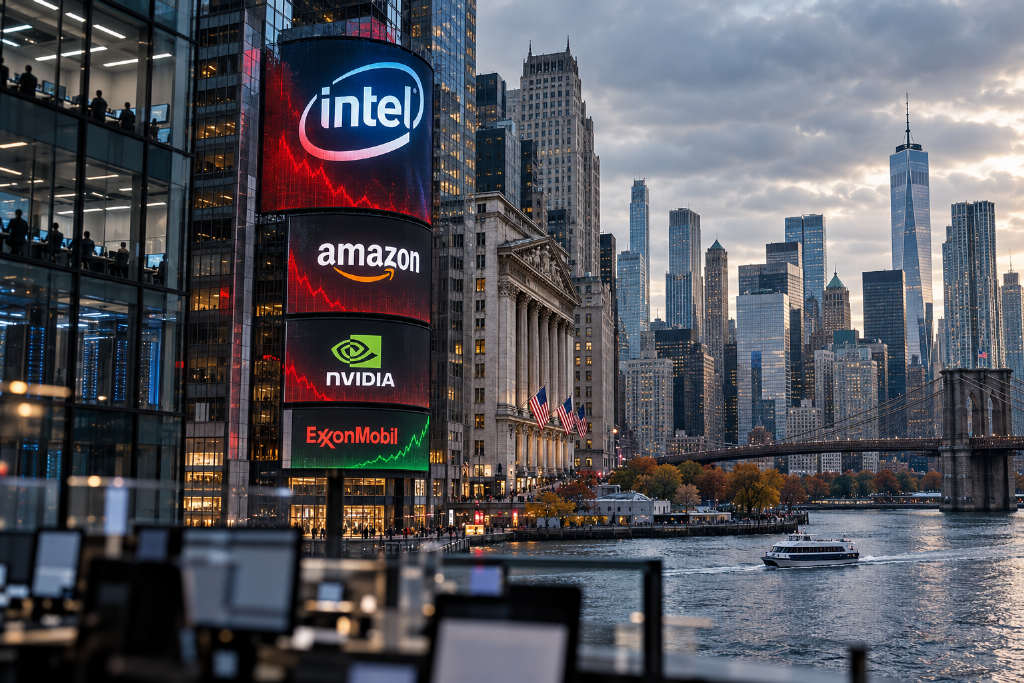
U.S. stocks opened lower on Oct. 30, with technology shares taking the brunt of the selling as investors reacted to fresh concerns over whether heavy artificial intelligence spending can generate acceptable returns. The Nasdaq fell about 2.2% shortly after the open, while the Dow Jones Industrial Average slipped about 0.2% and the S&P 500 lost about 1.1%. Intel dropped about 25.7% after issuing fourth-quarter revenue guidance of roughly $15 billion to $16 billion, below market expectations of about $17.1 billion. The company’s finance chief also warned that weak PC demand could last through the first half of 2027. Amazon fell about 5.3% after reporting a second straight quarter of negative free cash flow and a fourth-quarter outlook that missed expectations. Nvidia was down about 2.5%, and cloud startup Nebius lost about 7.3%. According to CNBC, the market is increasingly focused on whether large technology companies can keep funding AI infrastructure buildouts without damaging cash flow. At the same time, some energy names outperformed, with Exxon Mobil up about 1.5%, as investors reassessed financing costs, leverage and credit risk tied to data center and chip capacity expansion.

710
Intel sinks nearly 26% at the open as AI spending worries hit U.S. tech stocks
Strive
Oct 30, 2026

Strive’s Bitcoin Accumulation Is Speeding Up, but Common Equity Still Needs Proof

Strive bought 6,182 BTC for about $511.5 million between Oct. 17 and Oct. 23, lifting its total holdings to 43,000 BTC. The comparison with Strategy is becoming harder to ignore: both companies are using listed securities to raise dollars and manage a bitcoin treasury. Still, the article argues that structural similarity alone does not prove that common shareholders are seeing the same kind of benefit. The key issue is capital structure. Strive’s filings show that BTC per effective common share rose from about 0.0002968 to 0.0003377 during the reporting window, a gain of roughly 13.8%, or about 13.9% on a fully diluted basis. But that figure does not subtract the claims of preferred securities such as SATS and SATA, nor does it incorporate cash, operating assets, or other liabilities. As a result, it cannot be treated as a direct measure of net asset value growth or shareholder return. The report also highlights the cash burden attached to Strive’s preferred stock, the larger scale and liquidity tools available to Strategy, and the fact that Strive’s current BTC total includes assets obtained through its Semler Scientific acquisition. The next Form 8-K, the piece says, will offer a cleaner test of whether rising bitcoin holdings are translating into durable gains for common equity.

1350
Strive’s Bitcoin Accumulation Is Speeding Up, but Common Equity Still Needs Proof
Gemini
Oct 30, 2026

Cameron Winklevoss says Zcash does not need a new governance model

Gemini co-founder Cameron Winklevoss said Zcash does not need to reinvent its governance structure, arguing that stakeholder voting has operated in capital markets for centuries and that tokenholder voting is simply its on-chain version. He said experimental governance is not Zcash’s mission and that privacy remains the network’s core purpose. In the same remarks, Winklevoss called for an end to ZCG, saying it has created distractions and misaligned objectives. His comments come after Winklevoss Asset, tied to Cameron and Tyler Winklevoss, filed an S-1 registration statement with the U.S. Securities and Exchange Commission for the proposed Winklevoss Zcash ETF. The fund plans to hold ZEC directly, seek a Nasdaq listing under the ticker WINK, charge a 0.25% fee, and use Gemini Trust Company as custodian.

1220
Cameron Winklevoss says Zcash does not need a new governance model
Total 1001 items
Go topage