OPS

Binance
2026-08-14 10:34:33

Binance Lists Perpetual Contracts for Kuaishou, Meituan and Two Korea Semiconductor Leveraged ETF Products

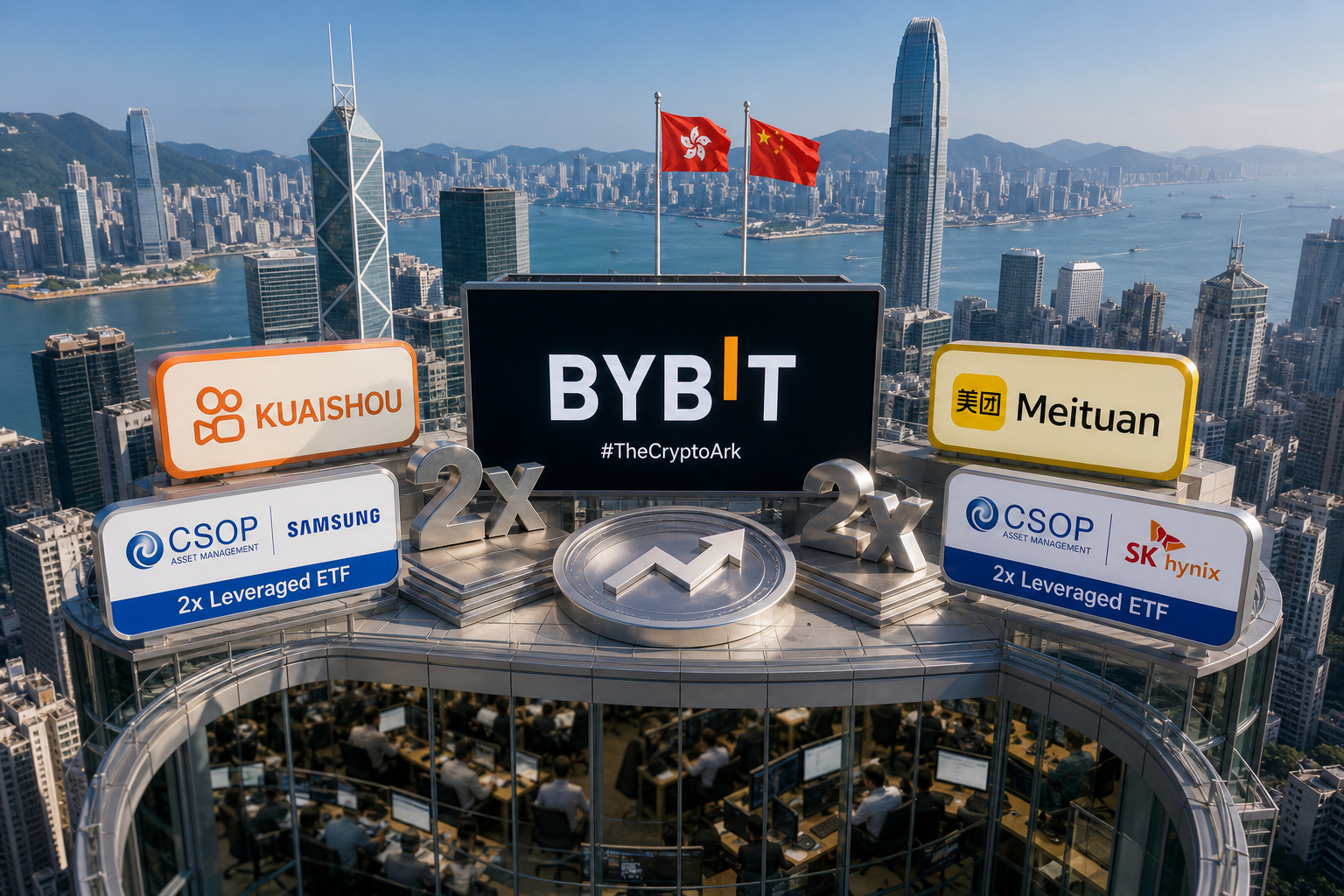
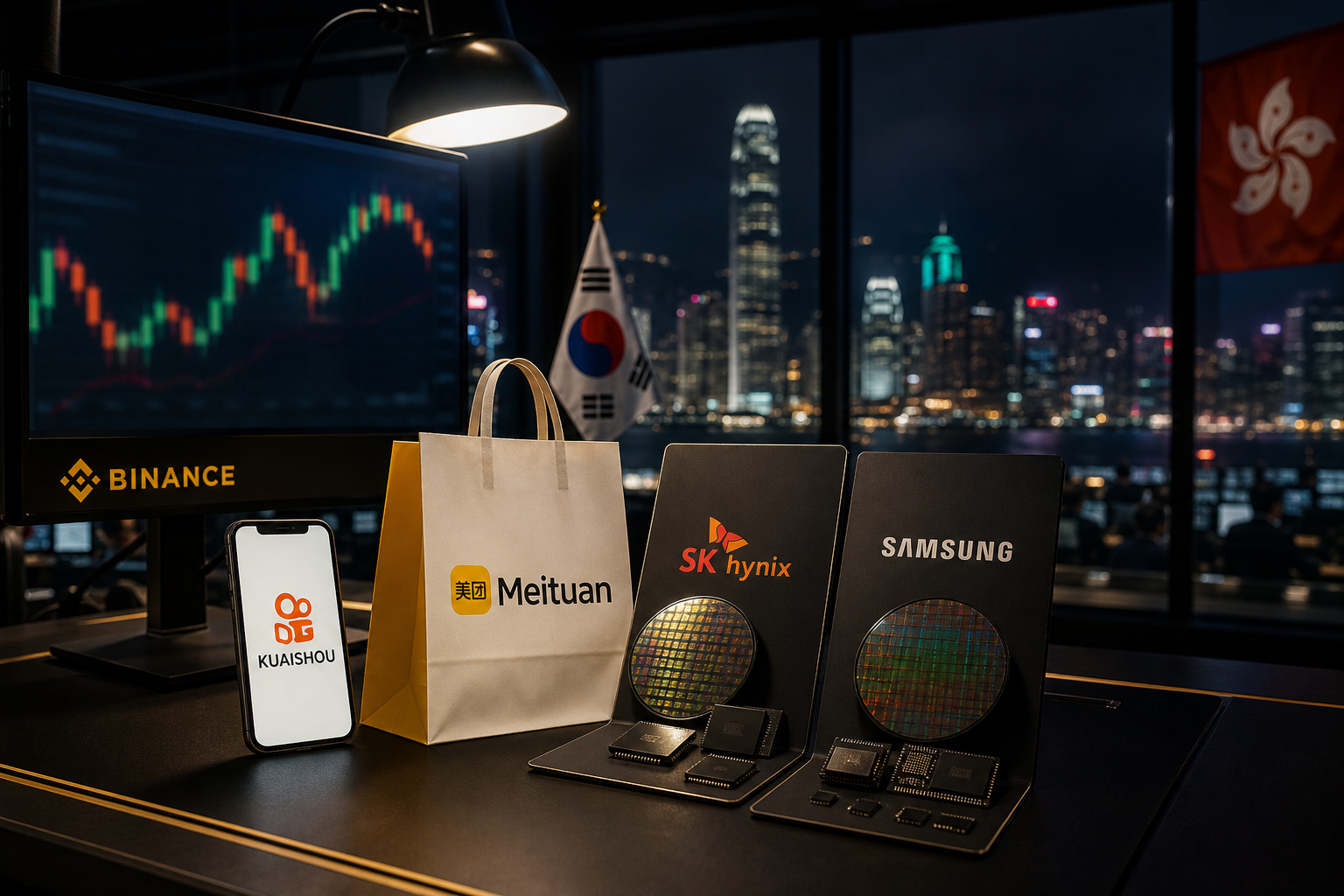
Binance Futures has added four USDT-margined perpetual contract pairs on Aug. 11, according to an official announcement. The new listings are KUAISHOUUSDT, MEITUANUSDT, CSOPSKHYNIX2LUSDT and CSOPSAMSUNG2LUSDT. The first two track Kuaishou and Meituan, while the latter two are tied to leveraged products linked to South Korea semiconductor names through CSOP offerings listed in Hong Kong. Binance said Kuaishou and Meituan contracts support leverage of up to 20x. The two semiconductor ETF-related contracts support leverage of up to 10x. For all four contracts, the funding rate cap is set at +2%/-2%, with settlement every eight hours. The contracts also support Multi-Assets Mode. The exchange said CSOPSKHYNIX2LUSDT tracks the CSOP SK Hynix Daily (2x) Leveraged Product listed on the Hong Kong Stock Exchange under ticker 7709. CSOPSAMSUNG2LUSDT tracks the CSOP Samsung Electronics Daily (2x) Leveraged Product, listed under ticker 7747. Binance also warned that digital asset prices can be highly volatile and that futures trading carries elevated risk, which investors must bear themselves.
820
Binance Lists Perpetual Contracts for Kuaishou, Meituan and Two Korea Semiconductor Leveraged ETF Products
SpaceX
2026-08-13 12:57:31

SemiAnalysis says SpaceX could approach 10GW of AI capacity by the end of 2027

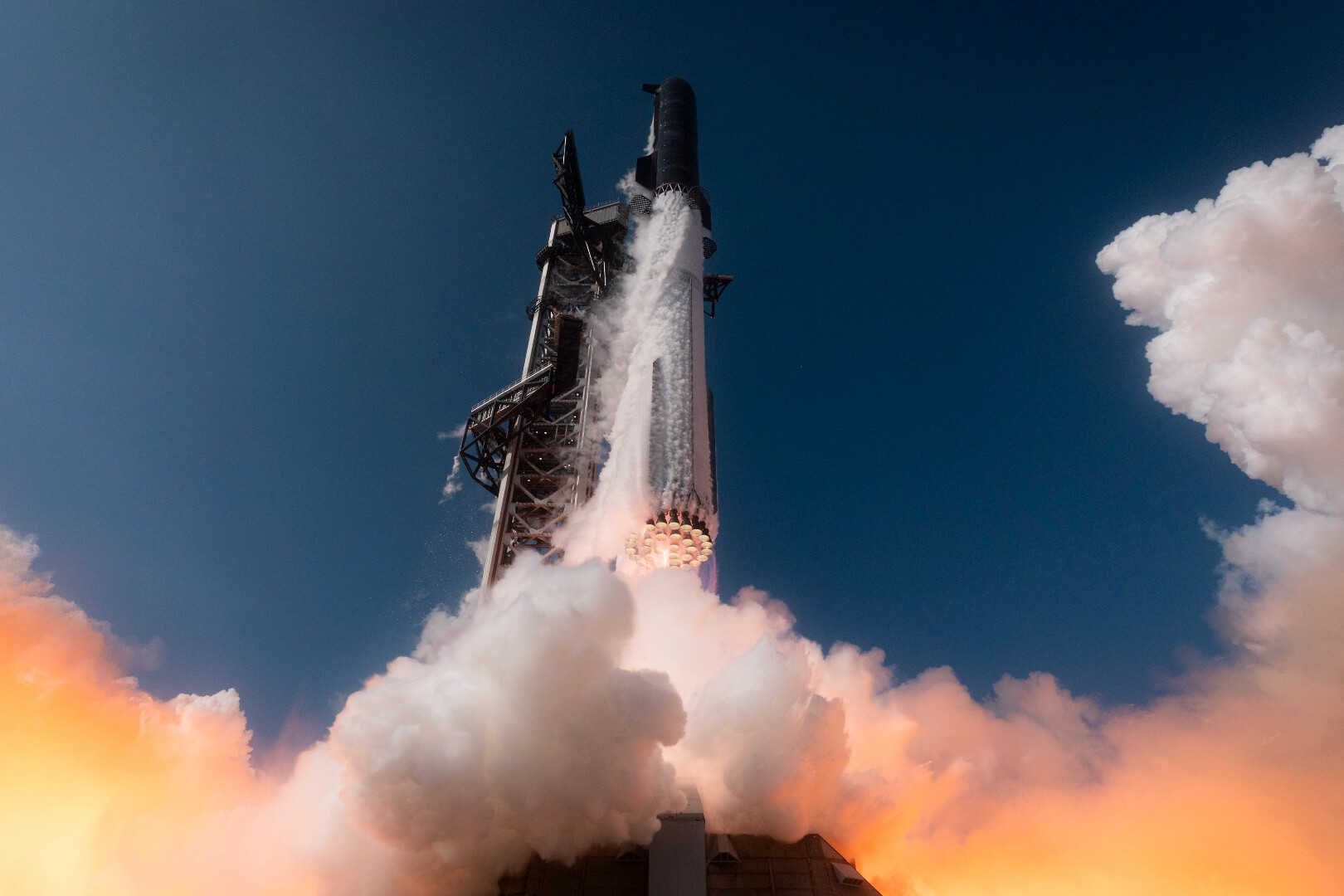
A new SemiAnalysis report argues that the center of gravity in the AI infrastructure race is shifting away from raw GPU counts and toward a tougher metric: how much revenue each megawatt of power can generate through inference. In that framework, SpaceX is being evaluated less as a conventional data center builder and more as a company trying to compress the time required to bring large blocks of AI capacity online. The report, dated Aug. 7, 2026, says SpaceX could reach close to 10GW of total AI compute capacity by the end of 2027. It ties that view to SpaceX’s engineering speed, xAI integration, on-site power generation strategy, and a broader market dynamic in which early access to power and compute may carry far greater economic value than ownership of GPUs alone. SemiAnalysis also frames Microsoft as the most important potential offtaker, while discussing how NVIDIA’s financing efforts could expand from chips and systems into infrastructure capital. At the same time, the report repeatedly notes that its headline figures—including 10GW, $300 billion-scale ARR scenarios, and revenue above $100 million per MW per year for frontier inference—depend on aggressive assumptions around demand, pricing, utilization, buildout pace, and power availability.

1330
SemiAnalysis says SpaceX could approach 10GW of AI capacity by the end of 2027
Gate
2026-08-12 06:07:53

Gate Launches 8 New Stock & ETF Perpetuals, Opens 13th Airdrop Event

Gate's stock-focused futures section has gone live with eight new perpetual contracts, effective Aug 12 at 14:00 (UTC+8). All contracts are settled in USDT and support leverage from 1x to 20x. The list includes CSOPSKHYNIX2L (CSOP SK Hynix Daily (2x) Leveraged ETF 7709.HK), CSOPSAMSUNG2L (CSOP Samsung Electronics Daily (2x) Leveraged ETF 7747.HK), SpaceX-related SSPC and SPCH, plus GFS, VST, OKTA and OUST. Separately, Gate is running the 13th airdrop campaign for its stock futures zone from Aug 12, 16:00 to Aug 21, 16:00 (UTC+8). New users get 5 USDT for their first futures trade; daily trading-volume check-ins can earn up to 35 USDT; trading the participating symbols qualifies for a share of a 30,000 USDT pool. The total prize pool is 50,000 USDT, with a per-user cap of 240 USDT.

1210
Gate Launches 8 New Stock & ETF Perpetuals, Opens 13th Airdrop Event
ByteDance
2026-08-12 03:10:10

ByteDance Seed says text-to-image scaling hinges on usable image information, not longer captions

ByteDance Seed has published a study arguing that the next scaling variable in text-to-image generation may not be model size, data volume, or training compute alone, but the amount of image-grounded information carried by captions. In the paper, "Scaling Properties of Text Conditioning in Visual Generation," the team reports that simply making prompts longer does not consistently improve diffusion training or generation quality. Across reconstruction tests and controlled training runs, natural-language captions quickly hit a saturation point, while a structured representation of visual variables continues to add useful supervision. To measure that supervision directly, the researchers introduce two indicators, Grounded Perplexity Gain and Effective Detailness, and show that both track converged diffusion loss far better than token count. They then build a Structured Prompt system in JSON that organizes global scene attributes, object-level details, and inter-object relations into named fields. With the same Qwen-Image architecture, training images, stages, and budget, the structured interface outperformed a matched natural-language setup. The paper also ties final generation quality to two factors: Diffusability, or how much a representation helps the diffuser learn, and Promptability, or how well an LLM can fill that representation from a user request. According to the team, scaling text conditioning itself may be as important as scaling the rendering model.

1520
ByteDance Seed says text-to-image scaling hinges on usable image information, not longer captions
Strategy
2026-08-11 09:41:00

Strategy builds a $4.65 billion cash reserve as Trump Media posts $360.6 million crypto loss in the first half

PANews’ daily roundup on Aug. 11 centered on two balance-sheet stories with direct relevance to crypto markets. Strategy said it sold 1,690 BTC last week and lifted its U.S. dollar reserve to about $4.65 billion, while also raising roughly $653 million through its at-the-market equity program. CEO Phong Le said the company had adjusted its approach because bitcoin alone could not meet investor demand, adding that institutional investors place greater value on cash and that Strategy now holds $4.75 billion in cash, enough to cover roughly 2.7 years of preferred dividends. Trump Media, by contrast, reported a first-half loss of $360.6 million tied to the decline in crypto asset prices. As of June 30, the company held 9,477.16 BTC with a fair value of $557.1 million, down by 65 BTC from the end of March, while its Cronos holdings stayed unchanged at about 756.1 million tokens but fell in fair value from $68 million at the end of 2025 to $40.6 million. The report also noted that most of its bitcoin had been pledged as collateral. Elsewhere, South Korea approved tougher crypto rules that tighten scrutiny of exchange major shareholders and remove the 1 million won threshold for the Travel Rule, extending it to all transfers. U.S. spot bitcoin ETFs recorded a net outflow of $145 million on Aug. 10, with BlackRock’s IBIT seeing the largest single-day net outflow at $53.56 million.

1320
Strategy builds a $4.65 billion cash reserve as Trump Media posts $360.6 million crypto loss in the first half
Bybit
2026-08-11 07:35:30

Bybit Lists Four Stock Perpetuals: Kuaishou, Meituan, CSOP SK Hynix 2x and CSOP Samsung 2x

Bybit has listed four new stock perpetual contracts on its platform. The new instruments are Kuaishou (KUAISHOUUSDT), Meituan (MEITUANUSDT), the CSOP SK Hynix Daily Leverage (2x) product (CSOPSKHYNIX2LUSDT) and the CSOP Samsung Daily Leverage (2x) product (CSOPSAMSUNG2LUSDT). The Kuaishou and Meituan perpetuals support up to 25x leverage, while the two CSOP daily leverage products are capped at 20x leverage. Alongside the launch, Bybit is running a limited-time fee promotion across all four contracts, with limit order fees set at 0% and market order fees discounted to 50% of the usual rate. The listing expands Bybit's equity-linked derivatives suite with familiar Chinese tech names as well as two Korea-focused products from CSOP. Traders can already access these new markets on the exchange.

1110
Bybit Lists Four Stock Perpetuals: Kuaishou, Meituan, CSOP SK Hynix 2x and CSOP Samsung 2x
Whale Activit
2026-08-11 02:09:00

Overnight crypto and AI roundup: whale moves, treasury reshuffles, and fresh policy signals

A dense batch of overnight developments across crypto and AI put institutional treasury moves, exchange remediation, Ethereum roadmap changes, and U.S. regulatory timing in focus. Strategy disclosed share sales, BTC disposals, and a larger dollar reserve, while BitMine and Sharplink updated major ETH accumulation plans. Bitget published a compensation plan tied to abnormal price moves in TUT, LOBSTER, and BICO perpetual contracts, and the U.S. Securities and Exchange Commission said it will review a proposed customized issuance framework for certain crypto-related investment contracts on Aug. 14. Elsewhere, Vitalik Buterin’s latest Ethereum roadmap comparison elevated quantum resistance, privacy, and AI-assisted verification, large wallets continued moving BTC and ETH, and several AI infrastructure financings pointed to growing use of debt markets to fund chip purchases and compute buildouts.

1850
Overnight crypto and AI roundup: whale moves, treasury reshuffles, and fresh policy signals
AI Agents
2026-08-11 00:17:09

AI agents are pushing storage into the runtime loop, reshaping the role of SSDs, HBM and memory tiers

A MarsBit report argues that AI agents are changing storage from a passive persistence layer into part of the execution path itself. As agents continuously observe, reason, call tools, write back results and preserve state, the value of storage is no longer limited to saving data after a task is complete. The report says SSDs are beginning to take on functions tied to model weights, KV cache spillover, indexing, encryption, compression, lifecycle control and long-term memory, pointing to a broader shift toward programmable, functional SSDs. The piece lays out how this transition could play out on both devices and in the cloud. On the edge, SSDs may become the long-lived state layer for personal agents, holding local models, adapters, vector indexes, personal memory and tool traces. In cloud deployments, storage nodes could move closer to the inference path, handling shared prefixes, KV data, adapters, vector search and governance. The report cites Mooncake and NVIDIA CMX as examples of systems where storage is already participating in token production rather than merely holding cold data. It also argues that the rise of agent systems does not diminish HBM. Instead, HBM, HBF, DRAM/CXL and SSDs are likely to be re-tiered by speed, mutability, capacity, cost and governance needs. Existing AI SSD efforts from Phison, Longsys, Maxio and partners are presented as early industrial samples of this shift, where the focus is moving from faster disks for AI workloads to a reallocation of responsibilities across runtime, memory hierarchy, controllers and flash.

1350
AI agents are pushing storage into the runtime loop, reshaping the role of SSDs, HBM and memory tiers