OUSD

Stablecoin
2026-07-03 16:31:29

OUSD Stablecoin Alliance Faces Dispute as Korean Firms Deny Formal Participation

According to The Block, Open Standard announced an OUSD stablecoin alliance involving more than 140 institutions, including Visa, Mastercard, and BlackRock, with a launch planned later this year. However, several Korean companies named as members, including Samsung Electronics, Dunamu, Shinhan Financial Group, and Kbank, said they had not formally agreed to join. Some said they only responded that they would review the proposal, while others said they merely indicated they might consider it under favorable conditions. The discrepancy has raised questions about how Open Standard confirmed alliance membership and how much of the published roster reflects firm commitments rather than preliminary conversations.

220
OUSD Stablecoin Alliance Faces Dispute as Korean Firms Deny Formal Participation
Circle
2026-07-03 15:31:08

Circle CEO Responds to OUSD: Why Stablecoins Tend Toward a Winner-Takes-Most Market

After Open Standard, backed by 140 global companies, announced plans to launch the dollar stablecoin Open USD (OUSD) later this year, investor concerns quickly hit Circle’s stock and raised new questions about whether USDC’s position could be challenged. In response, Circle founder and CEO Jeremy Allaire laid out a detailed defense of USDC’s moat and argued that stablecoins are fundamentally platform businesses with strong network effects, deep liquidity requirements, and heavy regulatory integration. In his view, that structure naturally pushes the market toward a winner-takes-most outcome rather than a fragmented alliance model. Allaire’s argument rests on three pillars. First, stablecoin utility scales with integrations: the more apps, developers, service providers, and institutions connect to a network, the more valuable it becomes for everyone else. Second, liquidity compounds. A global stablecoin needs both primary-market banking access and secondary-market depth across exchanges, DeFi, payment firms, and regional venues. Third, regulation and licensing matter as much as technology. Circle claims USDC has spent nearly a decade building these layers and remains uniquely positioned across key jurisdictions such as Europe and Japan. He also pushed back on OUSD’s proposed features, including free minting and redemption, revenue-sharing ideas, and broad consortium governance. According to Allaire, such models may sound attractive but can weaken economic incentives, slow execution, and underfund infrastructure over time. He reaffirmed Circle’s partnership with Coinbase, highlighted products such as CCTP, Gateway, Arc, CPN, StableFX, and Agent Stack, and said Circle would continue working even with firms that may also support competing stablecoin initiatives.

730
Circle CEO Responds to OUSD: Why Stablecoins Tend Toward a Winner-Takes-Most Market
Upbit
2026-07-03 13:19:49

Upbit Clarifies OUSD Position, Says It Only Showed Interest in Future OpenStandard Participation

Upbit said it had only expressed interest in potentially joining the OpenStandard ecosystem at a later stage and should not be understood as a confirmed participant in the OUSD initiative. The clarification came as several South Korean firms also moved to distance themselves from OUSD-related involvement. The key issue is not a new business development, but the distinction between exploratory interest, possible future participation, and formal inclusion on a partner list. The episode highlights the growing sensitivity around how crypto partnerships are described in public communications.

250
Upbit Clarifies OUSD Position, Says It Only Showed Interest in Future OpenStandard Participation
Circle
2026-07-03 14:01:16

Circle CEO Defends USDC Against OUSD, Arguing Stablecoins Are a Winner-Take-Most Market

On June 30, Open Standard, a stablecoin initiative backed by 140 global companies, officially announced plans to launch Open USD (OUSD) later this year, triggering fresh debate over whether Circle’s USDC could face a meaningful competitive challenge. The announcement briefly sent Circle’s stock (NYSE: CRCL) down more than 17%, prompting Circle founder and CEO Jeremy Allaire to respond publicly with a detailed defense of the company’s long-term position in the stablecoin market. Allaire’s argument is that stablecoins function less like simple digital payment products and more like platform utilities shaped by network effects. In his view, scale in this sector is driven by years of integration with applications, developers, exchanges, payment companies, and financial institutions. He highlighted Circle’s near decade-long investment in infrastructure, liquidity distribution, regulatory licensing, and software layers such as CCTP and Gateway, all of which reinforce USDC’s utility and make it difficult for new entrants to catch up quickly. He also pointed to third-party data from Artemis, claiming that in Q1 2026 USDC processed nearly $30 trillion in on-chain volume, representing 80% of all blockchain-based dollar stablecoin transaction activity, while USDT handled the remaining 20% and all other dollar stablecoins combined remained below 0.5%. Beyond defending USDC’s market lead, Allaire directly criticized some of OUSD’s implied differentiators, including free minting and redemption, revenue-sharing narratives, and alliance-based governance, arguing that such approaches often fail when tested against real liquidity demands, coordination costs, and operational discipline. At the same time, Allaire stressed that Circle’s partnership with Coinbase remains strong and that the company is expanding beyond USDC into a broader infrastructure stack including Arc, CCTP, CPN, StableFX, and Agent Stack. His message to investors was clear: Circle sees the future of stablecoins as much larger than today’s market, but believes enduring advantage will belong to networks that combine deep liquidity, broad regulatory acceptance, and global interoperability.


700
Circle CEO Defends USDC Against OUSD, Arguing Stablecoins Are a Winner-Take-Most Market
Upbit
2026-07-03 13:19:49

Upbit Clarifies OUSD Position, Says It Only Showed Future Interest in OpenStandard

Upbit said it only expressed interest in potentially joining the OpenStandard ecosystem at a later stage and did not confirm formal participation in the OUSD initiative. The clarification came as several South Korean firms reportedly distanced themselves from the project. The key issue in this development is not technical implementation, but how participation and partnership status were presented publicly. For market participants, Upbit’s statement helps distinguish between preliminary interest, informal association and confirmed involvement. The episode also highlights a more cautious communication approach among Korean crypto firms when their names appear alongside ecosystem or stablecoin-related initiatives.

260
Upbit Clarifies OUSD Position, Says It Only Showed Future Interest in OpenStandard
OUSD
2026-07-03 07:41:30

Samsung and Dunamu Deny Official Negotiation on OUSD Stablecoin, Open Standard’s New Dollar-Pegged Asset Sparks Controversy

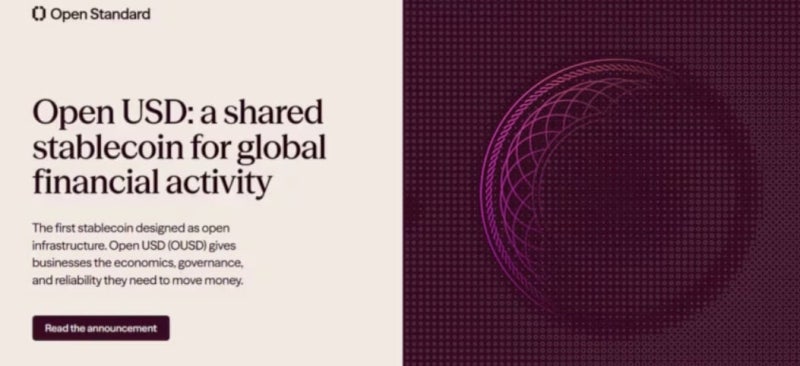
On June 30, 2026, the Open Standard consortium revealed the OUSD stablecoin, claiming the backing of over 140 global firms including Visa, Mastercard, and Samsung Electronics, with plans to launch within the year. However, several South Korean enterprises—most notably Samsung, Dunamu, Shinhan Financial Group, and K-Bank—immediately denied any formal negotiations, stating they had only been asked about potential participation and had merely replied that they would “review if the project progresses well.” They expressed surprise at being listed as members. OUSD employs an open infrastructure model in which participating institutions can mint and redeem tokens with no fees or limits, and all reserve investment income will be distributed among network partners, directly challenging the revenue monopoly of USDT and USDC. The incident highlights the difficulties in coordinating large-scale stablecoin alliances and raises questions about the robustness of Open Standard’s early traction.

670
Samsung and Dunamu Deny Official Negotiation on OUSD Stablecoin, Open Standard’s New Dollar-Pegged Asset Sparks Controversy
Circle
2026-07-03 01:01:07

Odaily Editorial Tea Talk: Stablecoin War with Open USD, Semiconductor Capex Surge, and Individual Stock Strategies

This article compiles instant analysis from Odaily's editorial team on recent market hotspots: Circle (CRCL) hit by Open USD, but most members believe OUSD will struggle to challenge USDC dominance in the near term, advising buying CRCL at dips; semiconductor equipment giants ASML, LRCX, AMAT, KLAC hit all-time highs amid industry capex cycle; individual stocks like Rocket Lab (RKLB) surged after Iridium acquisition, Robinhood (HOOD) traded at record volumes; crypto market awaiting BTC below $50K and ETH below $1,400 for DCA entries, with prediction markets (Polymarket, predict.fun) becoming the main focus. All views are internal discussions and not investment advice.

200
Odaily Editorial Tea Talk: Stablecoin War with Open USD, Semiconductor Capex Surge, and Individual Stock Strategies
Circle
2026-07-03 01:01:07

Circle CEO Fires Back at OUSD: Stablecoin Market Is 'Winner-Takes-All', Alliance Model Doomed to Fail

In response to the announcement of Open USD (OUSD) backed by 140 enterprises, Circle CEO Jeremy Allaire published a detailed statement arguing that the stablecoin market follows a winner-takes-all dynamic. He emphasized that USDC's decade-long investments in application integration, global liquidity, and regulatory compliance have created insurmountable network effects. Citing Artemis data, Allaire noted that USDC processed nearly $30 trillion in on-chain transaction volume in Q1 2026, accounting for 80% of all dollar-pegged stablecoin transactions. He systematically refuted OUSD's claims of free minting/redeeming, revenue sharing, and alliance governance, arguing that alliance-based products lack efficiency and innovation. Circle's stock rebounded 4% intraday following the statement.

650
Circle CEO Fires Back at OUSD: Stablecoin Market Is 'Winner-Takes-All', Alliance Model Doomed to Fail