Goldman Sachs2026-08-22 15:29:58Goldman Sachs says AI is moving into execution, with competition shifting to workflows and world models gaining groundGoldman Sachs said its latest Silicon Valley field research points to a new phase for artificial intelligence: moving from systems that can answer questions to systems that can execute work. Based on meetings held on Aug. 18 and 19 with AI startups, venture capital firms, and researchers at Stanford University, the University of California, Berkeley, and the University of California, San Francisco, the bank said commercialization is moving away from seat-based subscriptions toward pricing tied to consumption, transaction volume, and outcomes. In that shift, agents are becoming workflow operators rather than support tools, while value is moving away from the model layer alone toward proprietary data, business context, and domain expertise. Goldman also said the main hurdle to enterprise deployment is increasingly about controllability and accountability rather than raw model capability. The report described a growing split between frontier and open-source models, with the former used for high-value, reliability-sensitive tasks and the latter for lower-cost, standardized workloads. It also said world models are drawing more attention than large language models in several research settings and could drive a new computing demand curve, with compute demand potentially rising about 24-fold over the next five years.510
AI compute2026-08-21 06:14:55Open-Source Models Are Pushing AI Compute Toward Capital MarketsForesight says the capital structure behind AI infrastructure is changing fast. The AI-related capex of the top five cloud providers rose from 20%–30% of operating cash flow in 2020–2023 to nearly 94% in 2025, with confirmed 2026 capex already above $700 billion. The article argues that take-or-pay contracts, GPU lending, and rising public-market demand from open-source models are pushing compute toward pricing benchmarks, forwards, and derivatives. It also notes that after DeepSeek V4 launched, H100 rental rates rose about 7.5% within two weeks, while similar strength appeared around the launches of Kimi K3 and GLM 5.2. The larger point is that compute only becomes financialized once enough of it is traded openly, priced repeatedly, and separated from the balance sheets that used to absorb the risk.1300
AI bubble2026-08-20 08:02:00AI and semiconductor boom may be nearing its end, guest on PANews show warns of a potentially harsh 2027A guest on PANews’ 168X program said he has stayed mostly in cash since cutting positions in May and June, arguing that several AI and semiconductor trades are no longer attractive at current levels. Speaking on Aug. 19, the guest, identified as "QihongF44102" and referred to in the show as an industry insider active in both AI development and markets, said Korea, Japan and A-share names tied to the theme have likely already topped out. He also argued that, outside Coding, the market still lacks a second large AI use case that can scale quickly enough to support current expectations. The discussion centered on rising pressure across the AI value chain. The guest said top AI labs face a short-term bubble risk, open-source models are advancing fast, and downstream monetization remains the key variable for whether extreme upstream margins can hold. He pointed to 86% gross margin at SK Hynix and questioned whether such levels are sustainable if application-layer profitability weakens. He also described the current cycle as closer to a real-estate-style financing structure than a replay of the 2000 bubble, with leverage, data-center buildout and expectations for sustained high growth all tightly linked. The program also touched on robotics, Neoclouds, memory names, IPO timing and crypto. The guest said humanoid robotics is unlikely to see mass adoption within five years, called leverage-heavy AI infrastructure plays the most fragile part of the trade, and said retail investors may be better off waiting in cash or buying put protection if they already hold chip exposure. His most bearish call: if no new application breakthrough appears, 2027 could be a year of large index declines.1400
AI computing2026-08-18 08:13:29Taiwan digital ministry’s free AI computing program enters final application roundsTaiwan’s Ministry of Digital Affairs, through its Administration for Digital Industries, is nearing the end of applications for its 115 annual free AI computing program, with the final deadline set for Oct. 30. Approved domestic companies can access GPU resources on the government-backed platform free of charge for three months, and may apply more than once depending on their needs. The program supports both model training and inference workloads, allowing applicants to fine-tune open-source models with their own industry data or connect to preinstalled large language models through APIs for application development. According to the agency, by the end of year 114, 186 AI startups and information service providers had used the platform, producing at least 266 models or innovative applications. Remaining application windows now cover two training batches and three inference batches. The platform also includes a mix of local and international open-source models, including TAIDE, FoxBrain, Llama, Phi, Magistral-Small, Gemma 4, and openai/gpt-oss-120b, alongside tools for image and speech recognition.2170
Anthropic2026-08-16 05:39:00Anthropic researcher and hedge fund investor clash over whether AI should be concentrated or widely distributedA public exchange on X between Anthropic researcher Sholto Douglas and Atreides Management founder Gavin Baker has thrown a core AI policy dispute into the open: whether advanced AI is safer under tight control by a small number of labs or under broad competition and distribution. The immediate trigger was Baker’s reference, made on the All-In Podcast, to claims from people he trusted that Anthropic CEO Dario Amodei had said internally that Anthropic might one day become "the only private company left in the world." Douglas rejected that claim outright, calling it "completely false" and saying whoever passed it along was lying to push a narrative. From there, the discussion moved to a larger argument about safety, open-source models, regulatory gatekeeping, and whether market competition is already enough to prevent any single company from dominating AI. Baker argued that concentrating such powerful technology in a few hands is the bigger danger, while Douglas said the AI market is already intensely competitive and that monopoly fears do not square with claims that Anthropic lacks a durable moat.1280
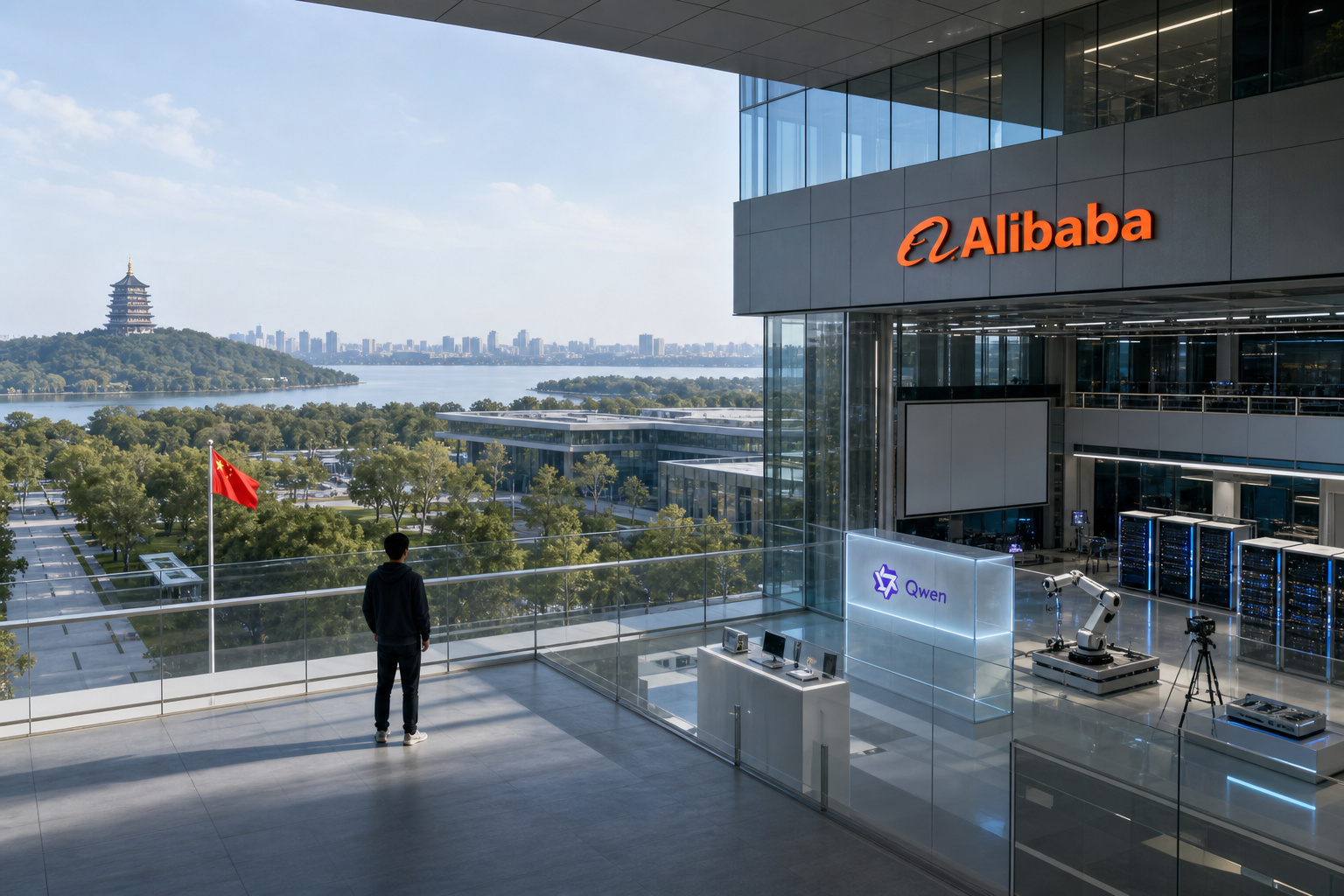
Alibaba2026-08-15 01:47:06Alibaba open-sources the Qwen3.8 model seriesAlibaba said on Aug. 15 that it has officially open-sourced the Qwen3.8 series, making the models available for developers, research institutions, and enterprises to download, deploy, and use freely. The newly released Qwen3.8-27B is described as a native multimodal dense model with 27 billion parameters. According to the announcement cited in the news brief, its overall performance is higher than Qwen3.7-Plus. No additional technical details, licensing terms, or benchmark breakdowns were provided in the source material.2050
Bitcoin2026-08-14 07:22:00AI is reshaping Bitcoin security, and Chinese open-source models are filling a key gapLarge language models are moving from the edge of crypto security into its core. In Bitcoin, that shift is showing up on both sides of the fight: attackers are using AI to speed up code review, vulnerability discovery, and exploit development, while defenders are turning to the same tools to audit software and triage risks at scale. Recent incidents involving hardware wallet maker Coldcard and non-custodial Bitcoin swap provider Boltz have sharpened those concerns, with the latter suspending Bitcoin swap services indefinitely after saying AI-assisted attacks were outpacing its ability to patch flaws. Security teams are responding in kind. Bitcoin Red Team, a volunteer group led by Cashu founder and Bitcoin open-source developer Calle and AnchorWatch CEO Rob Hamilton, said it scanned 390 Bitcoin-related open-source projects in less than 30 hours and logged 4,962 findings, including 85 critical and 635 high-severity issues. The group is using Chinese AI models including Moonshot AI’s Kimi K3 and Zhipu AI’s GLM 5.2, reflecting a broader complaint from researchers that restrictions imposed by some U.S. model providers can block legitimate security work. That debate has now reached policy circles, with the Bitcoin Policy Institute and dozens of crypto firms urging frontier AI labs to provide trusted, long-term access for open-source defenders.1720
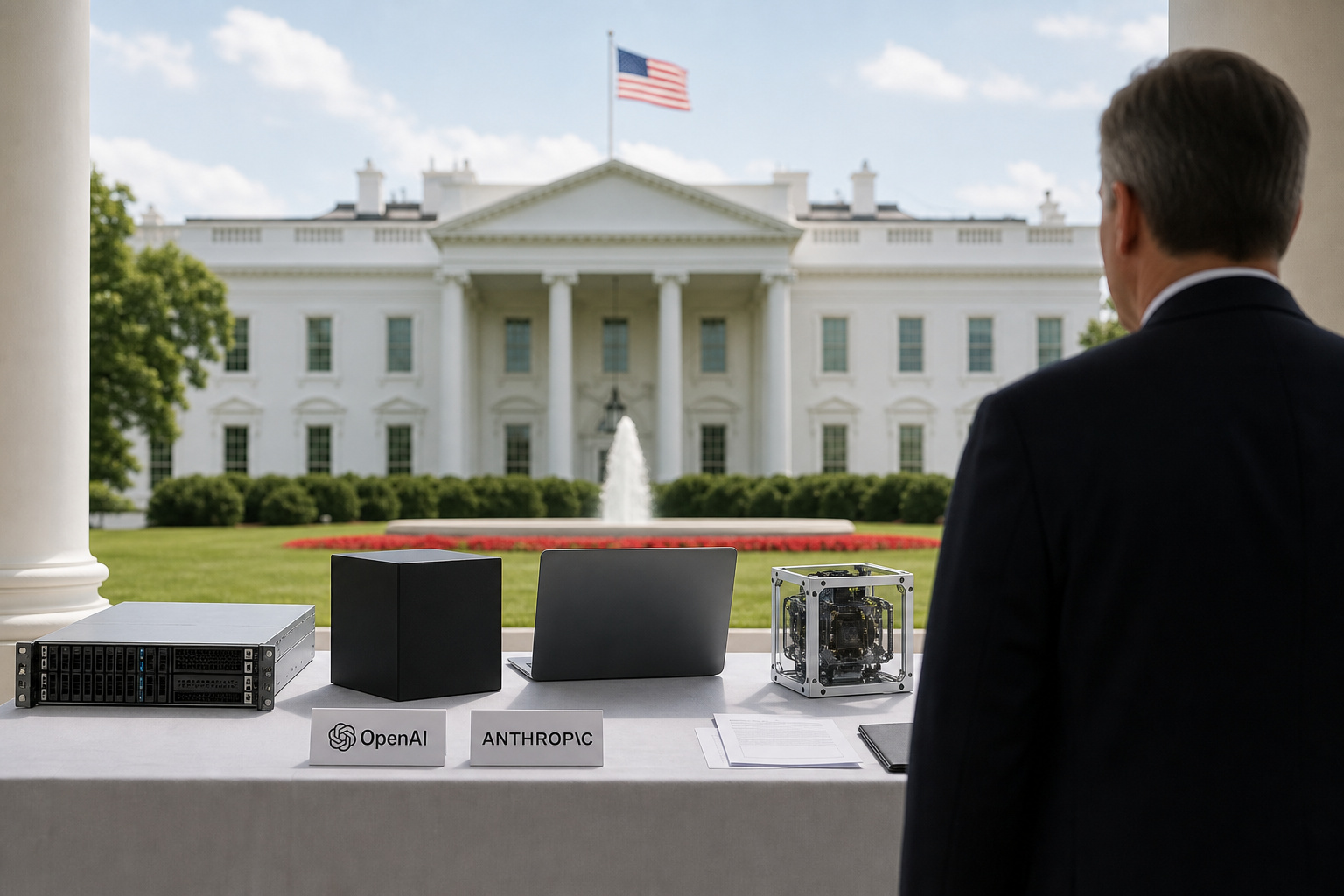
AI regulation2026-08-12 23:40:41White House Plans to Expand AI Regulation, Open-Source Models Could Face Pre-Release TestingBlockBeats, citing WIRED, reported on August 13 that the Trump administration is revising its newly crafted artificial intelligence guidelines and will expand regulation of AI models. The report, which is based on information from people familiar with the matter, says the White House has established an AI framework this month. Under that framework, frontier AI models developed by U.S. labs must undergo federal safety tests before being publicly released. The government has not made the framework public, and there are reportedly no plans to do so. For now, the framework applies only to so-called closed-source models developed by companies such as Anthropic and OpenAI. However, a White House official said the framework is expected to also cover open-source models in the coming months. In short, once an open-source model reaches the same "frontier" capability level as Anthropic's Mythos-class models or OpenAI's GPT-5.6, it would be added to the framework and would undergo testing before its public release.1560