PGP

Suiyuan Techn
2026-09-11 13:43:00

Suiyuan’s STAR Market debut caps an eight-year run that began with a 20-slide pitch deck

Suiyuan Technology has gone public on Shanghai’s STAR Market after an eight-year buildout that investors describe as one of the longer and harder commercialization cycles in China’s AI chip sector. The company opened at RMB 410 per share, up 188.37% from its IPO price of RMB 142.18, giving it a market value of RMB 176.4 billion, the highest opening-day market capitalization among this year’s new listings so far. Founded in March 2018 by chip veterans Zhao Lidong and Zhang Yalin, Suiyuan spent years developing domestic cloud AI training chips, a segment investors viewed as more capital-intensive and technically difficult than inference chips or edge-focused products. Before listing, the company completed 10 equity financing rounds, with investors including Delta Capital, ZhenFund, Yunhe Capital, Tencent Investment and Sunshine Insurance-affiliated Sunshine Ronghui Capital. Its prospectus shows that by the end of 2025, Suiyuan had completed four generations of computing architecture and five cloud AI chips, with all five succeeding on the first tape-out. Revenue reached RMB 990 million in 2025, while net loss narrowed to RMB 1.164 billion. Still, customer concentration remains a major point of attention: Tencent was both Suiyuan’s largest customer and largest shareholder, with direct and indirect sales to Tencent accounting for 83.79% of 2025 revenue and Tencent Technology and its affiliates holding 20.26% of the company.

90
Suiyuan’s STAR Market debut caps an eight-year run that began with a 20-slide pitch deck
Liquid Networ
2026-09-07 22:02:19

Liquid gets 3,400 BTC back after on-chain exchange as white hats keep 598.5 BTC

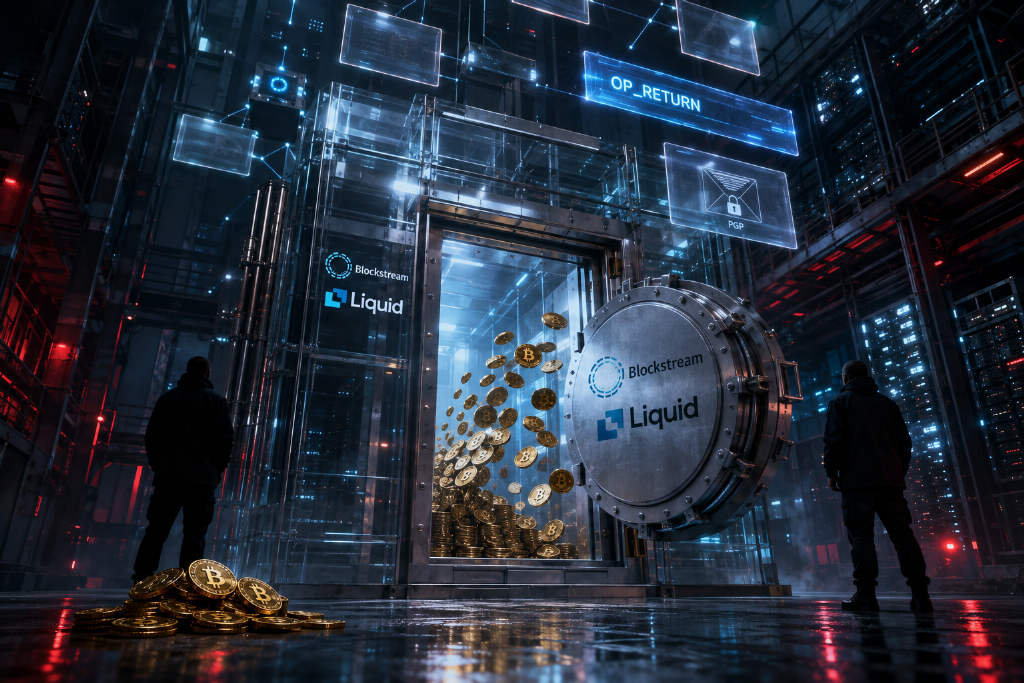
Liquid Network recovered 3,400 BTC after a day of messages embedded in Bitcoin transactions, while the party described as white hats kept 598.5 BTC, roughly 15% of the consolidated amount, as an implied bounty. According to Bitcoin Magazine, the return transaction was confirmed at 16:09 UTC on Sept. 7 and sent the 3,400 BTC back to the labeled Liquid peg script address, with the remaining 598.5 BTC returning to the same white-hat-controlled address as change. The transaction followed a sequence of on-chain messages between the holder of the roughly 4,000 BTC and an address linked to Blockstream. Those messages included a request to contact Blockstream security, encrypted payloads, PGP-signed notes, and clear-text statements about patching bridge nodes before funds could be returned. Liquid’s last official statement, published Sunday, said the withdrawal happened through the SideSwap peg-out path, that the PAK itself was not compromised, that other issued assets were unaffected, and that the sidechain had been paused. As of the article’s publication, neither Liquid nor Blockstream had issued a new public statement on the 3,400 BTC return.

100
Liquid gets 3,400 BTC back after on-chain exchange as white hats keep 598.5 BTC
Decrypt
2026-09-08 13:06:33

On-Chain Trading Terminals Log $6.35 Billion Weekly Volume, Their Biggest Week Since TRUMP Launch

Decrypt’s latest Morning Minute said on-chain trading terminals handled $6.35 billion in volume last week, marking their biggest week since the TRUMP launch in January 2025. Fomo processed $2.38 billion and gmgn’s trading bot handled $2.07 billion, meaning the two apps made up roughly 70% of total flow. Pump.fun’s app posted $489.5 million, while basedbot logged $450.5 million. The newsletter tied the spike to a run in meme coins and infrastructure tokens such as ZCAT, Stonk, MEME, and Marscoin, with PONS rising past a $600 million valuation and leading activity in the Robinhood Chain ecosystem. At the same time, the author argued broader DEX data does not yet confirm a local market top: DeFiLlama-tracked DEX volume reached $9.18 billion on the day and $217.33 billion over 30 days, up 1.81% on the week, but still around 20% of the highs seen in early 2025. The piece also covered macro and market moves, including Bitcoin’s 90-day correlation with gold rising to 0.56, the highest since tracking began in 2017, and Friday net inflows of $175 million into spot Bitcoin ETFs and $26 million into Ether ETFs. Other items included Solana’s upcoming transaction-size increase, progress on Ethereum proposal EIP-8141, the planned LAPTOP token launch on Base by Hunter Biden, and weekend moves across meme coins, protocol revenue rankings, and NFTs.

180
On-Chain Trading Terminals Log $6.35 Billion Weekly Volume, Their Biggest Week Since TRUMP Launch
ChainCatcher
2026-09-08 02:11:43

ChainCatcher Morning Brief: Korean memory inventory warning and Hunter Biden’s LAPTOP token plan lead a packed crypto cycle

ChainCatcher’s latest morning roundup spans a wide mix of crypto, macro, security and tech-capex developments from the past 24 hours. Bitcoin slipped nearly 1% to around $79,700 as rising oil prices, linked in the report to an escalation between the U.S. and Iran, added fresh pressure to risk assets. At the same time, spot crypto ETFs kept attracting money, with Bitcoin spot ETFs posting $987 million in weekly net inflows and Ethereum spot ETFs drawing $218 million, both marking a third straight week of net inflows. Beyond price action, several project and security updates stood out. Vitalik Buterin pushed back on claims that AI could break Bitcoin’s security assumptions, while Galaxy Research said roughly 45% of the assets stolen in the Coldcard “Wave 3” incident have now moved into cross-chain or mixing paths. Liquid Network and SideSwap also remained in focus after an exploit involving 4,000 L-BTC, and Blockstream said the vulnerability tied to the incident had been patched. On the corporate and policy front, KB Securities warned that Samsung Electronics and SK Hynix have memory inventories below 10 days, pointing to a tighter supply picture as AI infrastructure spending expands. The Wall Street Journal separately reported that Hunter Biden plans to launch a meme coin called LAPTOP on Base on Sept. 9, with a detailed token allocation, lockup and burn-or-charity framework tied to preset future events.

290
ChainCatcher Morning Brief: Korean memory inventory warning and Hunter Biden’s LAPTOP token plan lead a packed crypto cycle
Whale Watch
2026-09-08 01:28:07

24H crypto roundup: Hunter Biden eyes LAPTOP meme coin, whale Loracle adds to PONS short

Crypto markets on Sept. 8 were led by a mix of meme-coin headlines, whale positioning and sector rotation data. Hunter Biden, son of former U.S. President Joe Biden, is planning to launch a meme coin called LAPTOP, though no issuance date, supply details or token mechanics have been disclosed. The token is tied to the politically charged “Hunter Biden laptop” theme and was described in the source material as a political expression aimed at Donald Trump and his family. On-chain, Hyperbot data showed whale trader Loracle continued adding to a 3x leveraged short on PONS. The position has grown to 25,747,236 PONS, worth about $21.078 million. Separately, Blockstream said a vulnerability on Liquid has been patched and informed a white-hat hacker that roughly 4,000 BTC can now be safely returned. The hacker still controls 3,998.5 BTC, according to the update. Elsewhere, privacy coins remained in focus. glassnode said the privacy sector is the only major crypto segment above its previous market peak, with ZEC highlighted as a major driver. Market tables in the source also showed RAY, DOOD and METIS among the top 24-hour gainers, while BTC, ETH and SOL were lower over the same period.

550
24H crypto roundup: Hunter Biden eyes LAPTOP meme coin, whale Loracle adds to PONS short
Liquid
2026-09-07 16:06:06

Liquid attacker broadcasts return of 3,400 BTC, keeps 598 BTC after on-chain negotiation

The address that drained Blockstream’s Liquid federation wallet on Sunday has now broadcast a transaction returning 3,400 BTC to the federation while sending 598.49955894 BTC back to itself, leaving the attacker with roughly 15% of the 3,998.50 BTC originally withdrawn. According to The Defiant, the entire exchange between Blockstream and the attacker took place inside Bitcoin transactions through OP_RETURN messages, with Blockstream’s messages PGP-signed. The return transaction was still unconfirmed at 15:50 UTC Monday. It carries a 1,768-satoshi fee, a fee rate of 0.77 satoshis per virtual byte, and all 16 inputs are marked replace-by-fee. Earlier on Monday, the attacker wrote in plain text that it was "sending most back" to a specified address and asked, "is that ok." Blockstream later replied with a signed "Yes, thank you," followed by another signed message saying bridge nodes had been patched and it was safe to return the funds. SideSwap, whose peg-out authorization key was used in the incident, said a customer sent 4,000 L-BTC to its peg-out service and that Blockstream later determined the L-BTC had been created through a bug in Elements software. SideSwap said neither its key nor its systems were compromised.

140
Liquid attacker broadcasts return of 3,400 BTC, keeps 598 BTC after on-chain negotiation
Liquid Networ
2026-09-07 04:15:00

Liquid 'White Hat' Hacker Communicates with Blockstream, Promises to Return Most BTC After Fix

Galaxy Research Director Alex Thorn reported that the white-hat hacker of Liquid Network has initiated communication with Blockstream via OP_RETURN and PGP. The hacker offered to return most of the stolen BTC after the vulnerability is fixed, insisting on a patch upgrade for all nodes. Encrypted technical details were also shared. Negotiations continue.

140
Liquid 'White Hat' Hacker Communicates with Blockstream, Promises to Return Most BTC After Fix
Boltz
2026-08-05 19:21:27

Boltz warrant canary lapse sparks scrutiny after BTC bridge service suspension

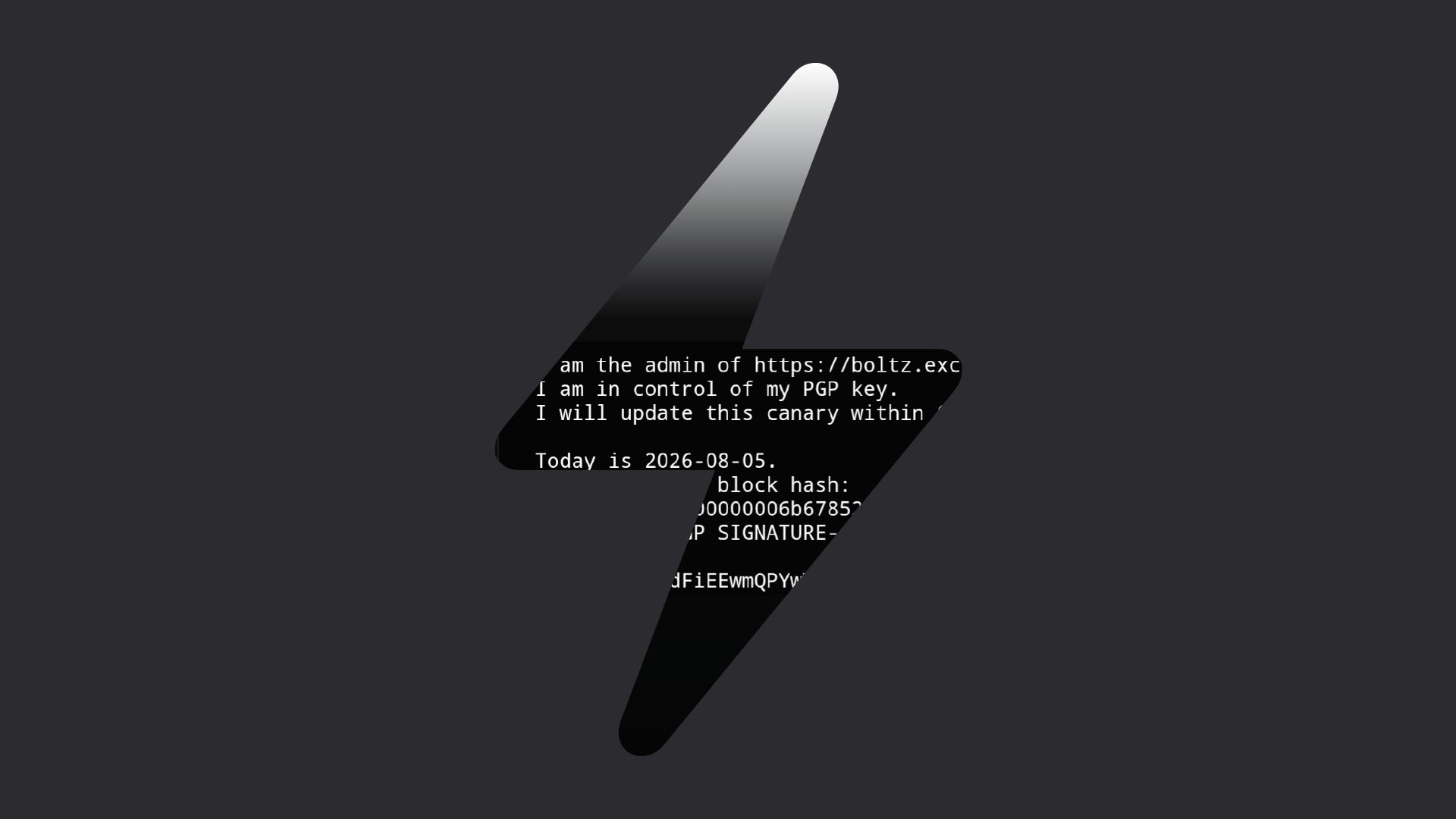
Bitcoin bridge operator Boltz is facing fresh scrutiny after its warrant canary went unrenewed for more than five days while the company was already dealing with a service shutdown tied to what it described as months of “AI-assisted probing.” Critics argued that the lapse, combined with the suspension of Boltz Swap Service, could point to government pressure or some form of duress. Boltz later renewed the notice on August 5 with a valid PGP-signed message stating that it had received zero information requests from any third party, including government agencies. The timing drove the debate. Boltz’s previous signed canary was dated May 31 and promised a 60-day refresh, setting July 30 as the expected renewal date. Swaps were disabled on August 3, and the new canary did not appear until August 5. Users and companies relying on the service, including Bull Bitcoin and wallets such as Aqua, warned of failed Lightning payments and Liquid-to-BTC swaps. On social media, critic Adam Simecka described the stale notice as an “authenticated Deadman Switch,” while defenders said the update process was manual and that the team simply forgot during the service freeze.

1190
Boltz warrant canary lapse sparks scrutiny after BTC bridge service suspension