Binance Word of the Day Answers for May 28, 2026: Full WOTD List Revealed
Binance releases daily word puzzle answers under 'AI Safety' theme, with words from 3 to 8 letters. Players guess correctly to earn points and share a 500,000 BNB prize pool.

Binance releases daily word puzzle answers under 'AI Safety' theme, with words from 3 to 8 letters. Players guess correctly to earn points and share a 500,000 BNB prize pool.

Rheinmetall says Germany has surpassed the US in conventional ammunition capacity, with 155mm shell output rising from 70,000 to 1.1 million a year as defense production expands into the auto supply chain.

A published roundup lists Binance Word of the Day candidate answers for Jan. 23, covering 3-letter to 8-letter entries under the theme “Protect Your Crypto,” along with gameplay and reward details.

Binance Word of the Day puzzle for February 11, 2026, reveals answers under the P2P Safety theme. Players can earn BNB rewards by guessing 18 crypto-related words.

Binance WOTD answers for Jan 17 under the theme "Protect Your Crypto" are out. Players can guess 3-8 letter words to earn points and share a 500,000 BNB prize pool.

Crypto trading split sharply on Wednesday. Bitcoin, Ethereum and XRP edged lower, while smaller altcoins such as RAIN, REQ and OSMO posted outsized gains as traders rotated into higher-volatility tokens.

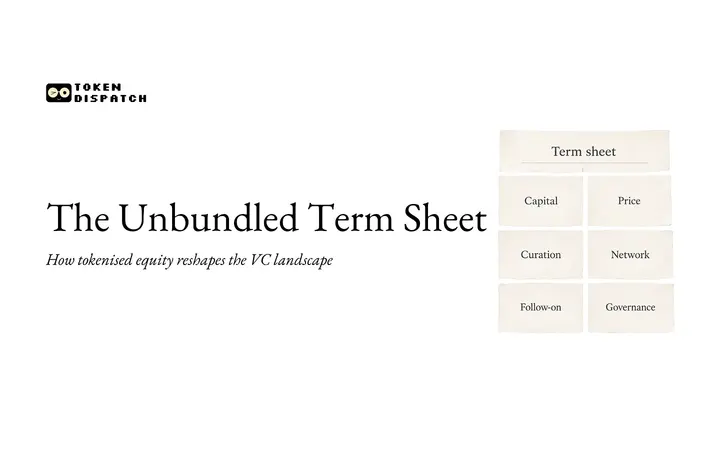
Securitize’s public listing on July 2, 2026 did more than put a tokenization company on the New York Stock Exchange. On the same morning it went public, the company also issued its stock natively on Solana and Avalanche, with about $270 million of common shares registered on-chain on day one. The article argues that this structure points to a larger shift: tokenized equity may start breaking apart the bundled service package venture capital firms have traditionally sold through a single term sheet. That package has usually included capital, price setting, signaling, network access, follow-on support and governance rights. If equity can trade, clear and discover price more continuously, some of those functions may move to markets and specialist software providers instead of staying inside one VC relationship. The piece cites examples such as Ondo Global Markets, Hyperliquid, Fairmint, Pulley, LiquiFi, Echo, Magna and Sablier. Still, the article does not argue that venture capital disappears. It says early-stage startups remain harder to price than mature firms, and A-round companies still rely heavily on investor judgment and reputation. Follow-on financing is also described as one of the last major VC functions without a mature tokenized substitute under current compliant market structures.

Securitize’s July 2 listing on the New York Stock Exchange did more than take the tokenization infrastructure firm public. On the same morning, the company also issued its common stock in tokenized form on Solana and Avalanche, with about $270 million in common shares registered on-chain on day one. The article argues that this structure matters far beyond one listing: if equity can be priced continuously, transferred more freely, and administered through specialized software, venture capital’s long-standing one-stop model may start to fragment. Traditionally, a venture term sheet has bundled capital, valuation, signaling, network access, governance rights, and follow-on support into a single package. The piece says tokenized equity could separate those functions. Market-based price discovery may handle part of fundraising and valuation for more mature companies, while cap-table management, exercise tooling, and programmable governance shift to dedicated providers such as Fairmint, Pulley, Magna, and Sablier. It also points to Coinbase’s acquisitions of LiquiFi in July 2025 and Echo in October 2025 as signs of that unbundling. Still, the article does not claim early-stage venture can simply be replaced. It argues that young startups lack the operating history and public information needed for clean market pricing, leaving curation, credibility, and relationship-driven judgment in VC hands. Follow-on investing also remains hard to replicate under current regulatory frameworks, which are aimed at already public companies rather than Series A startups.