SEPA

Privy
2026-09-02 15:50:22

Privy Expands Wallet API with Fiat Deposits, Stablecoin Conversion

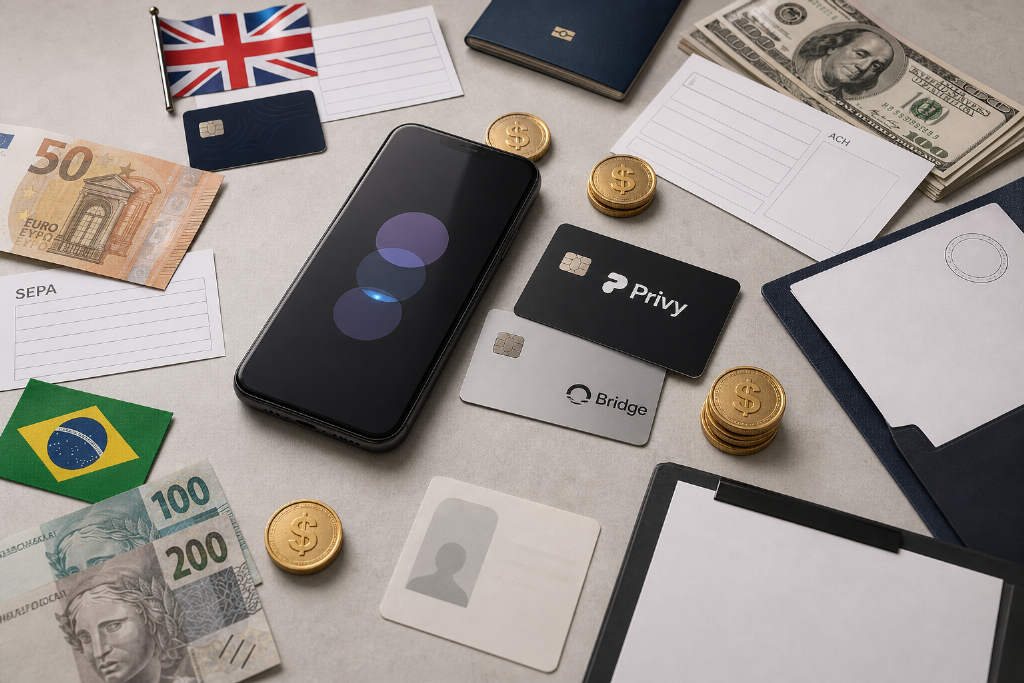
Privy has expanded its wallet API to include fiat deposits, automatic stablecoin conversion, and bank withdrawals. The feature uses Bridge for compliant settlement, supporting payment methods such as US ACH and wire transfers, UK Faster Payments, EU SEPA, and Brazil's PIX. Users and businesses must complete KYC or KYB verification to access fiat services. Use cases include stablecoin top-ups, global contractor payments, remittances, and treasury management.

60
Privy Expands Wallet API with Fiat Deposits, Stablecoin Conversion
Mastercard
2026-08-21 00:35:00

Mastercard’s stablecoin, agent commerce and AI thesis comes into focus with BVNK deal

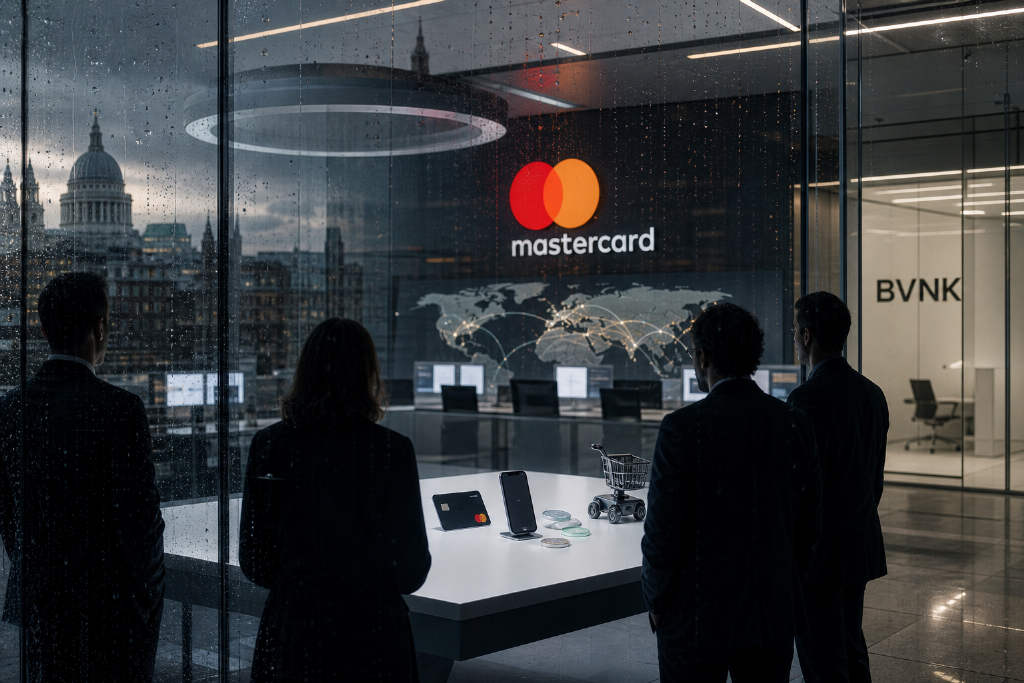
Mastercard used its July 30 second-quarter earnings call and a same-day Motley Fool podcast appearance by CEO Michael Miebach to lay out a consistent view across three hot topics in fintech and crypto: stablecoins, agentic commerce and AI. His argument was not that every payment should stay on card rails. It was that settlement may move across several rails, while trust, security and interoperability remain the layer Mastercard intends to own. Miebach said stablecoins already have clear utility in some B2B and P2P flows, especially where correspondent banking is expensive and opaque, but argued there is "no problem to solve" for everyday pay-to-merchant spending. In agentic commerce, he drew a line between AI buying on behalf of people or businesses, where Mastercard believes cards and existing protections still fit, and machine-to-machine transactions, where on-chain permissioning and off-chain settlement may require new infrastructure. That framework helps explain Mastercard’s acquisition of BVNK, which closed on August 3 for $1.8 billion, five months earlier than originally planned. With BVNK bringing annualized stablecoin volume of about $30 billion, more than 25 licenses across 130 markets, MiCA authorization and SEPA euro connectivity, Mastercard is adding a working stablecoin settlement layer to support sending, receiving, storing and converting assets.

470
Mastercard’s stablecoin, agent commerce and AI thesis comes into focus with BVNK deal
KuCoin Ventur
2026-07-27 10:00:00

KuCoin Ventures weekly report flags crypto washout under high funding costs and tighter liquidity

KuCoin Ventures said in its latest weekly report that the market is reassessing crypto projects through balance-sheet quality, governance, real revenue and cash burn rather than headline funding rounds or token narratives. The report pointed to Movement Labs and Storj Labs, both now in Chapter 11 proceedings, as two different stress cases: one tied to token launch structure and internal controls, the other to legacy debt and long-running operating pressures. It argued that the broader shakeout is not just about highly funded projects failing, but about capital efficiency from the previous cycle being tested in a harder financing environment. The report also focused on macro conditions. Brent crude briefly moved back above $100 a barrel, shipping through the Strait of Hormuz and the Red Sea remained disrupted, and U.S. Treasury yields rose as markets priced inflation risk alongside fiscal and term-premium concerns. In crypto, Bitcoin briefly touched $65,504 on July 27 before slipping back toward $65,100, while spot Bitcoin ETF trading volume fell to about $8.05 billion for the week, the lowest for a full trading week since October 2024. Ethereum spot ETFs, by contrast, posted about $103 million in net inflows, topping Bitcoin ETFs for a second straight week. KuCoin Ventures also highlighted stablecoins and private funding. Global stablecoin market capitalization stood at about $310.36 billion, while Galaxy Research data showed roughly 355 crypto funding deals totaling about $4 billion in the first quarter of 2026, with around 57% going to later-stage projects. Among recent deals, Augustus raised $180 million in a Series B at a $1 billion post-money valuation.

1250
KuCoin Ventures weekly report flags crypto washout under high funding costs and tighter liquidity
Augustus
2026-07-26 08:55:00

Augustus raises $180 million, wins conditional OCC approval, and pitches itself as a wholesale bank for the stablecoin era

European payments company Augustus has raised $180 million at a $1 billion post-money valuation and secured conditional approval from the Office of the Comptroller of the Currency for a U.S. national bank charter. The company began life as Ivy, an open-banking checkout product aimed at merchants, then expanded through integrations with Mollie, Kraken, and Circle into institutional money movement, stablecoin settlement, and dollar infrastructure. That shift has pushed Augustus beyond merchant payments and toward a much broader ambition: becoming what can best be described, for now, as a wholesale bank built for the stablecoin era. The transition is strategically clear but operationally unresolved. A bank built around APIs can hold customer balances, control its ledger, connect to payment rails directly, and reduce reliance on sponsor banks that may pull back from crypto or cross-border fintech clients. At the same time, Augustus is attempting to combine payments software, deposits, agency banking, treasury management, digital asset infrastructure, tokenized deposits, lending, and compliance into one regulated stack. Public information does not yet show that its Marble platform lowers operating costs, that payment volume can turn into durable banking revenue, or that its planned U.S. banking setup is already handling live dollar flows. The company’s story is advancing fast. Its full banking model remains in buildout.

1490
Augustus raises $180 million, wins conditional OCC approval, and pitches itself as a wholesale bank for the stablecoin era