STAR

Suiyuan Techn
2026-09-11 13:43:00

Suiyuan’s STAR Market debut caps an eight-year run that began with a 20-slide pitch deck

Suiyuan Technology has gone public on Shanghai’s STAR Market after an eight-year buildout that investors describe as one of the longer and harder commercialization cycles in China’s AI chip sector. The company opened at RMB 410 per share, up 188.37% from its IPO price of RMB 142.18, giving it a market value of RMB 176.4 billion, the highest opening-day market capitalization among this year’s new listings so far. Founded in March 2018 by chip veterans Zhao Lidong and Zhang Yalin, Suiyuan spent years developing domestic cloud AI training chips, a segment investors viewed as more capital-intensive and technically difficult than inference chips or edge-focused products. Before listing, the company completed 10 equity financing rounds, with investors including Delta Capital, ZhenFund, Yunhe Capital, Tencent Investment and Sunshine Insurance-affiliated Sunshine Ronghui Capital. Its prospectus shows that by the end of 2025, Suiyuan had completed four generations of computing architecture and five cloud AI chips, with all five succeeding on the first tape-out. Revenue reached RMB 990 million in 2025, while net loss narrowed to RMB 1.164 billion. Still, customer concentration remains a major point of attention: Tencent was both Suiyuan’s largest customer and largest shareholder, with direct and indirect sales to Tencent accounting for 83.79% of 2025 revenue and Tencent Technology and its affiliates holding 20.26% of the company.

920
Suiyuan’s STAR Market debut caps an eight-year run that began with a 20-slide pitch deck
X Layer
2026-09-11 10:09:35

STARLINK on X Layer Opens Community Charity Fund for Disaster and Connectivity Gaps

The STARLINK community on X Layer opened a community donation charity fund at 9:00 on Sept. 11, according to an official announcement cited by BlockBeats. The meme token launched on Sept. 9 through Ignix, a general launch platform on X Layer, with liquidity paired against SPCX. Its trading taxes flow into a treasury and are distributed to holders in SPCX. At press time, the token’s market capitalization had exceeded $7.5 million. The project said the charity fund uses a fixed address and a multi-signature wallet. Donated token principal will not be spent. Instead, actual expenditures will come only from dividends generated by those holdings. The stated use of funds is to purchase Starlink satellite internet equipment and deploy it in areas without network coverage, including disaster-hit regions and connectivity blank spots. The team also said all fund inflows and outflows can be checked on the X Layer blockchain. It plans to keep publishing donor lists, receipts for each equipment purchase, deployment locations, and reconciled records covering dividend income and the number of devices deployed. As of publication, the donation address had received 350 million STARLINK, worth about $2.84 million.

820
STARLINK on X Layer Opens Community Charity Fund for Disaster and Connectivity Gaps
Suiyuan Techn
2026-09-11 06:33:00

Suiyuan Technology surges more than 200% on STAR Market debut, trading around CNY 400

Chinese AI computing chip company Suiyuan Technology (688801) jumped more than 200% after making its debut on Shanghai’s STAR Market on Sept. 11, according to a report cited by PANews from Securities Times. The stock was trading at around CNY 400 per share during the session. Based on its IPO price of CNY 142.18 per share, a winning subscription lot would be sitting on an unrealized gain of more than CNY 140,000. The report grouped Suiyuan with Moore Threads, MetaX and Biren Technology as China’s "four little dragons" in AI chips. It said all four companies posted more than CNY 1 billion in revenue in the first half of the year and maintained strong growth, but none had yet turned profitable overall. Losses at Moore Threads and MetaX have narrowed noticeably. Institutions cited in the report said that as domestic demand for AI computing rises and import substitution picks up pace, competition is expected to shift from single-card performance to system-level capabilities, including large-scale clusters, software-hardware ecosystems and commercial deployment.

700
Suiyuan Technology surges more than 200% on STAR Market debut, trading around CNY 400
Enflame Techn
2026-09-11 02:16:57

Enflame Technology lists on Shanghai STAR Market, shares hit intraday high of ¥475

Chinese cloud AI chipmaker Enflame Technology officially began trading on the STAR Market of the Shanghai Stock Exchange on Sept. 11, with an IPO price of ¥142.18 per share. At press time, the stock was quoted at ¥418, up 193.99% from the offering price. Turnover reached ¥3.404 billion, turnover rate stood at 44.82%, amplitude was 47.83%, and the intraday range ran from ¥407 to ¥475. The company’s total market capitalization was ¥179.887 billion. Founded in March 2018, Enflame uses a self-developed DSA architecture and has rolled out five cloud AI chips across four architecture generations. Its product lineup covers AI chips, accelerator cards and modules, as well as intelligent computing systems and clusters. The company said cumulative shipments of its third-generation S60 product reached 160,000 units. Revenue came in at ¥301 million in 2023, ¥722 million in 2024, and ¥990 million in 2025. In the first half of 2026, revenue reached ¥1.12 billion, up 279.08% year over year. Tencent-affiliated entities are Enflame’s largest external shareholder, holding 20.26% together with persons acting in concert, and also its largest customer, accounting for 83.79% of 2025 sales revenue. The company issued 43.0352 million shares in the offering, raising about ¥6.119 billion for fifth- and sixth-generation AI chip R&D and commercialization.

620
Enflame Technology lists on Shanghai STAR Market, shares hit intraday high of ¥475
Moonshot AI
2026-09-10 12:00:43

Moonshot AI weighs Hong Kong IPO and possible STAR Market listing

Moonshot AI, the company behind Kimi, is considering a dual-capital-markets path that could start in Hong Kong and later extend to Shanghai’s STAR Market, according to a BlockBeats report citing Beating AI. The company has already confidentially filed for a Hong Kong IPO and has recently signaled to investors that it is studying a follow-on listing on the STAR Market after a Hong Kong debut, though that plan has not been finalized. On the Hong Kong side, Moonshot AI is targeting roughly $3 billion in fundraising and could go public as early as the first quarter of 2027. It is also working on its final pre-IPO financing round at an estimated valuation of about $50 billion. The report said one reason the company is weighing a STAR Market listing is that AI stocks in Hong Kong have recently shown weak share-price performance, while the queue of companies seeking listings remains long. A dual-listing structure would add another funding channel and broaden investor reach. In June, the STAR Market relaxed its fifth listing standard specifically for large-model companies, allowing applications from businesses that have not yet reached a certain revenue scale, provided they meet conditions including having at least one large-model product online and in scaled commercial use.

650
Moonshot AI weighs Hong Kong IPO and possible STAR Market listing
Jiazhi Techno
2026-09-10 02:45:10

Zhejiang University professor-founded Jiazhi Technology files again for Hong Kong IPO

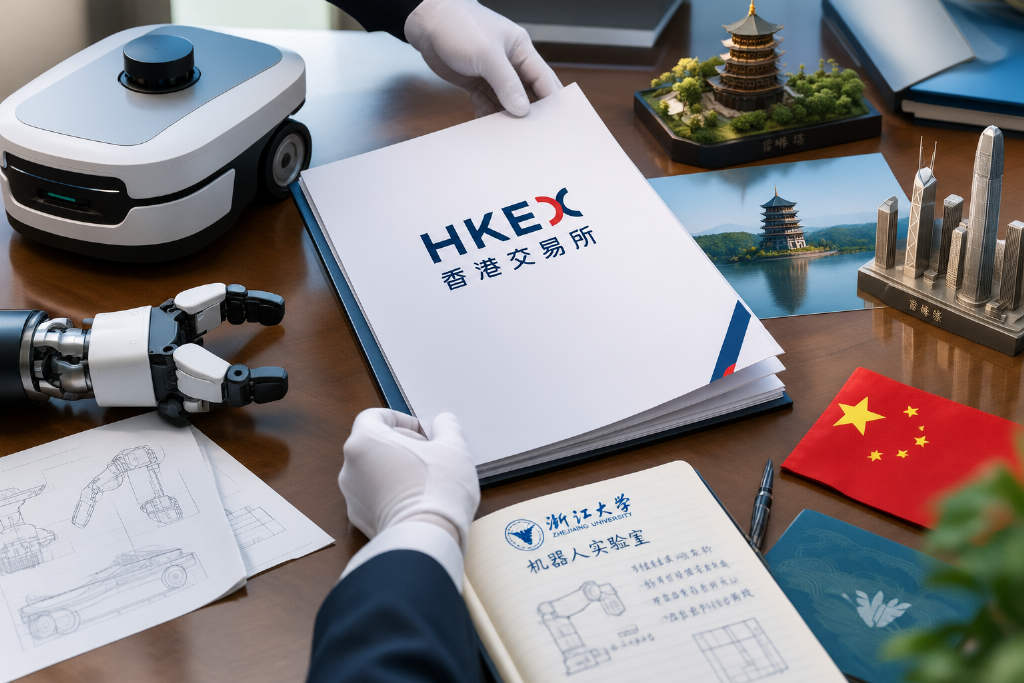
Jiazhi Technology, an industrial mobile robotics company founded by Zhejiang University professor Xiong Rong and members of her lab, has filed again for a main-board listing in Hong Kong under Chapter 18C. The company traces its roots to the university’s early robotics work, where Xiong led students in building Zhejiang University’s first FIRA soccer robot in 2001 and later guided teams that won four small-size robot soccer World Cup titles, including a 1-0 final victory over Germany’s ER-Force in 2019. In March this year, the International Federation of Robotics named Xiong to its list of the 11 Women Shaping the Future of Robotics 2026, where she was the only Chinese honoree. Jiazhi was founded in Hangzhou in July 2016 with registered capital of 5 million yuan. Its prospectus shows revenue of 74.95 million yuan, 110 million yuan, and 260 million yuan in 2023, 2024, and 2025, respectively. Revenue in the first half of 2026 reached 169 million yuan, up 25% year over year, with 891 robots shipped and contracts on hand of about 500 million yuan at period end. Robot solutions generated 147 million yuan, or 87.3% of total revenue, in the first half of 2026.

860
Zhejiang University professor-founded Jiazhi Technology files again for Hong Kong IPO
LAPTOP
2026-09-10 02:00:00

LAPTOP swings dominate a packed crypto news cycle as whale trades, exchange listings and stablecoin updates stack up

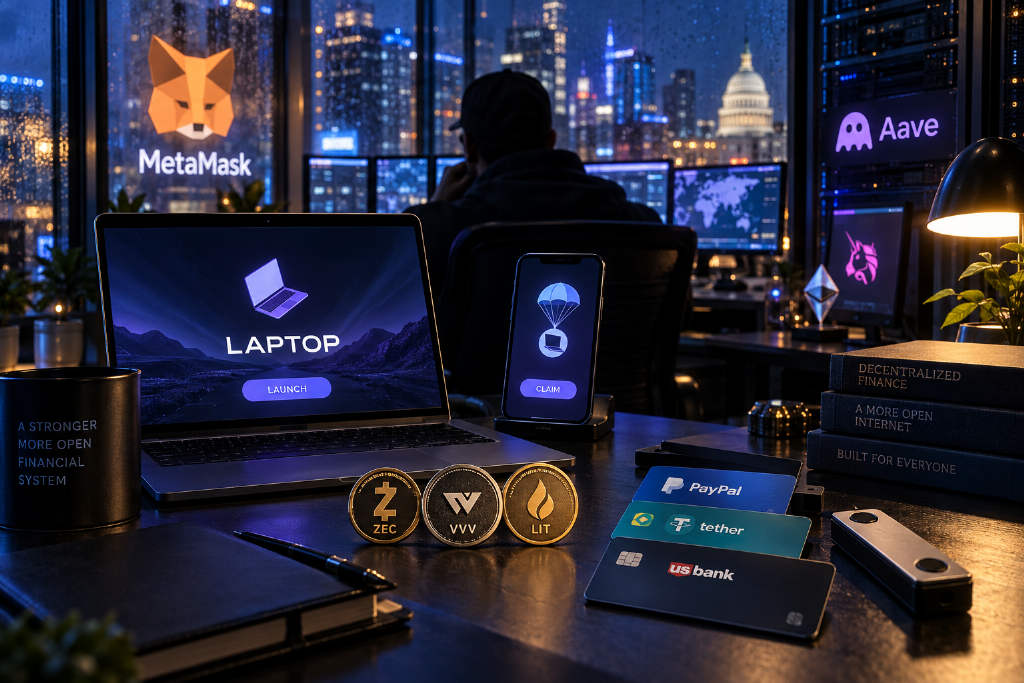
Crypto markets saw an unusually dense flow of developments between Sept. 9 and Sept. 10, with LAPTOP drawing the most attention after its launch, airdrop claims, market-maker allocations, liquidity incentives and extreme price moves all unfolded in quick succession. Security concerns emerged at the same time, including phishing warnings tied to LAPTOP and a separate email phishing alert from hardware wallet maker Trezor. Beyond LAPTOP, on-chain activity showed large ZEC buying through three wallets, a profitable six-month run in VVV and LIT by whale address 0x7378, and fresh positioning by trader Based16z. Binance listed Niulai and expanded related services, while Binance Alpha added 4Stock and A Meme Coin. Institutional and infrastructure news also arrived in size. Aave launched an official MCP server for AI agents, Consensys spun out MetaMask into an independent entity, U.S. Bank tested cross-border payments using USBDC on Stellar, PayPal formally rolled out its PYUSDx platform, and Tether teamed up with Fasanara Capital on a $400 million private credit fund. Regulators and policymakers were active as well, with U.S. enforcement action against Xinbi Guarantee, fresh pressure in Washington around the CLARITY Act, and an EU move to extend local contact-point rules to crypto service providers.

1540
LAPTOP swings dominate a packed crypto news cycle as whale trades, exchange listings and stablecoin updates stack up
Ethereum
2026-09-09 15:40:59

Vitalik says recursive STARK mempool could cut costs for quantum-safe signatures and private transfers

Vitalik said in a post on X that he wants Ethereum to include the recursive STARK mempool proposal, EIP-8288, in the network’s I-star upgrade. He described the proposal as a possible next step after Frames. According to his post, the design would move quantum-safe signature data off-chain, which could reduce signature costs. He also said gas costs for quantum-safe private transactions could fall from around 10 million to the tens of thousands. The proposal works by using frames and recursive STARKs to aggregate transaction dependencies. Under that setup, nodes would send one STARK of roughly 100 KB to 300 KB during each time period. The added on-chain overhead, he said, would be one STARK plus 96 bytes for each statement that needs to be proven.

760
Vitalik says recursive STARK mempool could cut costs for quantum-safe signatures and private transfers