South Korea
Oct 23, 2026

South Korea’s FSC to study allowing crypto exchanges into the STO market

South Korea’s Financial Services Commission is studying a plan that could allow cryptocurrency exchanges to participate in the security token offering, or STO, market, according to a market update cited by ChainCatcher. The review will cover the market environment, investor protection, integration of the licensing framework, and rules on concurrent business operations. FSC Chairman Lee Eok-won said he agrees with the proposal to use the technology and trading infrastructure already built by existing exchanges to develop the STO market. He also said that those technical systems and trading infrastructure should be integrated into the tokenized securities market. The statement points to a possible policy review around how existing crypto trading venues could be incorporated into South Korea’s STO framework.


1030
South Korea’s FSC to study allowing crypto exchanges into the STO market
South Korea
Oct 2, 2026

South Korea Unveils Tokenized Securities Rules With KRW 100 Million Annual Net Buying Cap for Retail Investors

South Korea’s Financial Services Commission said on Oct. 1 that amendments tied to tokenized securities under the Electronic Securities Act and the Capital Markets Act are set to take effect on Feb. 4, 2027, with draft enforcement rules open for public notice from Oct. 2 to Nov. 11. The proposal lays out which securities can be issued in tokenized form, including not only fractionalized investment products but also standardized securities such as stocks, bonds, and funds. It also sets conditions for distributed ledgers, requiring participation from an electronic registration institution and at least two account management institutions. The draft bars direct payment of ledger usage fees for electronic registration, citing the public-book nature of the ledger and the need to avoid delays in confirming rights. Separately, the Capital Markets Act draft adds debt securities to the list of permitted over-the-counter trading categories for tokenized securities and sets a retail investor cap of KRW 100 million in annual net purchases at each OTC venue. The FSC said industry feedback, including calls to raise the cap, lower the KRW 4 billion minimum capital requirement for issuer account managers, and ease distributed ledger requirements, will be reviewed during the legislative process.

730
South Korea Unveils Tokenized Securities Rules With KRW 100 Million Annual Net Buying Cap for Retail Investors
Plume Network
Sep 29, 2026

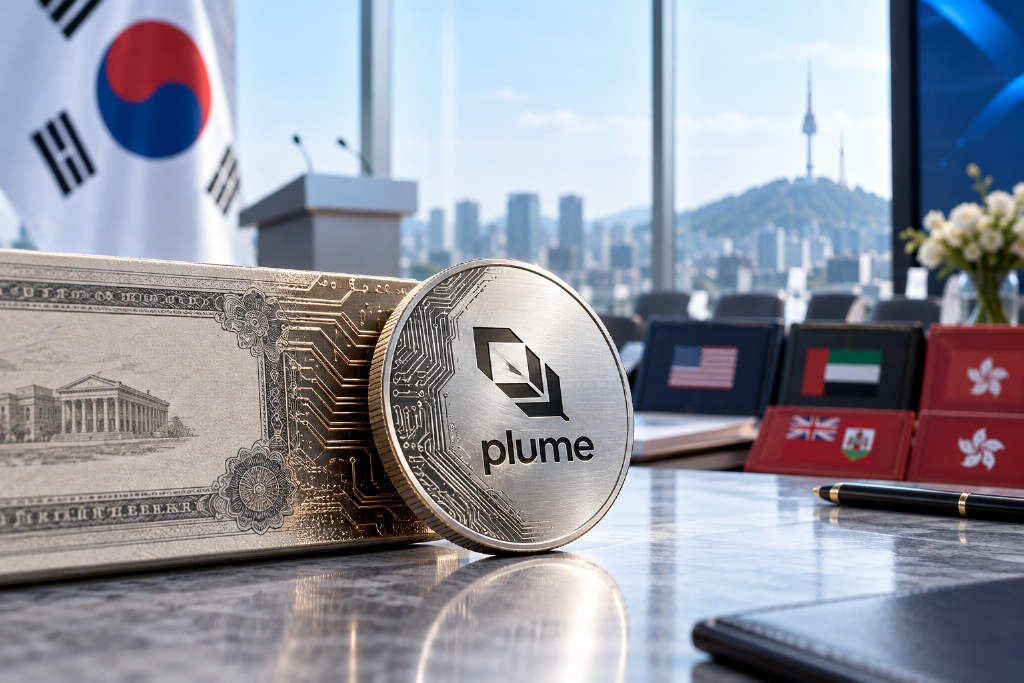
Plume Network Korea lead says tokenized securities combine TradFi strengths with blockchain

Plume Network Korea lead Sumi Kim said tokenized securities emerged from efforts to combine the strengths of traditional finance and blockchain, while stressing that legal licensing in each jurisdiction is a prerequisite for doing business. Speaking at GWDC 2026 Korea in Seoul, Kim said Plume Network, founded in 2024, covers the full process from financial asset tokenization to distribution and is already working with multiple asset managers and brokerages in the United States. She said the biggest pain point for crypto assets had previously been security, and argued that tokenized securities are one response to that problem. Kim also said tokenized assets are meaningless without demand, adding that yield-bearing products have drawn the most attention so far. On compliance, she outlined the company’s licensing path, including an early U.S. transfer agent license, a business license in Abu Dhabi Global Market, and a more recent license in Bermuda, with applications under way in places including Hong Kong. Kim also noted that South Korea’s STO-related law is set to take effect in February next year and said Korean financial institutions should pay attention to tokenized securities, not just stablecoins.

790
Plume Network Korea lead says tokenized securities combine TradFi strengths with blockchain
AhnLab Blockchain Company
Sep 29, 2026

AhnLab Blockchain executive says permissions and accountability will define the next AI-blockchain phase

At GWDC 2026 Korea, Lim Ju-young, a director at AhnLab Blockchain Company, said the earliest impact from combining AI and blockchain is likely to appear in payments, with data trading expected to follow. She said blockchain can be used to verify data, assess its value, and distribute corresponding rewards. Lim also argued that the biggest hurdle for traditional finance in adopting blockchain is the speed gap between legacy and new systems. In her view, financial institutions place greater weight on accountability and control, making it difficult to operate with the same openness seen in Web3, while both AI and blockchain are still evolving. Looking ahead, she said STO and RWA are likely to grow quickly, and the value of data, long overlooked, could rise sharply. She added that data may eventually be treated like an energy source and traded in tokenized form, a stage she said could arrive in about two years. For projects entering South Korea, she highlighted retail appeal, security and trust, and reputation management as key priorities.

850
AhnLab Blockchain executive says permissions and accountability will define the next AI-blockchain phase
South Korea
Sep 13, 2026

South Korea may push forward Digital Asset Basic Act this year, though passage could slip to first half of next year

South Korea is preparing to move ahead with its proposed Digital Asset Basic Act, according to MK, which cited Min Byung-deok, a lawmaker from the Democratic Party of Korea. He said the bill is expected to be pushed within this year, with a public hearing planned for this month and formal legislative review set to begin in November after the national audit ends. The timeline is not fixed. Because the National Assembly still faces the national audit and budget review process, the legislative schedule could be pushed back to the first half of next year. The report also said South Korea’s Financial Services Commission has released a phased roadmap for security token offerings, or STOs. At the same time, financial institutions are carrying out tokenization system tests and working on cooperation tied to global infrastructure. Taken together, the moves indicate that South Korea’s digital asset oversight is moving beyond policy discussion and toward implementation planning.

1350
South Korea may push forward Digital Asset Basic Act this year, though passage could slip to first half of next year
South Korea
Sep 4, 2026

South Korea Targets February 2027 for Full Tokenized Securities Market

South Korea's Financial Services Commission (FSC) and Financial Supervisory Service (FSS) have announced a phased roadmap to fully tokenize traditional securities, including stocks, bonds, and funds, starting February 2027. The plan, reported by CoinDesk, aims to expand Security Token Offerings (STO) from fractional investment products to conventional securities. FSC Vice Chairman Kwon Dae-young stated that the authorities are committed to laying the groundwork for issuance and circulation of tokenized traditional securities, with the ultimate goal of transforming capital market infrastructure for digital connectivity. The roadmap includes three phases: Phase 1 (February 2027) involves legal changes for electronic registration, institutional money market funds, bonds, unlisted stocks via trusts, and fractional investment securities; Phase 2 extends tokenization to all publicly offered securities; Phase 3 establishes stablecoin-linked on-chain payment infrastructure. Individual subscription limits are set at the lower of 30 million won (approximately $22,000) or 5% of total issuance, with OTC platform annual net purchase cap at around $74,000. The timeline for later phases depends on Phase 1 execution and pending stablecoin legislation.

2270
South Korea Targets February 2027 for Full Tokenized Securities Market
Mirae Asset
Aug 27, 2026

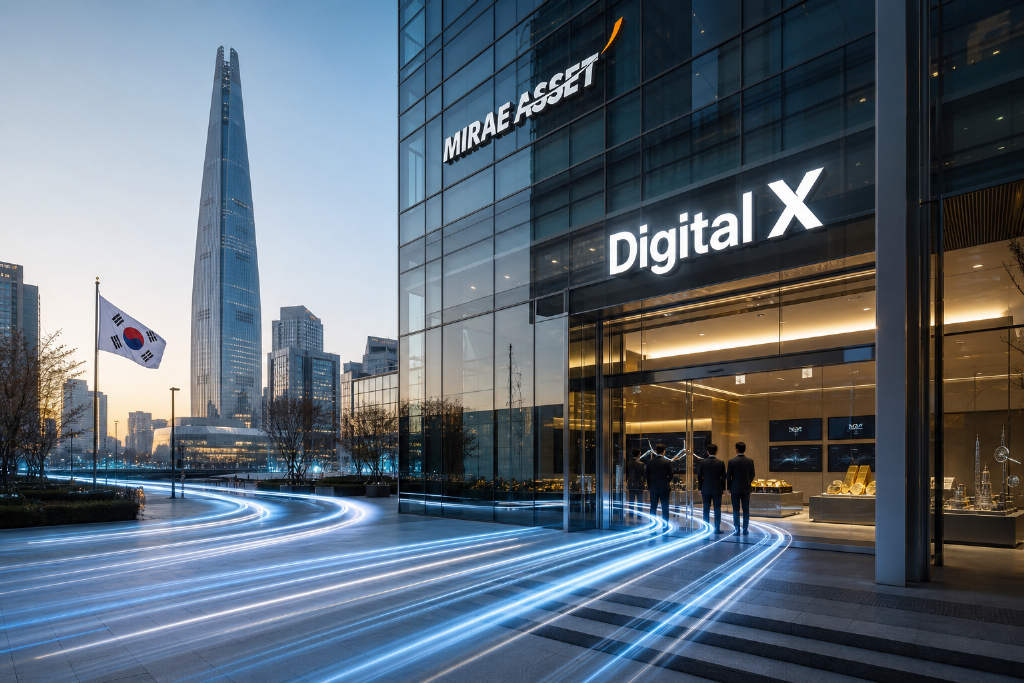
Mirae Asset targets a $109 billion crypto push after acquiring Digital X

Mirae Asset Financial Group founder Park Hyeon-joo laid out a crypto plan for Digital X at an internal employee event, according to CoinDesk. The strategy covers stablecoins, real-world assets, and security token offerings. Digital X was previously known as Korbit. CoinDesk framed the move as part of Mirae Asset’s attempt to build a $109 billion crypto empire following the acquisition. The report did not provide further operational details in the summary provided, but it identified the business lines Park highlighted and tied them directly to the newly acquired entity. The remarks were made to employees rather than in a public product launch or regulatory filing, based on the source text.

1030
Mirae Asset targets a $109 billion crypto push after acquiring Digital X
Mirae Asset Group
Aug 27, 2026

Mirae Asset to make Digital X a core pillar of its 3.0 strategy

Mirae Asset Group plans to place its crypto trading platform Digital X at the center of its "Mirae Asset 3.0" strategy, according to Yonhap News Agency. Chairman Park Hyeon-joo said the group will build the initiative on more than KRW 1,500 trillion in client assets. In the first phase, Mirae Asset aims to expand its digital asset business to KRW 150 trillion and is targeting profitability by 2027. The company also plans to broaden its product lineup across four areas: crypto assets, stablecoins, real-world assets, and security token offerings. In addition, it intends to push the tokenization of assets including gold, silver, and electricity, while developing on-chain financial services. Digital X was formerly the South Korean crypto exchange Korbit. Mirae Asset later renamed the platform after acquiring a 97.15% stake.

1630
Mirae Asset to make Digital X a core pillar of its 3.0 strategy
Total 32 items
Go topage