Orbital Matter
13 hours ago

Orbital Matter says it 3D printed a rigid beam in orbit

German startup Orbital Matter said one of its satellites has 3D printed a half-meter rigid beam in the vacuum of space using a custom plastic material. Company executives described it as the first time a free-flying spacecraft has carried out this kind of in-orbit printing, calling it a step toward building larger structures in space. The work was performed by the company’s Replicator-2 small satellite, which carries four 3D printers and was launched this summer on a SpaceX rideshare mission. According to the company, each printer forms rigid cylindrical beams by extruding resin coils and curing them with ultraviolet light, a process it compared to cement and water. Chief executive and co-founder Jakub Stojek said the mission showed for the first time that arrays of any size could be built in space based on mission needs. Orbital Matter is also working with the European Space Agency and satellite manufacturer Thales Alenia Space. TechCrunch was cited as the source of the report.

20
Orbital Matter says it 3D printed a rigid beam in orbit
Google
Oct 31, 2026

Google’s Suncatcher satellite returns its first AI-generated answer from orbit with a space haiku

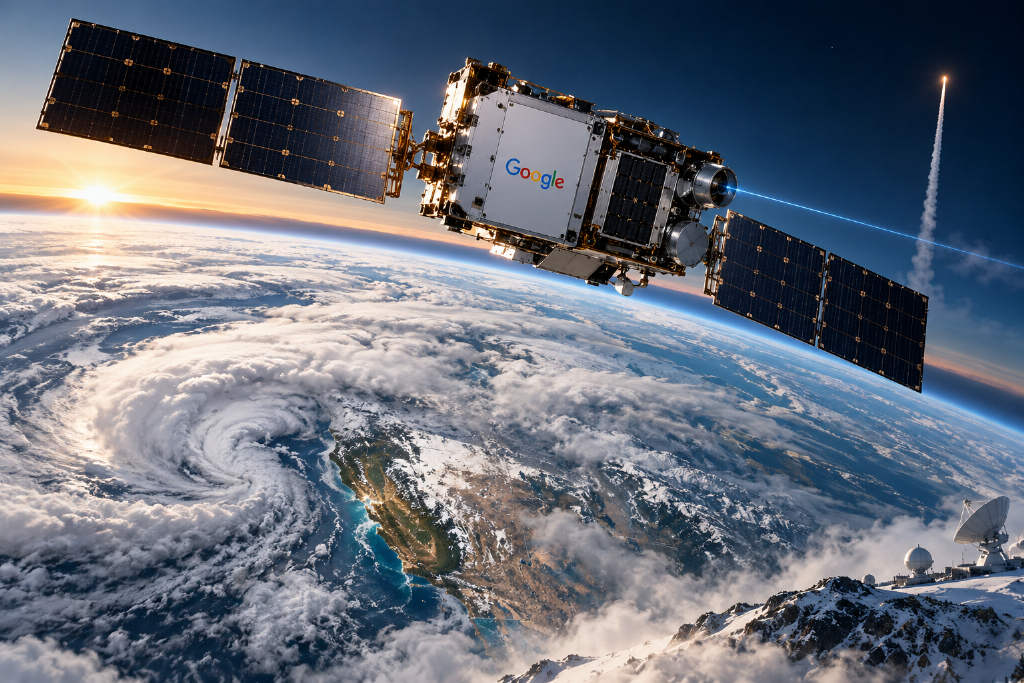
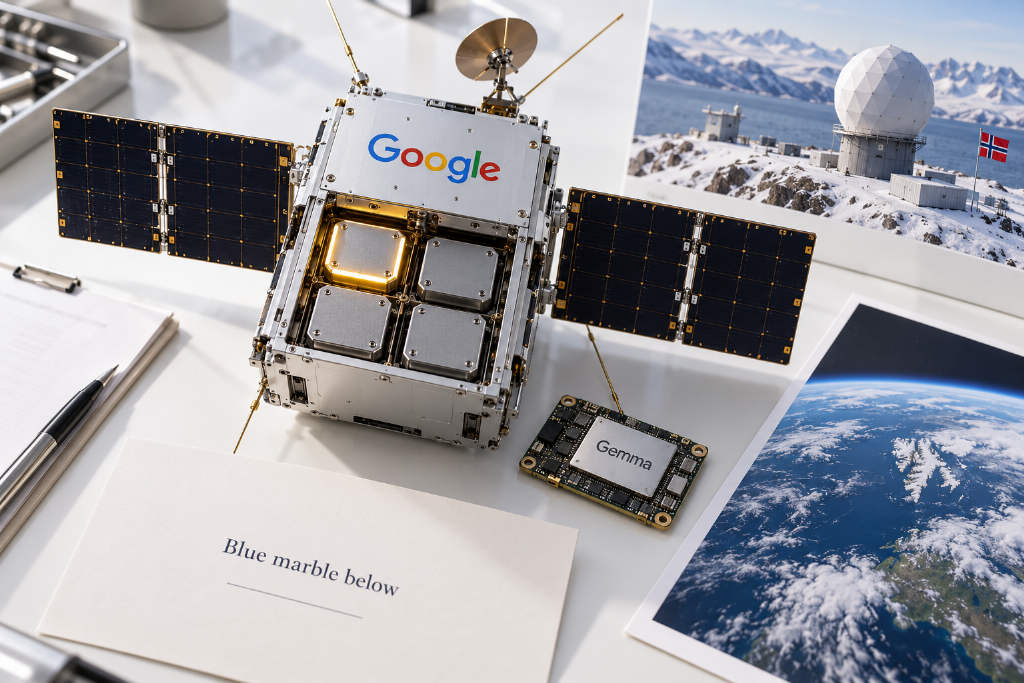
Google said its Project Suncatcher prototype satellite produced an AI response in orbit for the first time this week, marking what the company called a "Hello World" milestone for data-center-class TPU hardware in space. The first prompt uploaded from the ground asked the onboard Gemma 4 open model to write a haiku about being in space, and the response was transmitted back as the satellite passed over Svalbard, Norway. The prototype launched on Oct. 1 aboard a SpaceX Falcon 9 mission that also carried more than 100 other spacecraft. Google said the satellite carries four TPUs and can generate up to 1 kilowatt of power, but only one TPU can run at a time for roughly 20 minutes because of power constraints. After the haiku test, the company also asked the model to write a space-themed limerick and used telemetry prompts to report payload system status. Google told TechCrunch the satellite is operating normally. The next phase will test how the TPU handles thermal stress and radiation in orbit. Google said that after validating stable operation in space, it plans to launch two interconnected satellites in 2027, while TechCrunch reported those spacecraft are expected to have more power and demonstrate optical links between satellites.

150
Google’s Suncatcher satellite returns its first AI-generated answer from orbit with a space haiku
Google
Oct 30, 2026

Google brings first Suncatcher space data center satellite online for TPU inference test

Google said its Suncatcher prototype space data center satellite is now online and has established communications with the ground, marking an early operational step for the company’s orbital computing experiment. The satellite was launched into orbit aboard a SpaceX Falcon 9 and carries a single Google Tensor Processing Unit, or TPU. Its maximum power generation is 1 kilowatt, though power constraints limit each run to roughly 20 minutes. According to Google, ground operators have already used the satellite’s preloaded Gemma 4 model to generate haiku and report on orbital conditions. The company also said it plans to launch two more satellites in a later phase. Those additions are intended to support higher power generation and optical inter-satellite links. The update was cited by Techub, which referenced TechCrunch.

270
Google brings first Suncatcher space data center satellite online for TPU inference test
Germany
Oct 19, 2026

Reflex Aerospace expands satellite production in Europe with backing from Nvidia’s planned investment

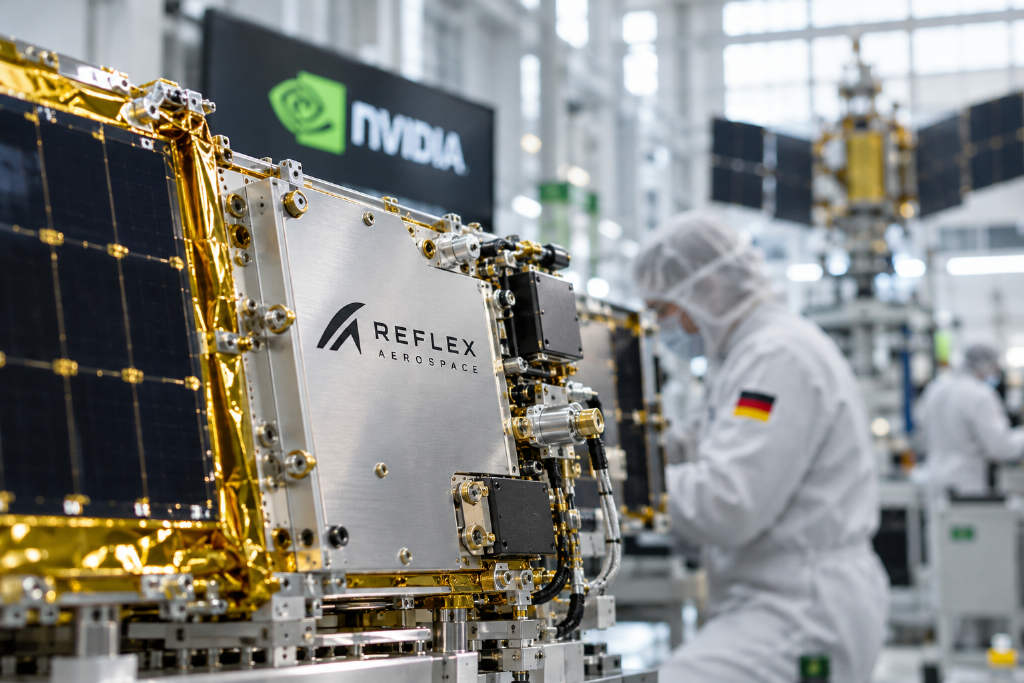
German satellite company Reflex Aerospace is expanding satellite production in Europe, according to a brief update cited by ChainCatcher. The report says the move is supported by Nvidia’s planned investment. No further details were provided in the source on the size of the investment, the production timeline, or the scope of the expansion. The update identifies Reflex Aerospace as a German satellite company and frames the expansion as taking place in Europe. ChainCatcher attributed the development to support tied to Nvidia’s planned investment, but the brief did not disclose additional context beyond that point.

550
Reflex Aerospace expands satellite production in Europe with backing from Nvidia’s planned investment
SpaceX
Oct 1, 2026

SpaceX plans to launch Planet Labs satellite carrying Google TPU into orbit

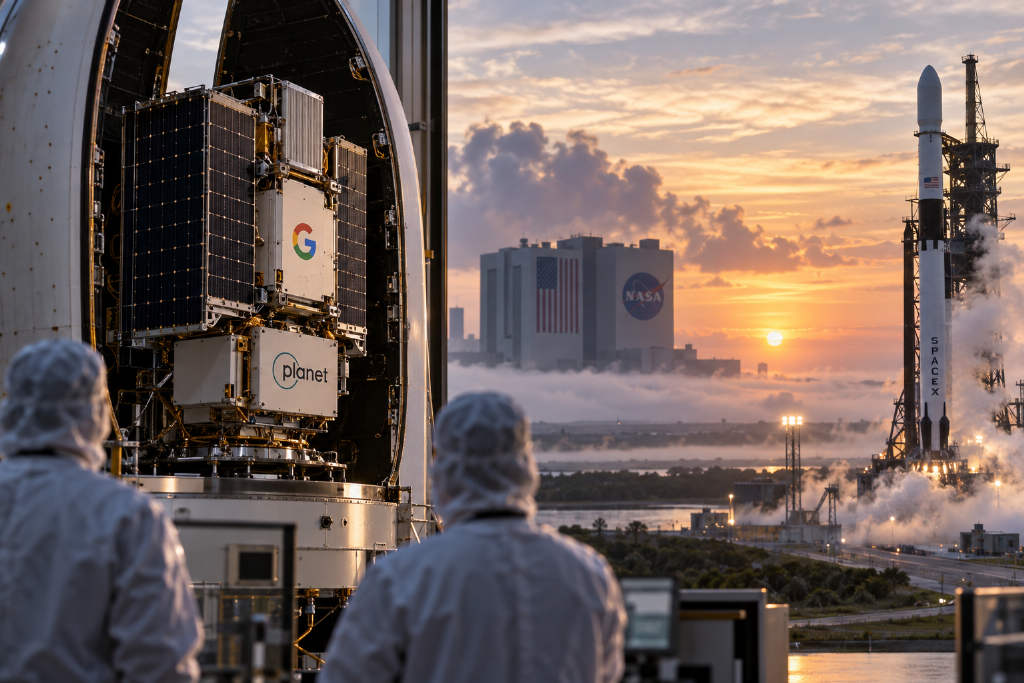
Techub News, citing CNBC, reported that SpaceX plans to send a Planet Labs satellite carrying Google’s Tensor Processing Unit, or TPU, into orbit. The report said the move is intended to support the development of space-based data centers. The item identifies three companies tied to the plan: SpaceX as the launch provider, Google as the TPU supplier, and Planet Labs as the satellite operator. No launch date, mission name, technical specifications, or financial details were disclosed in the source material. The report was published by Techub News under the technology category.

620
SpaceX plans to launch Planet Labs satellite carrying Google TPU into orbit
Google
Sep 27, 2026

Google to launch Suncatcher prototype satellite with four TPUs for in-orbit space tests

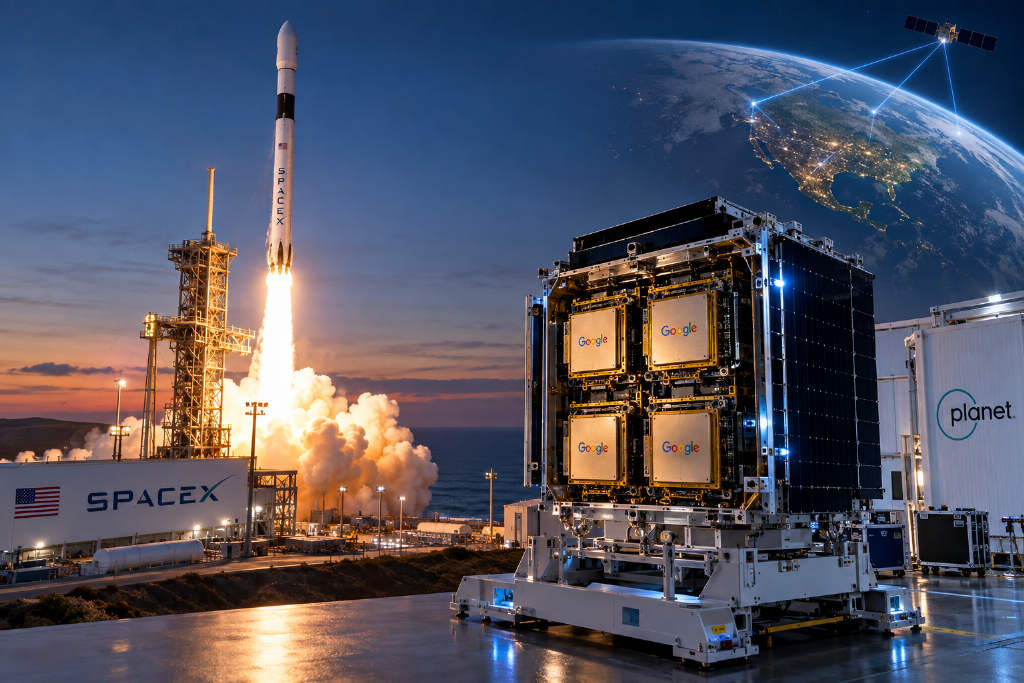
Google is set to send its first Project Suncatcher prototype satellite into orbit on Oct. 1 aboard SpaceX’s Transporter-18 rideshare mission from Vandenberg Space Force Base in California. The satellite, built with Planet, will carry four Trillium tensor processing units, or TPUs, to test whether Google’s in-house AI chips can withstand launch shock, radiation exposure and heat dissipation in a vacuum. Google said the mission is meant to answer a basic question that ground simulations cannot fully settle: whether AI hardware can survive the physical conditions of launch and low Earth orbit. The report says Google has already run vibration tests and proton-beam radiation experiments, with early results showing Trillium handled total ionizing dose levels above what a five-year space mission is expected to encounter. Heat remains a central challenge because orbital systems cannot rely on air convection and must radiate heat away through panels. The mission also feeds into Google’s 2027 plan to test laser links between two satellites, a step toward clustered orbital computing systems. The article places Google’s effort alongside SpaceX’s own orbital data center ambitions, including its FCC filing for up to 1 million satellites and Elon Musk’s stated goal of sending Nvidia-linked AI chips to space in the fourth quarter of next year.

710
Google to launch Suncatcher prototype satellite with four TPUs for in-orbit space tests